



A liver abscess is an infectious condition in which pus-filled cavities form within the liver parenchyma, caused by bacteria, parasites, or fungi. The disease progresses rapidly and can lead to serious complications such as rupture of the abscess, intra-abdominal infection, or pus spreading to the pleural or pericardial cavities – if not diagnosed and treated promptly.
What is a liver abscess? Causes of liver abscess
A liver abscess is a condition in which one or more pus-filled cavities form within the liver parenchyma as a result of bacterial, parasitic, or fungal infection. It is considered a serious internal organ infection and is classified into three main types:
Amoebic liver abscess
The most common cause is infection by the parasite Entamoeba histolytica, which invades the liver and destroys hepatic tissue, leading to abscess formation. The disease is primarily transmitted through ingestion of contaminated food or water. Individuals with a history of amoebic dysentery, especially chronic or inadequately treated cases, are at higher risk of developing a liver abscess.
Pyogenic (bacterial) liver abscess
A bacterial liver abscess usually develops when bacteria from other infection sites in the body, such as appendicitis or cholangitis – spread to the liver through the bloodstream or the portal vein. The condition may also occur after liver biopsy or in cases of biliary catheter obstruction.
The most common causative organisms originate from the intestinal flora, including Klebsiella pneumoniae, Escherichia coli, Bacteroides, Enterococci, and Candida spp.
Liver fluke–related liver abscess
Two species of liver flukes can cause infection in humans: Fasciola hepatica and Fasciola gigantica. Infection occurs when a person eats raw aquatic vegetables (such as rice paddy herb, water celery, or watercress) or drinks unboiled water contaminated with fluke larvae.

Symptoms of liver abscess by stage
The symptoms of a liver abscess may include high fever, chills, and pain in the right upper abdomen, and can vary depending on the underlying cause and stage of the disease:
- Pain in the right upper abdomen: The patient feels dull or sharp pain below the right rib cage, which may radiate to the right shoulder or upper abdomen and worsen with coughing or deep breathing.
- Digestive disturbances: Loss of appetite, nausea, vomiting, mild diarrhea, or rapid weight loss are common when the liver is significantly affected.
- Hepatomegaly: On examination, the liver is enlarged and tender to palpation.
- Other systemic manifestations: Jaundice, yellowing of the eyes, and dark urine may occur. In severe cases, shortness of breath, dry cough, or even coughing up pus can appear if the abscess ruptures into the pleural cavity.
In addition, the symptoms of a liver abscess may vary depending on the stage of the disease:
- Early inflammatory stage: Liver cells become inflamed and swollen, but pus cavities have not yet formed. Patients often feel fatigued, lose appetite, and may have mild fever — symptoms that are easily overlooked.
- Pus formation stage: White blood cells and bacteria accumulate within the liver parenchyma, forming pus pockets. Patients develop high fever, chills, pain in the right upper abdomen, and may experience rapid weight loss.
- Mature abscess stage: The abscess becomes well-defined, causing liver enlargement and jaundice. Systemic symptoms become more severe, and the risk of complications increases.
- Complication stage: The abscess may rupture into the abdominal cavity, pleural space, or pericardium, leading to peritonitis, pleural empyema, or cardiac tamponade. This is an extremely dangerous stage that can be life-threatening if not treated immediately.
Is liver abscess a dangerous condition?
Liver abscess can be extremely dangerous if not diagnosed and treated promptly. The most serious complications arise when the abscess ruptures into nearby internal organs, which can lead to life-threatening conditions such as sepsis, peritonitis, or pleural infection.
Rupture of liver abscess into the pericardium This complication occurs when a left-sided liver abscess ruptures into the pericardial cavity, leading to symptoms such as shortness of breath, excessive sweating, cyanosis, and muffled heart sounds. It is an extremely dangerous condition that can cause acute cardiac tamponade and death if not treated promptly.
Intra-abdominal infection When a liver abscess ruptures into the abdominal cavity, it causes widespread peritoneal infection with symptoms such as severe abdominal pain, abdominal rigidity, and high fever. The patient requires emergency medical care for abdominal drainage or surgical intervention to prevent severe infection or death.
Rupture of liver abscess into the lungs and pleural cavity When the abscess ruptures, it can penetrate the diaphragm, allowing pus to spill into the lungs or pleural space, resulting in coughing up pus (purulent sputum) and potentially causing pleural empyema or severe respiratory infection.
Rupture into the gastrointestinal tract When a liver abscess ruptures into parts of the gastrointestinal tract, such as the colon or stomach – the patient may experience vomiting of pus or bloody stools. In some cases, if the abscess ruptures into the abdominal wall muscles, it can cause a muscle abscess or form a pus-draining fistula.
Diagnosis of liver abscess
To accurately diagnose a liver abscess, physicians typically combine clinical examination with various laboratory tests and imaging studies.
- Clinical examination: Patients often present with a classic triad of fever, right upper abdominal pain, and hepatomegaly, although this triad may not always be complete.
- Blood tests: Typically show elevated white blood cell count, increased CRP, and possibly abnormal liver enzyme levels. Blood and pus cultures help identify the causative organism and guide appropriate antibiotic therapy. In liver fluke–related abscesses, eosinophil levels are usually elevated.
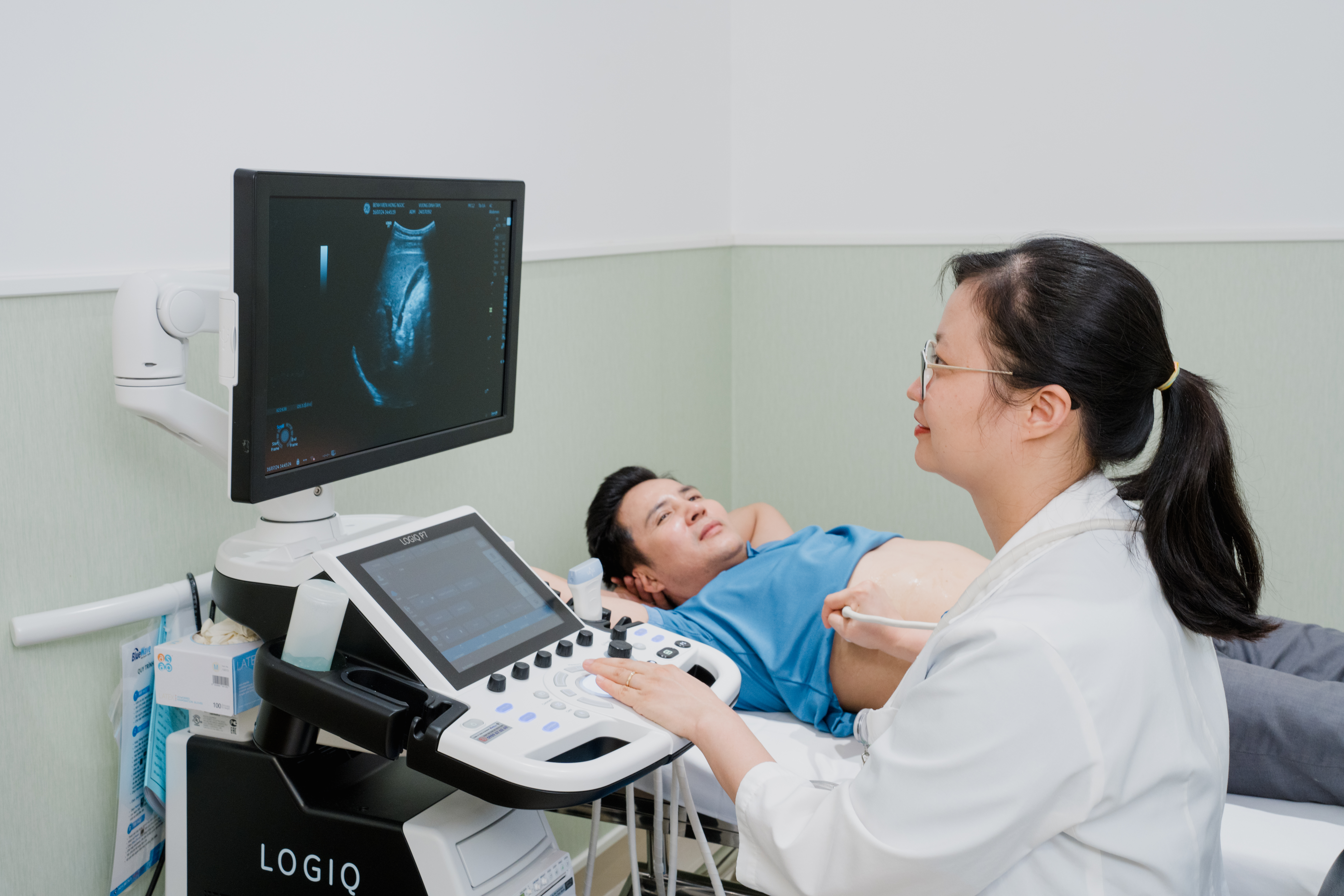
- Imaging studies: Liver ultrasound is the first-line diagnostic method, capable of detecting abscesses as small as a few millimeters. CT scan or MRI provides detailed information on the number, location, and size of the abscesses.
- Specific diagnostic tests: Stool or serological tests can detect Entamoeba histolytica infection, while pus cultures help identify bacterial or fungal pathogens.
Treatment of liver abscess
The treatment of liver abscess requires a combination of medication, drainage procedures, and surgery in selected cases.
Medical treatment
- This approach is indicated for most patients in the early stage or with small abscesses. Broad-spectrum antibiotics are administered initially and later adjusted based on culture and sensitivity results.
- For amoebic liver abscess, physicians prescribe tissue-acting amoebicides (such as metronidazole) in combination with luminal amoebicides to prevent recurrence.
- Medical therapy helps control infection, prevent abscess expansion, and reduce the risk of complications.
Percutaneous drainage
- When the abscess is larger than 5 cm or located close to the liver capsule with risk of rupture and does not respond to antibiotics, the physician will perform ultrasound- or CT-guided percutaneous drainage.
- This minimally invasive procedure is safe and highly effective, helping to rapidly relieve symptoms and shorten hospital stay.
- After drainage, patients must continue antibiotic therapy to ensure complete infection control.
Surgical treatment
- This treatment is indicated when the abscess has ruptured, infection has spread, or the location and structure of the abscess are too complex for drainage.
- Surgery allows complete removal of the abscess, cleaning of the abdominal or thoracic cavity if rupture has occurred, and helps prevent further complications.
- It is an invasive procedure, performed only when absolutely necessary to save the patient’s life.
The duration of liver abscess treatment depends on the size and condition of the abscess as well as the patient’s overall health status. Typically, physicians prescribe a combination of broad-spectrum antibiotics and medical therapy for 4–6 weeks. In addition, depending on the characteristics of the abscess, the doctor may recommend needle aspiration or percutaneous drainage to facilitate recovery.
At Hong Ngoc General Hospital, a team of highly qualified and experienced hepatology specialists provides accurate diagnosis and effective treatment for liver diseases, including rapid identification of the cause and stage of liver abscess.
- Dr. Dang Thi Kim Oanh, MD, PhD – Senior Hepatology Specialist: Over 40 years of experience at Bach Mai Hospital, recognized as one of Vietnam’s leading experts in hepatobiliary diseases.
- Dr. Le Thi Van Anh, MSc – Gastroenterology and Hepatology Specialist: More than 30 years of experience at the Gastroenterology and Hepatology Center, Bach Mai Hospital; extensively trained in digestive and hepatobiliary disease management, interventional endoscopy, and ultrasound-guided procedures.
Contact the hotline to schedule a liver abscess consultation with specialists at Hong Ngoc General Hospital: 0911 908 856
_2.jpg)
Is liver abscess contagious?
Liver abscess is infectious but not spread through air or casual contact. A liver abscess caused by liver flukes is transmitted through eating raw aquatic vegetables containing larvae. An amoebic liver abscess spreads via the fecal–oral route due to poor hygiene or contaminated food and water. Patients should wash hands thoroughly after using the toilet and before eating to prevent infection.
How to prevent liver abscess?
Prevention mainly relies on improving food and water hygiene and effectively managing underlying medical conditions.
- Eat well-cooked food and drink safe water: Avoid raw or undercooked foods, wash vegetables and fruits thoroughly, and drink boiled or properly filtered water.
- Maintain good personal hygiene: Wash hands regularly before meals and after using the toilet to reduce the risk of amoebic infection.
- Treat biliary and intestinal diseases early: Conditions such as cholangitis or other digestive disorders should be treated completely to prevent liver abscess formation.
- Manage underlying conditions: Individuals with diabetes, cirrhosis, or weakened immunity should have regular health check-ups to detect liver abnormalities early.
Frequently asked questions about liver abscess
Can liver abscess be cured?
Yes. If detected early and treated properly with antibiotics or antiparasitic drugs, along with fluke treatment and pus drainage when necessary, patients can fully recover.
Is liver abscess contagious?
It is not transmitted through casual contact or air, but amoebic liver abscess can spread via the fecal–oral route in cases of poor hygiene.
Can liver abscess spread to other organs?
Yes. If the abscess ruptures or is left untreated, infection may spread to the abdominal cavity, lungs, pleura, or pericardium, causing serious complications.
How long does liver abscess treatment take?
Typically about 4–6 weeks for medical therapy; if drainage or surgery is required, the hospitalization and recovery period may be longer.
What diet and lifestyle should patients follow for recovery?
Eat high-protein, fiber-rich foods, avoid raw or oily foods and alcohol, maintain good hygiene, and strictly follow medical advice to protect the liver and promote healing.
(*) Depending on each patient’s physical condition and disease status.
Note: The information provided in this article by Hong Ngoc General Hospital is for reference only and should not replace professional medical diagnosis or treatment. Patients should not self-medicate. To accurately determine their condition, they should visit a hospital for direct examination, diagnosis, and personalized treatment planning by qualified physicians.
Gastroenterology Center – Hong Ngoc General Hospital
- Hong Ngoc Phuc Truong Minh General Hospital – No. 8 Chau Van Liem, Tu Liem District, Hanoi
- Hong Ngoc General Hospital – 55 Yen Ninh, Ba Dinh District, Hanoi
- Hong Ngoc Tasco Long Bien Clinic – 3rd Floor, Tower B, Tasco Megamall, 07–09 Nguyen Van Linh, Viet Hung, Hanoi
Hotline: 0911 908 856 – 0932 232 016Email: trungtamtieuhoa@hongngochospital.vn
Stay updated with useful health information and special offers from the Gastroenterology Center – Hong Ngoc General Hospital.