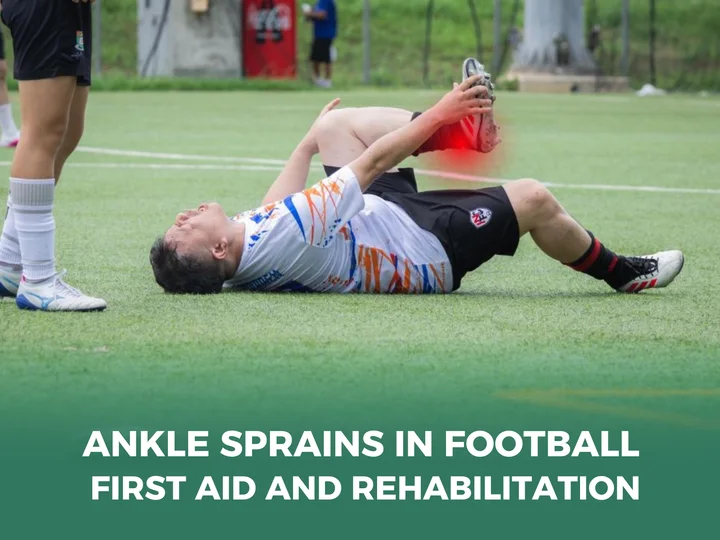




An ankle sprain can occur during running after a single misstep off the edge of the road, stepping onto an uneven surface or landing awkwardly. The injury may not only interrupt the training session but also affect the runner’s training plan and ability to return to running if the ankle is not fully rehabilitated. This article explains how to distinguish an ankle sprain from other injuries with similar symptoms, manage the injury while out on a run, progress safely from walking to running and reduce the risk of recurrence.
Quick answer: If the ankle rolls while running, stop immediately, move away from any hazardous area, limit weight bearing, apply ice, use moderate compression and elevate the leg. Do not attempt to complete the training session or manipulate the ankle. Seek prompt medical attention if walking is impossible, there is sharp pain over a bone, the ankle appears deformed, or the foot feels numb or cold.

Medical review: Hoang Van Ban, MD, MSc, Department of Orthopedic Trauma and Neurosurgery, Hong Ngoc Phuc Truong Minh General Hospital.
Article summary
- An ankle sprain may occur while running after stepping into a pothole, misstepping off the edge of the road or landing awkwardly.
- If an ankle sprain occurs, stop running immediately and do not attempt to complete the planned distance.
- Seek medical attention if walking is impossible, there is sharp pain over a bone, the ankle appears deformed, or the foot feels numb or cold.
- Rehabilitation should begin with walking before progressing to slow running on a flat surface.
- Return to running only when the ankle is pain free, no longer swollen, sufficiently strong and able to maintain good balance.
Why are runners prone to ankle sprains?
An ankle sprain occurs when the foot rolls or twists beyond its normal range, stretching or tearing the ligaments surrounding the joint. The injury commonly occurs when a runner steps into a pothole, onto a stone or tree root, missteps off the edge of a pavement, or lands awkwardly on the outer edge of the foot.
Trail runners face a higher risk because of uneven, slippery and steep terrain. As the leg muscles become fatigued, balance and the ability to adjust each step quickly also decline.
The risk of an ankle sprain increases when:
- A previous ankle injury has not fully recovered.
- The muscles surrounding the ankle are weak or balance is poor.
- Running distance or speed is increased too quickly.
- The shoes have worn or slippery soles or are unsuitable for the terrain.
- The runner continues exercising despite fatigue.
To reduce the risk, runners should watch the running surface, slow down when descending slopes, increase training intensity gradually and choose appropriate footwear. Single leg balance exercises, heel raises and resistance band exercises can also improve ankle strength and stability.

Is ankle pain after running always caused by a sprain?
Ankle pain after running can have several causes and is not always due to a sprain. The pain may involve the ligaments, tendons or bones. To help identify the possible cause, runners should consider whether the pain began after rolling the ankle, landing awkwardly or running excessively, while also noting its location and any accompanying symptoms.
Signs of an ankle sprain
An ankle sprain commonly occurs after the ankle suddenly rolls, twists or slips. The runner may experience sharp pain upon landing, followed by swelling or bruising around the ankle.
Common signs include:
- Pain around the ankle, usually on the outer side.
- Pain when standing, walking or rotating the foot.
- Swelling or bruising around the ankle.
- Limping or pain when standing and walking.
- A sensation that the ankle is weak, unstable or likely to give way.
The severity of pain does not always accurately reflect the extent of ligament damage. Runners should therefore not assess the severity of an ankle sprain solely based on whether they can still walk.

Injuries that may be mistaken for an ankle sprain
Several other injuries can cause ankle pain, swelling or restricted movement and may therefore be mistaken for a sprain. Common conditions to consider include:
- Stress fracture: Usually causes localized pain over a specific area of bone that gradually worsens over repeated running sessions. The person may not recall a clear episode of rolling the ankle but still experiences pain while running, standing or walking.
- Achilles tendon injury: Typically causes pain at the back of the heel or lower leg, together with weakness when pushing the foot against the ground. With a severe injury, the person may have difficulty or be unable to rise onto the toes of the affected foot.
- Peroneal tendon injury: Causes pain along the outer side of the ankle, particularly during running or when rotating the foot. If the pain is concentrated over a bone, progressively worsens or differs from the symptoms of a typical ankle sprain, the runner should seek medical evaluation to determine the cause.

What should you do if you roll your ankle during a run, and when should you seek medical attention?
Stop running immediately after rolling the ankle. Continuing to run may worsen the pain and place additional stress on the injured ligaments.
Immediate management while out on a run
First, move away from the road or any hazardous area. If walking increases the pain, sit down and ask someone for assistance. During an organized race, an injured runner should contact the medical team rather than attempt to continue to the finish line.
Once in a safe location:
- Limit standing and walking if the ankle is significantly painful.
- Loosen the shoelaces if the foot begins to swell.
- Apply ice for no more than 20 minutes at a time, with a thin towel between the cold pack and the skin.
- Apply moderate compression to support the ankle.
- Elevate the leg while sitting or lying down.
Loosen the bandage if the foot becomes numb, cold or discoloured. Do not attempt to manipulate or forcefully move the ankle, massage it vigorously, apply heat or place any remedies of unknown composition on the injured area.

Read more: How should an ankle sprain from sport be managed, and when should you seek medical attention?
Signs requiring prompt medical evaluation
Runners should seek medical attention if they experience any of the following:
- An inability to stand or walk approximately four steps.
- Sharp pain when pressure is applied over the ankle bones or bones of the foot.
- Visible ankle deformity, abnormal alignment or an open wound.
- Rapidly increasing swelling and bruising.
- Numbness, coldness, pallor or discolouration of the foot.
- A cracking or popping sound at the time of injury.
- Severe pain at the back of the heel and an inability to rise onto the toes.
- Symptoms that do not improve after initial care.
A doctor may recommend an X ray if the patient cannot stand or walk, or has marked tenderness over a specific area of bone. MRI is not required in every case but may be used when a tendon, cartilage or complex ligament injury is suspected, or when persistent pain does not improve.

A rehabilitation pathway from walking to running
Runners should not resume running as soon as the ankle becomes pain free. Rehabilitation should restore the joint’s range of motion, strength, balance and control of the foot during landing.
Restoring mobility, strength and balance
Once pain and swelling have subsided, the person may begin gently flexing and extending the ankle within a comfortable range. Weight bearing should increase gradually, beginning with standing on both feet and walking short distances before progressing towards a normal gait without limping.
Once walking becomes comfortable, exercises may include:
- Moving the foot in different directions against a resistance band.
- Performing heel raises on both legs before progressing to one leg.
- Shifting body weight forwards, backwards and from side to side.
- Standing on one leg on a stable surface.
- Stepping onto a low platform when the movement is pain free.
Strength and balance exercises help improve ankle stability. Running should not resume if brisk walking, using stairs or standing on one leg still causes pain.

Progressing from walking to running
Runners should return to running in the following sequence:
- Walk at a normal pace.
- Walk briskly on a flat surface.
- Alternate between walking and slow jogging.
- Jog continuously for a short period.
- Gradually increase the duration or distance.
- Increase speed once the ankle can tolerate the running distance.
- Return to hill running or trail running last.
Progress to the next stage only if the ankle remains pain free and does not swell, and the running gait is normal. If symptoms return during the run or on the following day, reduce the training load and return to the previous stage. The decision to resume running should be based on pain levels, range of motion, strength, confidence, balance and functional performance rather than solely on the number of days spent resting.

How can runners prevent recurrent ankle sprains?
People with a previous ankle sprain are at increased risk of recurrence if the muscles surrounding the ankle remain weak and balance has not been fully restored. Runners should therefore continue strengthening and stability exercises even after returning to running.
Running shoes should fit properly, hold the heel securely and provide traction suited to the running surface. Shoes should be checked regularly and replaced when the soles become worn, slippery or deformed, or when they no longer provide adequate stability. Replacement should not be based solely on the number of kilometres covered, as durability also depends on the terrain, body weight and running style.
While running, watch for potholes, pavement edges and other obstacles. Slow down and shorten the stride when running downhill or on wet surfaces. Runners who have recently recovered should begin on flat surfaces before returning to trail terrain.
Runners should:
- Increase distance and speed gradually.
- Avoid increasing distance, speed and terrain difficulty at the same time.
- Stop the training session if the ankle becomes painful, weak or unstable.
- Continue heel raises, resistance band exercises and single leg balance exercises.
- Warm up the ankle before running.
An ankle brace or supportive taping may benefit some runners with a history of sprains, but these measures do not replace strength and balance rehabilitation exercises.

Assessment and rehabilitation of ankle sprains at Hong Ngoc General Hospital
Runners should seek medical evaluation if they experience severe pain, difficulty walking, marked pain around the ankle, or a sensation that the ankle is unstable or likely to give way. At the Department of Orthopedic Trauma and Neurosurgery, Hong Ngoc Phuc Truong Minh General Hospital, doctors assess the location of pain, degree of swelling, range of motion and joint stability. If a fracture or associated injury is suspected, the doctor may recommend an X ray, MRI or another appropriate imaging examination.
In addition to injury treatment, patients may receive coordinated rehabilitation at the Department of Physical Therapy and Rehabilitation to optimize treatment outcomes and restore mobility. Exercises are selected according to the individual condition and focus on improving range of motion, muscle strength, balance and ankle control.
For runners, rehabilitation should also address gait, single leg balance, landing mechanics and the ankle’s response to gradually increasing speed. Patients should not return to running independently while the ankle remains painful, becomes swollen after physical activity or continues to give way.

Frequently asked questions about ankle sprains while running
How long after an ankle sprain can you return to running?
The timing of return to running depends on the severity of the injury and the progress of recovery. Runners should return only when they can walk briskly, use stairs, stand on one leg and jog without pain or swelling. Severe sprains require a longer rehabilitation period, and exercises should be performed under medical guidance.
Should you seek medical attention if you can still walk after rolling your ankle?
The ability to walk does not completely rule out a small fracture or ligament injury. Runners should seek medical attention if they experience sharp pain, limping, increasing swelling or an inability to walk approximately four normal steps.
Should you run on a flat surface or a trail after an ankle sprain?
Begin running on a flat, dry surface with few obstacles. Hills and trails should be reintroduced only when the ankle has regained sufficient strength and balance and does not become painful or swollen after light running sessions.
Should you wear an ankle brace when returning to running?
An ankle brace may support runners with a history of sprains or residual joint instability. It should be used under the guidance of a doctor or rehabilitation specialist and should not be used to continue running while the ankle remains painful.
Conclusion
An ankle sprain while running requires immediate cessation of activity, early management and staged rehabilitation to reduce the risk of persistent instability and recurrence. Return to training only when brisk walking, jogging and balance activities can be performed without pain, limping or increased swelling. Runners with severe pain, an inability to bear weight, marked tenderness over a bone, ankle deformity or persistent joint instability should seek assessment at Hong Ngoc General Hospital for appropriate evaluation and rehabilitation guidance.
Medical disclaimer: This article is intended for informational purposes only and does not replace diagnosis or treatment prescribed by a doctor. Seek prompt medical attention if walking is impossible, the ankle is deformed, the foot becomes numb, cold or discoloured, pain or swelling worsens, or symptoms do not improve after initial care.
References
- American Academy of Orthopaedic Surgeons, Sprained Ankle.
- American College of Radiology, Appropriateness Criteria Acute Trauma to the Ankle.
- Martin RL và cộng sự, Lateral Ankle Ligament Sprains Revision 2021.
- Smith MD và cộng sự, Return to Sport Decisions After an Acute Lateral Ankle Sprain Injury.