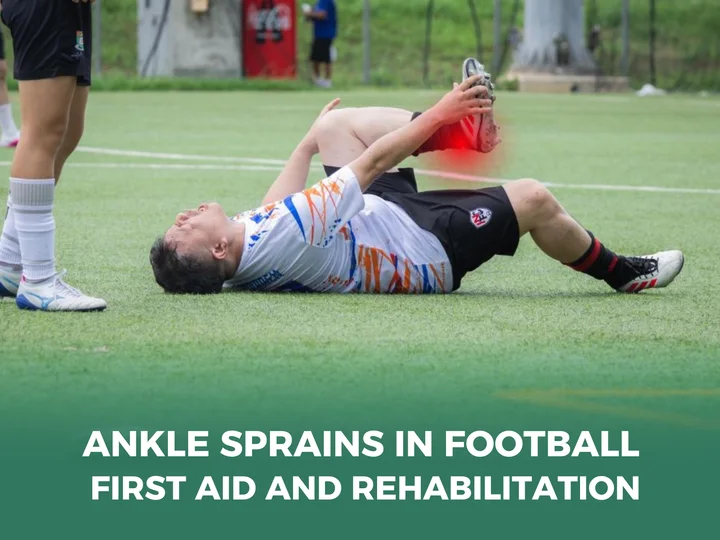




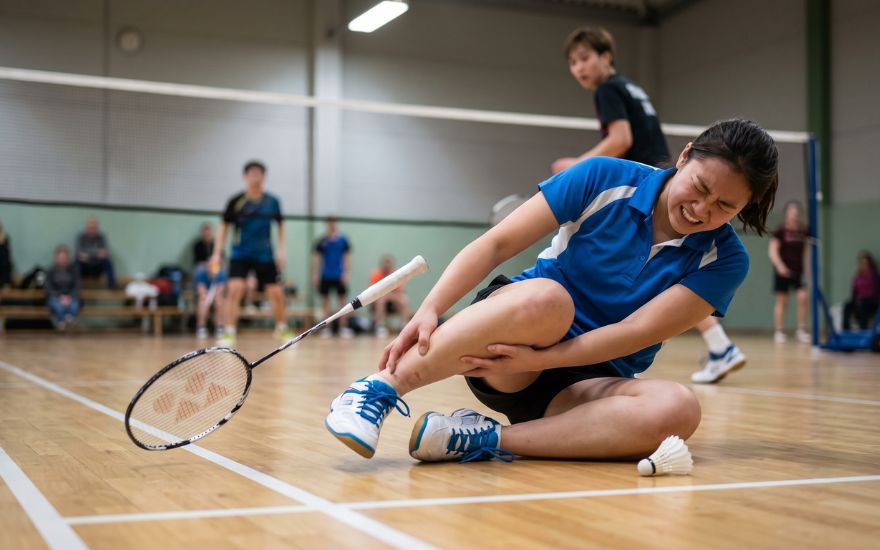
An ankle sprain in badminton commonly occurs when a player lunges, moves diagonally backwards, changes direction or lands after a jump. The injury may be mild but can also involve a ligament tear, fracture or tendon injury. Players should therefore stop playing, provide appropriate initial care and monitor for warning signs. Return to badminton only after the injury has fully healed, ankle movement is smooth and flexible, and no pain remains.
Quick answer: After rolling the ankle, stop playing, limit weight bearing, apply ice through a towel for no more than approximately 20 minutes at a time, use moderate compression and elevate the leg. Do not attempt to manipulate the ankle, massage it vigorously or continue playing to test it. Seek prompt medical attention if walking is impossible, there is sharp pain over a bone, the ankle appears deformed, the foot feels numb or cold, or severe pain develops at the back of the heel.
Medical review: Hoang Van Ban, MD, MSc, Department of Orthopedic Trauma and Neurosurgery, Hong Ngoc Phuc Truong Minh General Hospital.
Article summary
- Players are more likely to roll an ankle when lunging too far, moving diagonally backwards or landing off balance.
- Stop playing immediately after the injury and do not attempt to continue for a few more rallies.
- Severe pain over a bone, an inability to bear weight or visible deformity requires prompt medical attention.
- Rehabilitation should progress from ankle control exercises to shadow footwork, four corner movement drills and jumping.
- Appropriate footwear, a dry court and proper foot placement help reduce the risk of reinjury.
When do ankle sprains commonly occur in badminton?
Badminton requires repeated acceleration, sudden stops and rapid changes of direction. Many movements are performed on one leg while the body continues moving. If the foot is placed without adequate stability, the ankle may roll inward, stretching or tearing the ligaments on its outer side.
Four common situations include:
- Lunging towards the net: The player lunges too far or lands on the outer edge of the foot.
- Moving diagonally backwards or changing direction: The foot has already contacted the court while the body continues to rotate, creating a twisting force through the ankle.
- Jumping and landing: The player lands on one leg, loses balance or places the foot without sufficient stability.
- Attempting to retrieve the shuttle when fatigued: The body’s centre of gravity moves beyond the supporting leg while reaction time and ankle control decline.
Studies of badminton injuries have identified the lower limbs as a commonly affected area. Video analysis of match play also suggests that lateral backward movement may lead to an ankle roll when the joint tilts excessively. Fatigue and foot placement may alter the load placed on the ankle during badminton specific movements.
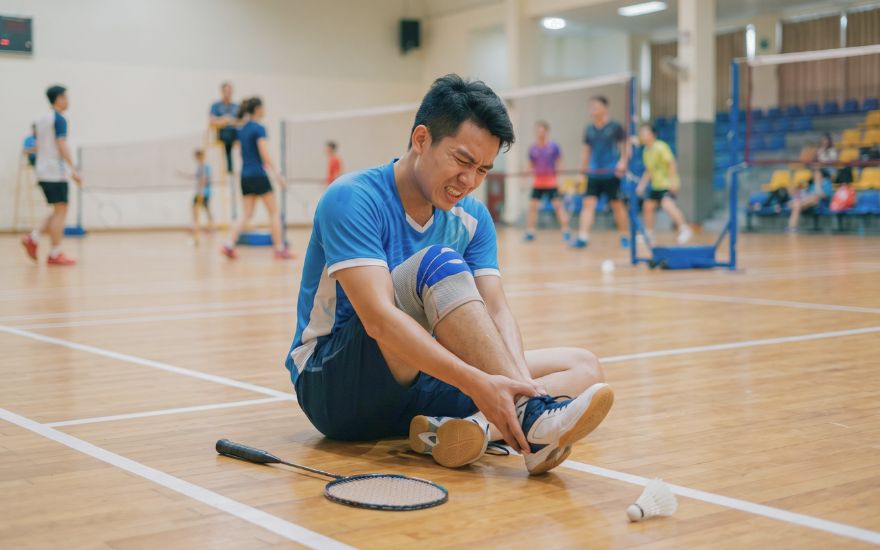
After the injury, players commonly experience pain around the ankle, swelling, bruising, restricted movement or difficulty bearing weight on the affected leg. Some can still walk but feel that the ankle is weak, unstable or likely to give way when turning.
What should you do immediately after rolling your ankle on a badminton court?
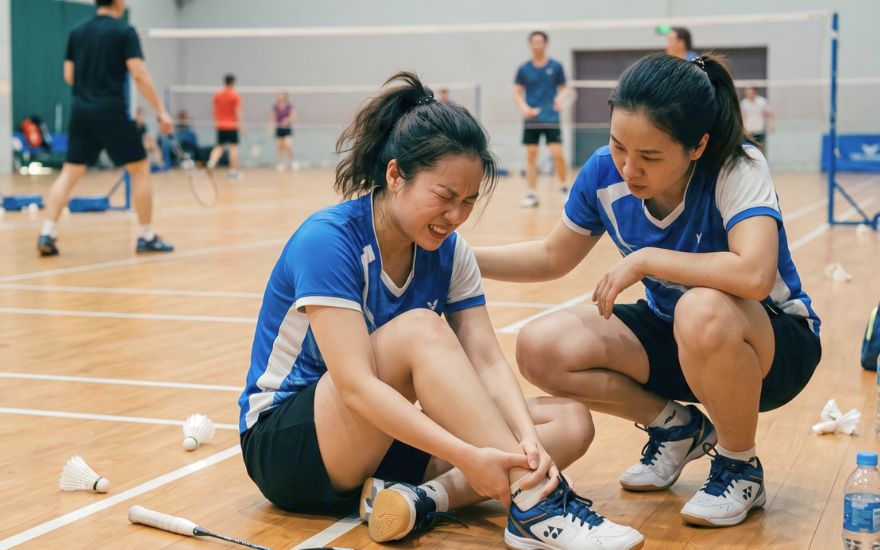
Stop playing as soon as the ankle rolls and becomes painful. Do not attempt to continue for a few more rallies, as lunging, changing direction and moving backwards place considerably greater stress on the ankle than ordinary walking.
During the initial stage:
- Sit or lie down in a safe location: Do not attempt to stand immediately if the ankle is severely painful or cannot support your body weight.
- Leave the court with assistance: Ask someone to help you or use an appropriate mobility aid if needed. Avoid hopping off the court on one leg.
- Inspect the injured area: Check for deformity, rapid swelling, pain over a bone, numbness or changes in foot colour.
- Protect the ankle and control pain and swelling: Limit movement, apply ice through a towel, use moderate compression and elevate the leg.
- Monitor the injury over the following hours: Pay attention to your ability to walk, the location of pain and the degree of swelling.
Do not pull, twist or attempt to manipulate the ankle. While pain and swelling persist, avoid vigorous massage, soaking the ankle in hot water or returning to the court to test its function. The American Academy of Orthopaedic Surgeons (AAOS) advises against returning to sport too soon, as an ankle that has not fully recovered is more susceptible to reinjury.
Read more: How should an ankle sprain from sport be managed, and when should you seek medical attention?
Injuries that may be mistaken for an ankle sprain
Not all ankle pain following a jump or change of direction is caused by a typical ankle sprain. Players should not attempt to identify the injury solely from the degree of swelling or their ability to walk.
Fracture around the ankle or foot
A fracture can cause pain, swelling and bruising similar to a sprain. Localized pain over a bone, an inability to bear weight, deformity or significant swelling requires clinical assessment and appropriate diagnostic imaging.
High ankle sprain
A high ankle sprain, also known as a syndesmotic ankle sprain, involves the ligaments connecting the lower ends of the tibia and fibula. Pain is usually located above the ankle, particularly when rotating the foot or taking a long step. This injury may require a longer recovery period than a typical lateral ankle sprain.
Achilles tendon injury
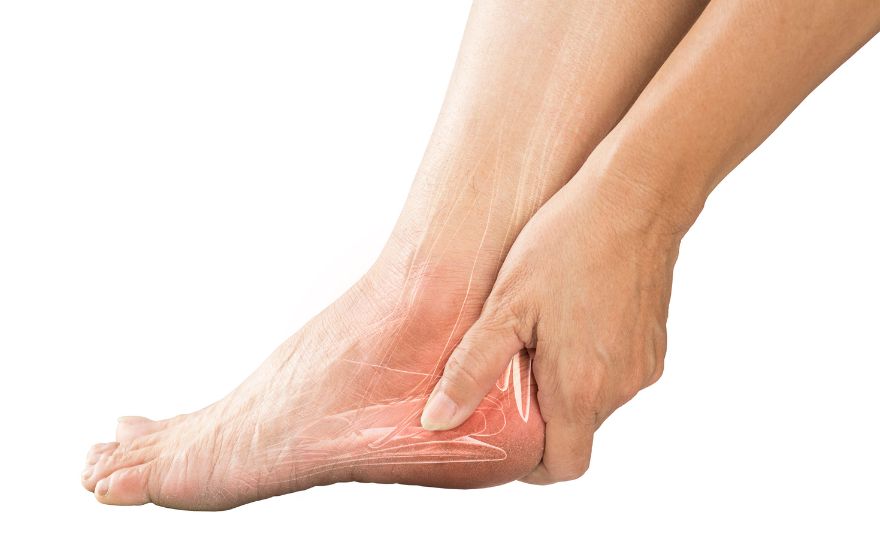
Pain at the back of the ankle or near the heel following a jump is not typical of a lateral ligament sprain. If the player hears a popping sound, experiences severe pain near the heel, has difficulty walking or cannot rise onto the toes of the affected foot, prompt medical evaluation is required to rule out an Achilles tendon tear.
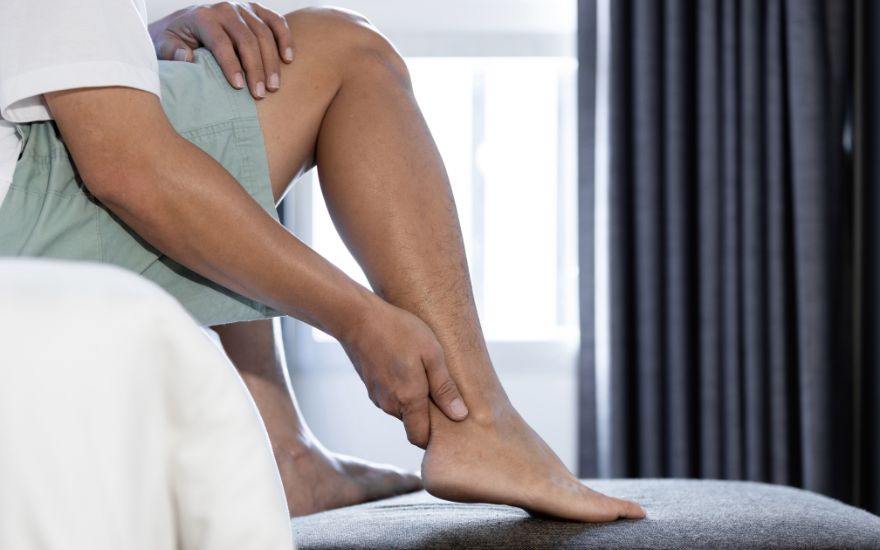
During the examination, the doctor will ask about the position of the foot at the time of injury and assess the location of pain, degree of swelling, range of motion, weight bearing capacity and joint stability. Depending on the symptoms and suspected injury, an X ray, ultrasound or MRI may be recommended.
When should a badminton player seek medical attention?
Seek prompt medical attention after rolling the ankle if standing or walking more than a few steps is impossible, there is severe pain over a bone, the ankle appears deformed, or the joint is markedly unstable. Numbness, coldness, pallor or bluish discolouration of the foot also requires timely medical assessment.
Medical evaluation is recommended if:
- Pain or swelling increases rapidly after the injury.
- Pain is located above the ankle.
- There is severe pain at the back of the heel or an inability to rise onto the toes.
- The ankle feels unstable and frequently gives way.
- Symptoms do not improve after several days.
- Pain and swelling return whenever light movement drills are attempted.
- The player has sustained repeated sprains on the same side.
Restoring movement before returning to badminton
Players should not resume training as soon as normal walking becomes possible. Rehabilitation should progress gradually from ankle control to badminton specific movement, jumping and full play.
Restoring weight bearing capacity and balance
Once pain has subsided and weight bearing becomes more comfortable, the person may begin gentle ankle dorsiflexion and plantar flexion, shifting weight between both legs, walking short distances, performing heel raises and practising balance exercises. The aim is to restore range of motion, strength and joint control. If symptoms worsen after exercise, reduce the number of repetitions or the duration of weight bearing.

Practising low intensity shadow footwork
Shadow footwork simulates badminton movement patterns without hitting a shuttlecock. Players should begin on half a court at a slow pace using short steps. Drills may include the split step, lateral movement, moving forwards and returning to the central base position. Deep lunges, rapid backward movement and jumping should not yet be attempted at this stage.
Practising lunges and four corner court movement
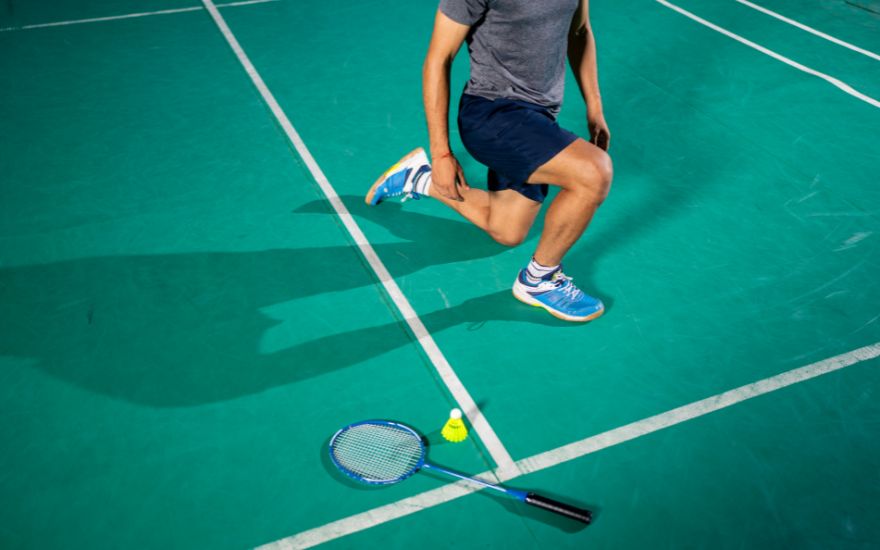
Once the player can balance steadily on one leg and perform shadow footwork without significant pain, they may progress to lunges, lateral movement and moving backwards towards the rear court. Foot and knee alignment and the body’s centre of gravity should remain controlled. Avoid reaching too far with the leg, as this may move the body beyond the supporting leg’s stable base.
Practising jumps, smashes and competitive play
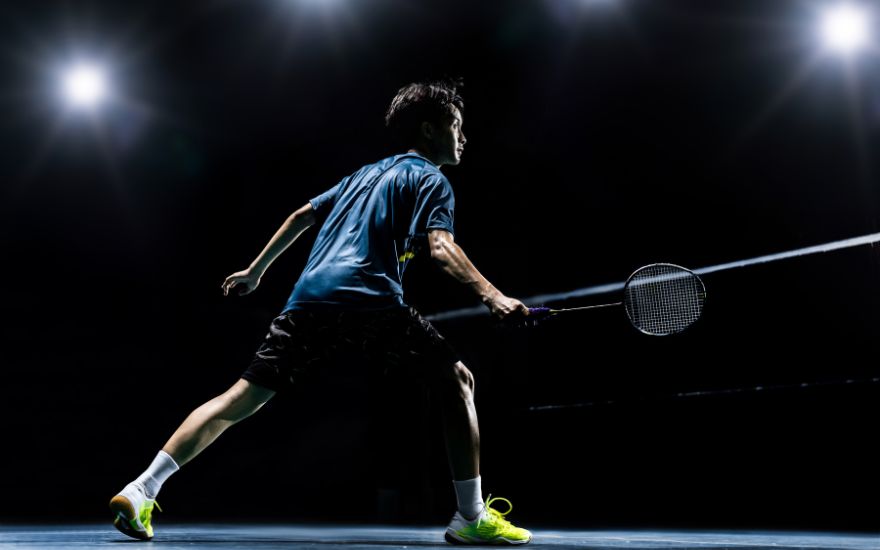
Players should begin jump training only after they can move to all four corners of the court without pain or ankle instability. Start with low jumps and two-footed landings before gradually progressing to more challenging drills. Stroke practice can progress from stationary hitting and movement within a limited area to rear-court movement, jump smashes and increasingly intense competitive play.
There is no single recovery timeline that applies to everyone. Recovery depends on the severity of the injury, any history of previous ankle sprains, weight-bearing capacity and response to rehabilitation.
When can players return to badminton after an ankle sprain?
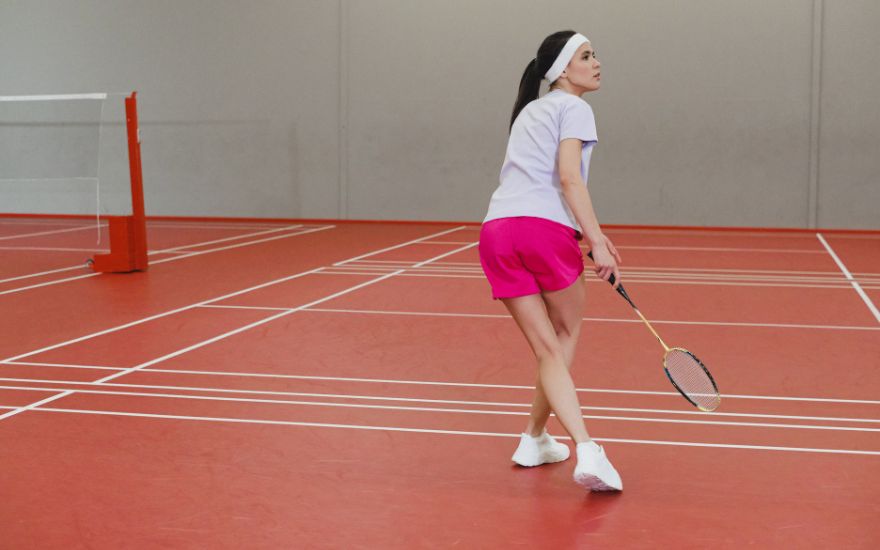
Players should return to competitive play only when the ankle can meet the physical demands of badminton, rather than simply after a set number of days. Return-to-sport decisions should consider pain, range of motion, strength, balance, perceived ankle stability and the ability to perform sport-specific movements.
Before returning to competitive play, players should be able to:
- Walk, climb stairs and balance on one leg without significant pain.
- Achieve an ankle range of motion comparable to the uninjured side.
- Perform heel raises, jump in place and land with good control.
- Move forwards, backwards, sideways and diagonally without the ankle giving way.
- Lunge to both sides and return to the centre position.
- Complete four-corner shadow footwork at near-competition speed.
- Perform jump smashes and land without pain or loss of confidence.
- Complete a full training session without worsening symptoms afterwards or the following morning.
Players should stop training if pain, swelling or instability returns. Returning to competition too soon may increase the risk of recurrent sprains and persistent ankle instability.
How can recurrent ankle sprains be prevented when playing badminton?
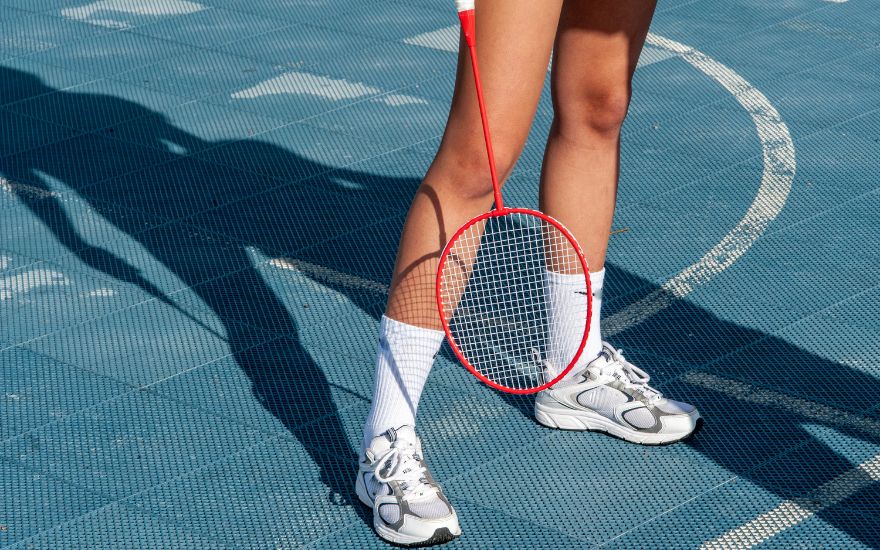
Players should combine improvements in footwork technique and ankle strength with safe court conditions. Wearing an ankle brace or changing footwear alone is not enough to protect the joint over the long term if balance has not been fully restored.
- Maintain strength and balance: Continue performing heel raises, single-leg balance exercises, weight shifts and controlled jumping drills even after the ankle is pain-free.
- Improve footwork technique: Use an appropriate stride length when lunging, move diagonally backwards with proper timing and return to the centre position after each rally. Avoid reaching for the shuttlecock once the body’s centre of gravity has moved beyond the supporting leg.
- Manage training intensity and fatigue: Increase training duration, speed and frequency gradually. Reduce the intensity when the leg muscles become fatigued, footwork slows or balance deteriorates.
- Check footwear and court conditions: Choose well-fitting badminton or indoor court shoes that support lateral movement and have unworn soles. Wipe away water or sweat from the court and keep equipment out of the playing area.
Ankle sprain assessment and rehabilitation at Hong Ngoc General Hospital
Patients experiencing severe pain, muscle weakness or ankle instability can seek assessment at the Department of Orthopedic Trauma and Neurosurgery, Hong Ngoc Phuc Truong Minh General Hospital. The doctor will assess the mechanism of injury, pain location, mobility and joint stability, and may recommend diagnostic imaging if a fracture or associated injury is suspected.
Patients requiring rehabilitation may receive coordinated care from the Department of Physical Therapy and Rehabilitation. Hong Ngoc General Hospital’s sports injury treatment service manages conditions including ankle sprains, ankle dislocations and mobility limitations, with rehabilitation exercises tailored to each patient’s condition.

Frequently asked questions about ankle sprains in badminton
When can players begin shadow footwork?
Players may begin shadow footwork once they can walk normally, bear weight comfortably and maintain balance without pain. Start slowly on half the court, then gradually increase the movement range and lunge depth.
Should players wear ankle tape or a brace when playing badminton?
Ankle tape or a brace may provide additional support for players with a history of ankle sprains, particularly during the early stages of returning to training. Players should select an appropriate product, avoid applying it too tightly and continue strength and balance exercises under professional guidance.
Can running shoes be worn for badminton?
Running shoes are primarily designed for forward movement, whereas badminton involves frequent stops and lateral changes of direction. Players should choose well-fitting badminton or indoor court shoes that provide lateral stability and have unworn soles.
Is pain at the back of the heel after jumping an ankle sprain?
Pain at the back of the heel is not typical of a lateral ankle ligament sprain. Players should seek prompt medical assessment if they hear a popping sound, experience severe pain near the heel, have difficulty walking or cannot stand on tiptoe, as these symptoms may indicate an Achilles tendon injury.
Conclusion
An ankle sprain during badminton can cause more than temporary pain and swelling. It may also lead to joint instability and an increased risk of recurrence if the player returns to the court too soon. After rolling the ankle, the player should stop immediately, provide appropriate initial care and seek medical attention if they cannot bear weight, experience pain over a bone, notice ankle deformity or have severe pain at the back of the heel. Fully restoring range of motion, strength, balance and badminton-specific footwork can support a safer return to the court, help maintain performance and reduce the risk of persistent injury.
Medical disclaimer: This article is for informational purposes only and does not replace medical diagnosis or treatment advice. Patients should not attempt to manipulate the ankle, use medication for prolonged periods without medical advice or return to badminton before the joint has fully recovered.
References
- Stepper B và cộng sự. Systematic review on badminton injuries: incidence, mechanism, location, type, severity and risk factors, 2025.
- Fong DTP và cộng sự. A lateral ankle sprain during a lateral backward step in badminton, 2021.
- He Z và cộng sự. Impact of specialized fatigue and backhand smash on ankle biomechanics, 2024.
- Wen J và cộng sự. Effects of foot rotation on ankle control and injury risk during badminton lunge landings, 2025.
- American Academy of Orthopaedic Surgeons. Sprained Ankle.
- American College of Radiology. Acute Trauma to the Ankle.