



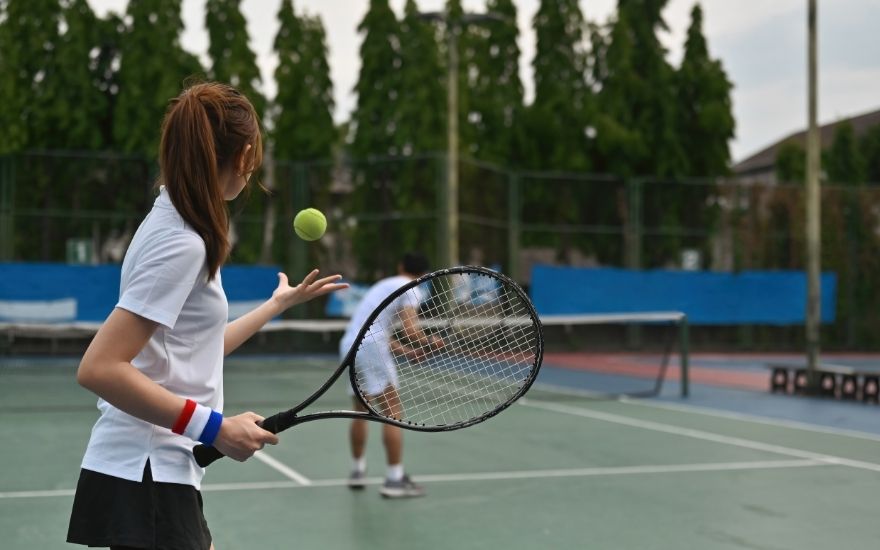
Shoulder pain when playing tennis may develop when the shoulder performs repetitive movements, particularly during serves and overhead shots. When pain occurs, players should reduce training intensity and limit movements that worsen the discomfort. They should return to the court only when the shoulder moves comfortably, pain has substantially decreased and tennis strokes can be performed almost normally.

Medical consultation: Hoang Van Ban, MSc, MD, Department of Orthopaedics, Trauma Surgery and Neurosurgery, Hong Ngoc Phuc Truong Minh General Hospital.
Medical disclaimer: Shoulder pain when playing tennis can arise from various conditions, so the cause cannot be accurately determined based on pain alone. Players should seek prompt medical evaluation if pain occurs after a fall or forceful impact, the shoulder becomes swollen or appears abnormal, the arm cannot be raised, arm movement becomes more difficult than usual, numbness radiates down the arm or shoulder function is noticeably reduced.
Why does playing tennis commonly cause shoulder pain?
When playing tennis, the shoulder is repeatedly involved in arm elevation, shoulder rotation and racket swinging. Serving, in particular, places considerable stress on the rotator cuff tendons, the muscles around the shoulder blade and the structures that stabilize the shoulder joint. Repeated serves or high intensity activity can overload the shoulder and cause pain.
Shoulder pain may also occur when players return to the court after a break and resume high intensity training before the muscles around the shoulder have had sufficient time to adapt. In addition, poor coordination between the trunk, shoulder and arm during strokes can concentrate more force on the shoulder and lead to pain.

Common causes of shoulder pain in tennis players
Shoulder pain when playing tennis may be associated with various injuries involving the tendons, muscles, cartilage or shoulder joint. Physicians assess the cause and identify the affected structures based on the location of pain, movements that trigger symptoms, the degree of movement limitation and any history of injury.
Rotator cuff overuse or injury
The rotator cuff consists of a group of muscles and tendons surrounding the shoulder joint that help maintain stability during arm elevation and rotation. Repeated serving, overhead smashes or prolonged training can overload the rotator cuff tendons, leading to pain and inflammation. If the shoulder has sustained an injury or the tendons have developed degenerative changes, the damage may become more severe and result in a partial or complete tear.
Pain commonly occurs at the front or outer side of the shoulder and becomes more noticeable when serving, raising the arm overhead, reaching behind the back or performing overhead shots. With more severe tendon damage, players may have difficulty raising the arm, experience reduced power during strokes, develop increased pain at night or find it difficult to lie on the affected shoulder. If symptoms persist or shoulder movement becomes increasingly difficult, patients should seek medical evaluation to determine the extent of the injury and receive appropriate treatment.
Injury to the biceps tendon or shoulder labrum
The long head of the biceps tendon is located at the front of the shoulder joint and contributes to arm elevation, rotation and control during tennis strokes. When this tendon becomes irritated or injured, players commonly experience pain at the front of the shoulder, particularly when raising the arm, rotating the shoulder or performing powerful strokes.
The labrum is a rim of tissue surrounding the shoulder socket that helps maintain joint stability during movement. When the labrum is injured, players may experience deep pain within the shoulder, a catching sensation or clicking sounds during movement. However, these symptoms alone are not sufficient to identify the exact injury, so medical evaluation is recommended if they persist.

Shoulder instability or injury after a fall
Falling onto an outstretched hand, landing directly on the shoulder or having a previous shoulder dislocation can damage the structures that stabilize the shoulder joint. Players may feel that the shoulder is loose or unstable, experience pain when raising the arm overhead or feel as though the joint is about to slip out during a serve.
If severe shoulder pain, visible deformity or near complete loss of movement occurs after a fall, the player should stop playing and seek prompt medical evaluation. Persistent shoulder instability also requires assessment, as continuing to train before the joint is stable may increase the risk of recurrent injury.

What should tennis players do when experiencing shoulder pain?
When shoulder pain begins, players should temporarily stop movements that worsen the pain, particularly serving and overhead shots. If the shoulder remains mobile, complete immobilization is unnecessary. Gentle movement may be continued within a pain free range. Players should also reduce training frequency, playing time and exercise intensity to allow the shoulder to recover.
During the first few days after a minor impact, applying a cold pack may help reduce pain and swelling. Players should not continue serving if every swing causes pain, attempt to manipulate the shoulder joint themselves or use prescription medication without medical evaluation.
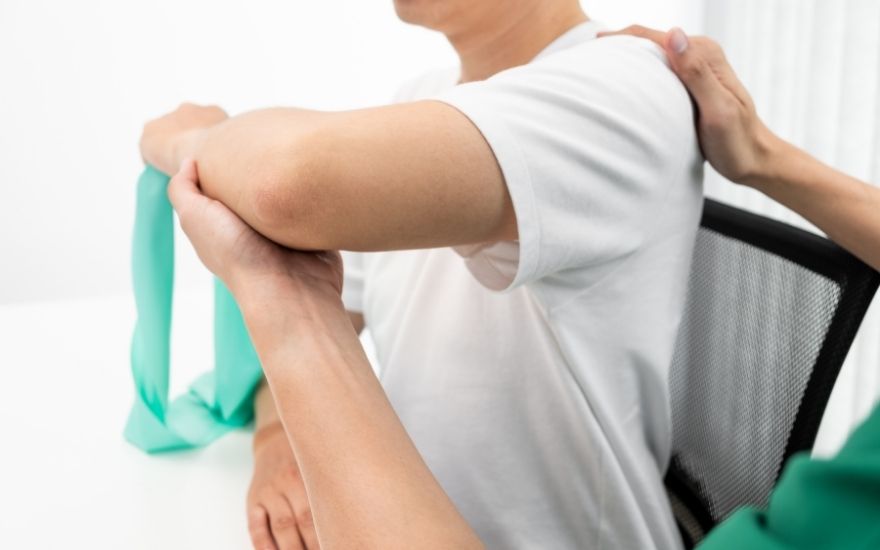
Once symptoms improve, rehabilitation exercises are needed to gradually restore shoulder range of motion and strength. Exercises should be selected according to the type of injury and each patient’s functional ability, with a focus on:
- Improving arm elevation and internal and external shoulder rotation.
- Strengthening the rotator cuff muscles.
- Improving shoulder blade control during arm elevation and overhead movements.
- Strengthening the trunk and legs to reduce stress on the shoulder during strokes.
- Gradually practising serves from lower to higher intensity before increasing the number of repetitions.
- Restoring shoulder strength through rehabilitation before returning to the court.
When does tennis related shoulder pain require medical evaluation?
Players should seek medical evaluation if shoulder pain does not improve after rest and reduced training intensity or if it recurs whenever they return to the court. Early assessment is also recommended when pain begins to affect sleep or daily activities, arm elevation becomes difficult or arm strength decreases noticeably.
Medical attention is particularly important if any of the following signs occur:
- Shoulder deformity after a fall or impact.
- Inability to raise or use the arm normally.
- Arm weakness after an injury.
- A sensation that the shoulder joint is loose or slipping, or a history of shoulder dislocation.
- Numbness, reduced sensation or weakness extending down the arm.
- Severe pain at night or progressively worsening pain.
- Pain that recurs immediately during serving or overhead shots.
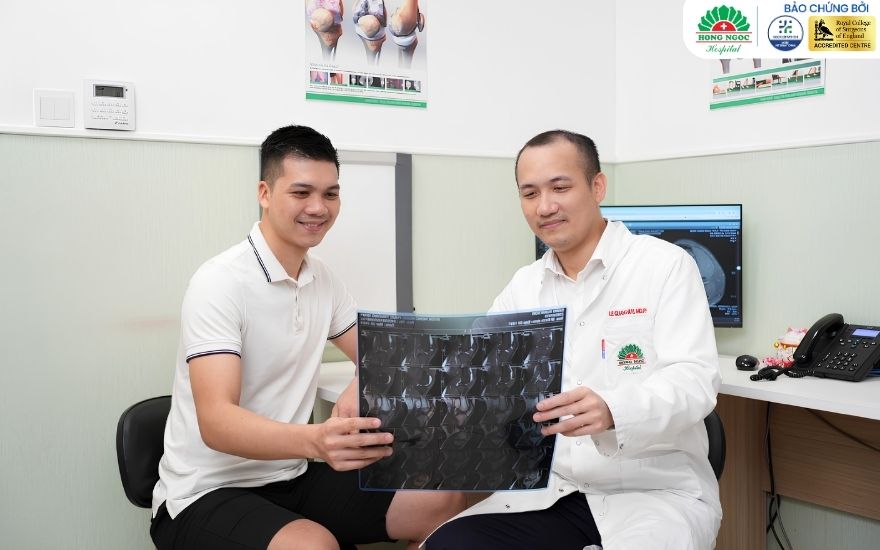
During the examination, the physician will review when the pain began, its location, movements that worsen it, recent training intensity and any history of injury. The physician will then assess the shoulder’s range of motion, strength and stability. Depending on the suspected injury, X rays, ultrasound or magnetic resonance imaging may be recommended to evaluate the bones, rotator cuff tendons, labrum and other structures surrounding the shoulder joint.

Shoulder evaluation and rehabilitation at Hong Ngoc General Hospital
Tennis players with persistent or recurrent shoulder pain or limited movement can seek medical evaluation at the Department of Orthopaedics, Trauma Surgery and Neurosurgery, Hong Ngoc Phuc Truong Minh General Hospital.
The department provides diagnosis and treatment for injuries and conditions affecting the muscles, bones, joints, tendons and ligaments. When an injury to the shoulder joint requires intervention, physicians may recommend shoulder arthroscopy to directly examine and treat the injury through small incisions while minimizing damage to the surrounding soft tissues.
Depending on the condition, care may be coordinated with the Department of Physical Therapy and Rehabilitation. Exercise programs are developed according to the patient’s pain level, shoulder mobility and actual strength, helping improve range of motion, restore muscle strength and support a gradual return to sports. Hong Ngoc also applies this coordinated approach to treatment and rehabilitation in the management of sports injuries.
Frequently asked questions about shoulder pain when playing tennis
Does shoulder pain after playing tennis indicate a rotator cuff tear?
Shoulder pain after playing tennis can result from various causes, including rotator cuff overuse, biceps tendon injury, labral injury or problems affecting other structures around the shoulder joint. A rotator cuff tear is only one possible cause. A physician needs to examine the shoulder and assess its mobility and strength to identify the injury.
Can I continue playing tennis if my shoulder is mildly painful?
If a movement worsens shoulder pain, players should temporarily stop that movement rather than continue training through the pain. If the pain is mild and shoulder movement remains normal, they may reduce playing time and intensity while temporarily avoiding serves and overhead shots. Training should be increased gradually only when shoulder movement becomes more comfortable and no pain occurs after playing.
When can I return to tennis after experiencing shoulder pain?
The timing of return depends on the cause and severity of the injury, so there is no fixed timeline for every player. Patients should resume training when shoulder mobility has been restored, strength has improved and tennis strokes can be performed without pain. When returning to the court, players should begin with light strokes and shorter sessions, then gradually increase intensity before resuming serves or normal competition.
Does shoulder pain when playing tennis require immediate MRI?
Not every case of shoulder pain requires immediate MRI. The physician will first assess the location of pain, range of motion, strength and signs of injury. Depending on the findings, X rays may be recommended to evaluate the bones, ultrasound to examine the tendons or MRI to assess the rotator cuff, labrum and other soft tissue injuries within the shoulder joint in greater detail.
Conclusion
Shoulder pain when playing tennis may be associated with overuse or injury to the structures surrounding the shoulder joint. When pain develops, players should reduce training intensity, temporarily stop movements that worsen symptoms and perform appropriate rehabilitation exercises.
If pain persists, repeatedly returns or is accompanied by arm weakness or difficulty raising the arm overhead, medical evaluation is recommended to identify the cause and provide appropriate treatment before returning to the court.
References
- American Academy of Orthopaedic Surgeons (AAOS). Common Shoulder Injuries.https://orthoinfo.aaos.org/en/diseases--conditions/common-shoulder-injuries/
- Desmeules F, et al. Rotator Cuff Tendinopathy Diagnosis, Nonsurgical Medical Care and Rehabilitation: A Clinical Practice Guideline. Journal of Orthopaedic & Sports Physical Therapy, 2025.https://pubmed.ncbi.nlm.nih.gov/40165544/
- American Academy of Orthopaedic Surgeons. Management of Rotator Cuff Injuries – Clinical Practice Guideline. 2025.https://www.aaos.org/quality/quality-programs/rotator-cuff/
- Saini SS, et al. Scapular Dyskinesis and the Kinetic Chain: Recognizing Dysfunction and Treating Injury in the Tennis Athlete. Current Reviews in Musculoskeletal Medicine, 2020.https://pmc.ncbi.nlm.nih.gov/articles/PMC7661674/
- Neuman BJ, et al. Rotator Cuff Injuries in Tennis Players. Current Reviews in Musculoskeletal Medicine, 2020.https://pmc.ncbi.nlm.nih.gov/articles/PMC7661672/