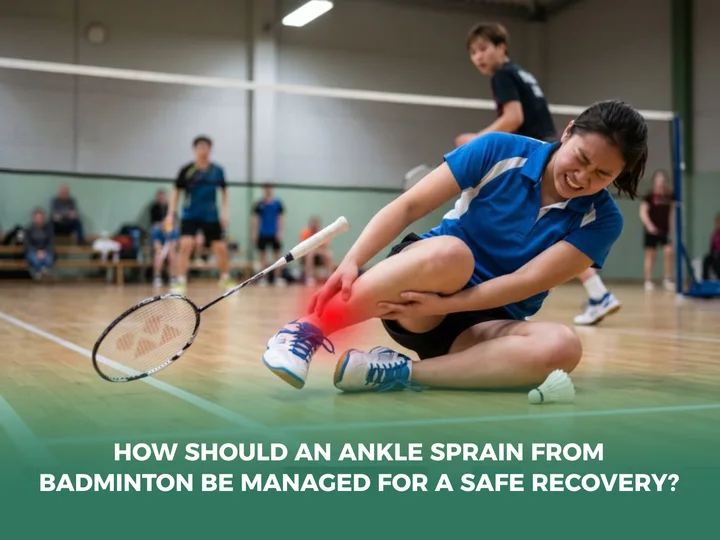



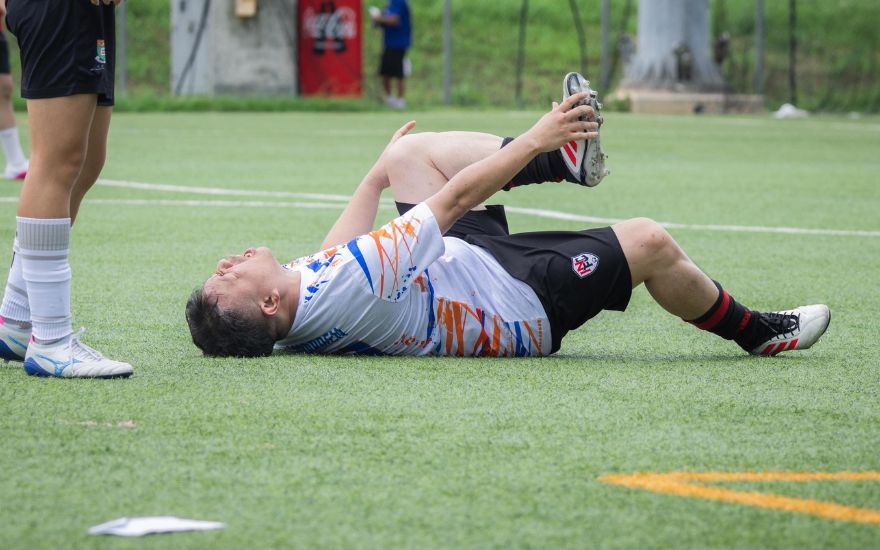
An ankle sprain in football commonly occurs when the foot rolls inward during a change of direction, landing or tackle. The player should stop immediately and protect the injured area, apply ice, use compression and elevate the leg during the first two to three days. This article explains how to manage the injury correctly on the pitch, restore function and determine when it is safe to return to training.
Medical review: Hoang Van Ban, MD, MSc, Department of Orthopedic Trauma and Neurosurgery, Hong Ngoc Phuc Truong Minh General Hospital.
Article summary
- Anyone who rolls an ankle should stop playing football immediately and should not attempt to run or continue the match.
- Seek prompt medical attention if weight bearing is impossible, there is sharp pain over a bone, or the ankle appears deformed.
- Gentle movement and gradually increased weight bearing should begin as symptoms allow, rather than maintaining prolonged immobilization.
- Return to the pitch only when the ankle is pain free, stable and able to meet functional testing criteria.
Causes and signs of an ankle sprain in football
An ankle sprain in football occurs when the foot rolls inward during a change of direction, pivot, tackle or landing. Injury may also occur after stepping on another player’s foot, planting the supporting foot without adequate stability, wearing footwear unsuitable for the playing surface, or continuing to play after the leg muscles have become fatigued. These situations may overstretch or tear the ligaments on the outer side of the ankle.
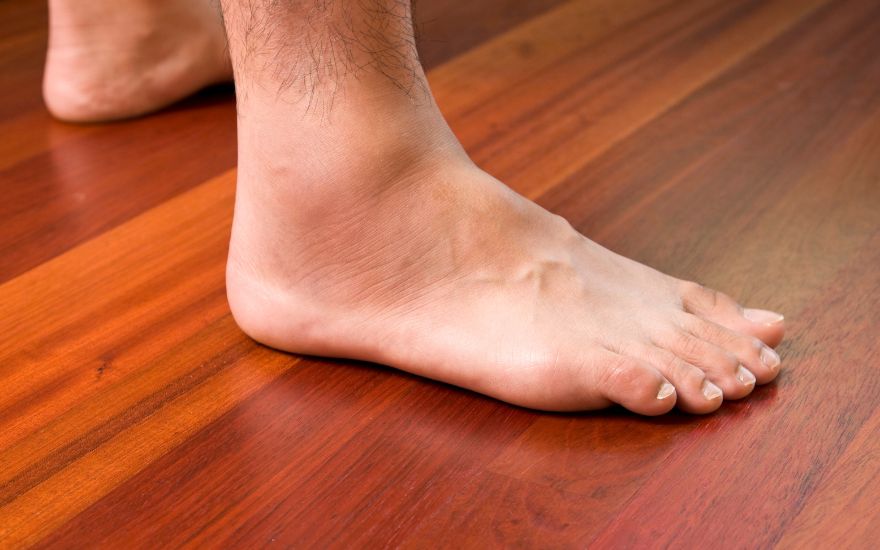
After the injury, players commonly experience pain around the ankle, swelling, bruising and difficulty bearing weight on the affected leg. Ankle movement may be restricted, with increased pain during rotation or walking. The joint may also feel unstable or likely to give way. Players with a previous ankle sprain face a higher risk of recurrence if strength and balance have not fully recovered.
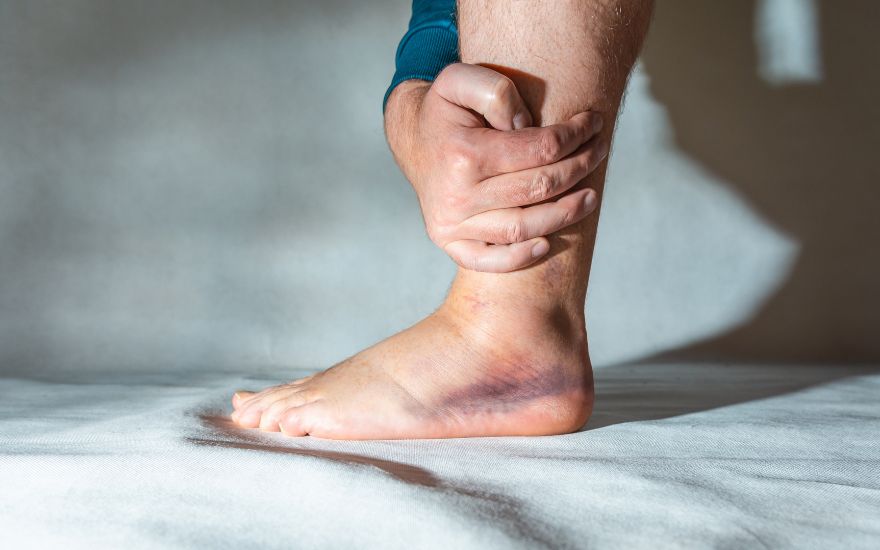
What should you do immediately after rolling your ankle on the pitch?
Stop playing as soon as the ankle rolls and becomes painful. Attempting to run, kick the ball or continue tackling may worsen the injury.
Immediately after the injury:
- Leave the pitch safely: Ask a teammate or medical staff member for assistance. Do not attempt to walk if the ankle cannot support your body weight.
- Check for warning signs: Look for ankle deformity, rapid swelling, severe pain over a bone, or numbness or coldness in the foot.
- Protect the ankle: Avoid twisting, running and jumping. Do not pull, rotate or attempt to manipulate the joint.
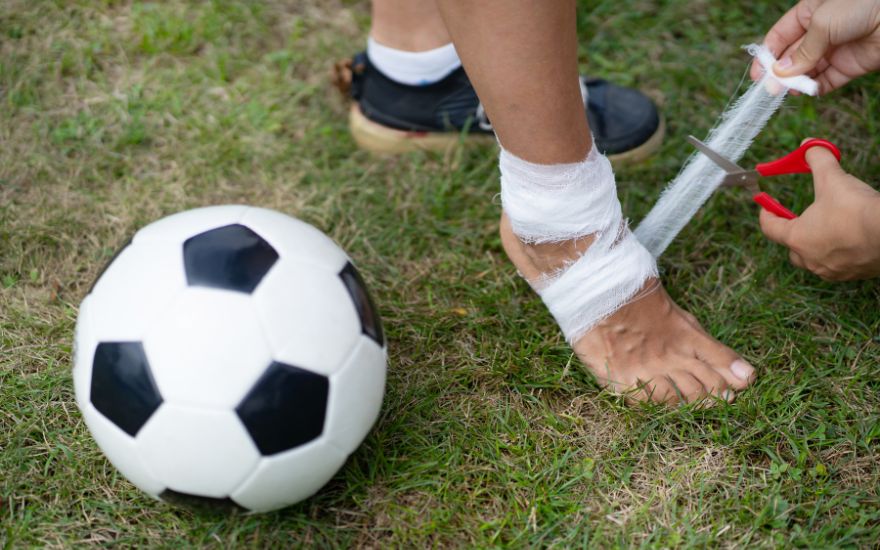
- Control pain and swelling: Apply ice through a layer of cloth for no more than 20 minutes at a time, use moderate compression and elevate the leg.
- Monitor the injury: Reassess your ability to walk, the degree of swelling and the location of pain over the following hours.
During the first few days, avoid applying heat, massaging the area vigorously or attempting to manipulate the ankle. Once pain and swelling have subsided, gentle movement may begin within a range that does not worsen the symptoms.
Read more: How should an ankle sprain from sport be managed, and when should you seek medical attention?
Why should you stop playing football even if you can still walk after an ankle sprain?
The ability to walk does not mean that the ankle is ready for continued play. Football requires repeated acceleration, pivoting, jumping, tackling and changes of direction. These movements place considerably greater stress on the ankle ligaments than ordinary walking.
Pain may also temporarily subside because of the body’s heightened arousal following physical activity. The player may underestimate the injury and roll the ankle again during the next change of direction or tackle.
Continuing to play with a painful or unstable ankle may worsen swelling and prolong recovery. Leave the pitch immediately if the ankle feels weak or unstable, hurts during weight bearing, or does not feel secure when walking.
Assessment of football related ankle sprains at Hong Ngoc General Hospital
Patients with severe pain, difficulty walking or ankle instability may seek assessment at the Department of Orthopedic Trauma and Neurosurgery, Hong Ngoc Phuc Truong Minh General Hospital. The doctor will ask how the ankle rolled on the pitch and assess the location of pain, degree of swelling, range of motion and joint stability.
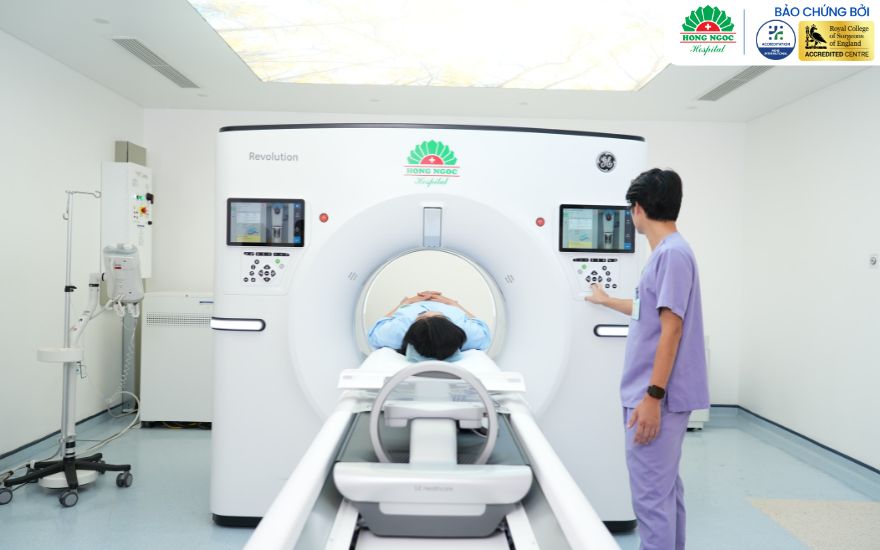
Based on the clinical examination, diagnostic imaging may be recommended if a fracture or associated injury is suspected. Patients may also be referred to the Department of Physical Therapy and Rehabilitation for exercises designed to improve strength, balance and mobility.
Hong Ngoc General Hospital provides sports injury treatment for conditions including ankle sprains, ankle dislocations and restricted movement following injury. The treatment approach and timing of return to the pitch should be determined according to each patient’s condition.
A staged return to football after an ankle sprain
Players should not return to football simply because they have rested for a certain number of days or the ankle pain has recently resolved. Recovery may take days, weeks or several months, depending on the severity of ligament damage and the response to rehabilitation.
The return to the pitch should progress gradually through each stage.
Stage 1: Walking and restoring basic mobility (approximately days 4 - 14)
This stage may begin once the player can bear weight comfortably on the injured leg, walk normally and remain pain free. Ankle dorsiflexion, plantar flexion and rotation should be restored gradually within a range that does not increase pain or swelling.
Running, jumping and rapid changes of direction should not yet be attempted. If walking causes increased ankle pain, reduce the level of activity and allow appropriate rest.
Stage 2: Improving strength and balance (approximately weeks 2 - 3)
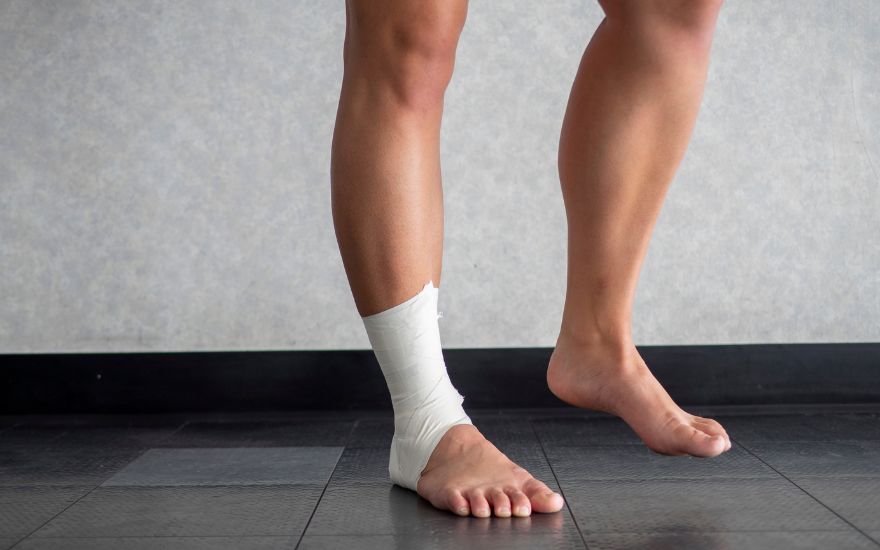
Players may begin performing heel raises, standing on one leg and completing balance control exercises. The ankle should bear weight steadily without feeling unstable or likely to give way.
Exercise difficulty should increase gradually, progressing from standing on both legs to standing on one leg and then to less stable surfaces. Exercises should be performed with proper technique and stopped if they increase pain.
Stage 3: Running and resuming ball drills (approximately weeks 3 - 6)
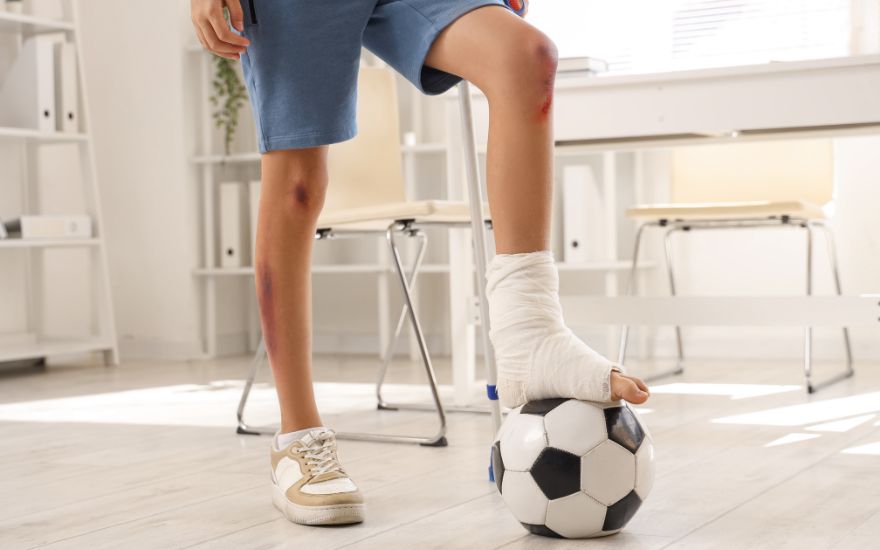
Players should begin with straight line running at a low speed before gradually increasing distance and pace. Once the ankle tolerates this well, lateral running, deceleration, changes of direction and jumping may be introduced.
Passing, dribbling and shooting drills can then be added. Begin with short distances and light force, progressing gradually rather than immediately attempting powerful shots or high speed changes of direction.
Stage 4: Returning to full team training
Players should return to full training only when they can run, accelerate, change direction, jump, land and kick the ball without pain or a feeling of ankle instability. Monitor the ankle for 24 hours after each training session. If pain or swelling returns, reduce the intensity and continue rehabilitation.
Before clearing a player to return to competition, rehabilitation specialists typically assess pain, range of motion, strength, balance, confidence and the ability to perform sport specific movements. This evaluation helps determine whether the ankle is sufficiently stable to tolerate the demands of football and reduces the risk of reinjury.
How can recurrent ankle sprains be prevented in football?
Players should continue strength and balance exercises even after returning to the pitch. Simply resting until the pain resolves and then resuming football may leave the ankle weak and vulnerable to rolling again during the next tackle.
Measures that may reduce the risk of recurrence include:
- Warm up the ankles, lower legs and entire body before entering the pitch.
- Practise single leg standing, heel raises and controlled jumping.
- Practise landing on the whole foot rather than placing excessive pressure on its outer edge.
- Gradually increase the duration and intensity of play after injury.
- Choose well fitting boots with studs appropriate for the playing surface.
- Replace boots when the soles or studs become worn.
- Do not play while the ankle remains painful, swollen or weak.
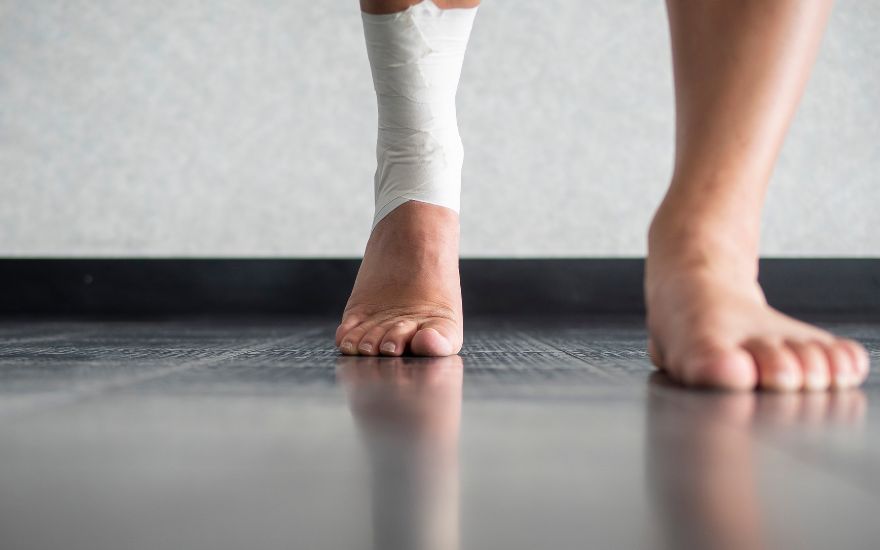
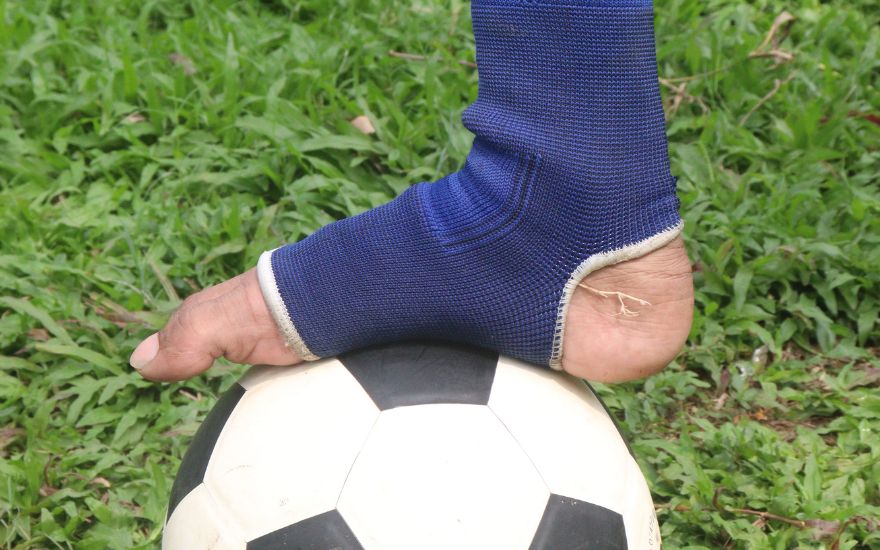
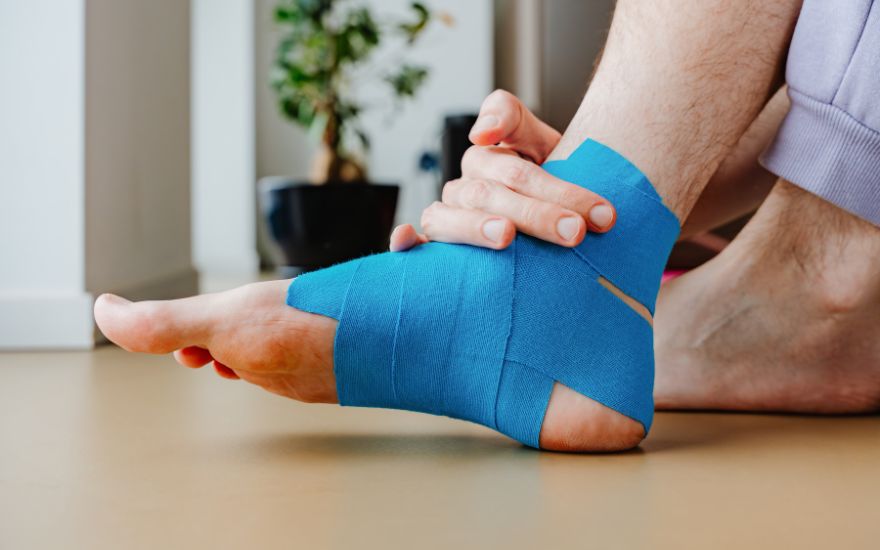
- Use supportive taping or a brace when recommended by a healthcare professional.
Taping and braces provide additional support but do not replace exercises that improve strength, balance and movement control. An individualized rehabilitation programme can help patients return to sport more safely.
Frequently asked questions about ankle sprains in football
Should you continue playing if you can still walk after rolling your ankle?
Do not continue playing if the ankle is painful, weak or unstable, even if walking remains possible. Acceleration, pivoting and tackling place considerably greater stress on the ligaments than ordinary walking and may worsen the injury.
When can you begin training with the ball?
Ball drills may begin once walking, straight line running and balance activities can be performed without significant pain. Start with gentle passing and slow dribbling before gradually progressing to shooting, changes of direction and contact drills.
How long does an ankle sprain from football take to heal?
Recovery time depends on the severity of the injury and the response to rehabilitation. A mild sprain may improve within a few weeks, whereas a severe injury may require several weeks or months. Return to play should be based on functional ability rather than solely on the number of days spent resting.
Should you use ankle taping when returning to the pitch?
Supportive taping or a brace may help protect the ankle during the early stages of returning to football, particularly in players with a previous sprain. Select the appropriate support under the guidance of a doctor or rehabilitation specialist, and do not apply it too tightly.
Can football boots affect the risk of an ankle sprain?
Poorly fitting boots or studs that are unsuitable for the playing surface may reduce foot control. Choose well fitting boots with soles in good condition and studs appropriate for natural grass, artificial turf or indoor surfaces.
Conclusion
An ankle sprain in football not only causes pain while walking but may also affect running, pivoting, tackling and changing direction. Players should leave the pitch immediately after rolling an ankle, apply appropriate initial management and monitor for warning signs.
The return to football should progress from walking, strength and balance exercises to running, ball drills and full team training. If the ankle remains painful, swollen, weak or prone to giving way, continue rehabilitation or seek medical evaluation rather than attempting to play. Returning at the appropriate time can help restore stable movement and prevent prolonged absence caused by reinjury.
References
1. American College of Radiology, Acute Trauma to the Ankle.
2. American Academy of Orthopaedic Surgeons, Foot and Ankle Conditioning Program.