

Herniated disc is a common musculoskeletal disorder in our country and is increasingly affecting younger populations, particularly individuals aged 30 to 60 years. If not detected early and managed appropriately, the condition may lead to serious complications, significantly impacting overall health.
What are the clinical manifestations of a herniated disc? Let us explore in the following article.
What is a herniated disc? Types of disc herniation
Intervertebral discs are cartilaginous structures located between the vertebrae of the spine, including the cervical and lumbar regions. Their primary function is to absorb shock and reduce mechanical stress on the spine during daily activities such as walking, lifting, and bending.
A herniated disc refers to a condition in which one or more intervertebral discs are displaced from their normal anatomical position or undergo degeneration, leading to compression of the spinal cord and adjacent nerve roots. This results in persistent pain and neurological symptoms.
Each intervertebral disc consists of two main components: the inner nucleus pulposus and the outer annulus fibrosus. In disc herniation, the annulus fibrosus becomes weakened or ruptured, allowing the nucleus pulposus to protrude outward.
Depending on the location and severity, disc herniation is classified into several types. The most common forms are cervical disc herniation and lumbar disc herniation.
Clinical manifestations of herniated disc
Herniated discs typically present with pain at various locations along the spine. In the early stages, symptoms are often mild and may be overlooked by patients, leading to delayed medical evaluation. However, over time, the pain may progressively intensify, becoming severe and persistent, resulting in fatigue, reduced mobility, and significant impairment in quality of life and work productivity.
Clinical manifestations of lumbar disc herniation
Common signs and symptoms of lumbar disc herniation include:
Low back pain
Patients with lumbar disc herniation typically experience low back pain, which may present as sudden, severe episodes or as persistent, dull aching pain. The pain can occur intermittently in sharp, shooting episodes localized to the lumbar region.
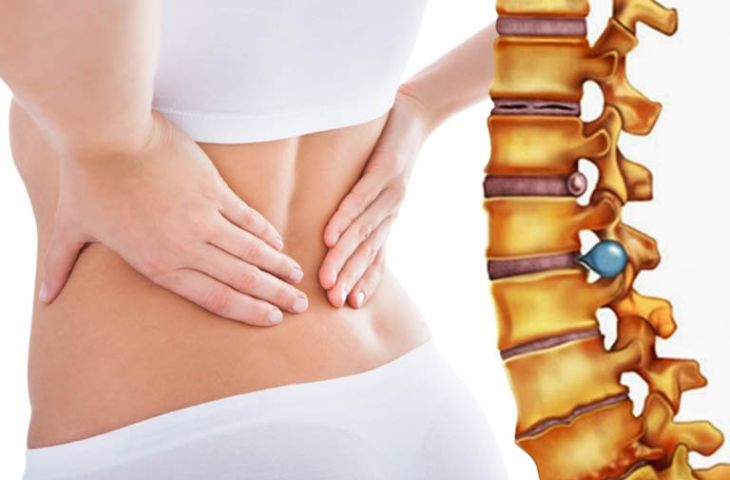
Low back pain is a characteristic symptom of herniated disc.
Radiating pain
As the condition progresses, pain may extend beyond the lower back, radiating to the buttocks, anterior and posterior aspects of the thighs, and may be accompanied by numbness over the dorsum of the foot, suggestive of nerve root involvement.
Pain exacerbated by movement
Pain may temporarily improve with rest but is often aggravated by physical activity, and even minor actions such as coughing, sneezing, or lying on one side. Prolonged sitting or standing can also intensify discomfort.
Reduced functional capacity
Lumbar disc herniation may limit spinal mobility, making it difficult for patients to bend forward or extend the back. Muscle weakness in the lower extremities may occur, leading to impaired grip strength and reduced overall mobility. Patients may adopt an antalgic posture, leaning to one side to alleviate pain. In severe cases, patients may be forced to remain immobile in certain positions to reduce discomfort.
Loss of bladder and bowel control
In advanced cases, herniation of the nucleus pulposus may compress spinal nerve roots, resulting in loss of bladder or bowel control, sensory disturbances, muscle atrophy, and even paralysis.
Clinical manifestations of cervical disc herniation
Common signs and symptoms of cervical disc herniation include:
Neck pain
An early sign of cervical disc herniation is pain localized to one or more cervical vertebrae or radiating along the posterior neck region.
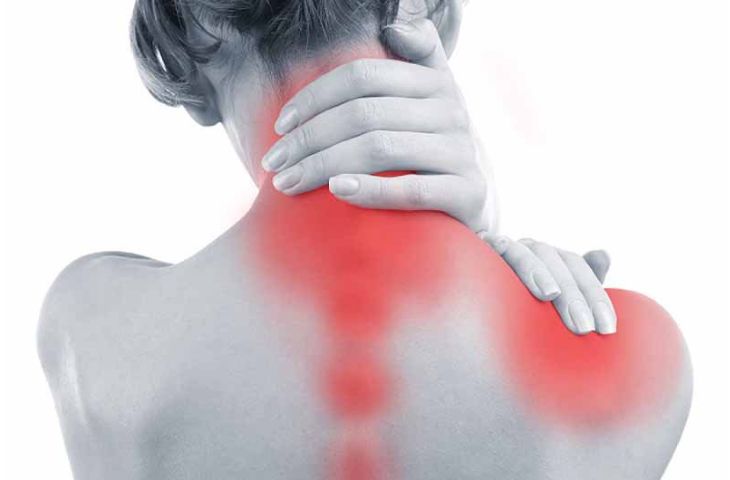
Pain radiating from the neck to the shoulder blades and upper back.
Radiating pain: Pain may spread from the shoulder to the arm, with numbness along the arm and hand, and sometimes extending to the occipital region and orbital area.
Variable pain intensity: Pain may be continuous or intermittent, often worsening with neck movement, bending, extension, coughing, or sneezing.
Sensory and motor impairment: Reduced hand strength, affecting daily activities such as gripping or lifting.
Limited mobility: Restricted movement of the neck and upper limbs, with difficulty raising the arms or reaching पीछे the back.
Muscle weakness: In severe cases, spinal cord compression may lead to weakness in both upper and lower extremities, impairing balance and mobility.
Other symptoms: May include unilateral chest pain, dyspnea, constipation, or urinary difficulties.
If left untreated, symptoms may progressively worsen, potentially leading to serious complications such as spinal canal stenosis, cerebral hypoperfusion, disability, or spinal cord compression syndrome. Early medical evaluation is strongly recommended.
Causes of herniated disc
Common etiological factors contributing to disc herniation include:
Excessive physical workload, improper posture, or repetitive mechanical strain leading to spinal and disc injury.
Age related degeneration, in which intervertebral discs lose hydration, become fibrotic, and are more susceptible to damage.
Traumatic injury to the spine or back.
Congenital or underlying spinal disorders such as scoliosis or degenerative spine disease.
Genetic predisposition.
Overweight or obesity, which increases mechanical load on the spine, particularly in the lumbar region.
Prevention of herniated disc
Herniated disc can be effectively prevented by adopting the following measures:
Engage in regular and appropriate physical exercise, avoiding excessive strain that may վնաս the muscles, bones, and joints.
Maintain a healthy body weight to reduce mechanical stress on the spine.
Avoid lifting or carrying excessively heavy objects to protect spinal structures.
Follow a balanced diet, ensuring adequate intake of calcium, vitamin D, and other nutrients essential for musculoskeletal health.
Avoid smoking and stimulant use; limit alcohol consumption.
Undergo routine health check ups every six months to facilitate early detection and prevention of spinal disorders.
Engaging in appropriate physical exercise helps maintain overall health and musculoskeletal strength.
In addition, when experiencing the above mentioned symptoms of disc herniation, patients may seek evaluation and treatment at the Department of Rheumatology and Musculoskeletal Medicine, Hong Ngoc General Hospital, which offers:
A highly experienced team of physicians with strong clinical expertise, trained and having worked at leading national and international institutions such as Bach Mai Hospital, Viet Duc Hospital, and Royal North Shore Hospital (Australia).
Advanced diagnostic imaging systems and medical equipment imported from the United States, including SIGNA Prime MRI, 128 slice CT scanner, Hologic bone densitometry system, and Logiq P7 musculoskeletal ultrasound, providing high resolution imaging for accurate early detection of tumors and musculoskeletal lesions.
An integrated treatment approach combining physical therapy and rehabilitation, utilizing advanced German therapeutic equipment and specialized manual therapy techniques from Austria, helping patients restore mobility rapidly and effectively reduce pain associated with disc herniation.
In addition, patients benefit from a wide range of modern healthcare services and amenities, including:
Structured follow up schedules with proactive appointment reminders tailored to each patient.
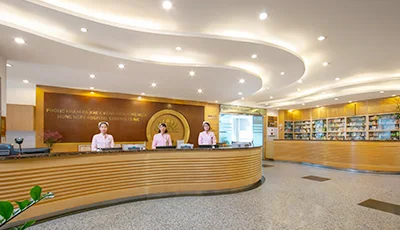
A clean and comfortable hospital environment, equipped with modern amenities such as complimentary WiFi, café, and dining services.
Service availability on weekends without additional charges.
Efficient insurance processing with direct billing support, ensuring maximum patient benefits.
For consultation and treatment of herniated disc at Hong Ngoc General Hospital, please contact the hotline at 0889 621 046 for prompt assistance.
Note: The information provided by Hong Ngoc General Hospital is intended for reference purposes only and does not replace professional medical diagnosis or treatment. Patients are advised not to self medicate. For accurate diagnosis and appropriate treatment planning, individuals should seek direct consultation with qualified healthcare professionals at medical facilities.
Herniated disc is a common musculoskeletal disorder in our country and is increasingly affecting younger populations, particularly individuals aged 30 to 60 years. If not detected early and managed appropriately, the condition may lead to serious complications, significantly impacting overall health.
What are the clinical manifestations of a herniated disc? Let us explore in the following article.
What is a herniated disc? Types of disc herniation
Intervertebral discs are cartilaginous structures located between the vertebrae of the spine, including the cervical and lumbar regions. Their primary function is to absorb shock and reduce mechanical stress on the spine during daily activities such as walking, lifting, and bending.
A herniated disc refers to a condition in which one or more intervertebral discs are displaced from their normal anatomical position or undergo degeneration, leading to compression of the spinal cord and adjacent nerve roots. This results in persistent pain and neurological symptoms.
Each intervertebral disc consists of two main components: the inner nucleus pulposus and the outer annulus fibrosus. In disc herniation, the annulus fibrosus becomes weakened or ruptured, allowing the nucleus pulposus to protrude outward.
Depending on the location and severity, disc herniation is classified into several types. The most common forms are cervical disc herniation and lumbar disc herniation.
Clinical manifestations of herniated disc
Herniated discs typically present with pain at various locations along the spine. In the early stages, symptoms are often mild and may be overlooked by patients, leading to delayed medical evaluation. However, over time, the pain may progressively intensify, becoming severe and persistent, resulting in fatigue, reduced mobility, and significant impairment in quality of life and work productivity.
Clinical manifestations of lumbar disc herniation
Common signs and symptoms of lumbar disc herniation include:
Low back pain
Patients with lumbar disc herniation typically experience low back pain, which may present as sudden, severe episodes or as persistent, dull aching pain. The pain can occur intermittently in sharp, shooting episodes localized to the lumbar region.
Low back pain is a characteristic symptom of herniated disc.
Radiating pain
As the condition progresses, pain may extend beyond the lower back, radiating to the buttocks, anterior and posterior aspects of the thighs, and may be accompanied by numbness over the dorsum of the foot, suggestive of nerve root involvement.
Pain exacerbated by movement
Pain may temporarily improve with rest but is often aggravated by physical activity, and even minor actions such as coughing, sneezing, or lying on one side. Prolonged sitting or standing can also intensify discomfort.
Reduced functional capacity
Lumbar disc herniation may limit spinal mobility, making it difficult for patients to bend forward or extend the back. Muscle weakness in the lower extremities may occur, leading to impaired grip strength and reduced overall mobility. Patients may adopt an antalgic posture, leaning to one side to alleviate pain. In severe cases, patients may be forced to remain immobile in certain positions to reduce discomfort.
Loss of bladder and bowel control
In advanced cases, herniation of the nucleus pulposus may compress spinal nerve roots, resulting in loss of bladder or bowel control, sensory disturbances, muscle atrophy, and even paralysis.
Clinical manifestations of cervical disc herniation
Common signs and symptoms of cervical disc herniation include:
Neck pain
An early sign of cervical disc herniation is pain localized to one or more cervical vertebrae or radiating along the posterior neck region.
Pain radiating from the neck to the shoulder blades and upper back.
Radiating pain: Pain may spread from the shoulder to the arm, with numbness along the arm and hand, and sometimes extending to the occipital region and orbital area.
Variable pain intensity: Pain may be continuous or intermittent, often worsening with neck movement, bending, extension, coughing, or sneezing.
Sensory and motor impairment: Reduced hand strength, affecting daily activities such as gripping or lifting.
Limited mobility: Restricted movement of the neck and upper limbs, with difficulty raising the arms or reaching पीछे the back.
Muscle weakness: In severe cases, spinal cord compression may lead to weakness in both upper and lower extremities, impairing balance and mobility.
Other symptoms: May include unilateral chest pain, dyspnea, constipation, or urinary difficulties.
If left untreated, symptoms may progressively worsen, potentially leading to serious complications such as spinal canal stenosis, cerebral hypoperfusion, disability, or spinal cord compression syndrome. Early medical evaluation is strongly recommended.
Causes of herniated disc
Common etiological factors contributing to disc herniation include:
Excessive physical workload, improper posture, or repetitive mechanical strain leading to spinal and disc injury.
Age related degeneration, in which intervertebral discs lose hydration, become fibrotic, and are more susceptible to damage.
Traumatic injury to the spine or back.
Congenital or underlying spinal disorders such as scoliosis or degenerative spine disease.
Genetic predisposition.
Overweight or obesity, which increases mechanical load on the spine, particularly in the lumbar region.
Prevention of herniated disc
Herniated disc can be effectively prevented by adopting the following measures:
Engage in regular and appropriate physical exercise, avoiding excessive strain that may վնաս the muscles, bones, and joints.
Maintain a healthy body weight to reduce mechanical stress on the spine.
Avoid lifting or carrying excessively heavy objects to protect spinal structures.
Follow a balanced diet, ensuring adequate intake of calcium, vitamin D, and other nutrients essential for musculoskeletal health.
Avoid smoking and stimulant use; limit alcohol consumption.
Undergo routine health check ups every six months to facilitate early detection and prevention of spinal disorders.
Engaging in appropriate physical exercise helps maintain overall health and musculoskeletal strength.
In addition, when experiencing the above mentioned symptoms of disc herniation, patients may seek evaluation and treatment at the Department of Rheumatology and Musculoskeletal Medicine, Hong Ngoc General Hospital, which offers:
A highly experienced team of physicians with strong clinical expertise, trained and having worked at leading national and international institutions such as Bach Mai Hospital, Viet Duc Hospital, and Royal North Shore Hospital (Australia).
Advanced diagnostic imaging systems and medical equipment imported from the United States, including SIGNA Prime MRI, 128 slice CT scanner, Hologic bone densitometry system, and Logiq P7 musculoskeletal ultrasound, providing high resolution imaging for accurate early detection of tumors and musculoskeletal lesions.
An integrated treatment approach combining physical therapy and rehabilitation, utilizing advanced German therapeutic equipment and specialized manual therapy techniques from Austria, helping patients restore mobility rapidly and effectively reduce pain associated with disc herniation.
In addition, patients benefit from a wide range of modern healthcare services and amenities, including:
Structured follow up schedules with proactive appointment reminders tailored to each patient.
A clean and comfortable hospital environment, equipped with modern amenities such as complimentary WiFi, café, and dining services.
Service availability on weekends without additional charges.
Efficient insurance processing with direct billing support, ensuring maximum patient benefits.
For consultation and treatment of herniated disc at Hong Ngoc General Hospital, please contact the hotline at 0889 621 046 for prompt assistance.
Note: The information provided by Hong Ngoc General Hospital is intended for reference purposes only and does not replace professional medical diagnosis or treatment. Patients are advised not to self medicate. For accurate diagnosis and appropriate treatment planning, individuals should seek direct consultation with qualified healthcare professionals at medical facilities.
Để lại câu hỏi của bạn để nhận được giải đáp từ các bác sĩ của Hồng Ngọc
Lorem ipsum dolor
Lorem ipsum dolor sit amet, consectetur adipiscing elit. Mauris odio lectus, pretium faucibus nisi eu, accumsan consectetur orci. In blandit vehicula nisl, vel lacinia ligula finibus a. Donec fermentum rhoncus