



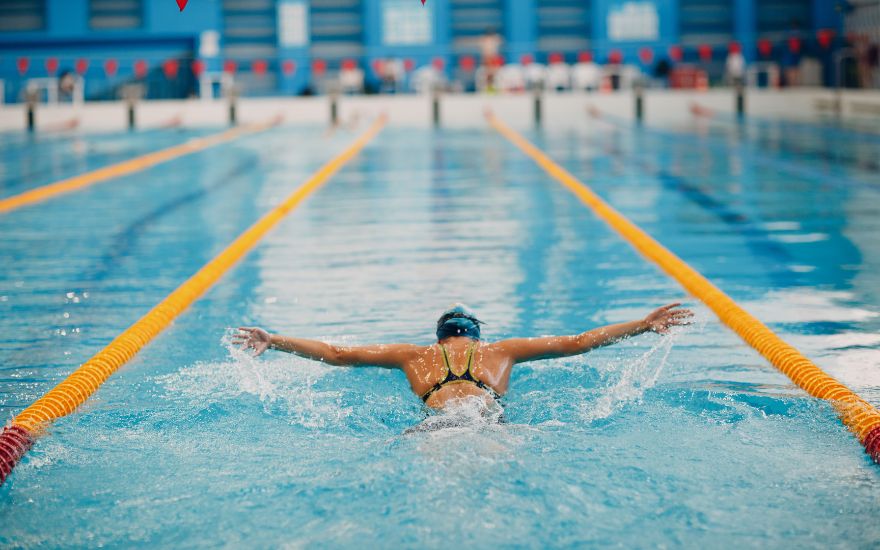
Shoulder pain when swimming can develop when the joint repeatedly performs overhead movements, particularly after a rapid increase in training volume or when swimming technique is suboptimal. The pain may result from overuse or involve the rotator cuff tendons, biceps tendon, bursa or glenoid labrum. Identifying the underlying cause helps swimmers adjust their training and recover safely.

Medical consultation: Hoang Van Ban, MD, MSc, Department of Orthopedic Trauma and Neurosurgery, Hong Ngoc Phuc Truong Minh General Hospital.
Medical disclaimer: Shoulder pain when swimming is not a specific diagnosis. If the pain develops suddenly after an injury or is accompanied by shoulder deformity, arm weakness, numbness, tingling or an inability to raise the arm normally, prompt medical evaluation is recommended instead of self-directed exercise or continued swimming.
What commonly causes shoulder pain when swimming?
In sports medicine, swimmer’s shoulder is a general term for swimming-related shoulder pain rather than a single diagnosis. The pain may arise from several structures around the shoulder, commonly involving the rotator cuff tendons, biceps tendon, bursa, glenoid labrum or shoulder instability.
Shoulder overuse from repetitive swimming movements
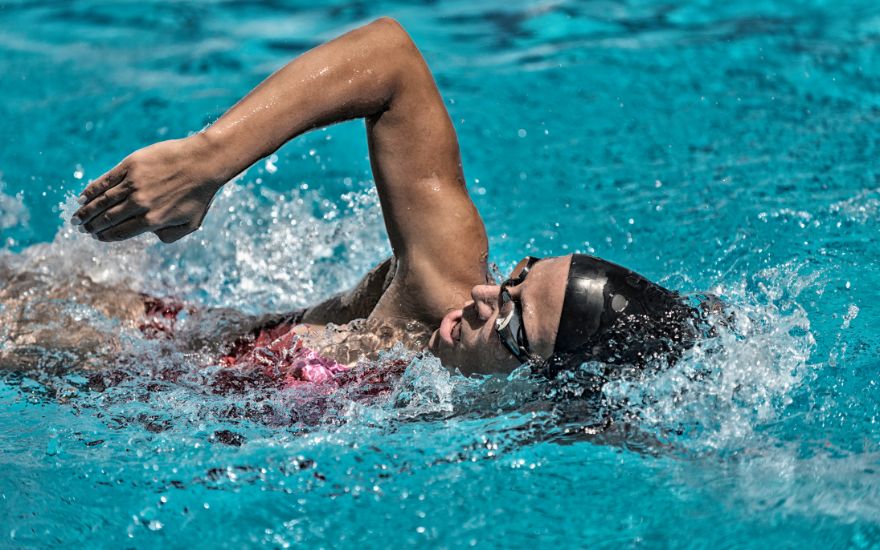
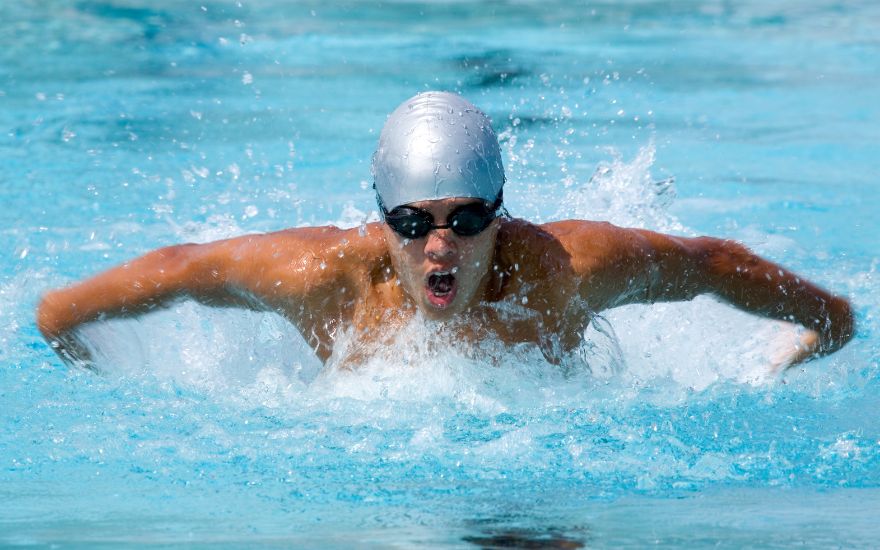
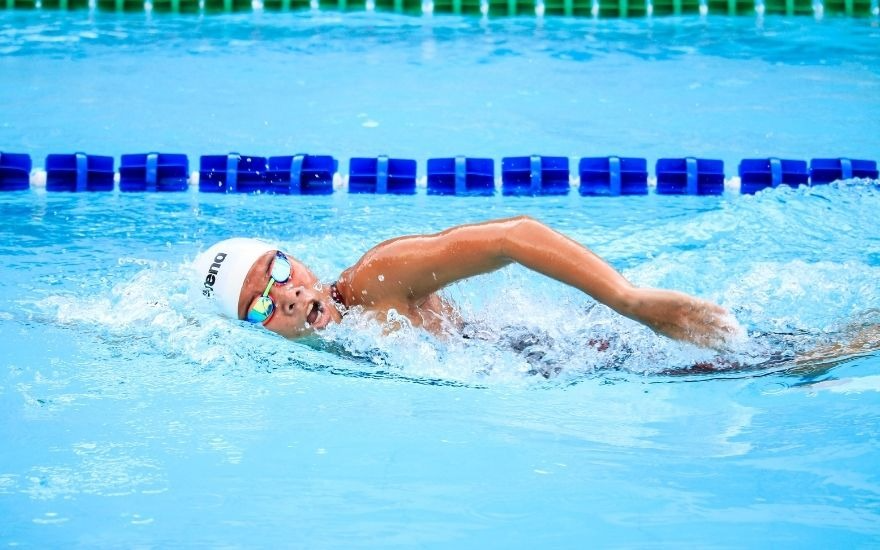
In strokes such as freestyle, backstroke and butterfly, the arm repeatedly moves overhead, rotates and pulls through the water. If swimmers increase their training frequency, distance or intensity too quickly, the muscles and tendons around the shoulder may not have sufficient time to adapt, resulting in pain during or after swimming.
The risk of shoulder pain increases further when training continues without adequate recovery. Initially, pain may occur only near the end of a session. If the same training load is maintained, the pain may recur and begin earlier in subsequent sessions.
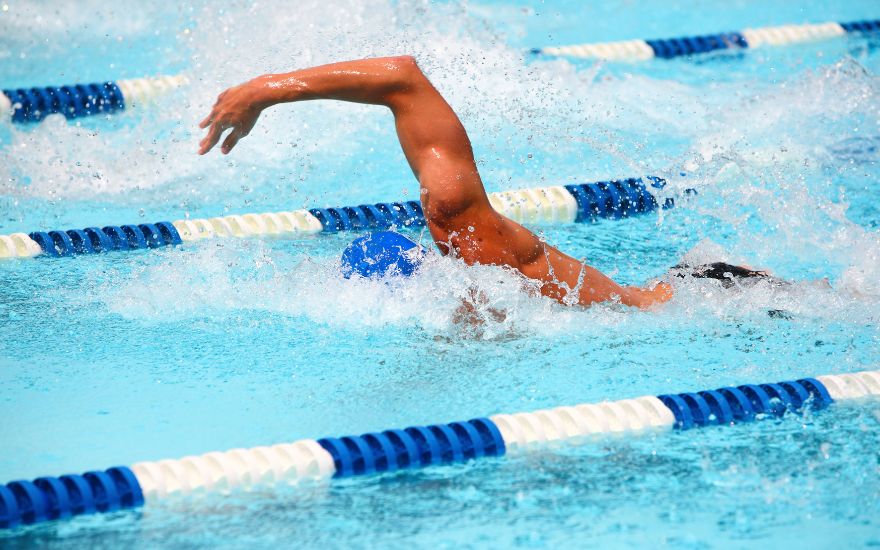
Suboptimal swimming technique increases stress on the shoulder
Hand entry, the pull phase, body rotation and arm recovery all affect how the shoulder joint functions. When these movements are performed incorrectly, swimmers may rely excessively on the shoulder or place the arm in a position that increases stress on the surrounding tendons.
Shoulder movement also depends on coordination between the rotator cuff muscles and the muscles that stabilize the shoulder blade. When these muscles are weak, fatigue quickly or function unevenly, the shoulder blade may not remain stable as the arm moves overhead. This can increase the likelihood of shoulder pain, particularly during prolonged swimming.
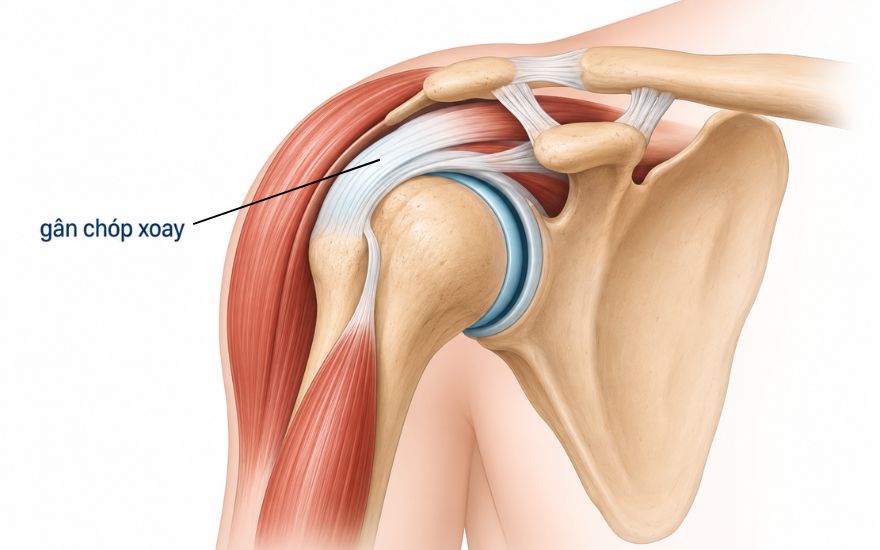
Injury to the tendons and structures around the shoulder joint
Persistent shoulder pain when swimming may be associated with several different injuries. The rotator cuff is commonly affected. This group of muscles and tendons stabilizes the head of the upper arm bone within the shoulder socket during arm elevation and rotation. Swimmers may develop rotator cuff tendinopathy, including supraspinatus tendinopathy.
Repeated pulling through the water may also irritate the long head of the biceps tendon. Other cases may involve the subacromial bursa, glenoid labrum, joint laxity or shoulder instability during movement. Because these conditions can produce similar symptoms, swimmers cannot determine the exact cause based solely on the location of the pain.
What signs may indicate a shoulder injury?
Swimming-related shoulder pain is often more noticeable during overhead movements, while pulling through the water or immediately after training. Depending on the structure affected, swimmers may experience one or more of the following symptoms:
- Pain at the front, outer side or deep within the shoulder while swimming.
- Pain when raising the arm overhead, reaching for objects or getting dressed.
- Rapid shoulder fatigue or reduced arm strength during the pull phase.
- Difficulty moving the arm through its normal full range of motion.
- Pain that worsens toward the end of a swimming session or persists after leaving the pool.
- A sensation that the shoulder is loose, unstable or about to slip out of position.
- Painful clicking, catching or locking within the shoulder.
- Night pain or difficulty lying on the affected side.
Normal muscle fatigue after swimming generally improves with rest and does not significantly affect shoulder movement. Pain that recurs over several sessions, begins progressively earlier, reduces pulling strength or interferes with raising the arm and performing daily activities may indicate shoulder overuse or injury rather than simple muscle fatigue.
What should you do about shoulder pain when swimming?
Management depends on the severity and underlying cause of the pain. First, reduce movements that aggravate the symptoms to allow the shoulder time to recover. As the pain improves, gradually restore mobility and strength before returning to swimming.
Reduce or stop movements that worsen the pain
If shoulder pain develops while swimming, slow down or stop the training session. Do not continue simply to complete the planned distance or persist with a stroke that worsens the pain, as repetitive movements may aggravate the injury.
After stopping, the shoulder may still be moved gently, and normal daily activities can be continued provided they do not increase the pain. Monitor whether the symptoms improve and whether the ability to raise the arm begins to recover.
A cold pack may be applied for shoulder pain after exercise
If the shoulder is painful or mildly swollen after swimming, apply a cold pack wrapped in a towel for approximately 15 to 20 minutes. Do not apply ice directly to the skin or use cold therapy continuously for an extended period. Cold therapy mainly helps relieve symptoms and does not address the underlying cause of recurrent shoulder pain.
If pain occurs every time you swim, repeatedly applying a cold pack and then resuming the same training routine may prolong the problem. The training load, swimming technique and shoulder mobility should then be reassessed.

Perform pendulum exercises for gentle shoulder movement
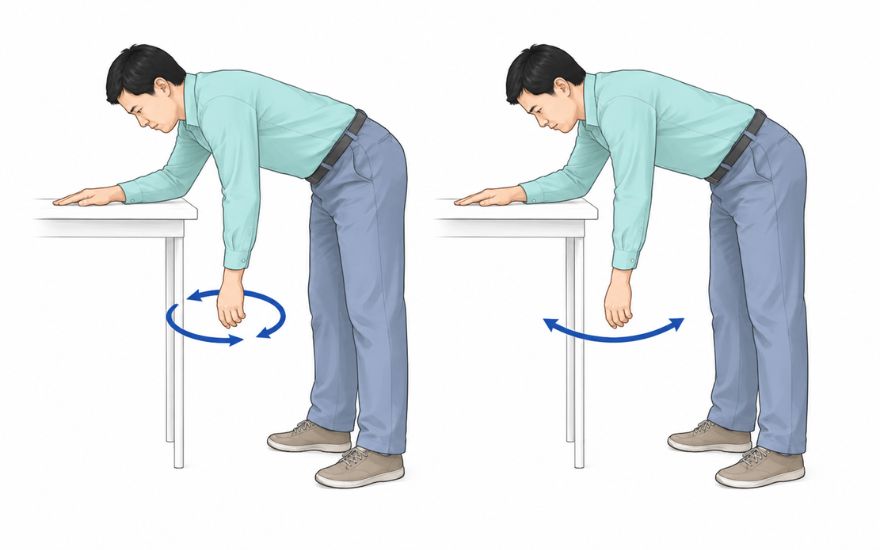
Once the pain has improved, swimmers may perform pendulum exercises to help prevent shoulder stiffness. First, place the unaffected hand on a table for support and lean slightly forward. Allow the affected arm to hang loosely, then gently swing it forward and backward, from side to side, or in small circles.
Keep the arm relaxed and perform each movement slowly. Stop exercising and seek medical attention if the pain worsens or the arm becomes weak or difficult to move. Do not add weights or resistance bands, or perform forceful stretching without professional guidance.
When does shoulder pain when swimming require medical evaluation?
If the shoulder only feels mildly fatigued and improves with rest, swimmers may continue to monitor their symptoms. However, medical evaluation is recommended when the pain persists, frequently recurs or limits movement.
Earlier assessment is required if any of the following occurs:
- Severe pain after a fall, impact or sudden forceful movement.
- Visible deformity of the shoulder or arm, suggesting a possible dislocation.
- Inability or increased difficulty raising the arm.
- Arm weakness or repeated giving way when lifting.
- Persistent numbness, loss of sensation or pain radiating down the arm.
- Marked swelling, warmth or redness of the shoulder, or pain accompanied by fever.
- A sensation that the shoulder is loose, slipping or about to dislocate.
If a shoulder dislocation is suspected, do not attempt to pull or manipulate the joint back into position. Incorrect handling may cause further injury to the blood vessels, nerves and surrounding structures.

Assessment and rehabilitation of swimming-related shoulder pain at Hong Ngoc General Hospital
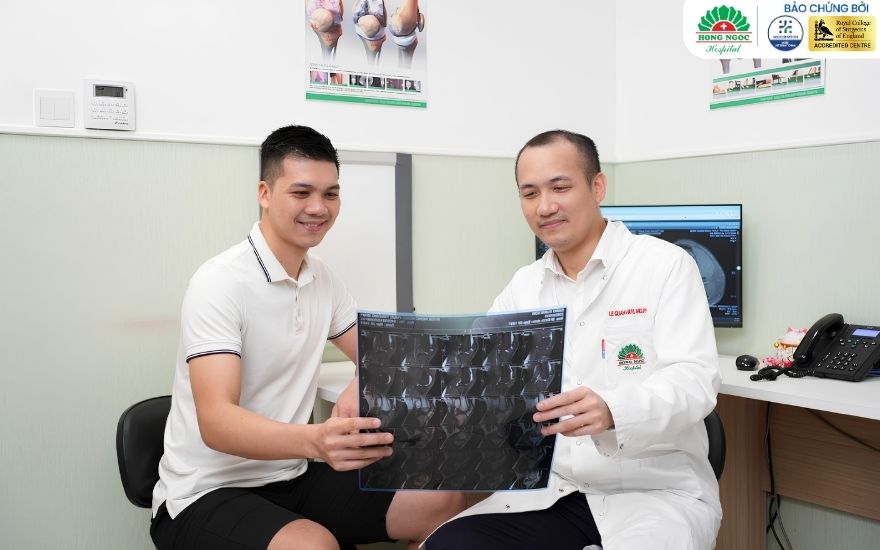
People with shoulder pain after swimming, particularly when a tendon or labral injury or shoulder instability is suspected, can seek medical evaluation at the Department of Orthopedic Trauma and Neurosurgery, Hong Ngoc Phuc Truong Minh General Hospital. The doctor will assess the location of pain, range of motion, strength, joint stability and movements that trigger symptoms. Depending on the condition, X-rays, musculoskeletal ultrasound or MRI may be recommended to evaluate the injury further.
When conservative treatment is appropriate, rehabilitation may be coordinated with physical therapy. The doctor will assess the patient’s mobility and develop an individualized exercise program to restore strength, improve shoulder movement control and support a gradual return to sports. For more severe injuries, such as a rotator cuff tear or another condition requiring intervention, treatment will be determined according to the extent of the injury and the individual’s functional needs.
When can you return to swimming and reduce the risk of recurrent pain?
The timing of a return to swimming depends on shoulder recovery rather than simply the number of rest days. Swimmers may resume training when pain has improved, movement is nearly normal, and strength and endurance have been restored.
Begin with a short, low-intensity swimming session. Distance and speed can then be increased gradually if the pain does not return. To reduce the risk of recurrence:
- Increase swimming distance and intensity gradually and avoid sudden increases.
- Warm up the shoulders and the entire body before entering the water.
- Ask a coach to correct your technique if the pain is associated with a specific movement or swimming stroke.
- Continue exercises that strengthen the rotator cuff and scapular stabilizing muscles as instructed.
- Allow adequate recovery between high-intensity training sessions.
- Reduce the training load if shoulder pain begins to return.
Frequently asked questions about shoulder pain when swimming
Can shoulder pain from swimming resolve on its own?
Mild pain caused by overtraining may improve with rest and reduced exercise intensity. However, if the pain recurs over several swimming sessions, persists, or is accompanied by arm weakness or restricted movement, medical evaluation is recommended to identify the injured structure and determine appropriate treatment.
Should you continue swimming with shoulder pain?
Reduce the swimming distance and speed, or temporarily stop the stroke that aggravates the pain. If the pain is mild, activities that do not cause shoulder discomfort may still be continued. Further training should be guided by the severity of the pain, shoulder mobility and the underlying cause.
Why does freestyle swimming commonly cause shoulder pain?
During freestyle swimming, the arm repeatedly moves overhead, enters the water, and pulls and pushes against the water to propel the body forward. When this movement is repeated excessively, performed with suboptimal technique or continued after the shoulder muscles become fatigued, the tendons and surrounding structures may become overloaded and painful.
How soon can you return to swimming after shoulder pain?
The appropriate time to return to swimming depends on the cause and severity of the pain. Swimmers should wait until the pain has improved, the arm can be raised and rotated comfortably, and shoulder weakness has resolved. When resuming training, begin with a short session at a slow pace and gradually increase the workload according to the shoulder’s response.
Conclusion
Shoulder pain when swimming is commonly associated with repetitive overuse, rapidly increasing the training load, suboptimal technique or injury to the structures around the shoulder joint. When pain develops, swimmers should reduce the intensity, avoid movements that aggravate symptoms and monitor shoulder function rather than continuing their usual training routine.
If the pain recurs over several swimming sessions or is accompanied by arm weakness, restricted movement or difficulty performing daily activities, seek medical evaluation at Hong Ngoc General Hospital to determine the cause and develop an appropriate treatment and rehabilitation plan.
References
- Desmeules F, et al. Rotator Cuff Tendinopathy Diagnosis, Nonsurgical Medical Care and Rehabilitation: A Clinical Practice Guideline. Journal of Orthopaedic & Sports Physical Therapy, 2025.https://www.jospt.org/doi/10.2519/jospt.2025.13182
- Delbridge A, Caling B, Boettcher C. Exploring the Management of the In-Season Swimmer's Shoulders. Aspetar Sports Medicine Journal, 2025.https://journal.aspetar.com/en/journals/volume-14-targeted-topic-the-athletic-shoulder/exploring-the-management-of-the-in-season-swimmers-shoulders
- Feijen S, et al. Swim-Training Volume and Shoulder Pain Across the Life Span of the Competitive Swimmer: A Systematic Review. Journal of Athletic Training, 2020.https://pmc.ncbi.nlm.nih.gov/articles/PMC6961642/
- American Academy of Orthopaedic Surgeons. Shoulder Pain and Common Shoulder Problems.https://orthoinfo.aaos.org/en/diseases--conditions/shoulder-pain-and-common-shoulder-problems/
- Cleveland Clinic. Swimmer's Shoulder: Symptoms, Tests, Treatment & Recovery.https://my.clevelandclinic.org/health/diseases/17535-swimmers-shoulder
- NHS. Shoulder Pain.https://www.nhs.uk/symptoms/shoulder-pain/