


Peripheral artery disease of the lower limbs poses significant risks to cardiovascular health due to arterial blockage that restricts blood flow from the legs to the heart and other organs. Early diagnosis and treatment are essential to prevent serious complications.
What is peripheral artery disease of the lower limbs?
Peripheral artery disease of the lower limbs, also known as peripheral arterial disease, occurs when atherosclerotic plaques form within the arteries supplying the lower extremities, leading to obstruction of blood flow.
These plaques consist of cholesterol, lipids, calcium, and other substances circulating in the blood. Over time, they accumulate along the arterial walls, forming deposits that partially or completely narrow the arterial lumen, thereby reducing blood flow to the tissues of the legs and other parts of the body.
Causes of peripheral artery disease of the lower limbs
The primary cause of peripheral artery disease of the lower limbs is atherosclerosis. This condition develops when fatty deposits accumulate within the arterial walls, leading to narrowing and obstruction of blood vessels.
Several risk factors contribute to the development of this disease, including chronic tobacco use, diabetes mellitus, hypertension, and dyslipidemia. These conditions accelerate the formation of atherosclerotic plaques and increase the likelihood of peripheral arterial disease as well as other atherosclerosis related vascular disorders.

Symptoms of peripheral artery disease of the lower limbs
The most common symptom of peripheral artery disease of the lower limbs is intermittent claudication, characterized by leg pain that occurs during walking or physical activity and tends to improve with rest. However, depending on the severity of the disease, symptoms may vary among individuals.
Common symptoms in patients with peripheral artery disease of the lower limbs include:
Functional symptoms
Patients often experience intermittent claudication, which is characterized by leg pain during walking or physical activity. As the disease progresses, the pain may occur even at rest and can become persistent and more severe.
In addition, other symptoms may include non healing ulcers at the extremities and gangrene of the toes in advanced stages of the disease.
Physical examination findings
In addition to intermittent claudication, vascular examination and the location of pain can help physicians identify and localize the affected arteries more accurately.
- Claudication in the hip and buttock region: This presentation often indicates lesions in the aortoiliac arterial segment. In such cases, femoral pulses on both sides may be weak or absent.
- Calf claudication: This is the most common and easily recognizable symptom. Pain in the upper two thirds of the calf often suggests involvement of the superficial femoral artery, while pain in the lower third of the calf may indicate disease affecting the popliteal artery.
- Thigh claudication: This symptom may indicate lesions in the aortoiliac or common femoral arteries. In these cases, femoral pulses may be weak or absent, and popliteal pulses are typically not palpable.
Other symptoms
In addition to the functional and physical signs mentioned above, patients may also experience the following symptoms:
- Changes in skin color
- Non healing ulcers
- Tissue necrosis of the extremities
- Dry and cracked skin
Diagnostic methods for peripheral artery disease of the lower limbs
To accurately diagnose peripheral artery disease of the lower limbs, physicians may recommend the following diagnostic methods:
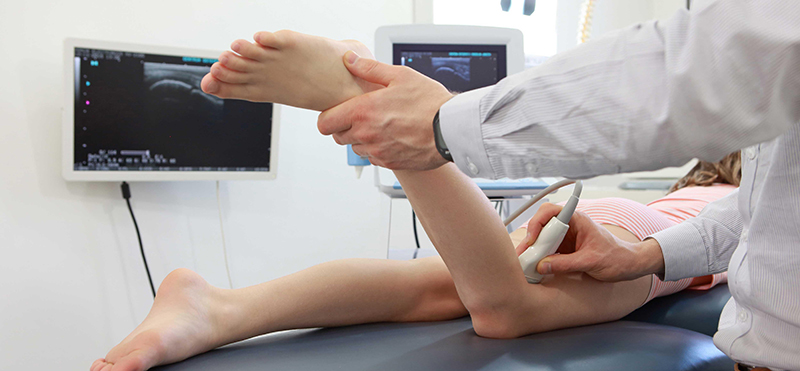
Doppler ultrasound of the arteries
This advanced ultrasound technique uses sound waves to generate images and evaluate blood flow within the arteries of the lower limbs. It helps detect and assess arterial obstruction caused by the accumulation of atherosclerotic plaques.
Computed tomography scan
During computed tomography imaging, X-ray technology is used to examine internal body structures. Before the scan, a contrast agent is injected into a vein and travels through the blood vessels, helping highlight areas of blockage within the arteries of the lower limbs.
Four limb blood pressure measurement
Physicians may measure blood pressure at different sites such as the thighs, calves, and feet. Reduced blood pressure in these areas may indicate arterial obstruction due to insufficient blood flow.
Angiography
Angiography uses X-ray imaging to determine whether atherosclerotic plaques are obstructing the blood vessels. During the procedure, the patient receives local anesthesia and a contrast agent is injected into the lower limb arteries to visualize the blood vessels and detect narrowing, blockage, or dilation.
Treatment methods for peripheral artery disease of the lower limbs
Peripheral artery disease of the lower limbs should be treated early to prevent serious complications caused by vascular obstruction. Several treatment approaches are commonly used:
Medical treatment
Medications are commonly prescribed to control blood pressure, manage cholesterol levels, and regulate diabetes in order to slow disease progression and reduce cardiovascular risk.
All medications should be taken strictly according to a physician’s prescription. Patients should not discontinue or change medications without consulting a specialist.
Reader may also be interested in:
- Stroke: Early prevention helps reduce the risk of severe complications
- Causes of cardiovascular disease and effective prevention strategies
Surgical treatment
Surgical intervention may be recommended to remove existing arterial blockages and restore blood flow, while also helping prevent the formation of new vascular obstructions.
Surgical treatment options for peripheral artery disease of the lower limbs include the following:
Angioplasty and stent placement
This procedure involves balloon angioplasty followed by stent placement. A balloon catheter is used to dilate the narrowed artery, after which a small metal mesh tube called a stent is inserted into the blood vessel to keep the artery open, reduce obstruction, and restore adequate blood flow.
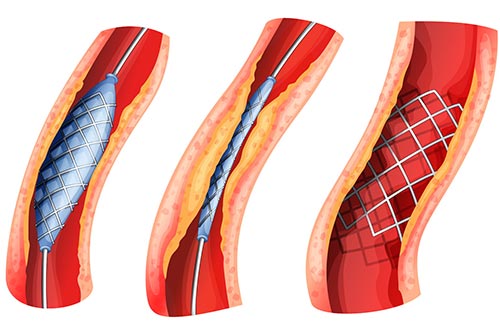
Before the procedure, the patient is given local anesthesia. The physician then performs balloon angioplasty by advancing a balloon catheter through the blood vessel to the narrowed segment and inflating the balloon to widen the artery. Afterward, a stent is placed at the affected site to restore and maintain blood flow.
Endarterectomy
This method is also effective in treating peripheral artery disease of the lower limbs. The procedure involves clearing the blocked artery by removing atherosclerotic plaques from the arterial wall.
Before the procedure, the patient receives local anesthesia. A contrast agent is injected to visualize the blockage on X ray imaging. The physician then inserts a catheter into the femoral artery and guides it to the obstructed segment, where specialized intravascular instruments attached to the catheter are used to remove the plaque.
Bypass surgery
In severe cases, particularly when patients experience significant pain, tissue necrosis associated with diabetes, embolic complications, or multiple open ulcers on the legs, physicians may consider bypass surgery.
This procedure creates a new pathway that allows blood to flow around the blocked artery, thereby improving circulation to the legs and returning blood to the heart. One of the major benefits of this surgery is that it may help prevent limb amputation caused by severe tissue necrosis.
Lifestyle modification
In addition to medical or surgical treatment prescribed by specialists, patients should adopt lifestyle changes appropriate to their condition.
This includes maintaining a balanced diet, limiting foods high in cholesterol, reducing excessive salt and sugar intake, controlling blood pressure and diabetes, and maintaining a healthy body weight to help prevent disease progression or recurrence.
Regular physical activity with appropriate exercises and moderate intensity is also recommended. Patients should stop exercising and rest if pain occurs.
Another important aspect is undergoing regular cardiovascular examinations to detect abnormalities early. Early diagnosis allows more effective treatment and helps prevent serious complications.
When symptoms such as intermittent claudication occur, patients should consult a cardiovascular specialist and follow prescribed treatment. The cardiology department at Hong Ngoc General Hospital is widely recognized for its expertise in diagnosing and treating cardiovascular diseases.
Patients visiting the hospital can expect high standards of both medical expertise and service quality, with several outstanding advantages:

The department is staffed by a team of highly qualified and experienced physicians specializing in the diagnosis and treatment of cardiovascular diseases, including:
- Dr. Vu Thin, with more than 20 years of experience at the National Heart Institute of Bach Mai Hospital and Hong Ngoc General Hospital.
- Dr. Le Thi Thanh Hang, with over 20 years of professional experience at Friendship Hospital.
- Dr. Cao Manh Hung, who has worked for many years at the National Heart Institute of Bach Mai Hospital, Hanoi Medical University Hospital, and Thanh Hoa Provincial General Hospital.
- Dr. Nguyen Thi Lan Anh, with many years of experience at Thanh Nhan Hospital.
The department continuously updates and invests in advanced medical technologies to support accurate diagnosis and effective treatment, including:
- Voluson E8 ultrasound system with color Doppler for vascular imaging
- CT Revolution EVO scanner and Signa Creator 1.5 Tesla MRI system (GE Healthcare, United States) providing high resolution imaging
- 24 hour Holter electrocardiography system
- Abbott laboratory testing system (United States)
- Digital subtraction angiography system that enables precise diagnosis and timely interventional treatment for many cardiovascular and cerebrovascular conditions
- Digital X ray imaging system
Patients do not need to worry about overcrowding, long waiting lines, or a noisy hospital environment. The cardiology clinics are designed as separate areas with spacious and comfortable settings, helping minimize waiting time and provide a more pleasant experience. In addition, patients are offered a complimentary buffet at the hospital restaurant during each visit.
Register here to receive consultation and schedule an examination with cardiology specialists at Hong Ngoc General Hospital.
Note: The information provided in articles published by Hong Ngoc General Hospital is for reference purposes only and does not replace professional medical diagnosis or treatment. Patients should not self medicate without medical supervision. To determine the exact medical condition, individuals should visit a hospital for direct examination, diagnosis, and appropriate treatment consultation with a physician.
Follow the official fanpage of Hong Ngoc General Hospital for more useful health information.