




Knee osteoarthritis is one of the most common musculoskeletal disorders. The disease progresses through stages and is increasingly affecting younger individuals, significantly impacting daily activities and quality of life.
What is knee osteoarthritis?
Knee osteoarthritis is a degenerative joint disorder characterized by dystrophic changes of the knee joint, particularly involving the articular cartilage. Over time, the cartilage progressively wears down, becoming rough and thinned, leading to structural alterations of the joint surface, formation of osteophytes and ultimately joint deformity and dysfunction.
The knee joint is covered by articular cartilage and formed by the articulation of three bones: the distal femur, the proximal tibia and the posterior surface of the patella. It plays a crucial role in weight bearing and is one of the most frequently used joints in the body. As joint damage progresses, synovial fluid production decreases, increasing friction between joint surfaces and accelerating cartilage degeneration, thereby contributing to the progression of osteoarthritis.
Causes of knee osteoarthritis
Knee osteoarthritis is a multifactorial condition with several contributing factors, including:
- Age: The risk increases with advancing age. Cartilage synthesis declines, reducing its capacity for regeneration and repair
- Sex: Women over 55 years of age are at higher risk than men, partly due to weaker knee ligaments and the habitual use of high heels, which increase pressure on the joint cartilage
- Overweight and obesity: Excess body weight places increased mechanical load on the knee joints, accelerating cartilage degeneration
- Joint injury: Trauma such as patellar fractures, distal femoral fractures or ligament injuries may cause significant cartilage damage. Without timely treatment, this can lead to joint misalignment and progressive degeneration
- Genetic predisposition: A family history of knee osteoarthritis increases the likelihood of developing the condition
- Excessive physical activity: Heavy labor or high intensity sports may accelerate joint wear and degeneration
- Physical inactivity: Lack of exercise weakens muscles, reduces joint stability and flexibility, and increases the risk of degeneration
- Inappropriate medication use: Misuse or overuse of corticosteroids, commonly used for anti inflammatory or immunosuppressive purposes, may exacerbate cartilage degeneration
- Impaired immune function: Articular cartilage is nourished by synovial fluid; immune dysfunction may trigger mechanisms that damage both healthy and degenerated cartilage
- Skeletal deformities: Congenital abnormalities of bone or cartilage increase the risk of joint degeneration
- Unhealthy diet and lifestyle: Poor nutrition reduces synovial fluid production, increasing joint friction. Excessive alcohol consumption may further damage cartilage
- Comorbid conditions: Diseases such as obesity, gout, diabetes mellitus, rheumatoid arthritis, metabolic syndrome and flatfoot deformity may contribute to the development and progression of knee osteoarthritis
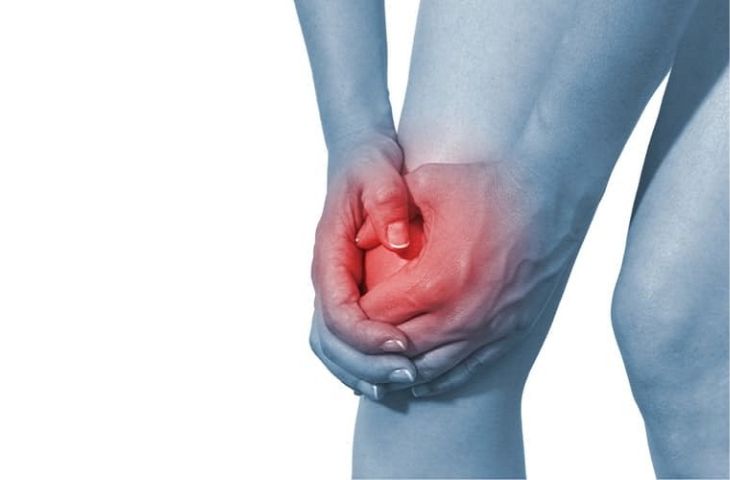
Symptoms of knee osteoarthritis
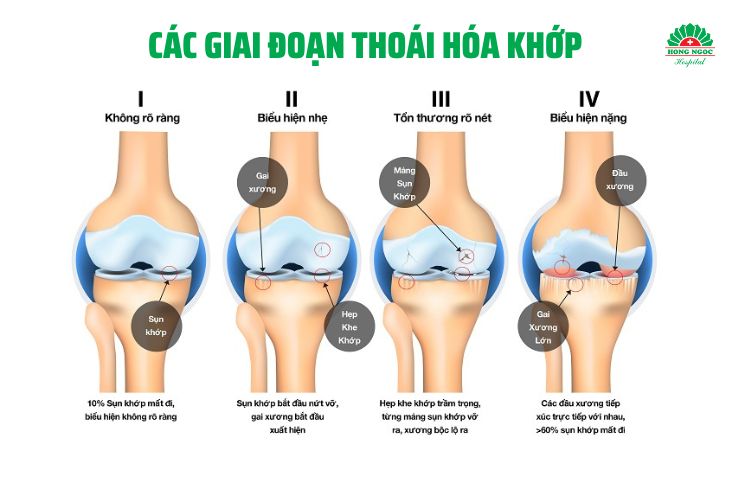
Knee osteoarthritis progresses through four stages, each characterized by distinct clinical features.
Stage 1: Minimal or no symptoms
At this early stage, mild changes in the articular cartilage may occur. Patients typically do not experience pain or discomfort due to minimal joint wear.
At this stage, clinicians may recommend supplementation with agents such as glucosamine or chondroitin, along with regular exercise, to help prevent symptom progression and slow the degenerative process.
Stage 2: Mild symptoms
At this stage, patients typically begin to experience joint pain, although cartilage damage remains limited. Synovial fluid is still sufficient to maintain normal joint movement.
However, characteristic symptoms of knee osteoarthritis may appear, including:
- Pain after prolonged walking or running
- Joint stiffness following periods of inactivity
- Reduced joint flexibility when kneeling or bending
Additionally, small osteophytes may begin to form, contributing to discomfort and pain during increased physical activity due to irritation of surrounding joint tissues.
Stage 3: Moderate to severe symptoms
At this stage, cartilage damage becomes evident, with fissuring, fragmentation and significant cartilage loss, leading to joint space narrowing. Patients typically experience persistent pain during walking, running, bending or kneeling. Joint stiffness may occur after prolonged sitting or in the morning, and swelling may develop following extended activity.
As the disease progresses, cartilage continues to deteriorate, and subchondral bone thickens with osteophyte formation. Inflammation of joint tissues may occur, with increased synovial fluid production leading to joint swelling (synovitis).
Stage 4: Severe symptoms
At this advanced stage, patients experience severe pain and marked functional limitation during movement. Joint space is significantly reduced, cartilage is nearly completely destroyed, and the joint becomes stiff and almost immobile. Synovial fluid is markedly decreased, reducing its lubricating function and increasing friction between joint surfaces.
Surgical intervention, such as osteotomy or joint replacement, may be required.
Diagnosis of knee osteoarthritis
To diagnose knee osteoarthritis, clinicians assess the patient’s medical history, presenting symptoms and perform a physical examination. Clinical findings may include joint tenderness on palpation, swelling due to effusion, osteophyte formation or a popliteal mass, as well as crepitus during joint movement.
For a more accurate diagnosis, additional investigations may be indicated:
- Blood tests: to evaluate inflammatory markers
- Synovial fluid analysis: typically clear, colorless, with normal or slightly reduced viscosity and low protein and cell counts
- X ray imaging: may reveal joint space narrowing, osteophyte formation, subchondral sclerosis and calcification of periarticular structures
- Ultrasound: useful for detecting joint effusion, assessing joint space, osteophytes and cartilage thickness
- Magnetic resonance imaging: provides detailed three dimensional visualization of joint structures, including cartilage, ligaments and synovium
- Arthroscopy: allows direct visualization and accurate assessment of cartilage degeneration, and helps differentiate osteoarthritis from other joint disorders
Is knee osteoarthritis dangerous?
If not diagnosed and treated promptly, knee osteoarthritis may lead to several serious complications, including:
- Gout: Degenerative changes in cartilage may promote the deposition of monosodium urate crystals within the joint, contributing to the development of gout
- Weight gain: Persistent joint pain and swelling may limit mobility, increasing the risk of obesity
- Cartilage calcification (chondrocalcinosis): Calcium crystal deposition in the cartilage may exacerbate inflammation and trigger acute pain episodes
- Sleep disturbances: Chronic pain may interfere with sleep quality
- Depression and anxiety: Ongoing pain and functional limitation may negatively impact mental health, leading to psychological distress
Additionally, other complications may include osteonecrosis, fractures, bleeding or infection, as well as damage to periarticular tendons and ligaments around the knee joint.
Treatment of knee osteoarthritis
Knee osteoarthritis is a common condition, and multiple treatment options are available depending on disease severity. At Hong Ngoc General Hospital, management strategies include:
Pharmacological treatment
Commonly prescribed medications include analgesics, anti inflammatory agents, muscle relaxants and disease modifying agents for osteoarthritis. Topical therapies may also be used.
While medications can effectively relieve pain, they may be associated with adverse effects such as gastrointestinal, hepatic or renal toxicity, as well as nausea and dizziness. Therefore, patients should strictly follow medical prescriptions and avoid self medication or overuse.
Non pharmacological treatment
- Weight reduction (if overweight): helps decrease mechanical load on the knee joint
- Regular exercise: with appropriate joint friendly exercises to improve function and slow disease progression
- Postural modification: avoid squatting, sitting cross legged or frequent stair climbing to reduce joint stress
- Physiotherapy: includes both passive (performed by therapists) and active (performed by patients) modalities. Techniques such as heat therapy, electrical stimulation, infrared therapy and manual massage are recommended. These approaches help reduce reliance on medications
Biological therapies
Intra articular injections such as hyaluronic acid (viscosupplementation) or platelet rich plasma (PRP) may be indicated to improve joint lubrication and support tissue repair.

Surgical treatment
In severe cases of knee osteoarthritis, such as joint deformity, persistent pain and stiffness, or osteoarthritis associated with synovitis, where conservative treatments are ineffective, surgical intervention may be indicated.
Common surgical options include arthroscopic procedures (joint lavage and removal of loose cartilage fragments), meniscectomy for damaged meniscus, debridement of irregular cartilage surfaces, cartilage cell implantation, realignment osteotomy and total knee replacement.
Reader may also be interested in:
Prevention of knee osteoarthritis
Musculoskeletal experts recommend the following measures to prevent knee osteoarthritis:
- Maintain an ideal body weight (BMI < 23) to reduce mechanical stress on the knee joints
- Achieve optimal glycemic control
- Engage in regular, moderate intensity exercise to improve joint flexibility, strengthen periarticular muscles and reduce the risk of chronic diseases
- Perform daily activities carefully to avoid joint injuries
- Adopt a healthy lifestyle, including a balanced diet, adequate sleep and stress reduction
- Avoid alcohol consumption, smoking and other stimulants
- Undergo routine health check ups every 6 months for early detection and management of potential abnormalities

Additionally, when symptoms suggestive of knee osteoarthritis appear, patients should seek early evaluation at a specialized musculoskeletal clinic for accurate diagnosis and appropriate, effective treatment.
In Hanoi, the Musculoskeletal Department of Hong Ngoc General Hospital is a trusted center for the diagnosis and management of knee osteoarthritis, highly regarded for both clinical expertise and service quality. At Hong Ngoc, patients benefit from leading healthcare services, including:
- A team of highly experienced specialists trained and working at major hospitals both domestically and internationally, such as Bach Mai Hospital, Viet Duc Hospital and Royal North Shore Hospital (Australia)
- A modern, fully integrated system of advanced medical equipment imported from the United States, including SIGNA Prime MRI, 128 slice CT scanner, Hologic bone densitometry system and Logiq P7 musculoskeletal ultrasound, enabling high resolution imaging and early detection of tumors and musculoskeletal disorders
- An integrated treatment approach combining physiotherapy and rehabilitation, utilizing German therapeutic systems and advanced Austrian manual therapy techniques to restore mobility and effectively relieve pain caused by knee osteoarthritis
In addition, patients are provided with a wide range of modern amenities and services:
- Personalized follow up schedules with proactive appointment reminders
- A clean, modern hospital environment with facilities such as free Wi Fi, café and restaurant services
- Weekend service availability with no additional charges
- Fast and efficient insurance direct billing procedures, ensuring maximum patient benefits
Note: The information provided in this article by Hong Ngoc General Hospital is for reference purposes only and does not replace professional medical diagnosis or treatment. Patients are strongly advised not to self medicate. For an accurate assessment of their condition, individuals should visit medical facilities for direct consultation, diagnosis and appropriate treatment planning by qualified healthcare professionals.
For more health related updates and useful information, please follow Hong Ngoc General Hospital’s official fanpage:https://www.facebook.com/BenhvienHongNgoc/