


Cervical spondylosis is a chronic condition that not only causes neck, shoulder, and upper back pain, along with numbness in the extremities, but also reduces mobility and significantly impacts daily activities.
How serious is cervical spondylosis, and what are the most effective treatment approaches? Let us explore Hong Ngoc General Hospital in the article below.
What is cervical spondylosis?
Before addressing whether cervical spondylosis is a serious condition, it is important to understand its nature and underlying causes to determine appropriate management strategies.
Cervical spondylosis is a chronic degenerative disorder resulting from the deterioration of articular cartilage and or intervertebral discs in the cervical spine. The condition typically progresses gradually and is more common in older adults. However, due to sedentary lifestyles and unhealthy habits, it is increasingly observed in younger populations, particularly individuals aged 25 to 30.

Cervical spondylosis is a chronic condition that causes pain in the neck and shoulder region.
Is cervical spondylosis dangerous?
Cervical spondylosis can be a serious condition and may lead to significant complications if not diagnosed and treated in a timely manner. Potential complications may include:
Neck, shoulder, and upper back pain: Persistent pain in the cervical and shoulder region is a hallmark symptom. Initially mild, the pain may progress, causing stiffness, restricted neck movement, and increased susceptibility to muscle strain or torticollis. Over time, nerve compression may lead to radiating pain extending to the arms, hands, and fingers.
Headache and dizziness: In addition to neck pain, patients may experience occipital or frontal headaches accompanied by dizziness, often due to compression of the vertebral arteries. Progressive symptoms may indicate vestibular dysfunction.
Vestibular disturbances: In advanced stages, patients may develop symptoms such as severe dizziness, nausea, imbalance, gait instability, fatigue, and stress. These manifestations are associated with impaired cerebral blood flow secondary to vascular and nerve compression.
Cervical disc herniation: A serious complication resulting from spinal cord compression, which may cause limb weakness, pain, difficulty walking, or even paralysis. This is one of the most concerning outcomes, potentially leading to severe pain, cervical spinal stenosis, chronic cerebral hypoperfusion, and permanent neurological deficits.

Is cervical spondylosis dangerous?
Diagnostic approaches for cervical spondylosis
Cervical spondylosis should be evaluated by musculoskeletal specialists to determine appropriate management based on disease stage.
Clinical assessment
Cervical spine syndrome: Characterized by neck pain and paraspinal muscle stiffness. Pain may worsen with prolonged neck positioning, fatigue, weather changes, or heavy lifting. Localized tenderness along the cervical spine may be identified.
Cervical radiculopathy: Pain radiating from the neck to one or both upper limbs, often accompanied by occipital or shoulder pain, paresthesia, and numbness extending to the fingers. Symptoms may worsen with neck movements, coughing, sneezing, or prolonged sitting. Associated findings may include dizziness, muscle weakness, or atrophy.
Vertebral artery syndrome: Typically presents with headaches in the occipital, frontal, or temporal regions, especially in the morning. May be associated with tinnitus, dizziness, visual disturbances, dysphagia, or ear and postauricular pain, particularly with sustained head positioning.
Spinal cord compression syndrome: Manifestations depend on the level and severity of compression, including gait instability, limb weakness, distal muscle atrophy, and, in severe cases, paralysis.
Other manifestations: Patients may also experience sleep disturbances, irritability, and reduced concentration, which can impact quality of life and reflect disease severity.
Paraclinical investigations
Inflammatory markers: Laboratory tests are performed to exclude infectious or malignant conditions.
Cervical spine X ray: Imaging in multiple views (anteroposterior, lateral, and oblique) helps assess cervical curvature, vertebral body height, intervertebral disc spaces, subchondral bone changes, and osteophyte formation.
Electromyography (EMG): Used to detect and evaluate nerve root involvement and neuromuscular impairment.
Magnetic resonance imaging (MRI) or CT scan: Advanced imaging modalities that accurately identify the location and cause of nerve root compression, such as osteophytes or intervertebral disc herniation.
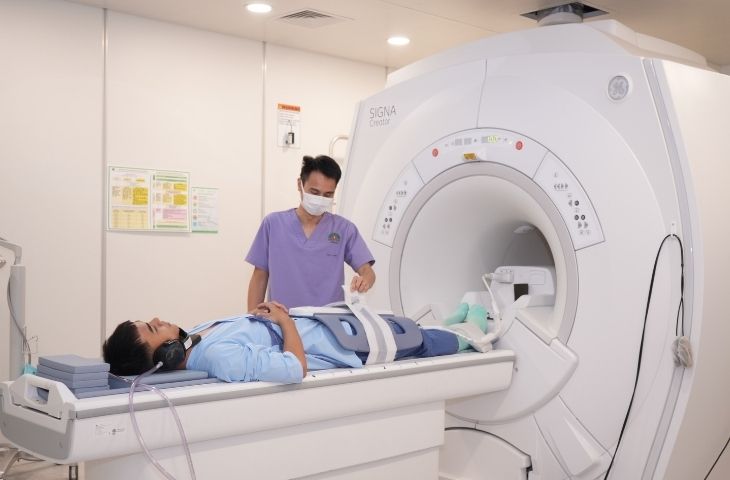
Magnetic resonance imaging (MRI) helps identify the location of degenerative changes in the cervical spine.
Differential diagnosis
Cervical spine trauma
Bone malignancies and benign or malignant bone marrow disorders
Disorders involving the vertebrobasilar arterial system
Intramedullary tumors and peripheral nerve tumors
How is cervical spondylosis treated?
The management of cervical spondylosis typically involves a combination of pharmacological therapy, rehabilitation, therapeutic exercise, and lifestyle modification to protect the cervical spine and improve clinical outcomes.
Pharmacological management
Analgesics: Medications such as paracetamol and tramadol are used to relieve pain associated with cervical spondylosis. Dosage should be prescribed based on the patient’s clinical condition and treatment response.
Nonsteroidal anti inflammatory drugs (NSAIDs) or selective COX 2 inhibitors: These may be administered orally or topically to reduce pain and inflammation. Use should be carefully monitored, especially in elderly patients or those with cardiovascular, gastrointestinal, or renal comorbidities.
Slow acting anti osteoarthritis agents (SYSADOAs):Agents such as piascledine, glucosamine sulfate, or diacerein may be prescribed depending on disease severity.
Muscle relaxants: These help alleviate muscle spasm and improve pain symptoms.
Neuropathic pain medications: Including gabapentin, pregabalin, and vitamin B complex (B1, B6, B12), as well as mecobalamin, to support nerve function and reduce neuropathic pain.
Glucocorticoid injections: Indicated in selected cases, administered under specialist supervision with appropriate dosing.
Physical therapy and rehabilitation
In addition to appropriate nutrition, rest, and therapeutic exercise, physical therapy plays an increasingly important role in managing musculoskeletal disorders. It helps improve flexibility in the neck and shoulder region, enhances functional mobility, and reduces dependence on pharmacological treatment.
In Hanoi, the Department of Traditional Medicine and Rehabilitation at Hong Ngoc General Hospital is a reputable destination for physical therapy in the management of cervical spondylosis, widely trusted and highly rated for both clinical expertise and service quality.
Highly qualified and experienced medical team: Led by Dr. Dinh Van Hao, Head of the Department of Traditional Medicine and Rehabilitation at Hong Ngoc Phuc Truong Minh Hospital, who received advanced training in Austria and has over 10 years of experience in managing musculoskeletal and neurological disorders. Dr. Do Chi Hung, PhD, former Head of the Rehabilitation Department at E Central Hospital, brings nearly 40 years of experience in rehabilitation for trauma, post surgical recovery, nerve paralysis, and stroke. Supported by a team of skilled physicians and therapists, including Dr. Nguyen Tien Tai, MSc. Dr. Tong Khanh Linh, and MSc. Dr. Do Duc Bao.
German technology based therapy protocols combined with advanced Austrian manual techniques: A fully integrated system of therapeutic equipment imported from Germany, including interferential electrotherapy devices, laser therapy systems, spinal traction tables, and advanced hydrotherapy units. pecialized Austrian manual therapy techniques help relieve muscle spasm, restore joint alignment, reduce recurrence of pain, and optimize treatment outcomes while minimizing the need for medication.
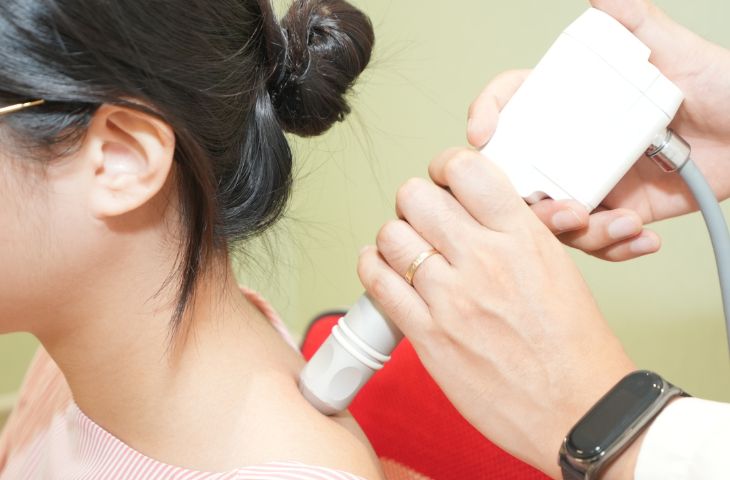
Physical therapy at Hong Ngoc General Hospital utilizes German technology to effectively relieve pain associated with cervical spondylosis.
In addition, patients receiving examination and treatment at Hong Ngoc General Hospital benefit from a range of patient centered amenities:
Clean, modern hospital environment with facilities such as free WiFi, cafés, and restaurants
Structured follow up schedules with proactive appointment reminders for each patient
Fast and efficient insurance processing, ensuring maximum patient benefits
Weekend services available without additional charges
For further consultation on cervical spondylosis at Hong Ngoc General Hospital, please contact the hotline: 0243 927 5568 (extensions 2225, 2265) or register via the form below:
Surgical management
Surgical intervention in cervical spondylosis is indicated in patients with progressive nerve root or spinal cord compression, high grade vertebral slippage (grade III–IV), or significant functional impairment. Surgery is particularly considered when there is no adequate response to conservative treatment and rehabilitation after approximately three months.
During the procedure, surgeons remove osteophytes and herniated discs to decompress affected nerve roots and the spinal cord. This helps relieve persistent pain, preserve mobility, and prevent serious complications associated with cervical spondylosis.
Understanding the condition and adopting early preventive measures are essential to protect against the increasing burden of cervical spondylosis. The information above addresses the question: “Is cervical spondylosis dangerous?”
Note: The information provided in this article by Hong Ngoc General Hospital is for reference purposes only and does not replace professional medical diagnosis or treatment. Patients should not self medicate. For accurate diagnosis and appropriate treatment, individuals are advised to visit a healthcare facility for direct medical evaluation, diagnosis, and consultation.
Cervical spondylosis is a chronic condition that not only causes neck, shoulder, and upper back pain, along with numbness in the extremities, but also reduces mobility and significantly impacts daily activities.
How serious is cervical spondylosis, and what are the most effective treatment approaches? Let us explore Hong Ngoc General Hospital in the article below.
What is cervical spondylosis?
Before addressing whether cervical spondylosis is a serious condition, it is important to understand its nature and underlying causes to determine appropriate management strategies.
Cervical spondylosis is a chronic degenerative disorder resulting from the deterioration of articular cartilage and or intervertebral discs in the cervical spine. The condition typically progresses gradually and is more common in older adults. However, due to sedentary lifestyles and unhealthy habits, it is increasingly observed in younger populations, particularly individuals aged 25 to 30.
Cervical spondylosis is a chronic condition that causes pain in the neck and shoulder region.
Is cervical spondylosis dangerous?
Cervical spondylosis can be a serious condition and may lead to significant complications if not diagnosed and treated in a timely manner. Potential complications may include:
Neck, shoulder, and upper back pain: Persistent pain in the cervical and shoulder region is a hallmark symptom. Initially mild, the pain may progress, causing stiffness, restricted neck movement, and increased susceptibility to muscle strain or torticollis. Over time, nerve compression may lead to radiating pain extending to the arms, hands, and fingers.
Headache and dizziness: In addition to neck pain, patients may experience occipital or frontal headaches accompanied by dizziness, often due to compression of the vertebral arteries. Progressive symptoms may indicate vestibular dysfunction.
Vestibular disturbances: In advanced stages, patients may develop symptoms such as severe dizziness, nausea, imbalance, gait instability, fatigue, and stress. These manifestations are associated with impaired cerebral blood flow secondary to vascular and nerve compression.
Cervical disc herniation: A serious complication resulting from spinal cord compression, which may cause limb weakness, pain, difficulty walking, or even paralysis. This is one of the most concerning outcomes, potentially leading to severe pain, cervical spinal stenosis, chronic cerebral hypoperfusion, and permanent neurological deficits.
Is cervical spondylosis dangerous?
Diagnostic approaches for cervical spondylosis
Cervical spondylosis should be evaluated by musculoskeletal specialists to determine appropriate management based on disease stage.
Clinical assessment
Cervical spine syndrome: Characterized by neck pain and paraspinal muscle stiffness. Pain may worsen with prolonged neck positioning, fatigue, weather changes, or heavy lifting. Localized tenderness along the cervical spine may be identified.
Cervical radiculopathy: Pain radiating from the neck to one or both upper limbs, often accompanied by occipital or shoulder pain, paresthesia, and numbness extending to the fingers. Symptoms may worsen with neck movements, coughing, sneezing, or prolonged sitting. Associated findings may include dizziness, muscle weakness, or atrophy.
Vertebral artery syndrome: Typically presents with headaches in the occipital, frontal, or temporal regions, especially in the morning. May be associated with tinnitus, dizziness, visual disturbances, dysphagia, or ear and postauricular pain, particularly with sustained head positioning.
Spinal cord compression syndrome: Manifestations depend on the level and severity of compression, including gait instability, limb weakness, distal muscle atrophy, and, in severe cases, paralysis.
Other manifestations: Patients may also experience sleep disturbances, irritability, and reduced concentration, which can impact quality of life and reflect disease severity.
Paraclinical investigations
Inflammatory markers: Laboratory tests are performed to exclude infectious or malignant conditions.
Cervical spine X ray: Imaging in multiple views (anteroposterior, lateral, and oblique) helps assess cervical curvature, vertebral body height, intervertebral disc spaces, subchondral bone changes, and osteophyte formation.
Electromyography (EMG): Used to detect and evaluate nerve root involvement and neuromuscular impairment.
Magnetic resonance imaging (MRI) or CT scan: Advanced imaging modalities that accurately identify the location and cause of nerve root compression, such as osteophytes or intervertebral disc herniation.
Magnetic resonance imaging (MRI) helps identify the location of degenerative changes in the cervical spine.
Differential diagnosis
Cervical spine trauma
Bone malignancies and benign or malignant bone marrow disorders
Disorders involving the vertebrobasilar arterial system
Intramedullary tumors and peripheral nerve tumors
How is cervical spondylosis treated?
The management of cervical spondylosis typically involves a combination of pharmacological therapy, rehabilitation, therapeutic exercise, and lifestyle modification to protect the cervical spine and improve clinical outcomes.
Pharmacological management
Analgesics: Medications such as paracetamol and tramadol are used to relieve pain associated with cervical spondylosis. Dosage should be prescribed based on the patient’s clinical condition and treatment response.
Nonsteroidal anti inflammatory drugs (NSAIDs) or selective COX 2 inhibitors: These may be administered orally or topically to reduce pain and inflammation. Use should be carefully monitored, especially in elderly patients or those with cardiovascular, gastrointestinal, or renal comorbidities.
Slow acting anti osteoarthritis agents (SYSADOAs):Agents such as piascledine, glucosamine sulfate, or diacerein may be prescribed depending on disease severity.
Muscle relaxants: These help alleviate muscle spasm and improve pain symptoms.
Neuropathic pain medications: Including gabapentin, pregabalin, and vitamin B complex (B1, B6, B12), as well as mecobalamin, to support nerve function and reduce neuropathic pain.
Glucocorticoid injections: Indicated in selected cases, administered under specialist supervision with appropriate dosing.
Physical therapy and rehabilitation
In addition to appropriate nutrition, rest, and therapeutic exercise, physical therapy plays an increasingly important role in managing musculoskeletal disorders. It helps improve flexibility in the neck and shoulder region, enhances functional mobility, and reduces dependence on pharmacological treatment.
In Hanoi, the Department of Traditional Medicine and Rehabilitation at Hong Ngoc General Hospital is a reputable destination for physical therapy in the management of cervical spondylosis, widely trusted and highly rated for both clinical expertise and service quality.
Highly qualified and experienced medical team: Led by Dr. Dinh Van Hao, Head of the Department of Traditional Medicine and Rehabilitation at Hong Ngoc Phuc Truong Minh Hospital, who received advanced training in Austria and has over 10 years of experience in managing musculoskeletal and neurological disorders. Dr. Do Chi Hung, PhD, former Head of the Rehabilitation Department at E Central Hospital, brings nearly 40 years of experience in rehabilitation for trauma, post surgical recovery, nerve paralysis, and stroke. Supported by a team of skilled physicians and therapists, including Dr. Nguyen Tien Tai, MSc. Dr. Tong Khanh Linh, and MSc. Dr. Do Duc Bao.
German technology based therapy protocols combined with advanced Austrian manual techniques: A fully integrated system of therapeutic equipment imported from Germany, including interferential electrotherapy devices, laser therapy systems, spinal traction tables, and advanced hydrotherapy units. pecialized Austrian manual therapy techniques help relieve muscle spasm, restore joint alignment, reduce recurrence of pain, and optimize treatment outcomes while minimizing the need for medication.
Physical therapy at Hong Ngoc General Hospital utilizes German technology to effectively relieve pain associated with cervical spondylosis.
In addition, patients receiving examination and treatment at Hong Ngoc General Hospital benefit from a range of patient centered amenities:
Clean, modern hospital environment with facilities such as free WiFi, cafés, and restaurants
Structured follow up schedules with proactive appointment reminders for each patient
Fast and efficient insurance processing, ensuring maximum patient benefits
Weekend services available without additional charges
For further consultation on cervical spondylosis at Hong Ngoc General Hospital, please contact the hotline: 0243 927 5568 (extensions 2225, 2265) or register via the form below:
Surgical management
Surgical intervention in cervical spondylosis is indicated in patients with progressive nerve root or spinal cord compression, high grade vertebral slippage (grade III–IV), or significant functional impairment. Surgery is particularly considered when there is no adequate response to conservative treatment and rehabilitation after approximately three months.
During the procedure, surgeons remove osteophytes and herniated discs to decompress affected nerve roots and the spinal cord. This helps relieve persistent pain, preserve mobility, and prevent serious complications associated with cervical spondylosis.
Understanding the condition and adopting early preventive measures are essential to protect against the increasing burden of cervical spondylosis. The information above addresses the question: “Is cervical spondylosis dangerous?”
Note: The information provided in this article by Hong Ngoc General Hospital is for reference purposes only and does not replace professional medical diagnosis or treatment. Patients should not self medicate. For accurate diagnosis and appropriate treatment, individuals are advised to visit a healthcare facility for direct medical evaluation, diagnosis, and consultation.
Để lại câu hỏi của bạn để nhận được giải đáp từ các bác sĩ của Hồng Ngọc
Lorem ipsum dolor
Lorem ipsum dolor sit amet, consectetur adipiscing elit. Mauris odio lectus, pretium faucibus nisi eu, accumsan consectetur orci. In blandit vehicula nisl, vel lacinia ligula finibus a. Donec fermentum rhoncus