



An ankle sprain during sport commonly occurs when the foot rolls, twists or lands awkwardly, causing the ligaments surrounding the joint to stretch or tear. After the injury, stop exercising, protect the ankle, apply ice correctly, use moderate compression and elevate the leg. Most mild sprains can be managed conservatively, but prompt medical attention is required if the person cannot bear weight, has sharp pain over a bone, develops ankle deformity, or experiences numbness, coldness or discolouration of the foot.

Quick answer
Anyone who sustains an ankle sprain while playing sport should stop exercising and follow the PRICE approach during the first 48 to 72 hours: protect the ankle, rest, apply ice for 15 to 20 minutes at a time, use moderate compression and elevate the leg. Once pain and swelling have subsided, gentle movement and gradual walking may begin. Seek prompt medical attention if walking more than a few steps is impossible, there is sharp pain over a bone, or the ankle appears deformed.

Medical review: Hoang Van Ban, MD, MSc, Department of Orthopedic Trauma and Neurosurgery, Hong Ngoc Phuc Truong Minh General Hospital.
Article summary
- An ankle sprain is a ligament injury that commonly occurs when the foot rolls or twists beyond its normal range.
- Stop playing sport immediately after the injury and follow the PRICE approach during the first 48 to 72 hours.
- Do not rotate or manipulate the ankle, massage it vigorously or apply heat while it remains swollen.
- An inability to bear weight, sharp pain over a bone, visible deformity, or a numb or cold foot requires medical attention.
- Return to sport only after ankle range of motion, strength, balance and the ability to perform sport specific movements have been restored.
What is a sports related ankle sprain?
An ankle sprain occurs when one or more ligaments surrounding the joint are overstretched, partially torn or completely ruptured. Ligaments are bands of tissue that connect one bone to another and help stabilize the joint during standing, walking, running and jumping.
In sport, this injury commonly occurs after an awkward landing, sudden pivot or stepping on another player’s foot, causing the foot to bend or roll inward. Sports involving frequent running, jumping and changes of direction, such as football, basketball, badminton, tennis, pickleball and trail running, increase the risk of rolling the ankle.
A sprain differs from a strain. A sprain affects a ligament, whereas a strain occurs when a muscle or the tendon connecting muscle to bone is overstretched or torn.

Recognizing the severity of an ankle sprain and when to seek medical attention
An ankle sprain usually causes pain immediately after the foot rolls or twists. Pain most commonly occurs around the outer ankle, although the inner ankle or area above the joint may also be affected. Common symptoms include:
- Pain when standing, walking or rotating the ankle.
- Swelling around the ankle within minutes or hours.
- Bruising around the ankle or extending into the foot.
- Tenderness over the injured area.
- Difficulty flexing, extending or rotating the ankle.
- Difficulty bearing weight on the affected leg.
- A sensation that the ankle is unstable or likely to give way.
Some people may hear a cracking or popping sound at the time of injury. However, this sound alone cannot distinguish a sprain from a fracture. Do not rotate the foot or repeatedly attempt to walk to test the injury.
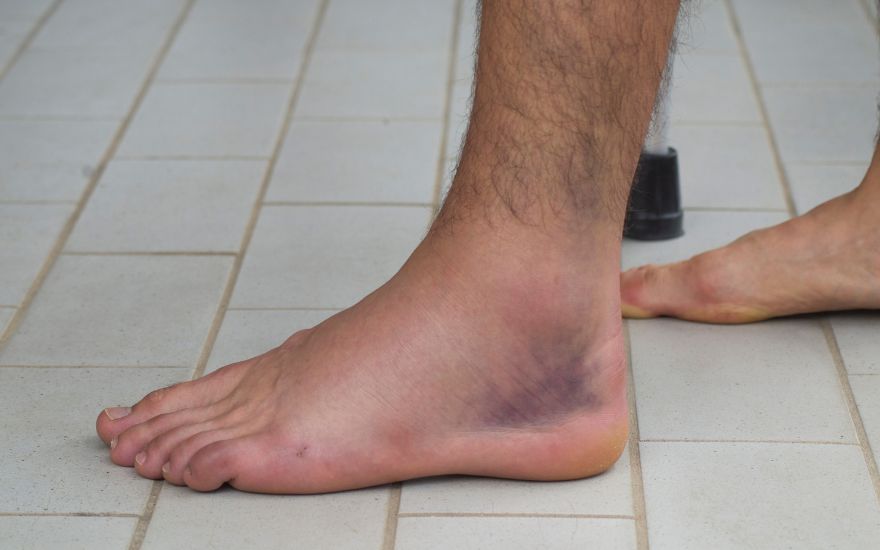
Three grades of ankle sprain
To assess the extent of the injury and determine appropriate management, ankle sprains are generally classified into three grades based on the degree of ligament damage:
The severity of an ankle sprain cannot be accurately determined from swelling or bruising alone. A severe sprain may resemble a fracture and requires medical assessment.
When should you seek prompt medical attention?
Seek medical attention if any of the following occur:
- Visible deformity of the ankle or foot.
- An inability to stand or walk approximately four steps.
- Sharp tenderness over a bone around the ankle or foot.
- Rapidly worsening swelling, bruising or pain.
- Numbness, coldness, pallor or bluish discolouration of the foot.
- An open wound or bleeding.
- Marked ankle instability, buckling or giving way.
- Pain located above the ankle joint.
- Symptoms that do not improve or become worse after several days.
The ability to bear weight and the location of bone tenderness are among the factors doctors use when deciding whether an X ray is needed. Patients should not apply these criteria themselves to rule out a fracture at home.

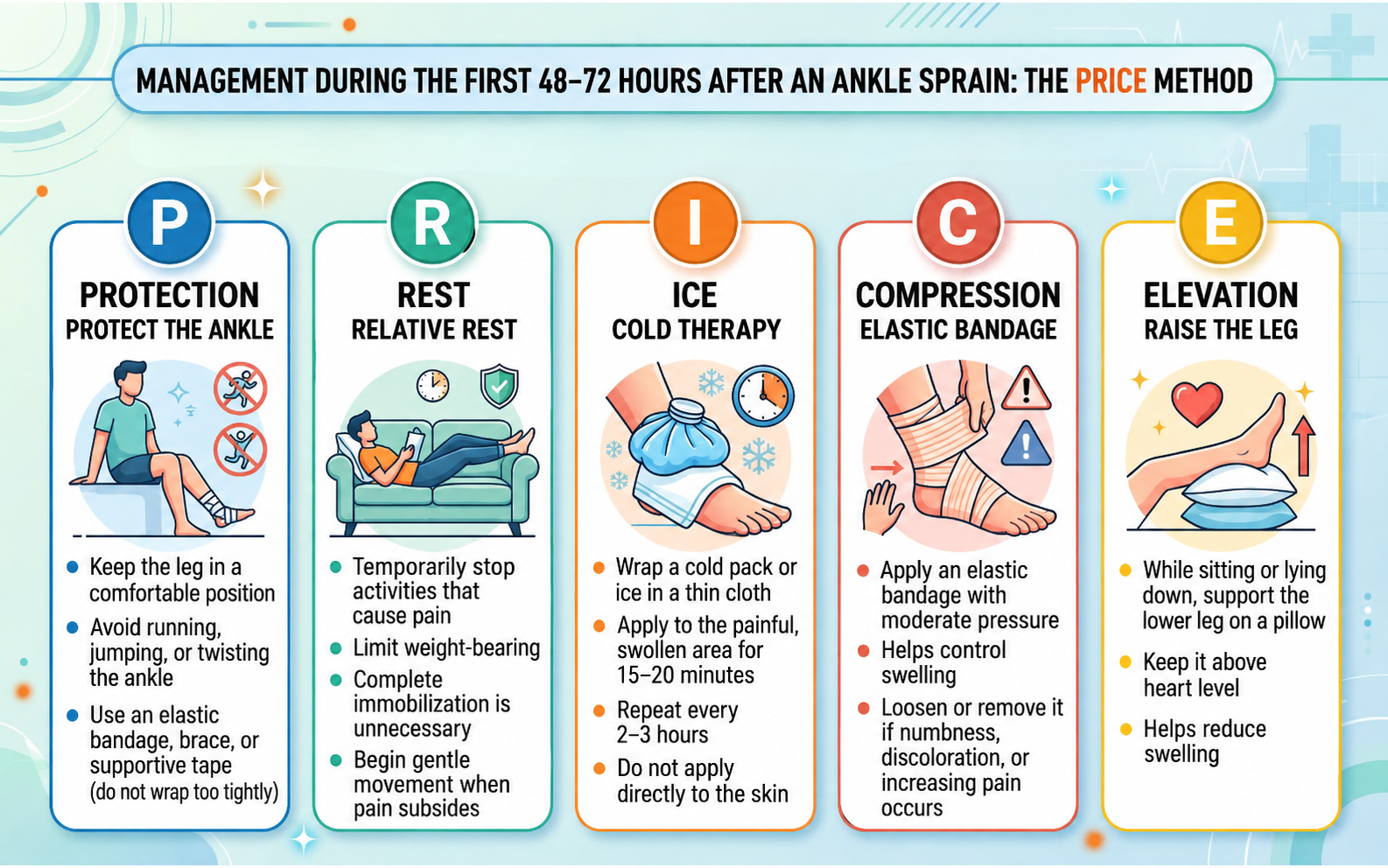
PRICE management for an ankle sprain during the first 48 - 72 hours
Immediately after rolling the ankle, the person should control pain and swelling, protect the ligaments and prevent the injury from worsening by following these steps:
- Protection: Place the ankle in a comfortable position and avoid running, jumping or twisting the joint. A bandage, brace or crutches may provide support, but the device should be appropriate and must not be applied too tightly.
- Relative rest: Temporarily stop activities that cause pain and limit weight bearing on the injured leg. Complete immobilization is not always necessary. Once pain and swelling have subsided, gentle movement may begin, followed by a gradual increase in weight bearing.
- Ice: Wrap a cold pack or ice in a thin towel and apply it to the painful, swollen area for 15 - 20 minutes at a time. This may be repeated every two to three hours if needed. Do not place ice directly on the skin or apply it while sleeping.
- Compression: Wrap an elastic bandage around the ankle with moderate pressure to support the joint and control swelling. Loosen or remove the bandage immediately if the foot becomes numb, cold or discoloured, or if the pain worsens.
- Elevation: While sitting or lying down, rest the ankle on a pillow and, if possible, keep it above heart level. This helps reduce swelling around the injured area.
During the first few days after injury, do not apply heat, soak the ankle in hot water, use medicated oils or massage the area vigorously. Avoid attempting to manipulate or forcefully pull the joint, applying remedies of unknown composition, consuming excessive alcohol, wrapping the ankle too tightly, or trying to continue running or competing. Massage, heat and alcohol may increase blood flow to the injured area, worsening pain, swelling and bruising.
Assessment and treatment of ankle sprains at Hong Ngoc General Hospital
Patients with an ankle sprain may seek assessment at the Department of Orthopedic Trauma and Neurosurgery, Hong Ngoc General Hospital, to determine the severity of the injury and rule out a fracture or associated injuries. The doctor will assess the location of pain, weight bearing capacity, range of motion and joint stability, and may recommend an X ray, MRI or another appropriate imaging examination when necessary. The department provides assessment, diagnosis and treatment for injuries involving the muscles, bones, joints and ligaments.
Depending on the condition, the patient may be advised to use a supportive bandage or brace, take appropriate pain medication and follow an individualized activity plan. If rehabilitation is required to restore range of motion, strength, balance and the ability to return to sport, treatment may be coordinated with the Department of Physical Therapy and Rehabilitation. Hong Ngoc also provides sports injury treatment for conditions including ankle sprains associated with pain, swelling, bruising or joint instability.
Patients should seek medical evaluation if they cannot bear weight, experience pain over a bone, have ankle instability or develop persistent symptoms. This allows an appropriate treatment and rehabilitation plan to be established before they return to physical activity.

Frequently asked questions about ankle sprains in sport
Should an ankle sprain be treated with heat or ice?
Ice should be prioritized during the first 48–72 hours to help relieve pain and control swelling. Wrap the cold pack in a towel and apply it for no more than approximately 20 minutes at a time. Do not apply heat while the ankle remains acutely swollen.
Does an ankle sprain require a cast?
Not every ankle sprain requires a cast. Mild sprains generally require only a supportive bandage or brace, whereas severe injuries may require short term immobilization. The doctor will select the appropriate approach based on the extent of ligament damage and joint stability.
How long does an ankle sprain take to recover?
Recovery time depends on the severity of the injury. A grade 1 sprain may take one to three weeks, while a grade 2 sprain may require three to six weeks. A grade 3 sprain involving a severe or complete ligament tear may take three to six months to recover and may sometimes require surgery combined with physical therapy to restore function.
How can recurrent ankle sprains be prevented?
Return to sport only when pain and swelling have resolved, the joint is stable, and running, jumping and changing direction can be performed without discomfort. Anyone with a previous ankle sprain should continue strength and balance exercises, warm up thoroughly, increase training intensity gradually and wear appropriate footwear. An ankle brace or supportive taping may be recommended in some cases. If the ankle remains weak, frequently gives way or repeatedly rolls, stop exercising and seek medical evaluation.
How can ankle sprains be prevented during sport?
To reduce the risk of an ankle sprain, warm up the joints thoroughly before exercising, wear well fitting sports shoes with appropriate traction, and consider using an ankle brace if you have a history of ankle injuries.
Conclusion
Managing a sports related ankle sprain involves more than relieving pain and swelling. Rehabilitation must also restore range of motion, balance and joint stability. Do not return to running, jumping or competition while the ankle remains painful, weak or prone to rolling.
Seek medical attention if you cannot stand or walk on the injured leg, experience severe pain over a bone, have ankle deformity or develop persistent symptoms. Accurate assessment and guided rehabilitation can help restore stable ankle function and reduce the risk of recurrence.
Medical disclaimer: This article is for informational purposes only and does not replace medical diagnosis or treatment. Do not attempt to manipulate the ankle, use medication for an extended period without medical guidance or return to sport before the ankle has recovered. Seek prompt medical attention if the pain is severe, walking is impossible, the ankle is deformed, or the foot becomes numb or cold.
References
- American Academy of Orthopaedic Surgeons. Sprained Ankle. OrthoInfo.
https://orthoinfo.aaos.org/en/diseases--conditions/sprained-ankle/
- National Health Service. Sprains and strains.
https://www.nhs.uk/conditions/sprains-and-strains/
- American College of Radiology. ACR Appropriateness Criteria: Acute Trauma to the Ankle.
https://acsearch.acr.org/docs/69436/Narrative/
- Smith MD và cộng sự. Return to sport decisions after an acute lateral ankle sprain injury: Introducing the PAASS framework. British Journal of Sports Medicine, 2021.