




Obesity not only increases the risk of cardiovascular disease, diabetes or fatty liver disease, but also has a significant impact on the musculoskeletal system. As body weight increases, the knee joints, hip joints, lumbar spine, ankles and feet are placed under greater load. At the same time, excess adipose tissue can promote chronic inflammation, contributing to joint pain, reduced mobility and an increased risk of osteoarthritis.
Not every case of musculoskeletal pain in people with obesity is caused by body weight. Joint pain may also be associated with gout, rheumatoid arthritis, ligament or meniscus injuries, lumbar disc herniation, joint infection or neurologic conditions. Therefore, if pain persists, or if swelling, warmth, redness, numbness or weakness occurs, patients should seek medical evaluation to determine the underlying cause.
Quick answer: Obesity affects bones and joints through two main mechanisms: increased mechanical load on weight-bearing joints and metabolic dysfunction or chronic inflammation driven by adipose tissue. People with obesity are more likely to experience knee pain, low back pain, foot pain, knee and hip osteoarthritis, limited mobility and reduced quality of life. The American Academy of Orthopaedic Surgeons (AAOS) states that obesity often contributes to soft tissue injury and osteoarthritis, particularly in the knees and hips.
Professional medical consultation: This article was reviewed by Nguyen Thi Nhu Quynh, MD, MSc, Resident Physician - Endocrinology Department, together with a team of musculoskeletal and orthopedic trauma specialists at Hong Ngoc General Hospital.
Medical disclaimer: This article is for informational purposes only and is not a substitute for medical diagnosis or treatment. Patients should not use pain relievers, anti-inflammatory medications, joint injections or musculoskeletal dietary supplements for prolonged periods without a physician’s indication. If severe joint pain, joint swelling with warmth and redness, fever, inability to stand, low back pain accompanied by leg numbness or weakness, urinary retention, loss of bowel control or pain after trauma occurs, patients should seek medical care or emergency treatment promptly.
Article summary
How does obesity affect bones and joints?
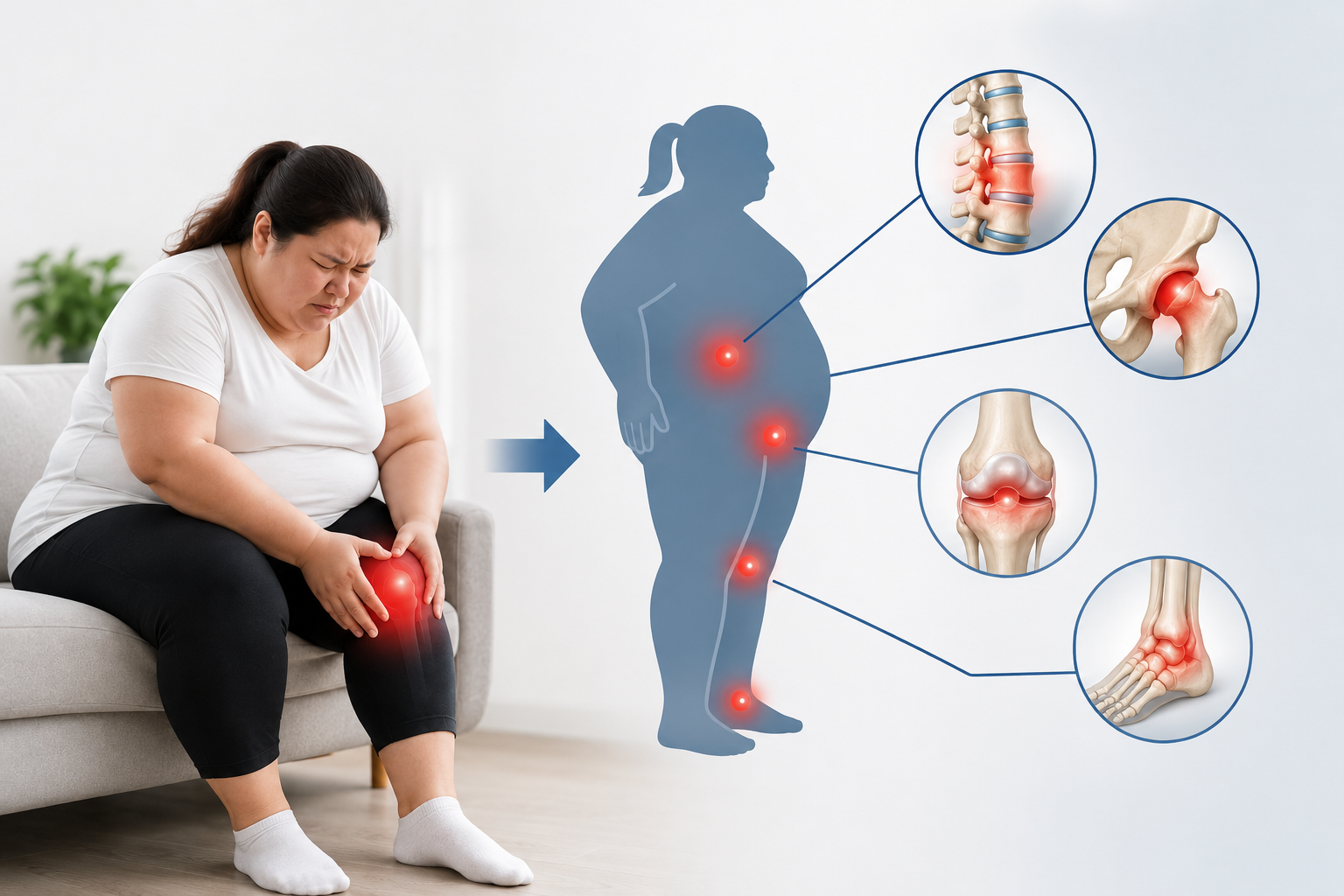
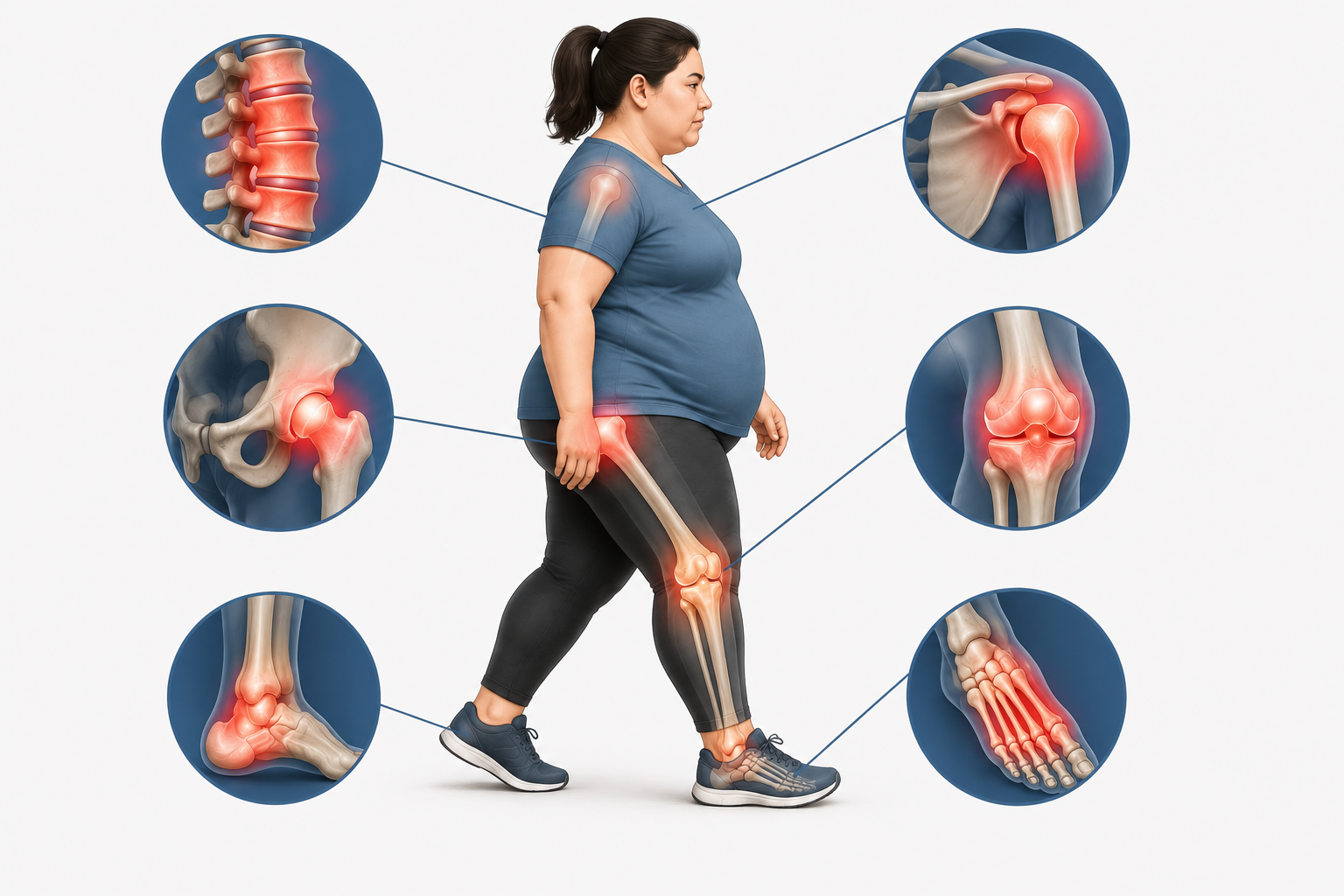
Obesity affects the musculoskeletal system through multiple mechanisms at the same time. Excess body weight increases pressure on weight-bearing joints such as the knees, hips, spine, ankles and feet. When this pressure persists, joint cartilage, ligaments, tendons and the muscles around the joints can become overloaded, leading to pain, stiffness and reduced mobility.
In addition, obesity is a complex metabolic condition. Excess adipose tissue, particularly visceral fat, can release inflammatory mediators that worsen pain and joint degeneration. Therefore, musculoskeletal pain in people with obesity is not only related to “body weight” but may also involve chronic inflammation, metabolic dysfunction, muscle weakness and reduced physical activity.
In brief: Obesity places greater load on the bones and joints while also increasing chronic inflammation. As a result, people with obesity are more likely to experience knee pain, low back pain, osteoarthritis and limited mobility.
Why does obesity increase the risk of joint pain and osteoarthritis?
Increased load on weight-bearing joints
The knee, hip, ankle and foot joints support most of the body’s weight. When body weight increases, each step places additional pressure on joint cartilage, subchondral bone, ligaments and tendons around the joints.
People who gain weight often experience knee pain when climbing stairs, squatting, standing for long periods or walking long distances. This is a sign that the joints are under greater load and should not be ignored if it persists.
Earlier cartilage degeneration
Joint cartilage acts as a cushion that allows the ends of bones to glide smoothly over each other. Excessive pressure over a prolonged period can accelerate cartilage wear, gradually narrow the joint space and cause pain during movement.
Osteoarthritis does not occur only in older adults. People with overweight or obesity may develop joint pain earlier, especially in the knees, hips and lumbar spine.
Changes in gait and movement mechanics
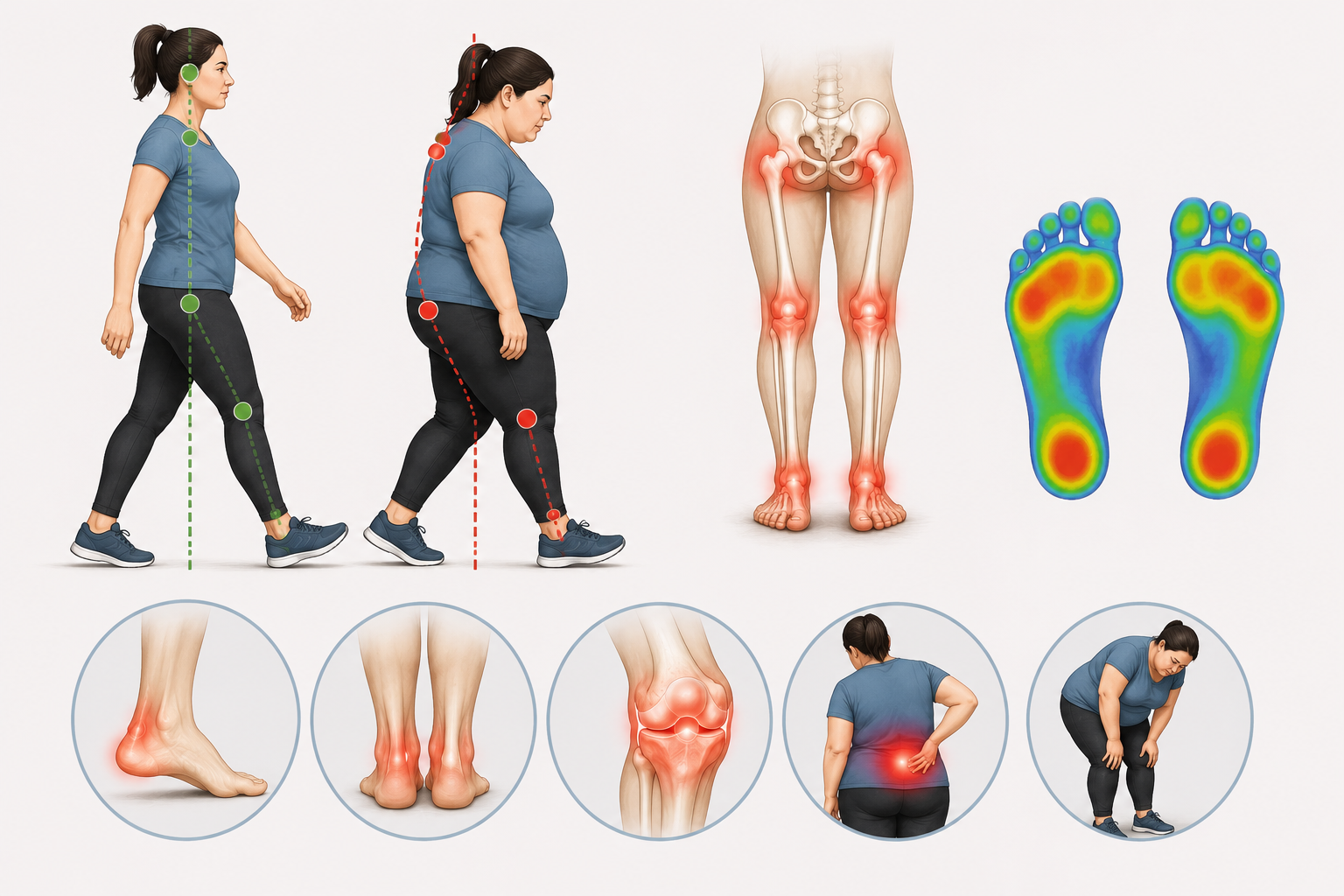
Obesity can alter the body’s center of gravity, gait, foot pressure and the way the knees, hips and spine coordinate during movement. This can overload certain muscle groups and joints.
People with obesity may walk more slowly, fatigue more easily, and experience heel pain, ankle pain or back pain after standing for long periods. Gait and foot assessment may be necessary in some cases.
Adipose tissue increases chronic inflammation
Excess adipose tissue does not merely “place pressure on the joints”; it also releases inflammation-related mediators. Low-grade chronic inflammation may contribute to joint pain and affect the intra-articular environment.
This is why obesity may be associated not only with pain in weight-bearing joints but also with pain in some joints that bear less mechanical load. Reducing visceral fat and improving metabolic health may help reduce systemic inflammation.
Muscle weakness reduces joint protection
The muscles around the joints, especially the thigh, gluteal and core muscles, help stabilize the knees, hips and spine. If people with obesity are physically inactive, muscle mass may weaken, causing the joints to bear greater load.
Weight loss achieved only through fasting may lead to muscle loss, making the joints less stable. A weight management plan should combine appropriate strength training to preserve muscle and protect the joints.
Which bones and joints are affected by obesity?
How are obesity and knee osteoarthritis related?
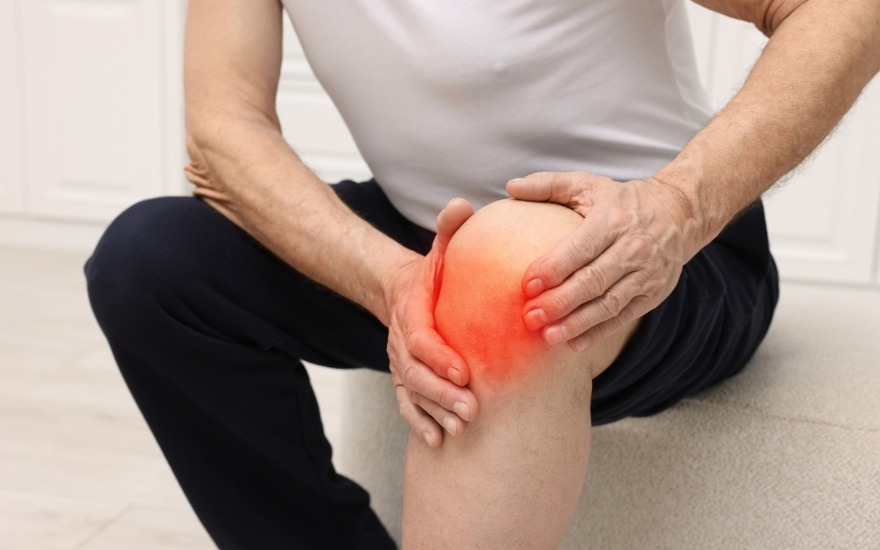
Knee osteoarthritis is one of the most common musculoskeletal problems in people with overweight or obesity. The knee joint bears substantial load during walking, standing, climbing stairs, squatting or rising from a chair. It is a joint that both supports body weight and performs frequent flexion-extension movements in daily activities. When body weight is high, joint cartilage and subchondral bone are exposed to greater compressive forces over a prolonged period.
The American Academy of Orthopaedic Surgeons (AAOS) states that the impact of obesity is particularly evident in knee and hip osteoarthritis. During weight-bearing activities, each additional pound of body weight may place approximately 4–6 pounds of pressure, more than 2 kg, on each knee joint. This figure should be understood as an estimate of mechanical load, not a fixed calculation for every posture or activity.
The obesity-joint pain-physical inactivity vicious cycle
Obesity and musculoskeletal pain often create a difficult cycle to break:
- Weight gain places greater load on the joints.
- Joint pain makes patients less willing to move.
- Physical inactivity reduces muscle mass and energy expenditure.
- Body weight continues to increase or becomes harder to reduce.
- Joint pain and mobility limitations become more severe.
For long-term improvement, patients need safe weight loss, movement rehabilitation, muscle strengthening and pain control, rather than relying only on temporary pain relief medications

How to reduce musculoskeletal risk in people with obesity
Lose weight safely and avoid extreme fasting
Weight loss helps reduce load on the joints, but losing weight too rapidly can cause muscle loss, nutritional deficiencies and reduced joint stability. Patients should set realistic goals and monitor both body weight and waist circumference.
They can start by reducing sugary beverages, fried foods, late-night eating and overly large portions, while increasing vegetables, lean protein, appropriate carbohydrates and healthy fats.
Build muscle to protect the joints
The muscles around the joints act as a natural “shock absorber.” When muscles are strong, the knees, hips and spine are better supported during daily activities and exercise.
Patients may perform strength training 2–3 sessions per week at an appropriate intensity. Those with joint pain should exercise under guidance to avoid incorrect technique.
Choose appropriate footwear
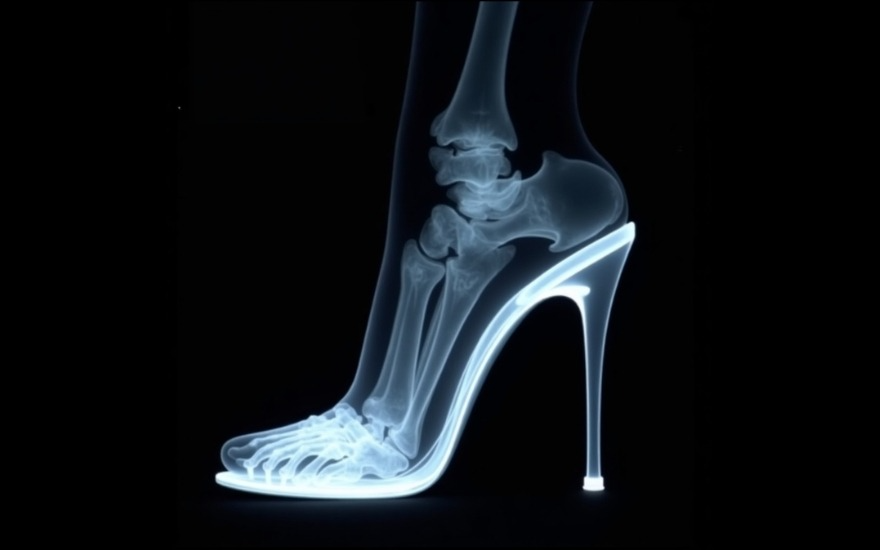
Improper footwear can worsen foot, ankle, knee and back pain. People with obesity should choose cushioned shoes with good support, proper fit and suitability for their activities.
Very thin sandals, prolonged use of high heels and unevenly worn shoes should be avoided. If flat feet or persistent heel pain is present, patients should seek evaluation for foot alignment and orthotic support.
Treat associated metabolic conditions
Type 2 diabetes, dyslipidemia, elevated uric acid, gout and fatty liver disease can worsen pain and inflammation. Controlling these conditions helps protect overall health and support musculoskeletal function.
People with obesity and joint pain should have blood glucose, HbA1c, lipid levels and uric acid checked when indicated.
Do not use pain relievers for prolonged periods without medical guidance
Pain relievers and anti-inflammatory medications may help reduce symptoms, but if used improperly, they can affect the stomach, liver, kidneys and cardiovascular system. People with obesity often have multiple underlying conditions, so extra caution is needed.
If joint pain persists, patients should seek medical evaluation to determine the cause and combine weight loss, physical therapy, appropriate exercises and prescribed treatment.
When should patients seek medical care?
Early medical evaluation is recommended if
You should seek medical care if any of the following situations apply:
- Body mass index (BMI) is in the obesity range and accompanied by knee pain, low back pain or foot pain.
- Joint pain is persistent, recurrent or gradually worsening.
- Knee pain occurs when climbing stairs, standing for long periods, squatting or rising from a seated position.
- Joint pain prevents the patient from exercising for weight loss.
- Low back pain radiates down the leg, or is accompanied by numbness or leg weakness.
- Underlying conditions are present, such as diabetes, gout, hypertension or kidney disease.
- Pain relievers have been used repeatedly without lasting improvement.
Seek medical care or emergency treatment immediately if warning signs appear
Medical care or emergency treatment is needed promptly if any of the following signs occur:
- severe joint pain after a fall or injury;
- inability to stand, walk or bear weight on the leg;
- joint swelling with warmth and redness accompanied by fever;
- low back pain with progressively worsening leg numbness or weakness;
- urinary retention or loss of bowel control;
- numbness in the saddle area;
- joint pain accompanied by weight loss, prolonged fever or extreme fatigue;
- severe joint pain, rapidly worsening pain or joint deformity.
Where to seek care for overweight and obesity-related musculoskeletal conditions in Hanoi
If overweight or obesity has caused joint pain, limited mobility or interference with daily activities, patients should choose a healthcare facility capable of providing comprehensive care, rather than focusing only on weight loss.
In Hanoi, the Overweight Management Center and Management of Obesity-related Consequences - Hong Ngoc General Hospital implements a multidisciplinary treatment model, allowing patients to be followed throughout their care journey by endocrinologists, nutrition specialists, rehabilitation physicians, psychologists and gastrointestinal surgeons within a unified treatment strategy. Depending on each case, patients may also receive consultations with cardiology, pulmonology or anesthesiology and intensive care specialists to ensure treatment effectiveness and safety.
For patients with joint pain related to overweight, doctors focus not only on weight management but also on assessing the degree of musculoskeletal injury, insulin resistance, diabetes, dyslipidemia, fatty liver disease and other comorbidities. Based on this evaluation, the treatment protocol is individualized, combining nutrition, physical activity, medical treatment or metabolic surgery when indicated.
The Center has managed many cases of severe obesity accompanied by musculoskeletal disorders. A representative case was a 46-year-old woman weighing 113 kg, with a BMI of 45.27, who was almost unable to walk independently due to long-standing obesity and concurrent type 2 diabetes, hypertension, fatty liver disease, dyslipidemia and musculoskeletal conditions. After multidisciplinary consultation, she was indicated for sleeve gastrectomy. Just one day after surgery, the patient was able to stand and walk gently on her own. After one month, she had lost 15 kg, her metabolic indicators improved significantly, and her doctors discontinued all medications for diabetes, hypertension and dyslipidemia.
With the advantage of more than 25 specialized departments, an experienced team of experts and a long-term post-treatment follow-up system, the Overweight Management Center and Management of Obesity-related Consequences at Hong Ngoc General Hospital aims not only to help patients lose weight, but also to improve obesity-related musculoskeletal disorders and metabolic dysfunction, thereby enhancing mobility and supporting sustainable quality of life. Patients may contact the hotline at 024 3927 5568 or leave their information in the form to be contacted for consultation.
See also: Obesity treatment promotion at Hong Ngoc General Hospital
Frequently asked questions
How does obesity affect bones and joints?
Obesity increases the load on the knees, hips, spine, ankles and feet. At the same time, excess adipose tissue may promote chronic inflammation and metabolic dysfunction, making joint pain, osteoarthritis and limited mobility more likely.
Can obesity cause knee pain?
It can. The knee is a major weight-bearing joint and is highly vulnerable when body weight increases. People with obesity often experience knee pain when climbing stairs, standing for long periods, squatting or walking long distances.
Can obesity cause osteoarthritis?
Obesity is an important risk factor for osteoarthritis, particularly in the knees and hips. Excess body weight increases pressure on joint cartilage, while adipose tissue may contribute to chronic inflammation. The American Academy of Orthopaedic Surgeons (AAOS) notes that obesity often contributes to osteoarthritis, especially in the knees and hips.
Why does overweight increase the risk of back pain?
Excess weight, especially abdominal obesity, shifts the body’s center of gravity and increases pressure on the lumbar spine. If the core muscles are weak, physical activity is limited or prolonged sitting is common, low back pain is more likely to occur.
Should people with obesity and joint pain exercise?
Yes, but the exercises must be appropriate. Swimming, walking in water, stationary cycling, moderate walking, light strength training and physical therapy should be prioritized. High-intensity running, jumping rope or plyometric exercises should not be started while the joints are painful.
Can weight loss help reduce joint pain?
It can. Weight loss helps reduce pressure on the joints and improve mobility. However, weight loss should be safe, preserve muscle mass and be combined with proper exercise. Extreme fasting may cause muscle loss, making the joints less protected.
Is joint pain in people with obesity always caused by body weight?
No. Joint pain in people with obesity may be related to body weight, but it can also be caused by gout, arthritis, trauma, disc herniation, joint infection or neurologic disease. If pain persists, the joint becomes swollen, warm and red, pain occurs after trauma, or numbness or weakness appears, patients should seek medical care.
When should people with obesity and joint pain see a doctor?
Medical evaluation is recommended if pain lasts more than 2 - 4 weeks, gradually worsens, the joint becomes swollen, warm and red, low back pain radiates down the leg, numbness or weakness occurs, walking becomes difficult or pain prevents exercise. If pain is severe, the patient cannot bear weight or fever is present, early medical evaluation is needed.
Conclusion
Obesity affects bones and joints through both mechanical and metabolic mechanisms. Excess body weight increases pressure on the knees, hips, spine, ankles and feet, while excess adipose tissue promotes chronic inflammation, joint pain and the risk of degeneration. Joint pain can make patients less physically active, which may lead to further weight gain and disease progression.
If obesity is accompanied by knee pain, back pain, foot pain, limited mobility or inability to exercise due to joint pain, patients should see a musculoskeletal or orthopedic trauma specialist to determine the cause and develop a safe movement plan.
References