




Complications of hemorrhoids may lead to serious medical conditions and, in severe cases, can even threaten a patient’s life. Below are warning complications indicating that hemorrhoidal disease is progressing to a more complex stage and requires prompt medical intervention at a qualified healthcare facility.
Infection of hemorrhoidal tissue
This complication occurs when prolapsed hemorrhoids extend outside the anus and are repeatedly subjected to friction from clothing, leading to tissue injury. The outer covering of the hemorrhoidal mass may tear, resulting in bleeding and subsequent infection.
At the same time, excessive mucous secretion keeps the hemorrhoidal tissue persistently moist. Prolonged exposure to the external environment allows bacteria to invade the damaged area, increasing the risk of infection.
Clinical manifestations of infected hemorrhoids:
- The prolapsed hemorrhoidal tissue becomes swollen, erythematous, warm, and painful in the anal region.
- Mild ulceration may appear around the anal area.
- The inflamed region may produce excessive mucous discharge and may bleed easily when subjected to friction from clothing.
- In more severe cases of infection, patients may also develop low-grade fever, malaise, and fatigue.
Anemia
One of the common manifestations of hemorrhoids is bleeding during defecation, often referred to as hemorrhoidal bleeding. If this bleeding occurs frequently and remains untreated, it may lead to chronic blood loss and subsequently result in anemia.
Reader may also be interested in:
- 4 causes of hemorrhoids and preventive measures
- Can postpartum hemorrhoids resolve on their own? What should mothers do to prevent hemorrhoids after childbirth?
- Are hemorrhoids dangerous? When should you see a doctor for hemorrhoids?
In this condition, the body lacks a sufficient number of red blood cells required for effective oxygen transport, leading to chronic anemia. Patients may present with fatigue, pallor, persistent weakness, and in severe cases may experience episodes of dizziness or syncope.
Sepsis – a severe complication of hemorrhoids
One particularly serious complication of hemorrhoids is severe infection of the hemorrhoidal tissue that progresses to bloodstream infection (sepsis). This occurs when hemorrhoids are not adequately treated, leading to ulceration and extensive inflammation, allowing bacteria to enter the bloodstream.
When this complication develops, the patient is usually already in a severe clinical condition and treatment becomes more challenging. Sepsis can pose a life-threatening risk. In such cases, patients require urgent medical management, which may include definitive treatment of hemorrhoids, surgical intervention, and blood purification therapy if necessary.
Strangulated hemorrhoids
Large hemorrhoidal masses may compress and obstruct the anal canal. Strangulated prolapsed hemorrhoids can cause severe difficulty during defecation or even the inability to pass stool, which may significantly disrupt normal physiological functions of the body.
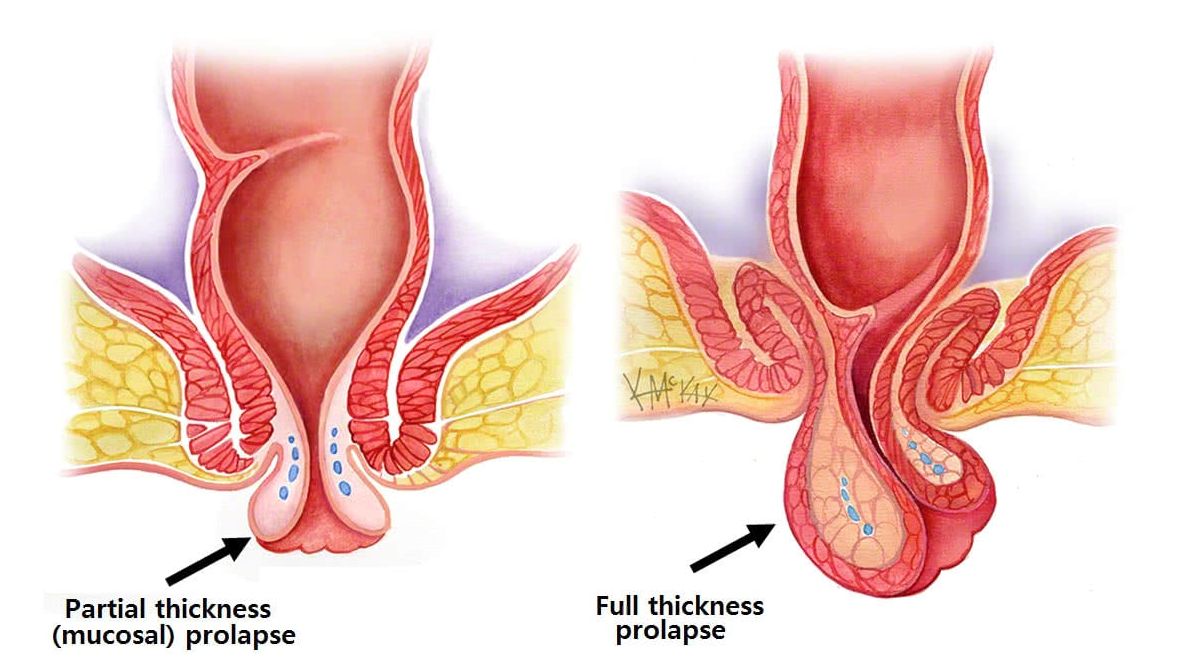
Patients may recognize strangulated hemorrhoids through visible changes. The prolapsed hemorrhoidal mass outside the anus may appear enlarged and pale gray in color. Hemorrhoids located within the anal canal often appear reddish, swollen, edematous, and may obstruct the anal opening.
The hemorrhoidal tissue is typically firm and irregular rather than soft, with palpable nodular masses caused by blood stasis and thrombus formation within the vessels. Because defecation becomes difficult or impossible, patients may experience significant discomfort. Initially, ulceration and infection may develop within the anal canal, which can subsequently lead to more severe hemorrhoidal complications if not promptly treated. Without appropriate management, the condition may progress to severe ulceration and infection.
Thrombosed hemorrhoids – a complication of hemorrhoidal disease
When a blood clot forms within a hemorrhoidal mass, the hemorrhoid may become markedly swollen and cause severe pain, particularly when sitting or during bowel movements. This condition occurs when the blood vessels within the hemorrhoidal tissue become compressed or rupture, leading to vascular obstruction and thrombus formation. As blood flow becomes impaired, the affected hemorrhoidal tissue may be deprived of adequate blood supply, increasing the risk of infection and tissue necrosis.
Patients may recognize this condition through the following signs:
- The appearance of swollen masses around the anal margin, typically pea-sized or larger.
- Hemorrhoidal tissue becomes tense, swollen, and painful.
- Enlarged hemorrhoidal masses may be clearly identified during endoscopic examination.
- Nodular protrusions may be detected along the rectal wall, with a palpable sensation of a foreign mass upon examination.
- Patients may experience deep pain within the hemorrhoidal tissue, accompanied by a noticeable bulging sensation and discomfort when sitting.
Necrosis of hemorrhoidal tissue
Prolonged infection and inflammation of hemorrhoidal tissue may progressively spread and damage the mucosa beneath and around the anus, potentially leading to anorectal abscess formation and, in severe cases, tissue necrosis.
Rectal cancer associated with hemorrhoidal complications
This is considered one of the most serious potential complications related to hemorrhoidal disease. Chronic inflammation and persistent infection of hemorrhoidal tissue may allow pathogenic bacteria to penetrate deeper into the rectal tissues. Severe and long-standing inflammatory processes may contribute to the development of colorectal malignancies, including rectal or colon cancer.
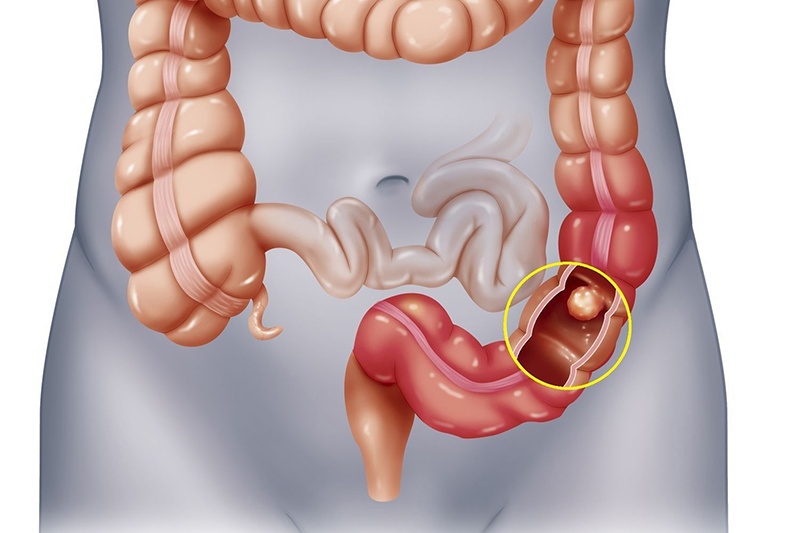
Clinical manifestations of rectal cancer may include the following symptoms:
- Abdominal pain accompanied by rectal bleeding; in some cases, bleeding may be significant and occur as a stream.
- Persistent constipation and significant difficulty during defecation.
- Narrow, fragmented stools with a dark gray or black coloration.
- Fatigue, loss of appetite, weakness, pallor, and anemia.
- Cramping pain in the stomach and lower abdomen.
- Unintentional and rapid weight loss.
Rectal cancer is considered the most serious complication associated with hemorrhoidal disease and may become extremely difficult to treat if the condition progresses to an advanced stage. Most severe complications typically occur in stage IV disease when patients have not received timely and definitive treatment.
The management of hemorrhoidal complications depends on the type and severity of the complication. Once complications develop, pharmacologic therapy alone is usually no longer effective. In such cases, patients often require surgical intervention or other procedural treatments according to an appropriate clinical management protocol.
Other complications of hemorrhoidal disease
- Gynecological infections in women: The female genital anatomy is relatively open and located close to the anus; therefore, infection of hemorrhoidal tissue may easily spread to the genital tract, potentially causing gynecological infections. This condition is particularly concerning during pregnancy, as it may worsen the disease and potentially affect maternal and fetal health.
- Dermatological conditions: When hemorrhoids prolapse outside the anus and continuously secrete mucus, the surrounding perianal skin may become persistently irritated. Over time, this irritation may lead to various perianal skin disorders.
- Anal sphincter dysfunction: Damage or obstruction affecting the anal structures may interfere with normal bowel movements. In severe cases, this may lead to difficulty with defecation or even loss of bowel control (fecal incontinence).
Watch the detailed video on hemorrhoid complications, with consultation by PP., Assoc. Prof., Dr. Nguyen Xuan Hung:
A safe and effective address for hemorrhoid treatment with minimized complications
The Center for Gastrointestinal, Colorectal, and Pelvic Floor Surgery at Hong Ngoc General Hospital is currently a trusted medical facility for hemorrhoid treatment, chosen by many patients. The center has successfully treated numerous patients with hemorrhoidal complications, supported by:
- A team of leading colorectal and anorectal specialists: Assoc. Prof., Dr. Nguyen Xuan Hung, People’s Doctor – Former Director of the Colorectal and Pelvic Floor Surgery Center at Viet Duc University Hospital; Vice President of the Vietnam Association of Anus and Rectum; Member of the French Society of Physicians for the Treatment of Colorectal and Anal Diseases.- Dr.Cu Trung Kien, MD, MSc – Received advanced training in gastrointestinal surgery in Hong Kong; previously worked at Bach Mai Hospital; currently Deputy Head of the Department of Gastrointestinal Surgery at Hong Ngoc Yen Ninh General Hospital.- Dr.Bach Phuc Huy, MD, Specialist Level I – With more than 15 years of clinical experience; currently Head of the Gastrointestinal Surgery Unit at Hong Ngoc Phuc Truong Minh General Hospital.
- Modern surgical techniques: Application of advanced hemorrhoid treatment technologies such as radiofrequency hemorrhoidectomy, PPH procedure, and Longo technique.
- Pain-minimized hemorrhoid surgery: Implemented with a comprehensive pain control protocol before, during, and after surgery, developed by MSc., MD Nguyen Thi Thu Ba, who received specialized residency training in France. A highly qualified anesthesiology team closely monitors patients throughout the surgical procedure.
- Proactive pain management strategy: Patients undergo thorough pre-anesthetic evaluation, continuous intraoperative monitoring, and early pain control before symptoms develop.
- 24/7 patient care team: Dedicated medical staff provide attentive support and monitoring throughout the hospitalization period.
- Comfortable inpatient environment: Spacious, clean, and well-equipped patient rooms designed with hotel-level amenities to enhance patient comfort during recovery.
For detailed consultation, please contact:
- Hotline for scheduling appointments with specialists: 0911 908 856
- Hotline for consultation on hemorrhoid surgery: 0949 646 556
Note: The information provided in this article by Hong Ngoc General Hospital is for reference purposes only and does not replace professional medical diagnosis or treatment. Patients should not self-medicate or independently purchase medications for treatment. To accurately determine their medical condition, individuals should visit a healthcare facility for direct examination, diagnosis, and appropriate treatment consultation by a qualified physician.
Follow the official Fanpage of Hong Ngoc General Hospital to receive more useful health information and updates on the hospital’s special offers and programs.