


Many people wonder whether hemorrhoids are dangerous and when medical evaluation is necessary. To better understand this issue, the following information may help provide a clearer answer.
Many individuals who experience symptoms of hemorrhoids feel reluctant to seek medical care because the condition involves a sensitive anatomical area. As a result, they often ask questions such as: “Are hemorrhoids dangerous?” or “When should I see a doctor for hemorrhoids?” According to medical experts, hemorrhoids in the early stages may only cause discomfort. However, if left untreated and allowed to progress, the condition can lead to complications that may seriously affect a patient’s health and, in severe cases, pose life-threatening risks.
What are the signs of hemorrhoids?
Common signs of hemorrhoids include:
Painless bleeding during defecation: Initially, a small amount of bright red blood may be noticed on toilet paper or in the toilet bowl. Bleeding is the earliest and most common symptom. As the condition progresses and straining increases, blood may drip or even spray in a stream. In severe cases, bleeding may occur even while squatting.
Anal itching or irritation: This occurs due to mucous discharge produced by the mucosa of the anal canal.
Pain or discomfort: Patients with hemorrhoids may experience varying degrees of discomfort, ranging from mild or no pain to severe pain, particularly when associated with anal fissures, thrombosis, or strangulated hemorrhoids.
Swelling around the anal region: Patients may notice swelling in the perianal area.
A protruding mass near the anus: Individuals with hemorrhoids may observe a lump near the anus that may cause burning or pain, which could represent a thrombosed hemorrhoid.
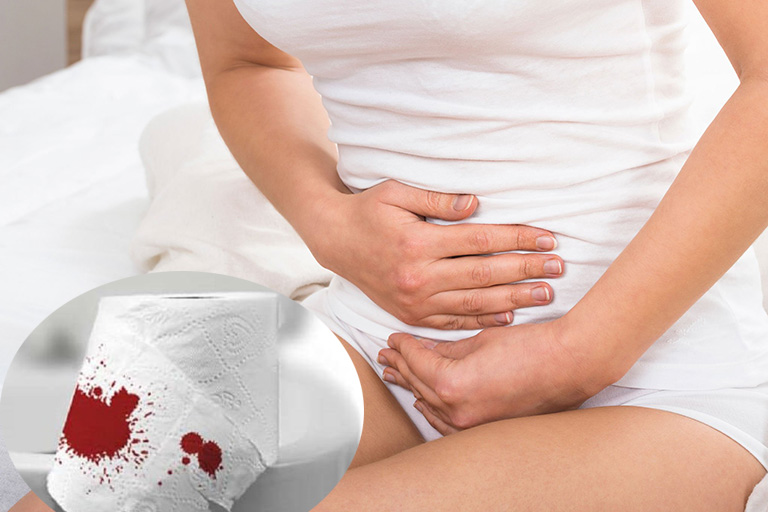
Rectal bleeding during defecation is one of the common signs of hemorrhoids.
Hemorrhoid symptoms often depend on their location:
External hemorrhoids: These usually cause the most discomfort because the skin covering the hemorrhoid may become irritated and ulcerated. If a blood clot forms within an external hemorrhoid, pain may occur suddenly and become severe. Patients may feel or see a protruding mass around the anus. The clot may later be absorbed, leaving excess skin that can cause itching and irritation.
Internal hemorrhoids: These typically do not cause pain, even when bleeding occurs. Patients may notice bright red blood on toilet paper or dripping into the toilet bowl. Internal hemorrhoids are usually not visible or palpable and rarely cause discomfort.
During defecation, stool passing through the anal canal may abrade the surface of the hemorrhoidal tissue, leading to bleeding. Internal hemorrhoids may also prolapse through the anus, forming prolapsed internal hemorrhoids. When prolapse occurs, the hemorrhoidal tissue may retain small amounts of mucus and stool, which can cause itching, pain, and a burning sensation. Frequent wiping in an attempt to relieve itching may further aggravate the condition.
Potential complications of hemorrhoids
Hemorrhoids not only cause significant discomfort in daily life but may also lead to serious health complications if not treated promptly. Therefore, patients should seek medical evaluation early to receive appropriate and effective treatment. Possible complications include:
Anemia: Chronic blood loss from hemorrhoidal bleeding may lead to anemia. In this condition, the body lacks a sufficient number of red blood cells to transport oxygen to tissues. However, this complication is relatively uncommon.
Strangulated hemorrhoids: When prolapsed hemorrhoidal tissue becomes trapped, the blood supply to the hemorrhoid may be obstructed. This condition usually causes significant pain. Gentle palpation may reveal a firm sensation due to the presence of a thrombus.
Thrombosis: This occurs when a blood clot forms within the blood vessels of hemorrhoidal tissue. Dilated veins and blood stasis caused by straining, heavy lifting, pregnancy, or intense physical activity that increases intra-abdominal pressure may facilitate clot formation and vascular obstruction.
In external hemorrhoidal thrombosis, a small bluish swelling may appear at the anal margin, accompanied by pain and tenderness when touched.
In internal hemorrhoidal thrombosis, patients may experience a deep sensation of discomfort or pressure, and symptoms are often less obvious than in external thrombosis.
Perianal dermatitis, inflamed anal papillae, and fissures: Ulceration of the skin between hemorrhoidal masses may lead to itching, pain, and burning in the anal region.
Necrosis of hemorrhoidal tissue: Prolonged infection and inflammation of hemorrhoidal tissue may spread and damage the mucosa beneath and around the anus, potentially leading to anorectal abscess formation and eventually tissue necrosis.
When should you see a doctor for hemorrhoids?
To prevent disease progression or misdiagnosis, individuals should visit a reputable healthcare facility for evaluation as soon as abnormal symptoms appear. These symptoms may include anal pain, itching, or persistent moisture in the anal region; difficulty during defecation accompanied by rectal bleeding; or signs of anemia such as fatigue and weakness.

When symptoms such as anal itching, burning, pain, or bleeding during defecation occur, patients should promptly seek medical evaluation at a healthcare facility.
How is hemorrhoid examination performed?
Typically, the hemorrhoid examination process includes the following three steps:
Step 1: Medical history assessment
First, the specialist will ask several questions. Patients should listen carefully and provide accurate information about their condition, as these details serve as an important basis for clinical diagnosis.
Typical questions may include:
Does anyone in your family have a history of hemorrhoids?
What is the nature of your occupation?
What are your daily dietary habits? Do you frequently consume spicy or high-fat foods? Do you drink enough water and consume sufficient vegetables?
Have you experienced constipation before?
What symptoms do you notice during bowel movements?
Have you previously used any medications or undergone any treatments? If so, for how long?
After gathering information about the patient’s symptoms through these questions, the physician will proceed to examine the anal region to accurately identify clinical signs of the condition.
The next step in the examination process is a rectal assessment to determine the severity of hemorrhoids.
The patient will change into a hospital gown to facilitate the examination.
The physician will examine the anal and rectal regions through visual inspection and clinical assessment to identify lesions and evaluate the internal condition.
To obtain more accurate results, additional diagnostic tests may be recommended, such as blood tests or anorectal endoscopy.
Step 3: Clinical conclusion – establishing the diagnosis
Finally, the physician will provide a diagnostic conclusion. The diagnosis is based on the patient’s symptoms, findings from the anal and rectal examination, and results of any relevant tests. Based on these evaluations, the physician will recommend an appropriate treatment plan.

The physician explains the diagnostic conclusion to the patient.
In addition, patients should follow the physician’s recommendations regarding diet, including foods to consume, foods to avoid, and appropriate lifestyle habits. Patients should also attend follow-up appointments as scheduled to allow timely management of potential complications or other clinical developments.
Notes before undergoing a hemorrhoid examination:
Before visiting the hospital, maintain proper personal hygiene and clean the anal area thoroughly. Avoid alcohol or stimulant substances and remember to bring any relevant medical documents.
To reduce the likelihood of abdominal discomfort during the examination, patients are advised to fast beforehand.
How are hemorrhoids treated?
In mild cases, patients may manage hemorrhoids at home using medications prescribed by a physician and by following recommended dietary and lifestyle modifications. However, in more severe cases, patients should not attempt self-treatment at home to avoid potentially serious complications.
Patients should seek medical evaluation at specialized healthcare facilities so that physicians can assess the condition and determine an appropriate treatment plan. Currently, four commonly used methods are applied in the management of hemorrhoids:
Laser hemorrhoidectomy: This outpatient procedure uses a focused laser beam to precisely target and treat hemorrhoidal tissue without the need for a surgical scalpel. The method allows rapid removal of hemorrhoids, with less pain and faster recovery for patients.
Ferguson technique: The Ferguson hemorrhoidectomy is a conventional surgical procedure in which each hemorrhoidal mass is excised and sutured individually. This technique removes hemorrhoidal tissue while preserving the normal anatomical structure of the anus. It can be applied to most cases requiring surgical treatment and requires highly skilled surgeons and modern medical equipment.
Milligan–Morgan technique: This procedure involves excising each hemorrhoidal mass while preserving bridges of mucosa and skin between them. In cases of circumferential hemorrhoids, additional accessory hemorrhoidal tissue may also need to be removed. With a relatively simple surgical process, short procedure time, low recurrence rate (approximately 5–10% within five years), and lower cost, this method remains widely used.
Longo technique: Based on the principle of repositioning prolapsed hemorrhoidal tissue back to its normal anatomical position, this technique is commonly indicated for circumferential hemorrhoids or grade III–IV hemorrhoids.
In this procedure, the surgeon uses a circular stapling device designed specifically for anorectal surgery to excise and staple a ring of mucosal tissue along with the associated blood vessels located above the dentate line the junction between the distal digestive tract and the anal canal that separates internal and external hemorrhoids. This technique lifts the prolapsed hemorrhoidal tissue back to its normal anatomical position while simultaneously interrupting the blood supply to the hemorrhoids, allowing them to gradually shrink.
With this method, patients typically experience less postoperative pain, faster recovery, and no open surgical wounds or complications such as anal stenosis.
Watch the detailed video on hemorrhoid treatment by PP., Assoc. Prof., Dr. Nguyen Xuan Hung:
Where can hemorrhoids be examined safely and effectively?
To determine whether hemorrhoids are present and assess their severity, patients should visit reputable healthcare facilities for evaluation by specialist physicians.
Hong Ngoc General Hospital brings together a highly qualified team of physicians along with a modern medical equipment system, gradually becoming a trusted healthcare destination for many patients seeking examination and treatment for hemorrhoids.
Patients can feel reassured with the hospital’s team of surgical specialists, including:
Assoc. Prof., Dr. Nguyen Xuan Hung – Former Director of the Colorectal and Pelvic Floor Surgery Center at Viet Duc University Hospital; Vice President of the Vietnam Association of Anus and Rectum; Member of the French Society of Physicians for the Treatment of Colorectal and Anal Diseases.
Dr. Pham Van Cuong, Meritorious Doctor, Specialist Level II – Nearly 40 years of clinical experience; Member of the Vietnam Association of Endoscopic and General Surgery.
Dr. Cu Trung Kien, MD, MSc – Received advanced training in gastrointestinal surgery in Hong Kong; previously worked at Bach Mai Hospital; currently Deputy Head of the Department of Gastrointestinal Surgery at Hong Ngoc Yen Ninh General Hospital.
Dr. Bach Phuc Huy, MD, Specialist Level I – With more than 15 years of clinical experience; currently Head of the Gastrointestinal Surgery Unit at Hong Ngoc – Phuc Truong Minh General Hospital.
Hemorrhoid treatment with specialists to ensure:
Accurate diagnosis: Avoid misdiagnosis with rectal cancer, rectal polyps, or other anorectal conditions.
Comprehensive treatment: Approximately 50% of cases can be managed with medication combined with dietary and lifestyle modification, while about 45% require simple procedural interventions.
Effective intervention: Minimal tissue injury, rapid recovery, very low complication rates, and a treatment success rate of over 95%.
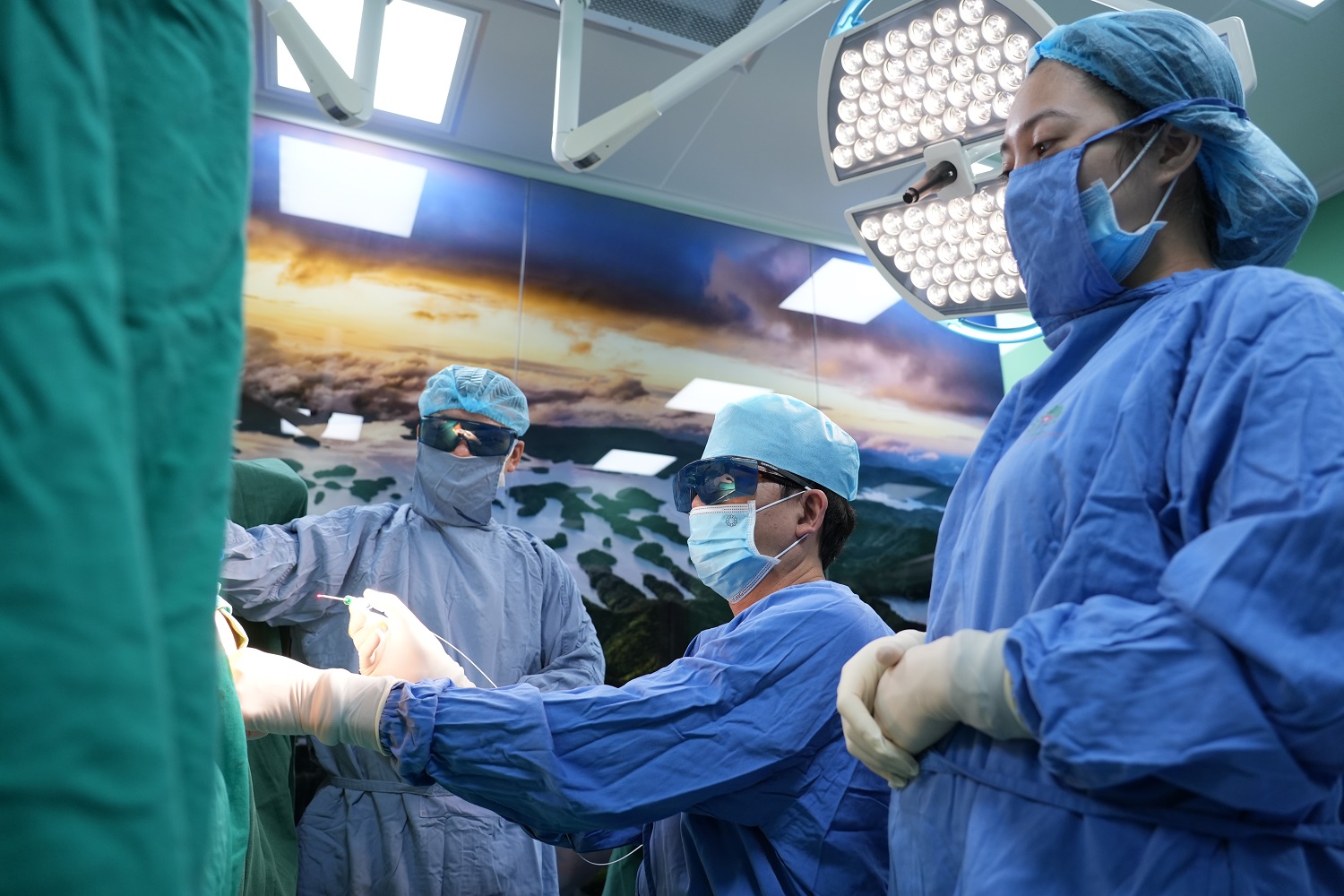
Assoc. Prof. Nguyen Xuan Hung and his surgical team performing laser hemorrhoid surgery – a modern treatment method for hemorrhoids with minimal pain and high effectiveness.
For detailed and prompt consultation, please contact:
Hotline for scheduling appointments with specialists: 0911 908 856
Hotline for surgical consultation: 0949 646 556
---------------
Note: The information provided in this article by Hong Ngoc General Hospital is for reference purposes only and does not replace professional medical diagnosis or treatment. Patients should not self-medicate or independently purchase medications for treatment. To accurately determine their medical condition, individuals should visit a healthcare facility for direct examination, diagnosis, and appropriate treatment consultation by a qualified physician.
Follow the official Fanpage of Hong Ngoc General Hospital to receive more useful health information and updates on the hospital’s special offers and programs.
Many people wonder whether hemorrhoids are dangerous and when medical evaluation is necessary. To better understand this issue, the following information may help provide a clearer answer.
Many individuals who experience symptoms of hemorrhoids feel reluctant to seek medical care because the condition involves a sensitive anatomical area. As a result, they often ask questions such as: “Are hemorrhoids dangerous?” or “When should I see a doctor for hemorrhoids?” According to medical experts, hemorrhoids in the early stages may only cause discomfort. However, if left untreated and allowed to progress, the condition can lead to complications that may seriously affect a patient’s health and, in severe cases, pose life-threatening risks.
What are the signs of hemorrhoids?
Common signs of hemorrhoids include:
Painless bleeding during defecation: Initially, a small amount of bright red blood may be noticed on toilet paper or in the toilet bowl. Bleeding is the earliest and most common symptom. As the condition progresses and straining increases, blood may drip or even spray in a stream. In severe cases, bleeding may occur even while squatting.
Anal itching or irritation: This occurs due to mucous discharge produced by the mucosa of the anal canal.
Pain or discomfort: Patients with hemorrhoids may experience varying degrees of discomfort, ranging from mild or no pain to severe pain, particularly when associated with anal fissures, thrombosis, or strangulated hemorrhoids.
Swelling around the anal region: Patients may notice swelling in the perianal area.
A protruding mass near the anus: Individuals with hemorrhoids may observe a lump near the anus that may cause burning or pain, which could represent a thrombosed hemorrhoid.
Rectal bleeding during defecation is one of the common signs of hemorrhoids.
Hemorrhoid symptoms often depend on their location:
External hemorrhoids: These usually cause the most discomfort because the skin covering the hemorrhoid may become irritated and ulcerated. If a blood clot forms within an external hemorrhoid, pain may occur suddenly and become severe. Patients may feel or see a protruding mass around the anus. The clot may later be absorbed, leaving excess skin that can cause itching and irritation.
Internal hemorrhoids: These typically do not cause pain, even when bleeding occurs. Patients may notice bright red blood on toilet paper or dripping into the toilet bowl. Internal hemorrhoids are usually not visible or palpable and rarely cause discomfort.
During defecation, stool passing through the anal canal may abrade the surface of the hemorrhoidal tissue, leading to bleeding. Internal hemorrhoids may also prolapse through the anus, forming prolapsed internal hemorrhoids. When prolapse occurs, the hemorrhoidal tissue may retain small amounts of mucus and stool, which can cause itching, pain, and a burning sensation. Frequent wiping in an attempt to relieve itching may further aggravate the condition.
Potential complications of hemorrhoids
Hemorrhoids not only cause significant discomfort in daily life but may also lead to serious health complications if not treated promptly. Therefore, patients should seek medical evaluation early to receive appropriate and effective treatment. Possible complications include:
Anemia: Chronic blood loss from hemorrhoidal bleeding may lead to anemia. In this condition, the body lacks a sufficient number of red blood cells to transport oxygen to tissues. However, this complication is relatively uncommon.
Strangulated hemorrhoids: When prolapsed hemorrhoidal tissue becomes trapped, the blood supply to the hemorrhoid may be obstructed. This condition usually causes significant pain. Gentle palpation may reveal a firm sensation due to the presence of a thrombus.
Thrombosis: This occurs when a blood clot forms within the blood vessels of hemorrhoidal tissue. Dilated veins and blood stasis caused by straining, heavy lifting, pregnancy, or intense physical activity that increases intra-abdominal pressure may facilitate clot formation and vascular obstruction.
In external hemorrhoidal thrombosis, a small bluish swelling may appear at the anal margin, accompanied by pain and tenderness when touched.
In internal hemorrhoidal thrombosis, patients may experience a deep sensation of discomfort or pressure, and symptoms are often less obvious than in external thrombosis.
Perianal dermatitis, inflamed anal papillae, and fissures: Ulceration of the skin between hemorrhoidal masses may lead to itching, pain, and burning in the anal region.
Necrosis of hemorrhoidal tissue: Prolonged infection and inflammation of hemorrhoidal tissue may spread and damage the mucosa beneath and around the anus, potentially leading to anorectal abscess formation and eventually tissue necrosis.
When should you see a doctor for hemorrhoids?
To prevent disease progression or misdiagnosis, individuals should visit a reputable healthcare facility for evaluation as soon as abnormal symptoms appear. These symptoms may include anal pain, itching, or persistent moisture in the anal region; difficulty during defecation accompanied by rectal bleeding; or signs of anemia such as fatigue and weakness.
When symptoms such as anal itching, burning, pain, or bleeding during defecation occur, patients should promptly seek medical evaluation at a healthcare facility.
How is hemorrhoid examination performed?
Typically, the hemorrhoid examination process includes the following three steps:
Step 1: Medical history assessment
First, the specialist will ask several questions. Patients should listen carefully and provide accurate information about their condition, as these details serve as an important basis for clinical diagnosis.
Typical questions may include:
Does anyone in your family have a history of hemorrhoids?
What is the nature of your occupation?
What are your daily dietary habits? Do you frequently consume spicy or high-fat foods? Do you drink enough water and consume sufficient vegetables?
Have you experienced constipation before?
What symptoms do you notice during bowel movements?
Have you previously used any medications or undergone any treatments? If so, for how long?
After gathering information about the patient’s symptoms through these questions, the physician will proceed to examine the anal region to accurately identify clinical signs of the condition.
The next step in the examination process is a rectal assessment to determine the severity of hemorrhoids.
The patient will change into a hospital gown to facilitate the examination.
The physician will examine the anal and rectal regions through visual inspection and clinical assessment to identify lesions and evaluate the internal condition.
To obtain more accurate results, additional diagnostic tests may be recommended, such as blood tests or anorectal endoscopy.
Step 3: Clinical conclusion – establishing the diagnosis
Finally, the physician will provide a diagnostic conclusion. The diagnosis is based on the patient’s symptoms, findings from the anal and rectal examination, and results of any relevant tests. Based on these evaluations, the physician will recommend an appropriate treatment plan.
The physician explains the diagnostic conclusion to the patient.
In addition, patients should follow the physician’s recommendations regarding diet, including foods to consume, foods to avoid, and appropriate lifestyle habits. Patients should also attend follow-up appointments as scheduled to allow timely management of potential complications or other clinical developments.
Notes before undergoing a hemorrhoid examination:
Before visiting the hospital, maintain proper personal hygiene and clean the anal area thoroughly. Avoid alcohol or stimulant substances and remember to bring any relevant medical documents.
To reduce the likelihood of abdominal discomfort during the examination, patients are advised to fast beforehand.
How are hemorrhoids treated?
In mild cases, patients may manage hemorrhoids at home using medications prescribed by a physician and by following recommended dietary and lifestyle modifications. However, in more severe cases, patients should not attempt self-treatment at home to avoid potentially serious complications.
Patients should seek medical evaluation at specialized healthcare facilities so that physicians can assess the condition and determine an appropriate treatment plan. Currently, four commonly used methods are applied in the management of hemorrhoids:
Laser hemorrhoidectomy: This outpatient procedure uses a focused laser beam to precisely target and treat hemorrhoidal tissue without the need for a surgical scalpel. The method allows rapid removal of hemorrhoids, with less pain and faster recovery for patients.
Ferguson technique: The Ferguson hemorrhoidectomy is a conventional surgical procedure in which each hemorrhoidal mass is excised and sutured individually. This technique removes hemorrhoidal tissue while preserving the normal anatomical structure of the anus. It can be applied to most cases requiring surgical treatment and requires highly skilled surgeons and modern medical equipment.
Milligan–Morgan technique: This procedure involves excising each hemorrhoidal mass while preserving bridges of mucosa and skin between them. In cases of circumferential hemorrhoids, additional accessory hemorrhoidal tissue may also need to be removed. With a relatively simple surgical process, short procedure time, low recurrence rate (approximately 5–10% within five years), and lower cost, this method remains widely used.
Longo technique: Based on the principle of repositioning prolapsed hemorrhoidal tissue back to its normal anatomical position, this technique is commonly indicated for circumferential hemorrhoids or grade III–IV hemorrhoids.
In this procedure, the surgeon uses a circular stapling device designed specifically for anorectal surgery to excise and staple a ring of mucosal tissue along with the associated blood vessels located above the dentate line the junction between the distal digestive tract and the anal canal that separates internal and external hemorrhoids. This technique lifts the prolapsed hemorrhoidal tissue back to its normal anatomical position while simultaneously interrupting the blood supply to the hemorrhoids, allowing them to gradually shrink.
With this method, patients typically experience less postoperative pain, faster recovery, and no open surgical wounds or complications such as anal stenosis.
Watch the detailed video on hemorrhoid treatment by PP., Assoc. Prof., Dr. Nguyen Xuan Hung:
Where can hemorrhoids be examined safely and effectively?
To determine whether hemorrhoids are present and assess their severity, patients should visit reputable healthcare facilities for evaluation by specialist physicians.
Hong Ngoc General Hospital brings together a highly qualified team of physicians along with a modern medical equipment system, gradually becoming a trusted healthcare destination for many patients seeking examination and treatment for hemorrhoids.
Patients can feel reassured with the hospital’s team of surgical specialists, including:
Assoc. Prof., Dr. Nguyen Xuan Hung – Former Director of the Colorectal and Pelvic Floor Surgery Center at Viet Duc University Hospital; Vice President of the Vietnam Association of Anus and Rectum; Member of the French Society of Physicians for the Treatment of Colorectal and Anal Diseases.
Dr. Pham Van Cuong, Meritorious Doctor, Specialist Level II – Nearly 40 years of clinical experience; Member of the Vietnam Association of Endoscopic and General Surgery.
Dr. Cu Trung Kien, MD, MSc – Received advanced training in gastrointestinal surgery in Hong Kong; previously worked at Bach Mai Hospital; currently Deputy Head of the Department of Gastrointestinal Surgery at Hong Ngoc Yen Ninh General Hospital.
Dr. Bach Phuc Huy, MD, Specialist Level I – With more than 15 years of clinical experience; currently Head of the Gastrointestinal Surgery Unit at Hong Ngoc – Phuc Truong Minh General Hospital.
Hemorrhoid treatment with specialists to ensure:
Accurate diagnosis: Avoid misdiagnosis with rectal cancer, rectal polyps, or other anorectal conditions.
Comprehensive treatment: Approximately 50% of cases can be managed with medication combined with dietary and lifestyle modification, while about 45% require simple procedural interventions.
Effective intervention: Minimal tissue injury, rapid recovery, very low complication rates, and a treatment success rate of over 95%.
Assoc. Prof. Nguyen Xuan Hung and his surgical team performing laser hemorrhoid surgery – a modern treatment method for hemorrhoids with minimal pain and high effectiveness.
For detailed and prompt consultation, please contact:
Hotline for scheduling appointments with specialists: 0911 908 856
Hotline for surgical consultation: 0949 646 556
---------------
Note: The information provided in this article by Hong Ngoc General Hospital is for reference purposes only and does not replace professional medical diagnosis or treatment. Patients should not self-medicate or independently purchase medications for treatment. To accurately determine their medical condition, individuals should visit a healthcare facility for direct examination, diagnosis, and appropriate treatment consultation by a qualified physician.
Follow the official Fanpage of Hong Ngoc General Hospital to receive more useful health information and updates on the hospital’s special offers and programs.
Để lại câu hỏi của bạn để nhận được giải đáp từ các bác sĩ của Hồng Ngọc
Lorem ipsum dolor
Lorem ipsum dolor sit amet, consectetur adipiscing elit. Mauris odio lectus, pretium faucibus nisi eu, accumsan consectetur orci. In blandit vehicula nisl, vel lacinia ligula finibus a. Donec fermentum rhoncus