




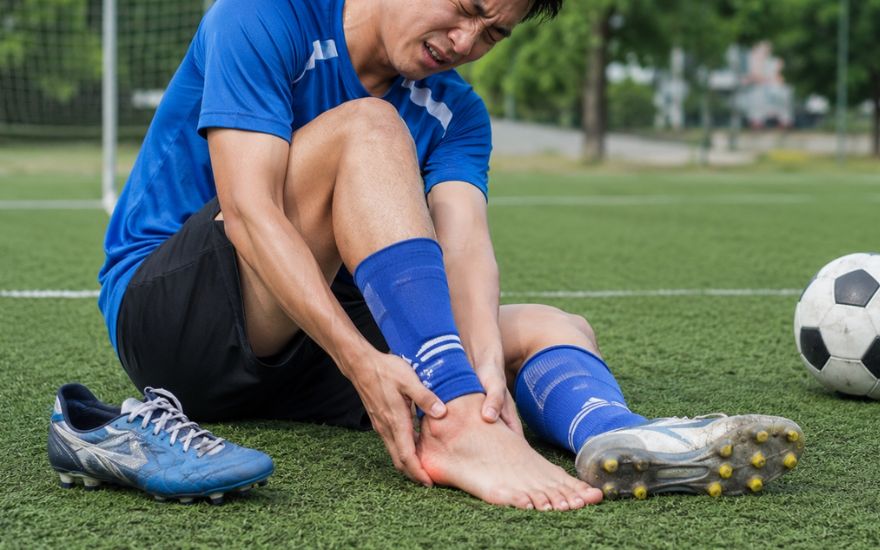
Heel pain after playing football commonly occurs during sprinting, jumping, sudden changes of direction or collisions during a match. The pain may involve the Achilles tendon, plantar fascia, heel pad or the heel bone. Early recognition of the symptoms and location of the injury helps guide appropriate management.
Medical review: Hoang Van Ban, MD, MSc, Department of Orthopedic Trauma and Neurosurgery, Hong Ngoc Phuc Truong Minh General Hospital.
Medical note: Heel pain after playing football is not always caused by overuse. If the pain occurs suddenly and is accompanied by significant swelling, difficulty walking or an inability to stand on tiptoe using the affected leg, the player should stop exercising and seek prompt medical evaluation to rule out a serious Achilles tendon or calcaneal injury.
What commonly causes heel pain after playing football?
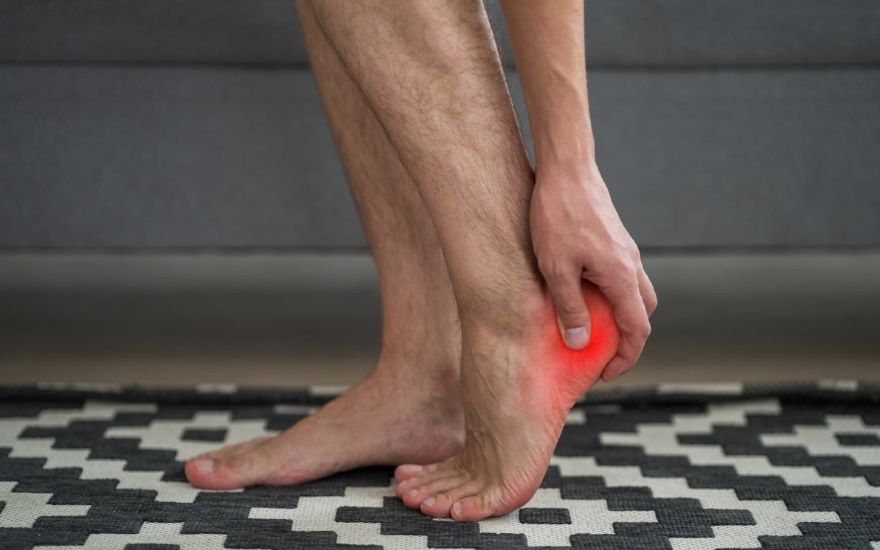
In football, the heel is repeatedly involved in running, accelerating, jumping, landing and changing direction. The location of the pain can help identify which tissue may be irritated or injured, but players should not determine the cause based on symptoms alone.
Achilles tendon irritation or injury
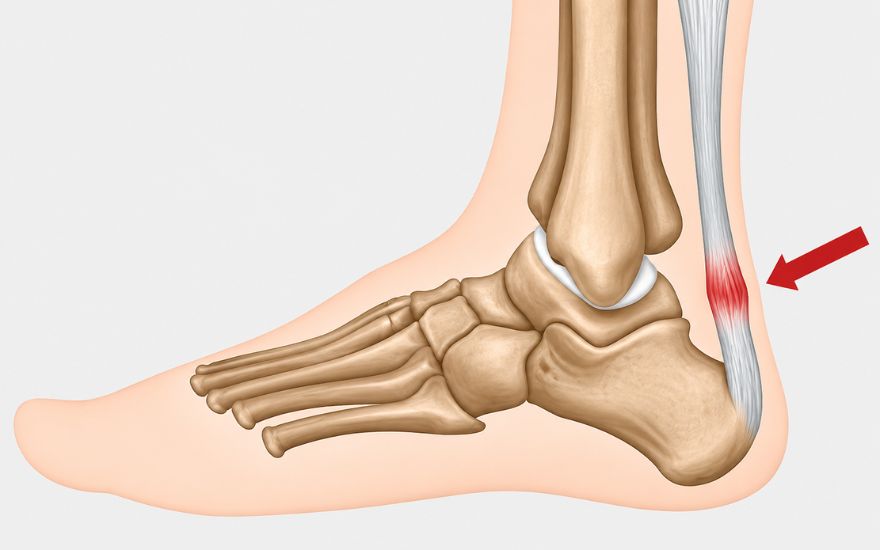
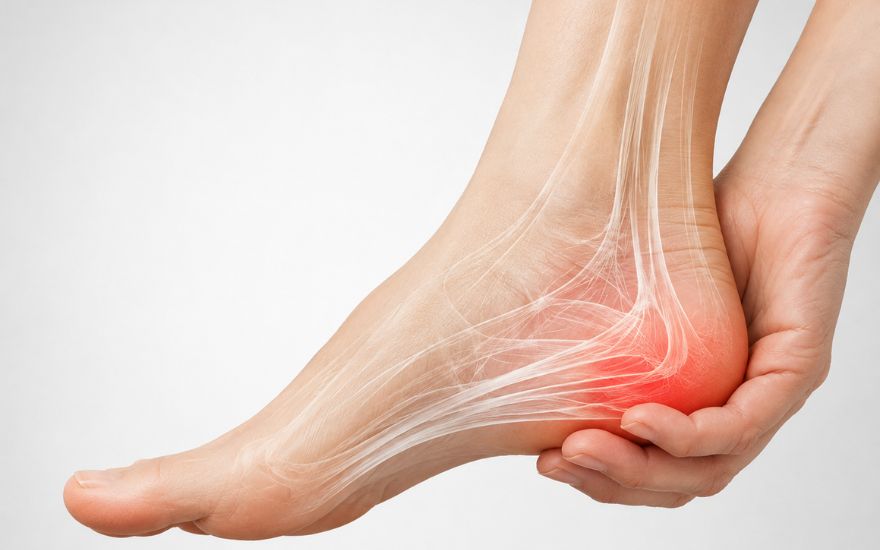
Pain at the back of the heel, sometimes extending into the lower calf, is commonly associated with the Achilles tendon. This tendon transfers force from the calf muscles to the foot and is therefore placed under considerable strain when a player accelerates, jumps, kicks the ball or pushes forward.
When the tendon becomes irritated by repetitive activity, players commonly experience pain and stiffness at the back of the heel, particularly when running, jumping or standing on tiptoe. An Achilles tendon tear or rupture usually occurs suddenly during acceleration, landing or a change of direction, followed by severe pain, swelling and difficulty standing on tiptoe using the affected leg.
Plantar fascia irritation after exercise
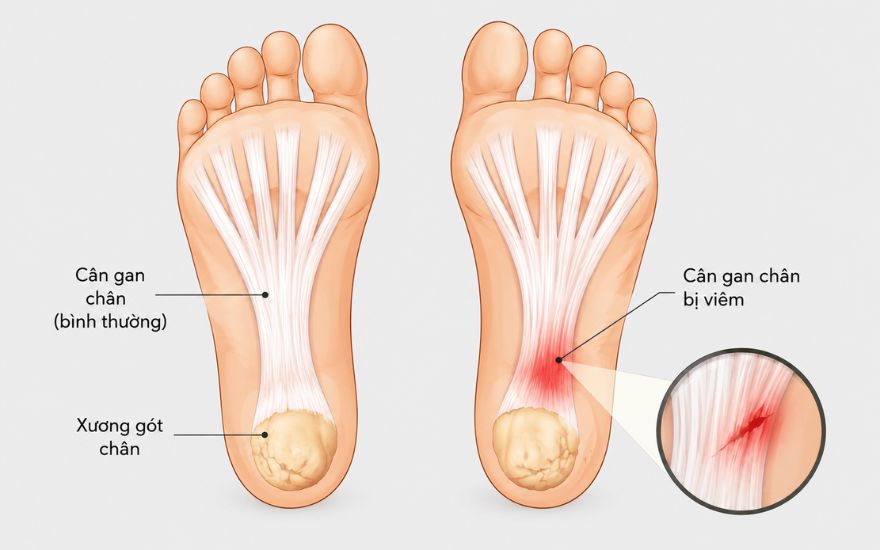
When pain is concentrated under the heel, particularly toward the inner side of the foot, plantar fasciitis is a common cause. The plantar fascia is a band of tissue that runs along the sole and is repeatedly loaded during running, jumping and landing.
The pain is usually most noticeable during the first few steps after prolonged rest or upon getting out of bed in the morning, then eases somewhat with gentle walking. Frequent football sessions, a rapid increase in playing frequency, or worn footwear with inadequate cushioning and support can increase irritation in this area.
Heel pad contusion
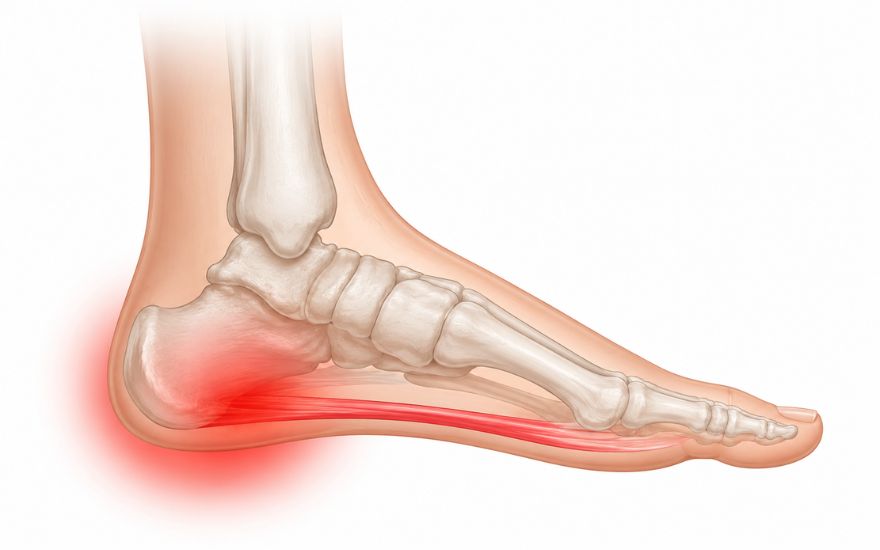
The heel contains a layer of fatty tissue that helps absorb impact when the foot strikes the ground. A forceful landing, stepping on a hard surface or receiving a direct blow to the heel from another player can bruise this protective pad and cause pain when standing or walking.
The pain is usually concentrated in the center of the underside of the heel and becomes noticeable following an impact. Unlike plantar fascia pain, it may not be most severe during the first few steps after getting out of bed.
Calcaneal injury caused by repetitive loading
Frequent football sessions involving repeated running and jumping can place repetitive stress on the calcaneus. If the bone does not have sufficient time to adapt to the training load, small stress injuries may develop and progress to a stress fracture.
Players typically experience deep, localized heel pain that worsens with running, standing or walking and begins to occur more readily across successive training sessions. Unlike ordinary muscle fatigue, the pain tends to persist and recur whenever the heel continues to bear weight.
What should you do for heel pain after playing football?
If heel pain becomes noticeable during or after a match, the player should immediately reduce sprinting, jumping and changes of direction that trigger the pain. Continuing to play places further stress on the injured area and may prolong the symptoms.
During the first few days, management should depend on the severity of the pain and the suspected cause. If there are no signs of a serious injury, the player can take the following steps:
- Stop playing football if running or jumping causes significant heel pain.
- Limit prolonged standing, long-distance walking and other painful activities, while maintaining gentle movement if walking is not difficult.
- If the heel is painful or swollen after exercise, apply a cold pack wrapped in a towel for up to 20 minutes at a time. Do not place ice directly on the skin.
- Wear properly fitting shoes with adequate cushioning and heel support. Avoid continuing to use heavily worn footwear.
- Do not massage forcefully, manipulate the heel or attempt intensive stretching if the pain begins suddenly and is accompanied by swelling and leg weakness.
- Do not take medication for prolonged periods or have medication injected into the heel without medical evaluation.
Once the pain has eased and walking has become more comfortable, stretching and strengthening exercises should be selected according to the underlying cause. For Achilles tendinopathy, strengthening the Achilles tendon and calf muscles is an important part of rehabilitation. Plantar fascia pain often requires a combination of plantar fascia and calf stretching, along with appropriate footwear adjustments.
Signs that heel pain requires medical attention
Players should seek medical evaluation if the pain feels different from ordinary post-exercise soreness. In particular, sudden pain following acceleration, jumping or a change of direction may indicate an Achilles tendon or bone injury. The player should not continue running to test the affected leg.
Warning signs include:
- Severe pain that begins suddenly during a football match.
- Significant swelling or bruising around the heel or back of the ankle.
- An inability to walk normally or stand on tiptoe using the affected leg.
- Visible deformity of the foot or ankle after an impact.
- Deep pain localized to one point on the bone that becomes more noticeable over successive matches.
- Numbness, reduced sensation or unusual coldness in the foot.
- Pain that progressively worsens, repeatedly returns or does not improve after approximately two weeks of home care.
The doctor will usually ask about the location and onset of the pain, the circumstances of the injury and the player’s recent training schedule before examining the heel. If a bone injury needs to be ruled out or the tendon and soft tissues require further assessment, X-rays, ultrasound or MRI may be recommended, depending on the individual case.
Recovery before returning to football
Being pain-free at rest does not mean the heel is ready for a football match involving repeated acceleration and changes of direction. Before returning to the previous level of play, the player should gradually restore ankle mobility, calf strength and the ability to perform football-specific movements.
Rehabilitation usually progresses from simple to more demanding exercises. Depending on the injury, the player may begin with ankle mobility and appropriate strengthening exercises before gradually progressing to heel raises, light running, acceleration, jumping and changes of direction.
Before returning to football, the player should be able to:
- Walk and use stairs without significant pain.
- Perform repeated heel raises without weakness or a considerable increase in pain.
- Move the ankle through an almost normal range of flexion and extension.
- Jog, accelerate, jump and change direction with good control.
- Complete a trial training session without a significant increase in heel pain during the session or the following day.
To reduce the risk of recurrence, players should increase playing time and intensity gradually instead of immediately returning for a full match. Footwear should fit properly, have soles that are not excessively worn and be suitable for the playing surface. After an extended break from football, several training sessions should be used to allow the muscles and tendons to readapt to running, jumping and changing direction.
Assessment and rehabilitation for heel pain after football at Hong Ngoc General Hospital
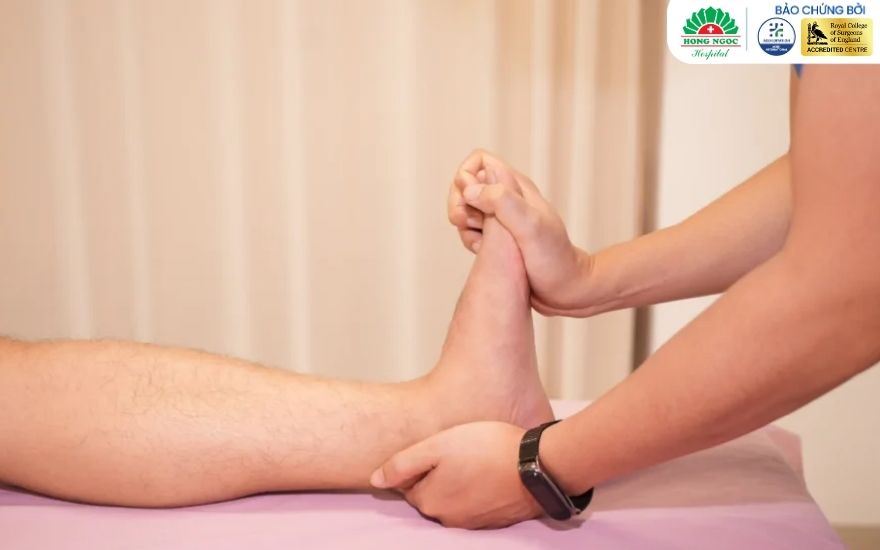
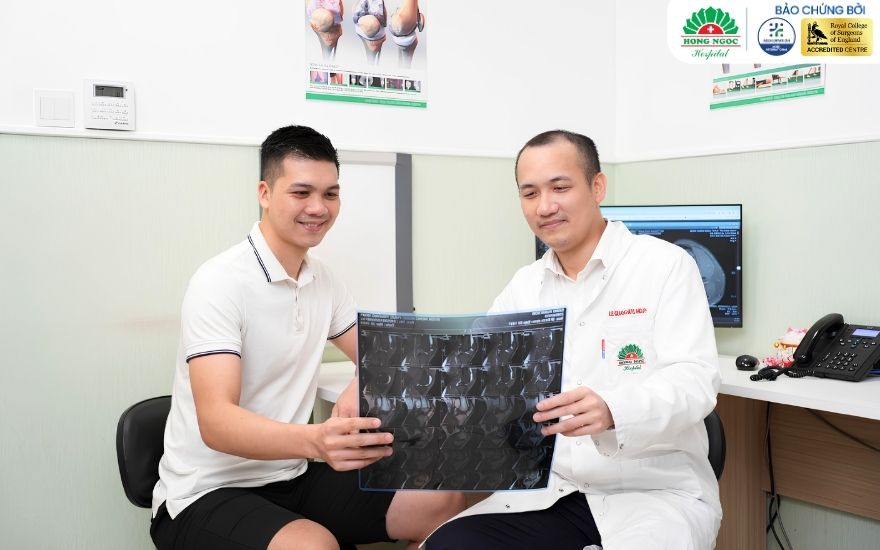
Players with persistent heel pain or pain affecting movement can visit Hong Ngoc Phuc Truong Minh General Hospital for medical assessment and identification of the underlying cause. The doctor will ask about the location and onset of the pain, the circumstances of the injury and the player’s recent football schedule. The examination will assess tenderness, swelling, ankle range of motion and strength during heel raises. Diagnostic imaging may be recommended when further evaluation of the injury is required.
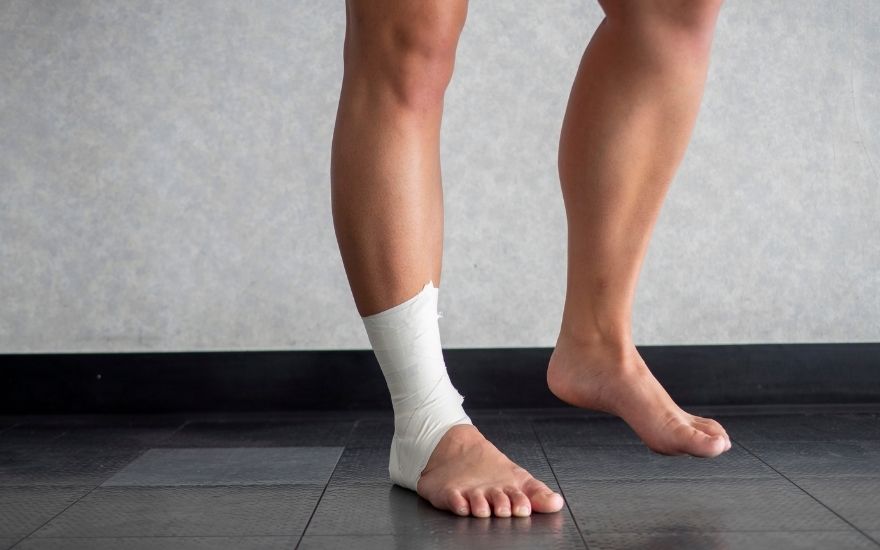
Depending on the type of injury and the degree of functional limitation, rehabilitation may be prescribed to reduce pain, improve mobility, restore muscle strength and support a safer return to daily activities and sport. At Hong Ngoc General Hospital, patients receive guidance on rehabilitation exercises following sports injuries, combined with physical therapy tailored to their specific condition.
Frequently asked questions about heel pain after playing football
Can football boots cause heel pain?
Poorly fitting football boots can contribute to heel pain, particularly if they are too tight, the heel counter rubs against the heel, or the soles are worn and provide less shock absorption. However, persistent pain should not be attributed solely to footwear, as the Achilles tendon, plantar fascia or calcaneus may also be the source of the symptoms.
Can I play football again if the heel pain is gone the next day?
Players should not decide to return to the pitch solely because the pain has disappeared at rest. If running, jumping, performing heel raises or changing direction causes the pain to return, the heel is not yet ready for the demands of a football match and requires further reduction in activity.
Should I massage my heel immediately after playing football?
Gentle massage is not appropriate for every cause of heel pain. If the pain begins suddenly after an injury and is accompanied by significant swelling, bruising or weakness during heel raises, forceful massage should be avoided. Medical evaluation is necessary to rule out a tendon tear or bone injury.
What is the difference between pain at the back and underneath the heel?
Pain at the back of the heel is more commonly associated with the Achilles tendon or its attachment to the calcaneus, while pain underneath the heel commonly involves the plantar fascia or heel pad. The location of the pain provides only an initial indication. The doctor must also consider how the symptoms began, the area of tenderness during examination and any functional limitations to determine the cause.
How long should I wait before returning to football after heel pain?
There is no single recovery timeline that applies to every case because the duration depends on the type and severity of the injury. Players should return according to their functional recovery, once basic activities, running, jumping and changing direction no longer cause significant pain and adequate strength has been restored.
Conclusion
Heel pain after playing football may arise from the Achilles tendon, plantar fascia, heel pad or a bone injury caused by repeated running, jumping and changes of direction. Players should reduce activities that trigger pain and restore strength gradually. If the pain begins suddenly, affects walking, prevents standing on tiptoe or persists despite reduced activity, medical assessment is required to determine the severity of the injury before returning to the pitch.
References
- Koc TA Jr, Bise CG, Neville C, et al. Heel Pain – Plantar Fasciitis: Revision 2023. Journal of Orthopaedic & Sports Physical Therapy, 2023.https://www.jospt.org/doi/10.2519/jospt.2023.0303
- Chimenti RL, Neville C, Houck J, et al. Achilles Pain, Stiffness, and Muscle Power Deficits: Midportion Achilles Tendinopathy Revision – 2024. Journal of Orthopaedic & Sports Physical Therapy, 2024.https://www.jospt.org/doi/10.2519/jospt.2024.0302
- American Academy of Orthopaedic Surgeons. Heel Pain.https://www.orthoinfo.org/diseases--conditions/heel-pain/
- American Academy of Orthopaedic Surgeons. Achilles Tendon Rupture (Tear).https://www.orthoinfo.org/diseases--conditions/achilles-tendon-rupture-tear/
- NHS. Heel pain.https://www.nhs.uk/symptoms/foot-pain/heel-pain/
- Silbernagel KG, Thomeé R, Eriksson BI, Karlsson J. Continued Sports Activity, Using a Pain-Monitoring Model, During Rehabilitation in Patients With Achilles Tendinopathy. American Journal of Sports Medicine, 2007.https://pubmed.ncbi.nlm.nih.gov/17307888/