




You may experience a burning or painful sensation in the anorectal area after a bowel movement, accompanied by itching and persistent discomfort, which may raise suspicion of hemorrhoids. However, can hemorrhoids be definitively identified based solely on these symptoms? Let us explore the common clinical signs of hemorrhoids in the article below.
Important signs of hemorrhoids that should be noted
Hemorrhoids refer to the swelling and dilation of veins located beneath the skin around the anus (external hemorrhoids) or in the lower rectum (internal hemorrhoids). A common clinical sign of both types is bleeding during defecation, typically presenting as bright red blood in the stool or on toilet tissue after wiping the anal area.
In the early stage, hemorrhoids are often difficult to recognize because the symptoms are usually mild and nonspecific. Noticeable discomfort and pain generally appear only when the condition progresses to a more advanced stage. Individuals should pay attention if the following symptoms occur, as they may indicate the presence of hemorrhoids:
Anal itching
One of the most recognizable signs of hemorrhoids is persistent itching and discomfort in the anal region. Hemorrhoidal cushions may produce mucus, causing the anal area to remain moist. This environment can facilitate bacterial growth, leading to irritation, itching, and a burning sensation around the anus.
Prolapse of hemorrhoidal tissue
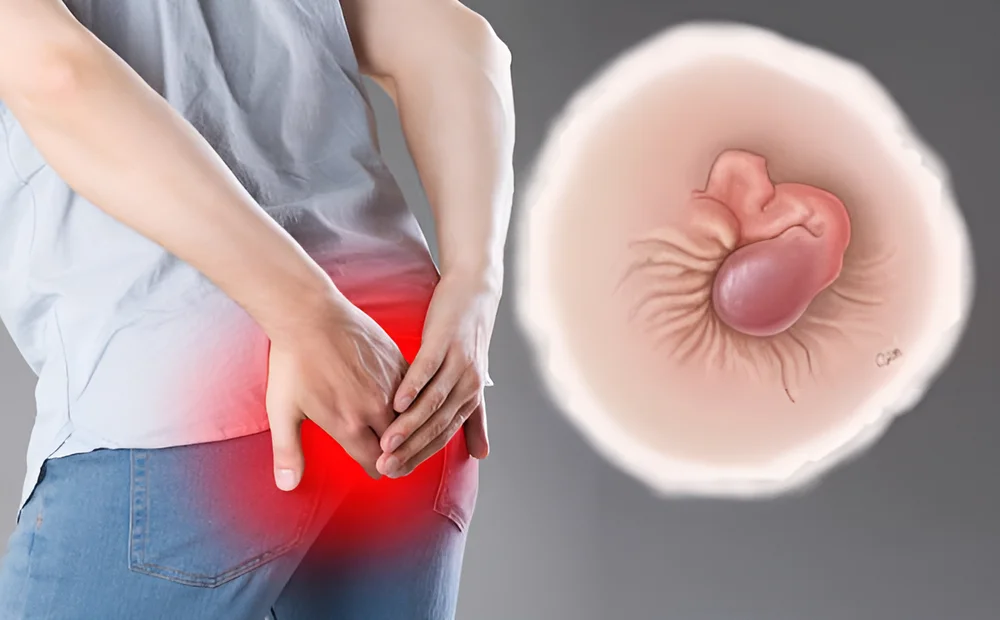
Another common sign of hemorrhoids is the prolapse of hemorrhoidal tissue. The hemorrhoidal mass may protrude externally and fail to spontaneously retract. Patients may notice or palpate a small protruding mass at the anal verge or within the perianal folds. Friction between the prolapsed hemorrhoids and underwear during daily activities can cause swelling and significant pain.
Pain and discomfort
Impaired blood circulation may lead to thrombus formation and thrombosis within the hemorrhoidal veins. When thrombosis occurs, external hemorrhoids may present as tense, firm, and swollen masses, while internal hemorrhoids may cause deep anal pain and significant discomfort. Severe anal pain may also result from secondary infection, inflammation spreading to surrounding tissues, mucosal injury around the anus, or the development of anorectal abscesses.
Difficulty during defecation
When hemorrhoidal tissue enlarges and progresses to prolapse or strangulated hemorrhoids, or when anal sphincter function becomes impaired, patients may experience pain during defecation and, in severe cases, loss of bowel control. Due to pain associated with bowel movements, patients may develop a tendency to withhold defecation, leading to harder stools and worsening pain during subsequent bowel movements.

Rectal bleeding during defecation
Another common sign of hemorrhoids is rectal bleeding during bowel movements. Blood may appear as droplets, as a small stream, mixed with stool, or visible on toilet tissue after wiping. Persistent bleeding may lead to fatigue, weakness, or shortness of breath due to blood loss.
In advanced cases, particularly when hemorrhoids are complicated by anorectal abscess formation, the risk of systemic infection may increase. This condition can facilitate bacterial invasion into the hemorrhoidal venous system, potentially leading to severe infection and posing a significant threat to the patient’s health.
>>> Watch the video for detailed consultation on hemorrhoid symptoms by People's Physician, Associate Professor, Dr. Nguyen Xuan Hung:
Which conditions can hemorrhoid symptoms be mistaken for?
The main symptoms of hemorrhoids include bleeding during defecation, prolapse of hemorrhoidal tissue, anal pain, and mucous discharge from the anus. Therefore, these manifestations can easily be confused with other conditions affecting the anorectal region, such as:
- Anal skin tags mistaken for hemorrhoids: When noticing or palpating excess tissue around the anal region, many individuals immediately suspect external hemorrhoids or prolapsed internal hemorrhoids. However, this may simply be an anal skin tag, which is generally benign and harmless.
- Anal fissure: Pain in the anal region may be caused by small tears in the anal mucosa characteristic of an anal fissure, which often results from difficult or strained bowel movements.
- Anal abscess: An anal abscess presents as a painful swelling caused by localized infection in the perianal area and may sometimes be mistaken for hemorrhoids.
In addition, discomfort in the anal region may also be confused with other medical conditions such as anal fistula, inflammatory bowel disease, genital warts, rectal prolapse, rectal polyps, or rectal cancer.
Potential complications of hemorrhoids
Hemorrhoids are generally considered a benign condition and, in the early stages, may not significantly affect a patient’s daily activities or quality of life. However, patients should not assume that the condition will resolve spontaneously or delay medical evaluation. If hemorrhoids progress without timely management, they may lead to several complications, including:
- Infection of hemorrhoidal tissue: If patients do not maintain proper anal hygiene after hemorrhoidal prolapse, bacteria or fungi may invade the affected area, leading to infection and inflammation of the anal region.
- Anemia: Persistent rectal bleeding that remains untreated may result in chronic blood loss and subsequent anemia. In this condition, the body lacks sufficient red blood cells to effectively transport oxygen, leading to chronic fatigue, pallor, weakness, and, in severe cases, episodes of syncope.
- Strangulated hemorrhoids – a serious complication: Enlarged hemorrhoidal masses may compress and obstruct the anal canal, causing significant difficulty during defecation or even inability to pass stool. Initially, ulceration and infection may develop within the anal canal, which can progress to more severe complications if not promptly treated. Untreated cases may result in severe ulceration and infection.
- Thrombosed hemorrhoids: This occurs when the blood vessels within the hemorrhoidal tissue become compressed or rupture, leading to vascular obstruction and thrombus formation. Impaired blood circulation may result in infection and tissue necrosis in the affected hemorrhoidal mass.
- Anal sphincter dysfunction: Weakening of the anal sphincter muscles may occur, leading to impaired control of gas and fecal continence.
- Rupture of external hemorrhoids.
- Secondary anorectal conditions: Hemorrhoids may also contribute to secondary conditions such as anal cryptitis, anal fissures, perianal or anorectal fistulas, and pruritus ani.
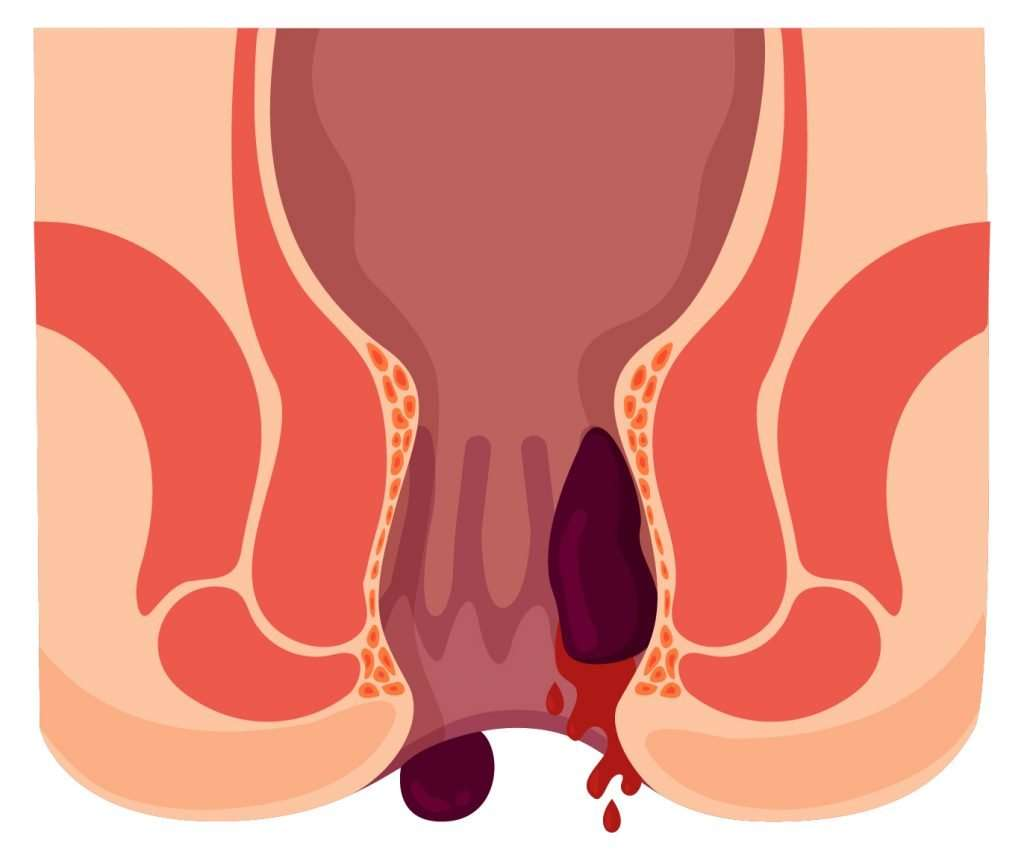
** In severe cases, complications may include thrombus migration to the mesenteric vessels causing vascular obstruction, or the development of septicemia.
What does the hemorrhoid examination process involve?
When symptoms suggestive of hemorrhoids are suspected, patients should visit a qualified medical facility for evaluation by a specialist physician. Proper clinical assessment helps ensure an accurate diagnosis, differentiate hemorrhoids from other anorectal conditions, and determine disease severity in order to establish an appropriate and effective treatment plan.
Typically, the hemorrhoid examination process at reputable healthcare facilities includes the following steps:
Step 1: Initial clinical assessment
During the initial consultation, the physician will obtain a detailed medical history by asking questions related to family history, occupation, current work characteristics, lifestyle habits, dietary patterns, and any prior history of anorectal diseases. Patients are encouraged to provide accurate and honest information, as this enables the specialist to better understand the clinical condition and determine an appropriate treatment strategy.

Step 2: External anal examination
At this stage, the physician examines the external area of the anus. This assessment helps identify clinical manifestations associated with hemorrhoids, such as anal fissures, prolapsed hemorrhoidal tissue, or irritation of the perianal skin.
Step 3: Digital rectal examination
Digital rectal examination is an essential step in the diagnostic evaluation of hemorrhoids. The patient will be asked to remove their clothing and wear a medical gown provided by the healthcare facility. The physician then wears lubricated gloves and gently inserts a finger into the rectum to assess the internal structure of the anal canal and detect any abnormalities.
Reader may also be interested in:
- How dangerous are the complications of hemorrhoids? A safe and effective address for hemorrhoid treatment with minimized complications
- 4 causes of hemorrhoids and preventive measures
- Can postpartum hemorrhoids resolve on their own? What should mothers do to prevent hemorrhoids after childbirth?
Some individuals, particularly women, may feel embarrassed or hesitant about this procedure because it requires partial removal of clothing. However, patients should not feel overly concerned, as physicians perform the examination with professionalism, care, and sensitivity. Maintaining a relaxed and cooperative attitude will help the examination proceed smoothly and efficiently.
Step 4: Laboratory testing
Patients with hemorrhoids often present with rectal bleeding, which may lead to anemia. Therefore, blood tests are commonly performed to assess hemoglobin levels and evaluate potential blood loss. Laboratory testing may also detect elevated white blood cell counts, which could indicate inflammation or complications associated with hemorrhoidal disease.
Step 5: Differential diagnosis
Typical symptoms of hemorrhoids include anal pain, burning sensation, and bleeding during defecation. However, several other anorectal conditions may present with similar symptoms. Therefore, physicians conduct thorough evaluations to distinguish hemorrhoids from other diseases such as inflammatory bowel disease, anal fissure, anal fistula, or rectal polyps. Diagnostic methods may include visual examination or endoscopic procedures to differentiate between these conditions.
Step 6: Clinical conclusion
After completing the examination and necessary diagnostic tests, the physician will provide a final diagnosis. Based on the patient’s clinical condition and disease severity, an appropriate treatment plan will be recommended.
Where to undergo reliable and effective hemorrhoid examination?
Hong Ngoc General Hospital brings together a highly qualified team of physicians along with a modern medical equipment system, gradually becoming a trusted healthcare destination for many patients seeking examination and treatment for hemorrhoids. As soon as symptoms suggestive of hemorrhoids appear, patients can visit the hospital and feel confident in receiving care from the experienced specialists of the Department of Surgery:

- Assoc. Prof., Dr. Nguyen Xuan Hung, People's Doctor, is one of Vietnam’s leading experts in gastrointestinal surgery and anorectal diseases. He previously served as Director of the Colorectal and Pelvic Floor Surgery Center at Viet Duc University Hospital and is currently Director of the Digestive and Colorectal–Pelvic Floor Disease Center at Hong Ngoc Phuc Truong Minh General Hospital. He is also Vice President of the Vietnam Association of Anus and Rectum, a member of the Vietnam Surgical and Endoscopic Surgery Association, and a member of the French Society of Physicians for the Treatment of Colorectal and Anal Diseases.
- Dr. Cu Trung Kien, MD, MSc – received advanced training in gastrointestinal surgery in Hong Kong, previously worked at Bach Mai Hospital, and currently serves as Deputy Head of the Gastrointestinal Surgery Department at Hong Ngoc Yen Ninh General Hospital.
- Dr. Bach Phuc Huy, MD, Specialist Level I – with more than 15 years of clinical experience, currently serves as Head of the Gastrointestinal Surgery Unit at Hong Ngoc Phuc Truong Minh General Hospital.
Hemorrhoid treatment with specialists to ensure:
- Accurate diagnosis: Avoid misdiagnosis with rectal cancer, rectal polyps, or other anorectal conditions.
- Comprehensive treatment: Approximately 50% of cases can be managed with medication combined with dietary and lifestyle modifications, while about 45% require simple procedural interventions.
- Effective intervention: Minimal tissue trauma, rapid recovery, very low complication rates, and a treatment success rate exceeding 95%.
For detailed consultation, please contact:
Hotline for scheduling appointments with specialists: 0911 908 856Hotline for consultation on hemorrhoid surgery: 0949 646 556
Note: The information provided in this article by Hong Ngoc General Hospital is for reference purposes only and does not replace professional medical diagnosis or treatment. Patients should not self-medicate or independently purchase medications for treatment. To accurately determine their medical condition, individuals should visit a healthcare facility for direct examination, diagnosis, and appropriate treatment consultation by a qualified physician.
Follow the official Fanpage of Hong Ngoc General Hospital to receive more useful health information and updates on the hospital’s special offers and programs.