



From an extremely poor prognosis, the young male patient with intracerebral hemorrhage has regained functional independence in daily activities and is able to communicate fluently in two languages after only 35 days of intensive treatment at Hong Ngoc General Hospital.
Intracerebral hemorrhage in the setting of high fever and deep coma: a major challenge in neurocritical care
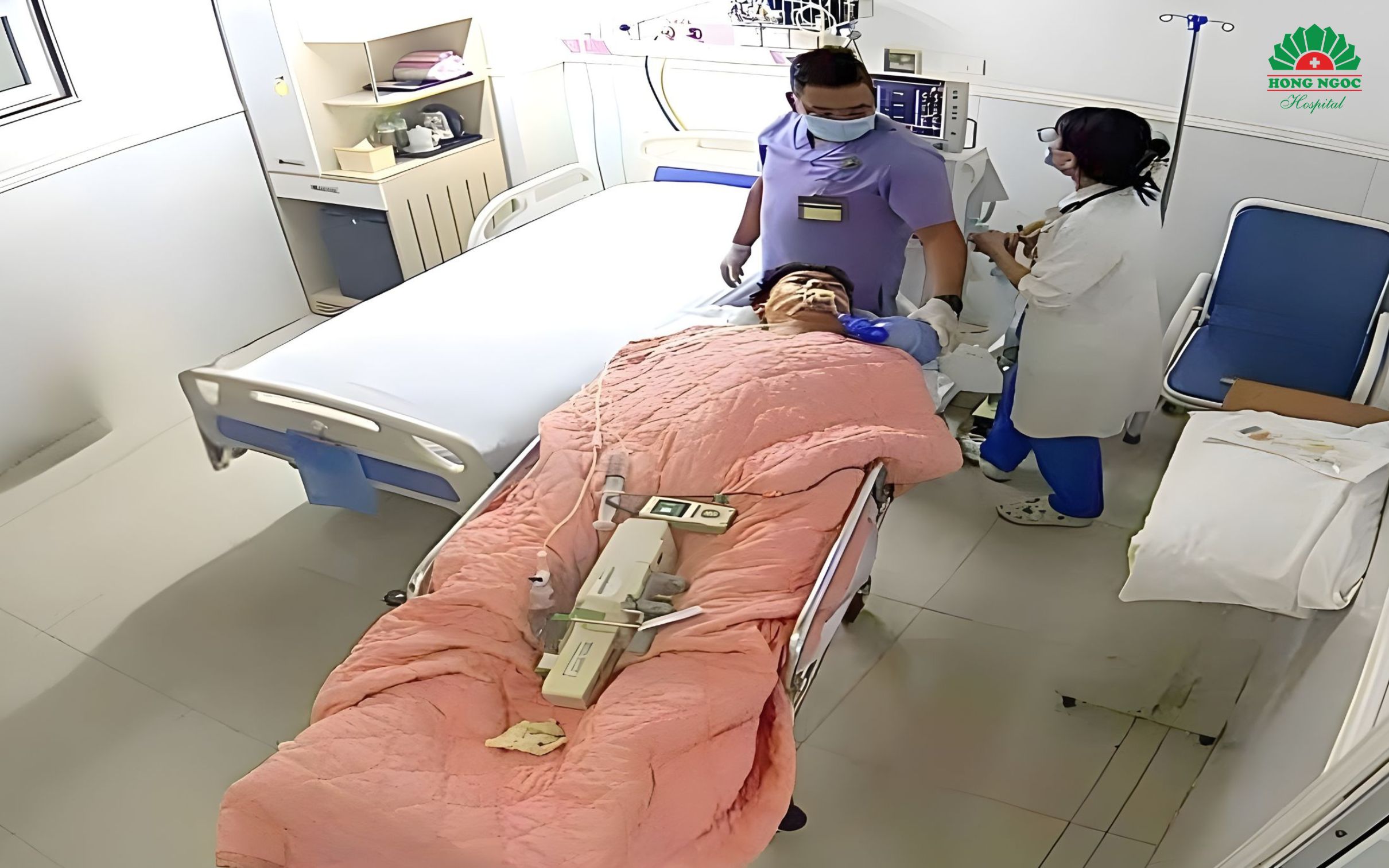
Mr. N.C.M., a 36 year old male, suddenly developed a severe headache and was emergently admitted to a medical facility in a drowsy state, with a Glasgow Coma Scale score of only 8/15, accompanied by respiratory failure. He was diagnosed with severe subarachnoid hemorrhage secondary to rupture of an anterior communicating artery aneurysm. The patient underwent endovascular aneurysm embolization, along with strict blood pressure control and anti cerebral edema management. However, after three days of treatment, his clinical condition continued to deteriorate, with progression to deep coma requiring mechanical ventilation. Consequently, the family decided to transfer the patient to Hong Ngoc General Hospital for further advanced neurocritical care management.
According to Dr. Pham Thi Ninh Van, Specialist Level I, Emergency and Intensive Care Department, Hong Ngoc General Hospital, Yen Ninh Campus, at the time of admission, the patient was in a critical condition due to severe brain injury following subarachnoid hemorrhage complicated by intraventricular hemorrhage, with progression to multiple organ dysfunction. In addition, the patient presented with persistent high fever, which is a key factor that significantly increases the risk of secondary brain injury and cerebrovascular complications.
Under these clinical circumstances, even if survival were achieved, the patient remained at high risk of severe long term sequelae, including prolonged dependence on mechanical ventilation, loss of communication ability, impaired motor function, and inability to perform self care activities, significantly limiting the likelihood of returning to normal daily life.
According to Dr. Van, statistics published in the United States PubMed database indicate that approximately 20–30% of patients are at risk of mortality within the first 3–12 months following the onset of intracerebral hemorrhage, and even among survivors, many may suffer from long term disability. Notably, in patients with severe clinical courses such as those requiring mechanical ventilation, presenting with coma, or having large volume brain injury, the proportion of individuals who survive and achieve a favorable neurological recovery is estimated at only around 30%. Given his critically unstable condition at admission and the presence of multiple poor prognostic factors, Mr. M. was considered to be at high risk for incomplete neurological recovery.
Progress beyond expectations through a closely monitored and individualized treatment strategy
In the face of an immediately life-threatening situation, the Emergency and Intensive Care Department of Hong Ngoc General Hospital promptly instituted Level I intensive care, the highest tier of critical care management. The treatment strategy focused on stabilization of vital signs, neuroprotection, prevention of rebleeding, and maximization of survival while minimizing the risk of severe neurological sequelae following subarachnoid hemorrhage. Concurrently, the multidisciplinary team implemented a stepwise treatment model, in which interventions were applied in a systematic and escalating manner, tailored to the patient’s ongoing clinical response and neurological evolution.
Dr. Van shared: “On the second day after admission, the patient continued to experience persistent high fever up to 39°C, a poor prognostic factor known to exacerbate secondary brain injury and increase the risk of delayed cerebral vasospasm. Therefore, the medical team implemented continuous core temperature monitoring via bedside monitoring systems and adopted a stepwise treatment strategy, remaining fully prepared to initiate targeted temperature management for proactive thermal control. Simultaneously, a tracheostomy was performed to secure the airway, optimize oxygenation, and reduce the risk of airway obstruction associated with prolonged coma.”
Owing to an aggressive intensive care strategy and meticulous close monitoring, the patient gradually overcame the most critical phase of the illness. After seven days of treatment, he was successfully weaned from mechanical ventilation and maintained stable spontaneous respiration. By day 15, his level of consciousness had significantly improved, with appropriate neurological responses observed, meeting the criteria for decannulation of the tracheostomy. Throughout the entire intensive care course, no motor deficits were documented, and common complications such as pressure ulcers, hospital acquired infections, or delayed cerebral ischemia were effectively prevented.
After 35 days of treatment, the patient demonstrated a favorable recovery, regaining independence in basic activities of daily living and the ability to communicate fluently in two languages. He has since been discharged from the hospital and continues outpatient rehabilitation, with an expectation of an early return to normal daily life and professional activities.

The patient’s father emotionally shared: “M’s physiological response to the treatment strategy implemented at Hong Ngoc Hospital has been extremely positive. From a state of near brain death, dependent on mechanical ventilation, urinary catheterization, intravenous nutritional support, and tracheostomy, after just one month M is now able to walk independently, eat and drink without assistance, perform daily activities autonomously, and even communicate with me in English. The disease progressed rapidly and was highly life threatening, and the decision to transfer M to Hong Ngoc Hospital for continued treatment was absolutely the right one.”
With a highly experienced medical team, closely coordinated multidisciplinary clinical protocols, and a comprehensive system of advanced medical equipment, Hong Ngoc General Hospital is fully equipped to receive, rapidly manage, and provide advanced intensive care for patients with acute stroke and severe intracerebral hemorrhage. These capabilities enable the minimization of long term sequelae and significantly improve patients’ chances of functional recovery. HONG NGOC GENERAL HOSPITAL
|