

Endocrinology specialists and gastrointestinal surgeons at Hong Ngoc General Hospital collaborated to perform sleeve gastrectomy for a 113 kg patient, enabling effective control of severe obesity, diabetes mellitus, fatty liver disease, musculoskeletal disorders, and a spectrum of high risk metabolic comorbidities.
After more than 10 years living with obesity, the patient experienced uncontrolled weight gain accompanied by multiple serious comorbid conditions
Ms. H. presented to the Endocrinology Department of Hong Ngoc General Hospital with severe obesity, weighing 113 kg and a body mass index (BMI) of 45.27, resulting in significant difficulty with ambulation and daily physical activities. In addition to morbid obesity, she was undergoing treatment for multiple comorbidities, including type 2 diabetes mellitus, hypertension, dyslipidemia, postsurgical hypothyroidism following thyroid cancer, and chronic gastritis.
Despite undergoing medical management at multiple healthcare facilities, her condition showed no significant improvement. Excessive body weight not only placed substantial mechanical stress on the musculoskeletal system but also progressively impaired her ability to ambulate and perform normal physical activities. The persistence of these chronic conditions over many years led to a marked decline in both her physical health and psychological well being.
Sharing her treatment journey, Ms. H stated: “My weight increased rapidly, and I have tried almost every weight loss approach, from dietary restriction and physical exercise to pharmacological therapy, yet none proved effective. Obesity has not only undermined my confidence in my appearance but has also led to a cascade of medical conditions, severely compromising my quality of life. My only wish now is to put an end to this condition so that I can live a healthier life.”
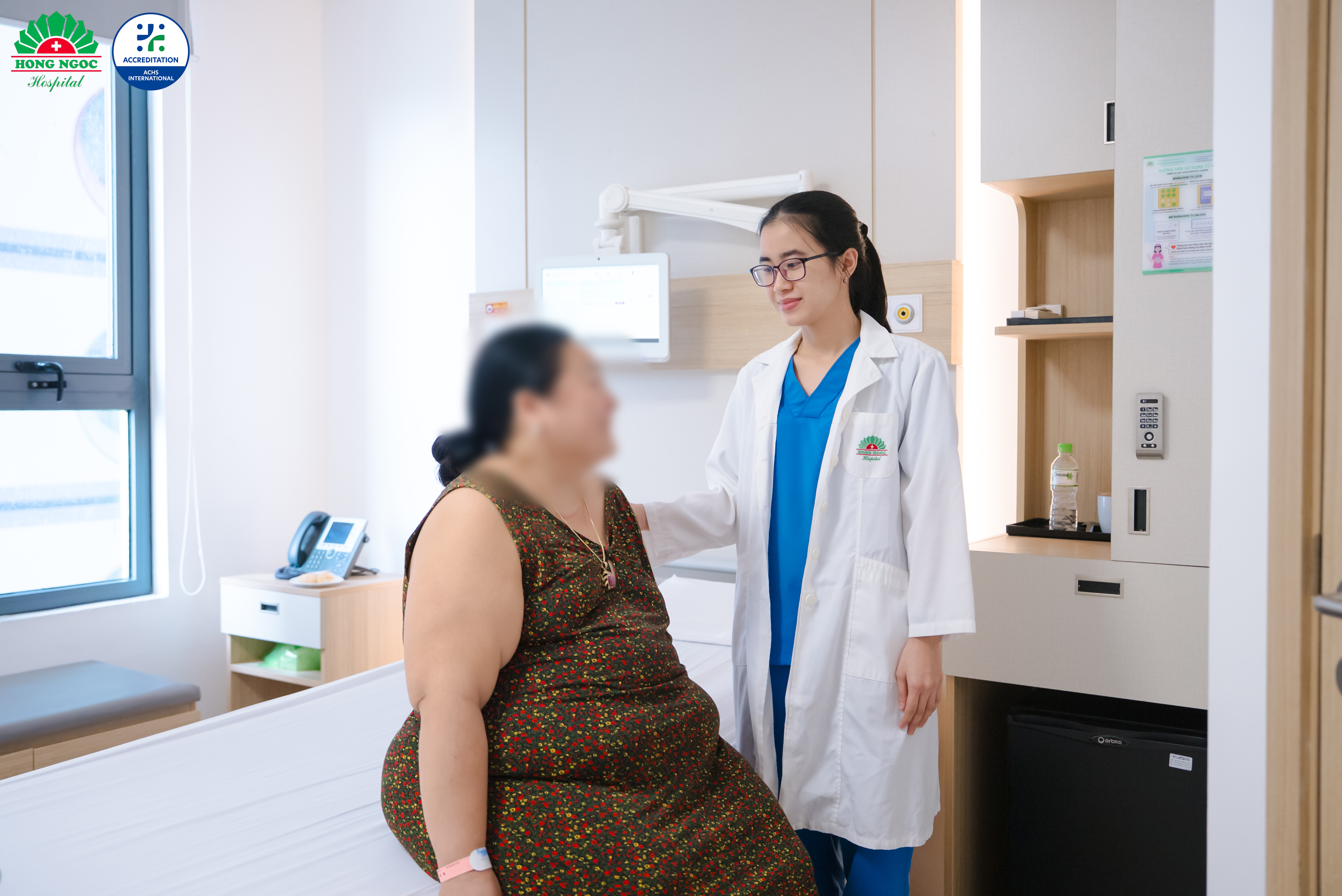
The physician examined the patient and provided treatment counseling.
According to the medical assessment, given the complex disease course and long duration of illness, medical therapy alone was no longer considered to provide sustainable efficacy. Therefore, surgical intervention was indicated to achieve more effective weight control, thereby comprehensively improving associated comorbidities and long term health outcomes.
“Should medical therapy alone be continued, effective and durable disease control would be unlikely, with a high risk of further clinical deterioration. Obesity is the primary underlying driver that accelerates the progression and complexity of associated comorbidities. Based on a comprehensive evaluation, the patient met the indications for metabolic surgery; surgical intervention at this stage is necessary to address the root cause, concurrently improve obesity related conditions, and enhance long term quality of life,” shared Nguyen Thi Nhu Quynh, MD, MSc, Endocrinology Department, Hong Ngoc General Hospital.
Sleeve gastrectomy: A therapeutic solution for the control of obesity and chronic comorbidities
The patient, Ms. H, shared: “To be honest, I had been counseled by Dr. Phong regarding sleeve gastrectomy for quite some time; however, I initially hesitated due to multiple concerns. Recently, I reached a point of despair as my health continued to deteriorate, to the extent that even walking became difficult. In addition, my physician advised that this represented the final and most definitive therapeutic option. Consequently, I decided to undergo sleeve gastrectomy at Hong Ngoc General Hospital.”
Accordingly, to achieve definitive treatment and address metabolic disorders at their root, the patient underwent a multidisciplinary consultation. Based on a comprehensive evaluation, the medical team reached a consensus to indicate sleeve gastrectomy, one of the most effective contemporary therapeutic approaches for the management of severe obesity and its associated metabolic comorbidities.
“This is not a cosmetic procedure. Sleeve gastrectomy is a metabolic therapeutic intervention that not only reduces gastric volume but also exerts direct effects on the brain–gut neuroendocrine axis, thereby decreasing hunger sensation, suppressing appetite, and improving insulin sensitivity. As a result, patients can achieve better long term control of blood glucose, lipid profiles, and other metabolic disorders,” explained Nguyen Thi Nhu Quynh, MD, MSc, Endocrinology Department, Hong Ngoc General Hospital.
The procedure was performed using a modern laparoscopic approach with the participation of a highly experienced surgical team. Despite the patient being classified as high risk due to severe obesity and metabolic disorders, the anesthesia and critical care team closely monitored and meticulously controlled vital parameters throughout the operation, ensuring a safe and successful surgical course.
Laparoscopic sleeve gastrectomy
“The patient belonged to the severe obesity category and presented with multiple metabolic disorders, which increased the anesthetic and surgical risks compared with routine cases. However, thanks to thorough preoperative assessment, meticulous preparation, and close intraoperative monitoring of vital parameters, the procedure was well controlled and achieved a safe outcome,” stated Bach Phuc Huy, MD, Specialist Level I, Head of the Gastrointestinal Surgery Unit, and the primary surgeon who performed the intervention for patient H.
Following surgery, the patient recovered rapidly, remained alert, experienced minimal postoperative pain, and was able to sit up and ambulate lightly within one day. Blood glucose and blood pressure parameters showed early signs of improved stabilization.
The patient was able to ambulate lightly just one day after surgery.
Ms. H emotionally shared: “Exactly one day after surgery, I was able to stand up and walk lightly, something I was almost unable to do before the operation due to my weight and musculoskeletal problems.” She expressed both relief and renewed confidence as she witnessed her health improving day by day.
One month after the intervention, Ms. H returned for follow up with a marked improvement in her physical condition. Her body weight had decreased to 98 kg, representing a loss of 15 kg compared with the preoperative period. Glycemic indices, blood pressure, and lipid profiles all showed significant improvement, and she no longer required pharmacological treatment for diabetes, hypertension, or dyslipidemia.
According to Nguyen Thi Nhu Quynh, MD, MSc, sleeve gastrectomy represents a comprehensive therapeutic intervention for patients with severe obesity who have failed to achieve adequate control with medical management. This is a complex surgical procedure that requires a high level of surgical expertise, advanced medical equipment, and close multidisciplinary coordination throughout the preoperative, intraoperative, and postoperative phases.
With a strong foundation of clinical expertise, a well integrated infrastructure, and extensive experience in the successful management of complex obesity cases, Hong Ngoc General Hospital continues to affirm its position as a trusted center for the treatment of obesity and metabolic disorders. At the hospital, each case is managed using an individualized treatment approach, offering patients the opportunity for comprehensive health transformation and renewed hope, particularly for those who have endured the long term burden of obesity and its associated conditions.
Endocrinology specialists and gastrointestinal surgeons at Hong Ngoc General Hospital collaborated to perform sleeve gastrectomy for a 113 kg patient, enabling effective control of severe obesity, diabetes mellitus, fatty liver disease, musculoskeletal disorders, and a spectrum of high risk metabolic comorbidities.
After more than 10 years living with obesity, the patient experienced uncontrolled weight gain accompanied by multiple serious comorbid conditions
Ms. H. presented to the Endocrinology Department of Hong Ngoc General Hospital with severe obesity, weighing 113 kg and a body mass index (BMI) of 45.27, resulting in significant difficulty with ambulation and daily physical activities. In addition to morbid obesity, she was undergoing treatment for multiple comorbidities, including type 2 diabetes mellitus, hypertension, dyslipidemia, postsurgical hypothyroidism following thyroid cancer, and chronic gastritis.
Despite undergoing medical management at multiple healthcare facilities, her condition showed no significant improvement. Excessive body weight not only placed substantial mechanical stress on the musculoskeletal system but also progressively impaired her ability to ambulate and perform normal physical activities. The persistence of these chronic conditions over many years led to a marked decline in both her physical health and psychological well being.
Sharing her treatment journey, Ms. H stated: “My weight increased rapidly, and I have tried almost every weight loss approach, from dietary restriction and physical exercise to pharmacological therapy, yet none proved effective. Obesity has not only undermined my confidence in my appearance but has also led to a cascade of medical conditions, severely compromising my quality of life. My only wish now is to put an end to this condition so that I can live a healthier life.”
The physician examined the patient and provided treatment counseling.
According to the medical assessment, given the complex disease course and long duration of illness, medical therapy alone was no longer considered to provide sustainable efficacy. Therefore, surgical intervention was indicated to achieve more effective weight control, thereby comprehensively improving associated comorbidities and long term health outcomes.
“Should medical therapy alone be continued, effective and durable disease control would be unlikely, with a high risk of further clinical deterioration. Obesity is the primary underlying driver that accelerates the progression and complexity of associated comorbidities. Based on a comprehensive evaluation, the patient met the indications for metabolic surgery; surgical intervention at this stage is necessary to address the root cause, concurrently improve obesity related conditions, and enhance long term quality of life,” shared Nguyen Thi Nhu Quynh, MD, MSc, Endocrinology Department, Hong Ngoc General Hospital.
Sleeve gastrectomy: A therapeutic solution for the control of obesity and chronic comorbidities
The patient, Ms. H, shared: “To be honest, I had been counseled by Dr. Phong regarding sleeve gastrectomy for quite some time; however, I initially hesitated due to multiple concerns. Recently, I reached a point of despair as my health continued to deteriorate, to the extent that even walking became difficult. In addition, my physician advised that this represented the final and most definitive therapeutic option. Consequently, I decided to undergo sleeve gastrectomy at Hong Ngoc General Hospital.”
Accordingly, to achieve definitive treatment and address metabolic disorders at their root, the patient underwent a multidisciplinary consultation. Based on a comprehensive evaluation, the medical team reached a consensus to indicate sleeve gastrectomy, one of the most effective contemporary therapeutic approaches for the management of severe obesity and its associated metabolic comorbidities.
“This is not a cosmetic procedure. Sleeve gastrectomy is a metabolic therapeutic intervention that not only reduces gastric volume but also exerts direct effects on the brain–gut neuroendocrine axis, thereby decreasing hunger sensation, suppressing appetite, and improving insulin sensitivity. As a result, patients can achieve better long term control of blood glucose, lipid profiles, and other metabolic disorders,” explained Nguyen Thi Nhu Quynh, MD, MSc, Endocrinology Department, Hong Ngoc General Hospital.
The procedure was performed using a modern laparoscopic approach with the participation of a highly experienced surgical team. Despite the patient being classified as high risk due to severe obesity and metabolic disorders, the anesthesia and critical care team closely monitored and meticulously controlled vital parameters throughout the operation, ensuring a safe and successful surgical course.
Laparoscopic sleeve gastrectomy
“The patient belonged to the severe obesity category and presented with multiple metabolic disorders, which increased the anesthetic and surgical risks compared with routine cases. However, thanks to thorough preoperative assessment, meticulous preparation, and close intraoperative monitoring of vital parameters, the procedure was well controlled and achieved a safe outcome,” stated Bach Phuc Huy, MD, Specialist Level I, Head of the Gastrointestinal Surgery Unit, and the primary surgeon who performed the intervention for patient H.
Following surgery, the patient recovered rapidly, remained alert, experienced minimal postoperative pain, and was able to sit up and ambulate lightly within one day. Blood glucose and blood pressure parameters showed early signs of improved stabilization.
The patient was able to ambulate lightly just one day after surgery.
Ms. H emotionally shared: “Exactly one day after surgery, I was able to stand up and walk lightly, something I was almost unable to do before the operation due to my weight and musculoskeletal problems.” She expressed both relief and renewed confidence as she witnessed her health improving day by day.
One month after the intervention, Ms. H returned for follow up with a marked improvement in her physical condition. Her body weight had decreased to 98 kg, representing a loss of 15 kg compared with the preoperative period. Glycemic indices, blood pressure, and lipid profiles all showed significant improvement, and she no longer required pharmacological treatment for diabetes, hypertension, or dyslipidemia.
According to Nguyen Thi Nhu Quynh, MD, MSc, sleeve gastrectomy represents a comprehensive therapeutic intervention for patients with severe obesity who have failed to achieve adequate control with medical management. This is a complex surgical procedure that requires a high level of surgical expertise, advanced medical equipment, and close multidisciplinary coordination throughout the preoperative, intraoperative, and postoperative phases.
With a strong foundation of clinical expertise, a well integrated infrastructure, and extensive experience in the successful management of complex obesity cases, Hong Ngoc General Hospital continues to affirm its position as a trusted center for the treatment of obesity and metabolic disorders. At the hospital, each case is managed using an individualized treatment approach, offering patients the opportunity for comprehensive health transformation and renewed hope, particularly for those who have endured the long term burden of obesity and its associated conditions.
Để lại câu hỏi của bạn để nhận được giải đáp từ các bác sĩ của Hồng Ngọc
Lorem ipsum dolor
Lorem ipsum dolor sit amet, consectetur adipiscing elit. Mauris odio lectus, pretium faucibus nisi eu, accumsan consectetur orci. In blandit vehicula nisl, vel lacinia ligula finibus a. Donec fermentum rhoncus