



Intervertebral discs play a crucial role in supporting the spine and absorbing mechanical shock. Disc degeneration directly impacts patients’ health and quality of life. Early understanding of this condition is essential for effective prevention and management.
What is disc degeneration?
The human spine consists of 33 vertebrae separated by intervertebral discs, which function as shock absorbers. Disc degeneration is a condition in which these discs lose hydration and elasticity over time or due to other factors, leading to reduced disc height and closer approximation of adjacent vertebrae. This process may result in nerve compression and spinal dysfunction, commonly affecting the cervical, thoracic, and especially the lumbar spine.
Disc degeneration is a common chronic condition, particularly in older adults. It typically progresses gradually from mild to severe stages and is non inflammatory in nature. If left untreated, it may lead to significant complications, causing persistent pain and impairment in daily activities.
Stages of disc degeneration
Disc degeneration progresses through multiple stages, each associated with distinct clinical features:
- Early stage: At this stage, initial structural changes occur in the intervertebral discs, nerves, and facet joints. However, due to the body’s compensatory mechanisms, symptoms are often absent or very subtle, and patients typically do not experience pain.
Early detection at this stage, combined with appropriate management, can lead to highly effective outcomes and prevent disease progression.
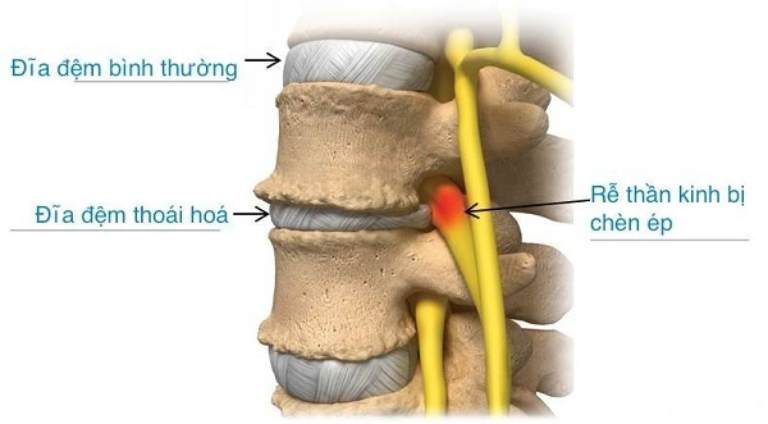
- Stage II: Moderate disc degeneration. At this stage, there is significant narrowing of the intervertebral disc space, with structural changes in the spine and reduced distance between vertebrae. Osteophyte formation may occur. Patients begin to experience pain, particularly during movement, physical exertion, bending, or lifting. A slight reduction in height may also be observed.
- Stage III: Advanced degeneration. The condition progresses over time, with persistent and more pronounced pain, even at rest, due to significant nerve involvement. Spinal deformities such as curvature or misalignment may develop, affecting overall body balance. Height reduction becomes more evident, and patients may experience fatigue and reduced energy levels.
- Stage IV: End stage degeneration. This represents the most severe stage, with marked spinal deformity and extensive nerve compression. Muscle atrophy may occur, and damage to spinal structures can become irreversible.
From stage II onward, as symptoms become more pronounced and pain increasingly affects daily activities, patients should seek evaluation at specialized medical facilities for timely diagnosis and appropriate management. Early detection and treatment are key to improving outcomes.
Symptoms of disc degeneration
The most prominent symptom of disc degeneration is persistent pain localized to the affected intervertebral disc. Other common manifestations include:
- Pain aggravated by bending or twisting the spine
- Reduced range of motion and difficulty with movement
- Muscle stiffness or spasms due to spinal instability
- Radiating or sharp, stabbing pain:
- In cervical involvement, pain may radiate to the shoulders, arms, and hands
- In lumbar involvement, pain may extend to the hips, buttocks, and posterior aspect of the legs
- Increased pain when maintaining a fixed posture for prolonged periods, such as standing, sitting, or bending
- Symptom relief with frequent changes in posture
- Numbness or tingling in the limbs due to nerve compression
Etiology of disc degeneration
Unlike other tissues, intervertebral discs have a limited blood supply, which impairs their ability to heal after injury and predisposes them to degeneration over time. Contributing factors include:
- Dehydration: Intervertebral discs are composed of approximately 60–80% water. Loss of hydration leads to reduced disc height and impaired shock absorbing function.
- Excessive mechanical stress: Repetitive or excessive physical activity can cause tears in the outer annulus fibrosus.
- Trauma: Acute injuries may directly damage the intervertebral discs.
- Aging: Degenerative changes are common in individuals over 60 years of age, although not all patients are symptomatic.

Why is the prevalence of disc degeneration increasing?
Previously, disc degeneration was primarily attributed to the natural aging process, typically occurring in individuals over 40 years of age as the musculoskeletal system gradually deteriorates.
However, the prevalence of disc degeneration is now increasing and trending toward younger populations due to multiple lifestyle related risk factors. In addition to aging, factors such as diet, physical activity, and daily habits play a significant role:
- Dietary factors: Both nutritional deficiency and excess can negatively impact spinal health. Inadequate nutrient intake impairs cartilage metabolism and disc repair, while overweight and obesity increase mechanical load on the spine, accelerating degeneration.
- Physical activity: A sedentary lifestyle, including prolonged sitting or maintaining a fixed posture, disrupts metabolic processes and accelerates degenerative changes. This is common among office workers and drivers. Conversely, excessive physical exertion or heavy lifting also places significant stress on the spine, contributing to disc degeneration over time.
- History of musculoskeletal disorders: Individuals with prior spinal injuries or a history of spinal surgery have an increased risk of developing disc degeneration.
- Genetic predisposition: A family history of spinal degeneration may increase susceptibility to the condition.
Management of disc degeneration
Treatment strategies for disc degeneration depend on the stage of the disease and severity of symptoms. Physicians will tailor management accordingly. At Hong Ngoc General Hospital, three main approaches are commonly applied: pharmacological therapy, physical therapy and rehabilitation, and surgical intervention.
Reader may also be interested in:
- Stages of disc herniation: recognizing each stage for appropriate management
- Lumbar spondylolisthesis: causes, symptoms and treatment options
Pharmacological management
Several medications are commonly used in the treatment of disc degeneration:
- Analgesics: Acetaminophen (paracetamol) is commonly prescribed for pain relief. It may be combined with codeine (e.g., Efferalgan Codeine) or tramadol (e.g., Ultracet) for short term use.
- Nonsteroidal anti inflammatory drugs (NSAIDs):Used at low doses and for short durations to reduce pain and inflammation. Caution is required in elderly patients and those with gastrointestinal, cardiovascular, or chronic renal conditions. These can be administered orally or topically.
- Neuropathic pain agents: Medications such as gabapentin and pregabalin are indicated in cases of radicular or nerve related pain.
- Muscle relaxants: Prescribed for patients with muscle spasms; however, they may cause side effects such as drowsiness, dizziness, and fatigue.
- Steroid injections: Epidural corticosteroid injections are used in moderate to severe cases to reduce inflammation and pain, thereby improving mobility. Imaging guidance (X ray or CT) is typically used to ensure accurate injection placement.

Physical therapy and rehabilitation
At Hong Ngoc General Hospital, minimizing medication use is a key principle; therefore, physical therapy is prioritized in the management of disc degeneration. This approach is safe, targets the underlying pathology, and can be performed at home under medical guidance.
Each patient receives an individualized treatment plan tailored to their condition. In addition to advanced German technologies such as laser therapy, shockwave therapy, infrared therapy, and spinal traction, the hospital also applies specialized Austrian manual techniques to restore disc alignment.
Notably, spinal manipulation therapy is widely utilized, helping patients rapidly regain mobility. Physicians perform targeted manual techniques to realign displaced vertebrae, restoring biomechanical balance.
When joint function is normalized, multiple benefits are achieved, including improved metabolism and synovial fluid circulation, pain reduction, enhanced nervous system function, and slowing of degenerative progression. As a result, patients experience improved overall health and greater ease in daily activities.
Spinal manipulation, along with other physical therapy modalities, has demonstrated significant effectiveness in managing disc degeneration. Patients are advised to seek treatment at reputable healthcare facilities to ensure optimal outcomes.

The Department of Physical Therapy and Rehabilitation at Hong Ngoc General Hospital is a trusted destination for patients with disc degeneration and disc herniation. Patients undergo comprehensive evaluation and accurate diagnosis by physicians, followed by treatment delivered by highly skilled and experienced therapists. The hospital continuously updates its advanced equipment systems to enhance treatment outcomes while ensuring patient comfort.
Surgical management
When conservative treatments such as medication and physical therapy fail to improve symptoms, or in cases of severe progression such as muscle atrophy or spinal deformity, surgical intervention may be indicated. Surgery offers rapid symptom relief and functional improvement; however, it may carry a risk of recurrence and involves higher costs.
Common surgical techniques include:
- Resection of the degenerated disc segment
- Total disc replacement with an artificial disc
In addition, patients are advised to adopt lifestyle modifications to optimize treatment outcomes, including limiting alcohol and stimulants, maintaining adequate hydration, avoiding prolonged static postures (taking breaks every 30 minutes), and engaging in light exercise to improve circulation and promote natural pain relief through endorphin release.
When receiving care at the Department of Rheumatology and Orthopedics, Hong Ngoc General Hospital, patients benefit from high quality healthcare services:
- Experienced and highly qualified medical team: Physicians trained and practiced at leading institutions such as Bach Mai Hospital, Viet Duc Hospital, and Royal North Shore Hospital (Australia)
- Advanced medical equipment imported from the United States: Including SIGNA Prime MRI, 128 slice CT scanner, and digital X ray systems for precise diagnosis and effective treatment
- Personalized treatment protocols tailored to each patient’s condition
- Successful surgical outcomes restoring mobility in numerous cases
- Structured follow up plans with proactive appointment scheduling
- Modern and comfortable facilities: Free WiFi, cafés, and restaurants
- Weekend services available without additional charges
- Efficient insurance processing ensuring optimal patient benefits
Note: The information provided in this article by Hong Ngoc General Hospital is for reference purposes only and does not replace professional medical diagnosis or treatment. Patients should not self medicate. For accurate diagnosis and appropriate management, individuals are advised to visit a healthcare facility for direct examination, diagnosis, and consultation with qualified physicians.
Follow the official fanpage of Hong Ngoc General Hospital for more health updates and useful information:https://www.facebook.com/BenhvienHongNgoc