



Undescended testis is a common congenital anomaly in boys, with a reported prevalence of 30%. Although the condition may lead to serious complications, children can still develop normally if undescended testis is detected and treated early.
What is undescended testis?
Undescended testis, or cryptorchidism, is a congenital condition in which one or both testicles are not located in the scrotum but remain in an abnormal position, most commonly in the inguinal canal or within the abdominal cavity. It is a common developmental disorder in male newborns, affecting approximately 1–3% of full-term infants, with a higher incidence among premature infants.
Normally, the testes descend from the abdominal cavity into the scrotum during fetal development. This process may be interrupted by various factors, including hormonal, genetic, or mechanical causes. If left untreated, undescended testis can lead to serious complications, including reduced fertility, an increased risk of testicular torsion, inguinal hernia, and, most importantly, a higher risk of testicular cancer.
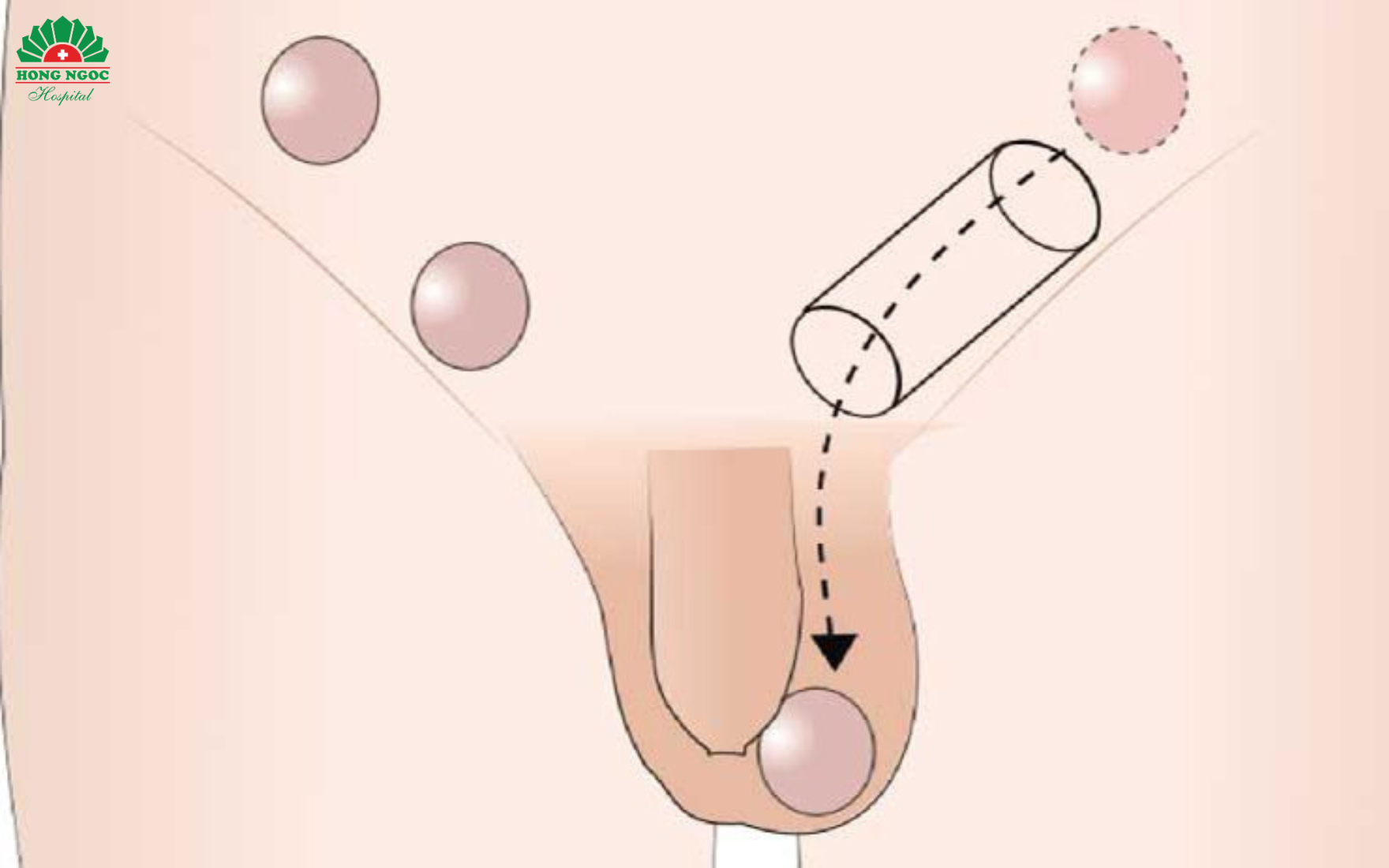
Undescended testis is classified into two main types:
Palpable undescended testis: The testis can be felt on physical examination, usually in the inguinal canal.
Non-palpable undescended testis: The testis is located at the deep inguinal ring or within the abdominal cavity and cannot be felt on physical examination.
Why does undescended testis carry a high risk of infertility?
When the testis is located in an abnormal position, such as within the abdominal cavity or the inguinal canal, the risk of infertility is increased because these locations are 2–3°C warmer than the scrotum. This higher temperature can damage the structure and function of key cells within the testis.
Damage to spermatogenic cells: The cells responsible for sperm production are highly sensitive to elevated temperatures. Increased temperature can impair their activity, leading to a decline in both sperm count and sperm quality.
Risk of seminiferous tubule fibrosis: Prolonged exposure to high temperature may cause fibrosis and atrophy of the seminiferous tubules, where sperm are produced and mature. This can reduce or even completely halt spermatogenesis.
Reduced reproductive hormone levels: Testosterone deficiency may impair spermatogenic function and affect fertility. In some cases, severe hormonal deficiency may even lead to sexual dysfunction in men.
Studies have shown that the infertility rate among patients with undescended testis who do not undergo surgery after the age of 5 may be as high as 75%. In addition, patients may face other complications, such as testicular torsion, testicular cancer, and inguinal hernia.
If parents notice signs of undescended testis in their child and need medical consultation, please contact the hotline at 0912 002 131 or leave your information HERE.
Diagnostic methods for undescended testis
The diagnosis of undescended testis involves a combination of clinical and paraclinical assessments to determine the location and condition of the testis, as well as to evaluate potential complications.
Clinical examination
The physician will perform a direct physical examination to assess the scrotum and locate the testis. If the testis cannot be felt in the scrotum, the physician will examine along the inguinal canal and other possible locations, such as the pubic and groin areas. The examination should be performed when the child is relaxed or lying down to improve the likelihood of detection.
However, deeper undescended testes located within the abdominal cavity or at the inguinal ring require more advanced paraclinical diagnostic methods for accurate identification.
Paraclinical diagnostic methods
Ultrasound: This is a commonly used, non-invasive method that helps identify the testis in the inguinal canal or lower abdominal region. Ultrasound provides information on the size, structure, and vascularity of the testis.
MRI (magnetic resonance imaging): MRI may be used when ultrasound cannot locate the testis. This method provides clearer imaging and is particularly useful in cases where the testis is located deep within the abdominal cavity.
Chromosomal testing: This may be performed in cases where a disorder of sex development or a syndrome associated with genetic abnormalities is suspected.
Tumor marker testing: In adult patients, if testicular cancer is suspected, tumor marker tests such as AFP (alpha-fetoprotein) and hCG (human chorionic gonadotropin) may be indicated.

Treatment methods for undescended testis
If the child’s testis does not descend spontaneously into the scrotum after 6 months of age, treatment is required. At present, the most effective treatment for undescended testis is orchiopexy, with a success rate of up to 90%. Hormonal supplementation may also be considered in selected cases.
Orchiopexy
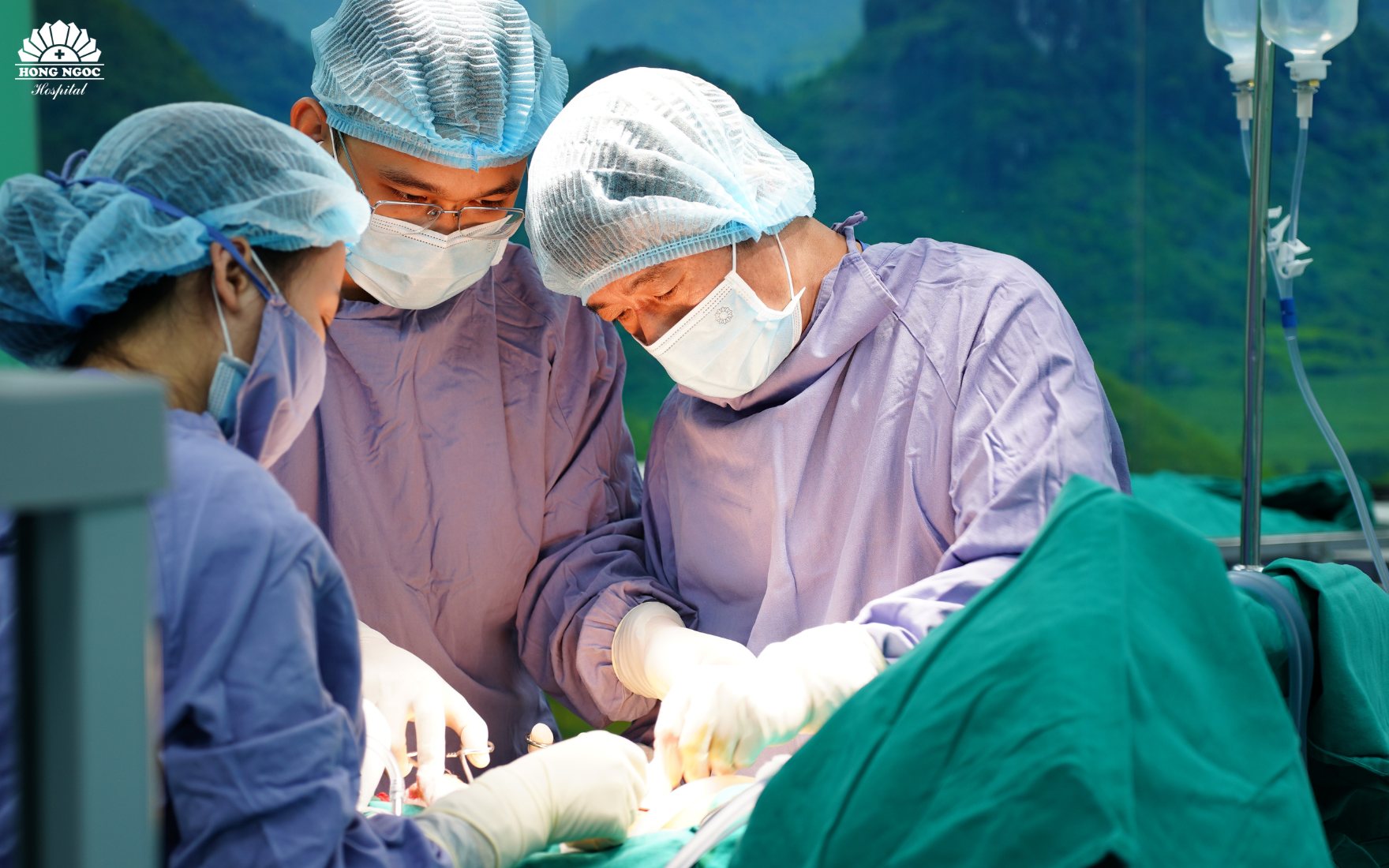
Orchiopexy is a surgical procedure that brings the testis from its abnormal position down into the scrotum and secures it in place. The procedure should be performed early, ideally when the child is between 12 and 18 months old. After this period, the number of germ cells in the child’s testis may decline rapidly, leading to fibrosis of the seminiferous tubules and affecting future sperm production.
The orchiopexy procedure is performed as follows:
Step 1: Preoperative preparation
After a clinical examination has been performed to accurately determine the location of the testis, the patient is placed under general anesthesia for the surgical procedure.
Step 2: Surgical procedure
Creating access to the testis: The surgeon makes a small incision in the groin or abdominal area, depending on the location of the testis.
Identifying and mobilizing the testis: The testis is identified, and any abnormally attached ligaments or fibrous tissues are dissected and released. At the same time, the blood vessels and vas deferens are carefully mobilized to provide sufficient length for the testis to be brought down into the scrotum without tension.
Fixing the testis in place: The testis is placed into the scrotum and secured in its natural position with sutures to prevent it from moving back upward.
Closing the incision: The incision is closed using absorbable or non-absorbable sutures, depending on the individual case.
Step 3: Postoperative care
The child may be monitored in the hospital for several hours to several days, depending on their condition. The surgical site should be kept clean, strenuous activities should be limited, and follow-up visits should be scheduled as recommended.
Medical treatment
The child may receive injectable hCG hormone therapy to stimulate testicular descent. However, the effectiveness of this method is only about one-fifth that of surgery, and it may be contraindicated in certain cases.
Is surgery for undescended testis dangerous?
Orchiopexy, also known as surgery for undescended testis, is a commonly performed procedure with a high success rate. The safety of orchiopexy can be ensured when key surgical principles are followed, including:
The procedure should be performed by a team of surgeons specializing in urology.
The blood vessels and vas deferens should be preserved to maintain testicular function and future fertility.
The blood vessels should remain tension-free to reduce the risk of injury or compromised blood supply to the testis.
Timely intervention before 18 months of age helps minimize the risk of long-term complications.
Children can achieve stable development if undescended testis is treated within the optimal treatment window.
At Hong Ngoc General Hospital, orchiopexy is directly performed by Dr. Trinh Minh Thanh, MD, Specialist Level II:
An andrology specialist with more than 30 years of experience at Bach Mai Hospital and Viet Duc Hospital.
Holder of certificates in endoscopic urologic surgery from the United States and Japan.
Successfully performed thousands of complex pediatric urologic surgeries, helping prevent serious complications and supporting children’s comprehensive development.
In addition, Hong Ngoc Hospital is equipped with an operating room system that meets the United Kingdom’s HBN standards, ensuring the supply of fresh, highly efficient HEPA-filtered sterile air. The operating rooms also maintain positive pressure to help prevent the risk of surgical infection.
Note: The information provided in this article by Hong Ngoc General Hospital is for reference purposes only and is not intended to replace professional medical diagnosis or treatment. Patients should not purchase or use medications on their own for treatment. To accurately determine their medical condition, patients should visit a hospital for direct examination, diagnosis, and consultation with a physician on an appropriate treatment plan.
Follow the official fanpage of Hong Ngoc Hospital HERE for more useful health information and attractive promotional programs from the hospital.