

Spermatic cord hydrocele is a relatively common condition in young children. Recognizing its clinical signs for timely detection and early treatment is an effective way for parents to help children develop healthily and avoid disease-related complications.
What is spermatic cord hydrocele?
Spermatic cord hydrocele is a benign cystic condition commonly seen in males, particularly in newborns and young children. It occurs when a small fluid-filled sac forms along the spermatic cord, between the testicle and the inguinal ring.
Most cases of spermatic cord hydrocele in newborns resolve spontaneously within 1–2 years. However, if the condition persists, surgical removal of the cyst may be required to prevent recurrence.

Spermatic cord hydrocele is commonly seen in newborns and young children.
Causes of spermatic cord hydrocele
Spermatic cord hydrocele in newborns
The main cause is often associated with abnormal persistence of the processus vaginalis - a structure that connects the abdominal cavity with the scrotum during fetal development.
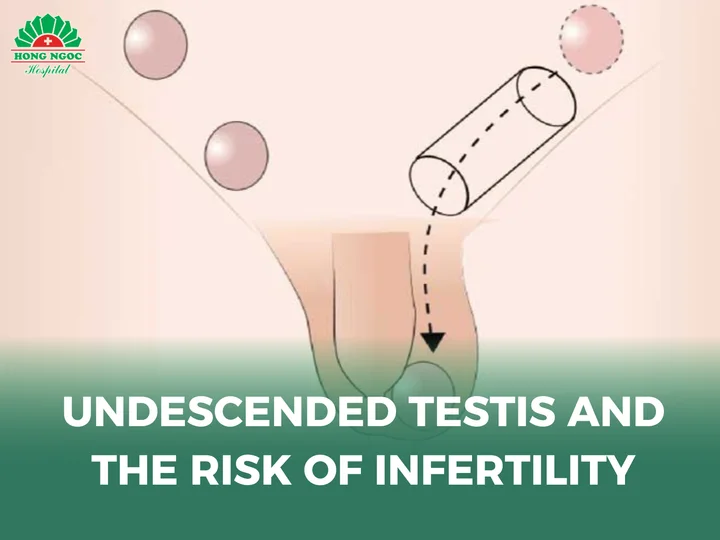
As the fetus develops in the womb, the testicles are initially located inside the peritoneal cavity, below the kidneys. They gradually descend through the inguinal canal, forming a tubular structure known as the processus vaginalis. After birth, this tract normally closes and becomes a fibrous cord.
When the diameter of the processus vaginalis is small and allows only fluid to pass through, a spermatic cord hydrocele may develop.
Conversely, if the diameter of this tract is large enough to allow the intestine, ovary, greater omentum, or other abdominal organs to descend, the condition is known as an inguinal hernia.
Spermatic cord hydrocele in adults
In adult men or older boys, spermatic cord hydrocele may develop as a result of scrotal trauma, epididymitis, or testicular infection.
Symptoms of spermatic cord hydrocele
The most noticeable sign of spermatic cord hydrocele is an abnormal swelling in the groin or scrotal area compared with the opposite side. The swelling may feel tense on palpation. It can appear intermittently and is usually painless, which means the condition may not be detected early. When a child becomes fussy or cries persistently, the condition may have progressed to a more severe stage and started causing pain.
Medical experts note that spermatic cord hydrocele is relatively common in newborns, particularly in premature infants, who are at higher risk. Therefore, parents should pay close attention to any abnormalities in the child’s scrotal area so that timely medical evaluation can be arranged.
For consultation, parents may contact the hotline at 0912 002 131 or leave their information HERE.
Is spermatic cord hydrocele dangerous?
Although spermatic cord hydrocele is generally a benign condition and is commonly seen in newborns and young children, parents should take their child to a medical facility for evaluation if the cyst does not resolve spontaneously within the first 1–2 years of life. A physician can provide appropriate treatment recommendations to help prevent potential risks that may affect the child’s long-term development.
Large cyst size: If the hydrocele increases in size, it may cause discomfort or interfere with daily activities, particularly in older children and adults.
Risk of inguinal hernia: If spermatic cord hydrocele is associated with abnormal persistence of the processus vaginalis, there may be a risk of developing an inguinal hernia. This is a more serious condition that requires early medical intervention.

Parents should take their children for regular medical check-ups to help prevent and rule out pediatric conditions.
Diagnosis of spermatic cord hydrocele
Clinical examination
The physician performs a physical examination to assess the condition. A spermatic cord hydrocele typically presents as a soft, round, mobile mass that is painless on palpation.
The cyst may vary in size throughout the day and is often larger in the evening.
Spermatic cord hydrocele usually shows a positive transillumination sign, meaning that light can pass through the cystic mass when a flashlight is shone against it.
Paraclinical evaluation
Ultrasound is the most accurate and commonly used imaging method for diagnosis. It helps distinguish spermatic cord hydrocele from other conditions, such as inguinal hernia, testicular tumor, or hydrocele of the tunica vaginalis. Ultrasound images typically show a fluid-filled cystic mass with well-defined margins and no solid lesions.
In addition, the physician may order urine tests or blood tests to determine whether the child has an infection or orchitis.
Treatment of spermatic cord hydrocele
Surgical treatment for spermatic cord hydrocele aims to ligate the processus vaginalis - the communication that allows fluid to pass from the abdominal cavity into the scrotum while completely removing the fluid-filled cyst to prevent recurrence.
There are currently two surgical approaches:
Open surgery: The surgeon makes a small incision, approximately 2–3 cm, along the natural skin folds of the lower abdomen to dissect, expose, and ligate the processus vaginalis. However, this method may leave a postoperative scar and does not allow the surgeon to assess whether the same condition is present on the opposite side.
Laparoscopic surgery: Depending on the child’s condition, the surgeon may choose single-port, two-port, or three-port laparoscopy to close the patent processus vaginalis. This approach is considered safer for children and may help shorten recovery time.
After surgery, the child will receive postoperative care, including a liquid diet and nutritional support to facilitate digestion. The physician may also prescribe antibiotics and medications to help reduce swelling.
At Hong Ngoc General Hospital, surgery for pediatric spermatic cord hydrocele is directly performed by Master’s-level, Level II Specialist Dr. Trinh Minh Thanh, an andrology specialist with more than 30 years of experience at Bach Mai Hospital and Viet Duc Hospital.
Dr. Thanh holds a certificate in laparoscopic surgery from the United States and a certificate in urologic surgery from Japan. He has successfully performed thousands of complex pediatric urologic surgeries, helping prevent serious complications and support children’s comprehensive development.
Dr. Trinh Minh Thanh, MD, Specialist Level II, is a senior andrology specialist with extensive experience in performing complex pediatric urologic surgeries.
In addition, Hong Ngoc Hospital is equipped with an operating room system that meets the United Kingdom’s HBN standards, providing HEPA-filtered fresh air and helping minimize the risk of surgical site infection in children. The operating rooms are also disinfected twice a week using ultraviolet light, while all medical equipment and instruments are thoroughly cleaned and sterilized.
Note: The information provided in this article by Hong Ngoc General Hospital is for reference purposes only and is not intended to replace professional medical diagnosis or treatment. Patients should not purchase or use medications on their own for treatment. To accurately determine their medical condition, patients should visit a hospital for direct examination, diagnosis, and consultation with a physician, who can recommend an appropriate treatment plan.
Follow the official fanpage of Hong Ngoc Hospital HERE for more useful health information and attractive promotional programs from the hospital.
Spermatic cord hydrocele is a relatively common condition in young children. Recognizing its clinical signs for timely detection and early treatment is an effective way for parents to help children develop healthily and avoid disease-related complications.
What is spermatic cord hydrocele?
Spermatic cord hydrocele is a benign cystic condition commonly seen in males, particularly in newborns and young children. It occurs when a small fluid-filled sac forms along the spermatic cord, between the testicle and the inguinal ring.
Most cases of spermatic cord hydrocele in newborns resolve spontaneously within 1–2 years. However, if the condition persists, surgical removal of the cyst may be required to prevent recurrence.
Spermatic cord hydrocele is commonly seen in newborns and young children.
Causes of spermatic cord hydrocele
Spermatic cord hydrocele in newborns
The main cause is often associated with abnormal persistence of the processus vaginalis - a structure that connects the abdominal cavity with the scrotum during fetal development.
As the fetus develops in the womb, the testicles are initially located inside the peritoneal cavity, below the kidneys. They gradually descend through the inguinal canal, forming a tubular structure known as the processus vaginalis. After birth, this tract normally closes and becomes a fibrous cord.
When the diameter of the processus vaginalis is small and allows only fluid to pass through, a spermatic cord hydrocele may develop.
Conversely, if the diameter of this tract is large enough to allow the intestine, ovary, greater omentum, or other abdominal organs to descend, the condition is known as an inguinal hernia.
Spermatic cord hydrocele in adults
In adult men or older boys, spermatic cord hydrocele may develop as a result of scrotal trauma, epididymitis, or testicular infection.
Symptoms of spermatic cord hydrocele
The most noticeable sign of spermatic cord hydrocele is an abnormal swelling in the groin or scrotal area compared with the opposite side. The swelling may feel tense on palpation. It can appear intermittently and is usually painless, which means the condition may not be detected early. When a child becomes fussy or cries persistently, the condition may have progressed to a more severe stage and started causing pain.
Medical experts note that spermatic cord hydrocele is relatively common in newborns, particularly in premature infants, who are at higher risk. Therefore, parents should pay close attention to any abnormalities in the child’s scrotal area so that timely medical evaluation can be arranged.
For consultation, parents may contact the hotline at 0912 002 131 or leave their information HERE.
Is spermatic cord hydrocele dangerous?
Although spermatic cord hydrocele is generally a benign condition and is commonly seen in newborns and young children, parents should take their child to a medical facility for evaluation if the cyst does not resolve spontaneously within the first 1–2 years of life. A physician can provide appropriate treatment recommendations to help prevent potential risks that may affect the child’s long-term development.
Large cyst size: If the hydrocele increases in size, it may cause discomfort or interfere with daily activities, particularly in older children and adults.
Risk of inguinal hernia: If spermatic cord hydrocele is associated with abnormal persistence of the processus vaginalis, there may be a risk of developing an inguinal hernia. This is a more serious condition that requires early medical intervention.
Parents should take their children for regular medical check-ups to help prevent and rule out pediatric conditions.
Diagnosis of spermatic cord hydrocele
Clinical examination
The physician performs a physical examination to assess the condition. A spermatic cord hydrocele typically presents as a soft, round, mobile mass that is painless on palpation.
The cyst may vary in size throughout the day and is often larger in the evening.
Spermatic cord hydrocele usually shows a positive transillumination sign, meaning that light can pass through the cystic mass when a flashlight is shone against it.
Paraclinical evaluation
Ultrasound is the most accurate and commonly used imaging method for diagnosis. It helps distinguish spermatic cord hydrocele from other conditions, such as inguinal hernia, testicular tumor, or hydrocele of the tunica vaginalis. Ultrasound images typically show a fluid-filled cystic mass with well-defined margins and no solid lesions.
In addition, the physician may order urine tests or blood tests to determine whether the child has an infection or orchitis.
Treatment of spermatic cord hydrocele
Surgical treatment for spermatic cord hydrocele aims to ligate the processus vaginalis - the communication that allows fluid to pass from the abdominal cavity into the scrotum while completely removing the fluid-filled cyst to prevent recurrence.
There are currently two surgical approaches:
Open surgery: The surgeon makes a small incision, approximately 2–3 cm, along the natural skin folds of the lower abdomen to dissect, expose, and ligate the processus vaginalis. However, this method may leave a postoperative scar and does not allow the surgeon to assess whether the same condition is present on the opposite side.
Laparoscopic surgery: Depending on the child’s condition, the surgeon may choose single-port, two-port, or three-port laparoscopy to close the patent processus vaginalis. This approach is considered safer for children and may help shorten recovery time.
After surgery, the child will receive postoperative care, including a liquid diet and nutritional support to facilitate digestion. The physician may also prescribe antibiotics and medications to help reduce swelling.
At Hong Ngoc General Hospital, surgery for pediatric spermatic cord hydrocele is directly performed by Master’s-level, Level II Specialist Dr. Trinh Minh Thanh, an andrology specialist with more than 30 years of experience at Bach Mai Hospital and Viet Duc Hospital.
Dr. Thanh holds a certificate in laparoscopic surgery from the United States and a certificate in urologic surgery from Japan. He has successfully performed thousands of complex pediatric urologic surgeries, helping prevent serious complications and support children’s comprehensive development.
Dr. Trinh Minh Thanh, MD, Specialist Level II, is a senior andrology specialist with extensive experience in performing complex pediatric urologic surgeries.
In addition, Hong Ngoc Hospital is equipped with an operating room system that meets the United Kingdom’s HBN standards, providing HEPA-filtered fresh air and helping minimize the risk of surgical site infection in children. The operating rooms are also disinfected twice a week using ultraviolet light, while all medical equipment and instruments are thoroughly cleaned and sterilized.
Note: The information provided in this article by Hong Ngoc General Hospital is for reference purposes only and is not intended to replace professional medical diagnosis or treatment. Patients should not purchase or use medications on their own for treatment. To accurately determine their medical condition, patients should visit a hospital for direct examination, diagnosis, and consultation with a physician, who can recommend an appropriate treatment plan.
Follow the official fanpage of Hong Ngoc Hospital HERE for more useful health information and attractive promotional programs from the hospital.
Để lại câu hỏi của bạn để nhận được giải đáp từ các bác sĩ của Hồng Ngọc
Lorem ipsum dolor
Lorem ipsum dolor sit amet, consectetur adipiscing elit. Mauris odio lectus, pretium faucibus nisi eu, accumsan consectetur orci. In blandit vehicula nisl, vel lacinia ligula finibus a. Donec fermentum rhoncus