


Ligaments of the knee joint connect the distal end of the femur, the proximal end of the tibia, and the patella, helping maintain stability and structural integrity of the knee. When these ligaments are injured, the joint may become unstable, accompanied by persistent pain, limited flexion and extension, and difficulty walking.
Structure of the knee ligaments
The knee joint has a hinge-like structure in which the distal end of the femur, the proximal end of the tibia, and the patella are connected by a complex system of ligaments that help stabilize and strengthen the joint.
Knee ligaments are composed of dense, tough, and elastic connective tissues. When overstretched, these ligaments may become strained, partially torn, or completely ruptured, resulting in loss of bone-to-bone connection, joint instability, and restricted mobility.
Classification of knee ligaments
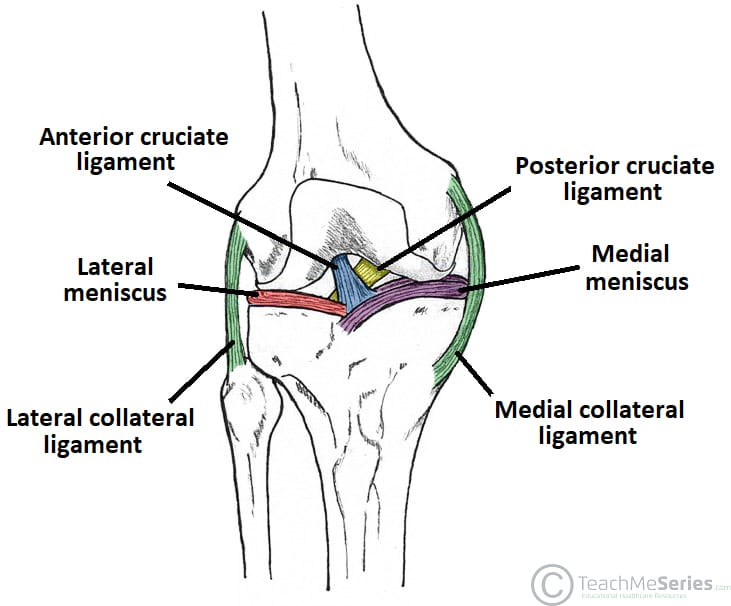
The ligament system of the knee joint consists of four main ligaments, each playing a crucial role in maintaining joint stability and coordinated movement:
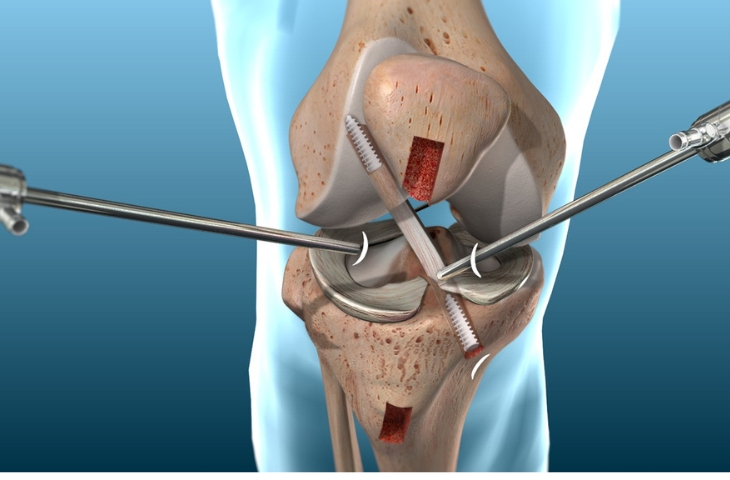
- Anterior cruciate ligament (ACL): The ACL runs diagonally through the center of the knee joint. It prevents the tibia from sliding forward relative to the femur along the anteroposterior axis and also controls internal rotational displacement of the tibia in relation to the femur. This ligament is essential for maintaining anterior and rotational stability of the knee.
- Posterior cruciate ligament (PCL): Located at the center of the knee, behind the ACL, the PCL prevents the tibia from moving backward beneath the femur, particularly when the knee is flexed at 90 degrees. It plays a vital role in stabilizing the knee during bending and weight-bearing movements.
- Medial collateral ligament (MCL): Extending from the inner surface of the femur to the inner surface of the tibia, the MCL resists forces that push the knee inward toward the opposite leg. It helps maintain the medial stability and alignment of the knee joint.
- Lateral collateral ligament (LCL): Located on the outer side of the knee, the LCL forms a narrow angle toward the back of the joint. It provides lateral stability and prevents the outer side of the knee from collapsing inward, maintaining overall joint balance and alignment.
Ligament-related knee injuries
Ligament injuries of the knee significantly affect the joint’s stability and function. The most common causes of knee ligament damage include sports injuries (such as those occurring in football, volleyball, high jump, or long jump), accidents (traffic or occupational), or falls that result in direct impact or excessive strain on the ligaments surrounding the knee joint.
Knee ligament sprain (ligament overstretching)
A knee ligament sprain occurs when the ligament is overstretched beyond its normal range, resulting in loss of elasticity and reduced tension needed to hold the femur and tibia in proper alignment. This condition causes the knee joint to become unstable and loose. In most cases, a knee ligament sprain can be effectively treated with physical therapy combined with targeted rehabilitation exercises to restore stability and strength.
Partial tear of the knee ligament
A partial ligament tear refers to a condition in which the ligament is partially ruptured but not completely severed. Although the ligament can still maintain some connection between the bones, it fails to stabilize the joint fully, leading to a sensation of looseness and unsteadiness while walking. Partial tears may heal naturally without surgical intervention; however, if left untreated, they can progress to a complete rupture and cause secondary damage to the meniscus and articular cartilage.
Complete tear of the knee ligament
A complete ligament tear is a severe injury in which the ligament loses its function entirely, resulting in joint instability, looseness, and frequent dislocation. The patient often experiences significant pain, limited range of motion, and impaired mobility. Without timely treatment, this condition may lead to complications such as cartilage degeneration, muscle atrophy, chronic pain, and, in severe cases, permanent disability.

Treatment of knee ligament injuries
Depending on the severity of the injury, doctors will recommend an appropriate treatment method. If conservative treatment is not effective, the patient may require surgical reconstruction of the knee ligament.
Rest
Knee ligament injuries are typically characterized by bruising, swelling around the knee joint, and pain, especially when pressure or movement is applied. Therefore, after an injury, the patient should minimize movement and avoid any impact on the affected area. Cold compresses, compression bandages, or knee braces may be used to reduce swelling and pain, stabilize the joint, and prevent dislocation.
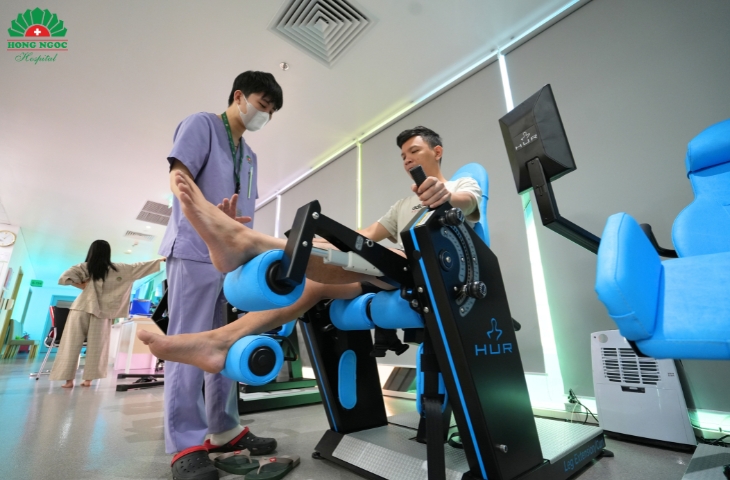
Physical therapy and rehabilitation
Based on the extent of ligament damage, the physician will design an appropriate rehabilitation program. Exercises may include muscle stretching, circulation enhancement, muscle strengthening, and range-of-motion training to promote healing and help patients return to normal activities and sports. All exercises should be performed under the supervision and guidance of a qualified physical therapist to ensure proper technique and prevent further injury.
Platelet-rich plasma (PRP) injection
Platelet-rich plasma injection is a procedure in which the patient’s own venous blood is drawn and centrifuged to extract plasma containing 6–10 times more platelets than normal plasma. This concentrated plasma is then injected into the knee joint.
In cases of partial ligament tear, PRP injections help stimulate the regeneration of connective tissues that form the knee ligaments, thereby accelerating the healing process. In addition, PRP therapy is widely applied after knee ligament reconstruction surgery to promote graft healing and integration, as well as to prevent complications such as knee joint degeneration.
Reader may also be interested in:
- Anterior cruciate ligament (ACL) tear and optimal treatment approaches
- Meniscal tear of the knee: Causes and warning signs
Knee ligament reconstruction surgery
Currently, arthroscopic knee ligament reconstruction is the most advanced and widely used method for treating severe ligament injuries. This minimally invasive technique offers high effectiveness, faster healing, minimal scarring, and significantly reduces the risk of complications such as infection, joint instability, or reinjury.
Surgery is typically indicated for patients whose ligament damage cannot recover through conservative treatments such as physical therapy and rehabilitation, especially in cases of persistent knee instability. After surgery, early rehabilitation is essential to prevent joint stiffness, accelerate functional recovery, and help patients return to normal activities and sports as soon as possible.
Examination and treatment of knee ligament injuries at Hong Ngoc General Hospital
In Hanoi, Hong Ngoc General Hospital is a trusted and reputable medical facility for the examination and treatment of knee ligament injuries. The hospital is highly regarded by patients for its professional expertise and comprehensive medical services. Hong Ngoc General Hospital features specialized departments in Orthopedics and Musculoskeletal Medicine, Physical Therapy and Rehabilitation, and an Orthopedic Trauma Unit, providing comprehensive care for all stages of knee ligament injuries — from diagnosis and conservative management to surgical reconstruction and postoperative rehabilitation.
A private hospital meeting global surgical standards
- Hong Ngoc General Hospital meets international standards for surgical excellence, accredited by the Royal College of Surgeons of England (RCS).
- The hospital is staffed by a team of highly qualified and experienced doctors, many of whom have trained in Europe, France, Japan, and Australia. They continuously update advanced techniques and treatment methods to ensure effective therapy and faster recovery for patients.
- The hospital is equipped with state-of-the-art diagnostic technology, including the SIGNA Prime MRI scanner, Revolution Evo CT scanner, and Logiq Fortis GE elastography ultrasound system, enabling accurate assessment of ligament injuries and precise diagnosis.
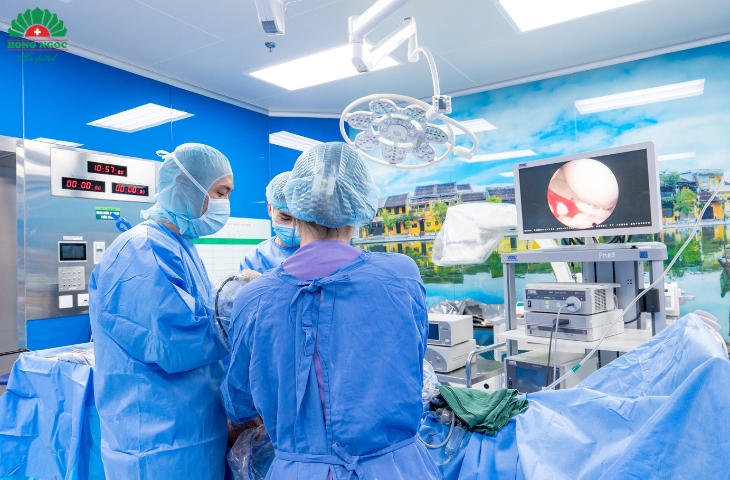
- The Karl Storz Power LED-175 arthroscopy system allows for highly precise ligament reconstruction procedures. All surgeries are performed in FDA-standard sterile operating rooms, ensuring maximum patient safety and minimizing infection risk.
- Patients also benefit from modern, hotel-like facilities, personalized follow-up schedules, proactive appointment reminders, and extensive insurance coverage and direct billing options, helping reduce treatment costs while ensuring comfort and convenience throughout the recovery process.
If you would like to receive an in-depth consultation regarding knee ligament injuries at Hong Ngoc General Hospital, please contact our Hotline: 0889 621 046 for dedicated support.
Note: The information provided in this article by Hong Ngoc General Hospital is for reference only and should not replace professional medical diagnosis or treatment. Patients are advised not to self-medicate. To accurately determine your condition, please visit the hospital for direct examination, diagnosis, and personalized treatment recommendations from a qualified physician.
Follow the official Facebook fanpage of Hong Ngoc General Hospital for more useful health information: https://www.facebook.com/BenhvienHongNgoc