
Many women experience significant anxiety and psychological distress after being diagnosed with fibrocystic breast changes. This raises an important question: how serious is this condition, and what should be done after diagnosis?
What is fibrocystic breast disease?
Fibrocystic breast disease, also referred to as fibrocystic breast changes, is a common medical condition and represents a benign breast disorder frequently observed in women.
According to scientific evidence, this condition is considered a common physiological phenomenon, largely influenced by hormonal fluctuations, particularly involving female sex hormones.
Studies indicate that approximately 60% of breast lumps in women of reproductive age are non malignant, and over 90% of premenopausal women exhibit fibrocystic changes, which are often regarded as part of the natural aging process.
During the normal menstrual cycle, under the influence of estrogen and progesterone, breast tissue undergoes cyclical changes, including swelling, fluid retention, and increased firmness. These changes may create areas that feel like palpable masses. Following menstruation, these symptoms typically subside and the breast tissue returns to baseline.
Over multiple menstrual cycles, repeated hormonal stimulation can lead to increased breast tissue density and the formation of small fluid filled cysts within dilated or obstructed ducts. This process is more pronounced in cases of hormonal imbalance between estrogen and progesterone, particularly in premenopausal women or those experiencing chronic stress. Clinically, this may present as palpable nodules, localized thickening, or diffusely distributed small lumps within both breasts.

Fibrocystic breast disease is a relatively common condition in women
Clinical manifestations of fibrocystic breast disease
Breast pain
Breast pain is the most common symptom of fibrocystic breast disease, typically occurring during the menstrual cycle, particularly in the premenopausal period. In women with dense breast tissue, pain may be unilateral or bilateral, most commonly localized to the upper outer quadrant or the lower half of the breast, and may radiate to the ipsilateral arm.
The intensity and duration of pain vary among individuals. Some patients experience mild discomfort one week prior to menstruation, which tends to decrease during menses.
Breast fullness and nodularity
Some patients report persistent pain or a sensation of breast fullness. On palpation, areas of thickening or nodular masses may be detected, which is a common clinical finding.
These changes can be identified through physical examination, ultrasound, or mammography. Patients may experience tenderness upon compression. In certain cases, larger cysts may be present, typically round, firm, mobile, and fluid-filled, producing a tense sensation when palpated.
Additional symptoms
Other associated symptoms may include menstrual irregularities, as well as lower abdominal or back pain during menstruation.
Diagnosis of fibrocystic breast disease
Ultrasound is currently the most widely utilized diagnostic modality due to its safety, noninvasive nature, cost effectiveness, and rapid results. It allows for accurate differentiation between solid and cystic lesions, as well as assessment of the number and location of fibrocystic changes.
Mammography may be used in selected cases; however, its use is limited due to radiation exposure and its lower diagnostic value compared to ultrasound, particularly in patients with less dense breast tissue. Fine needle aspiration (FNA) may be indicated for solid lesions when further evaluation is required.
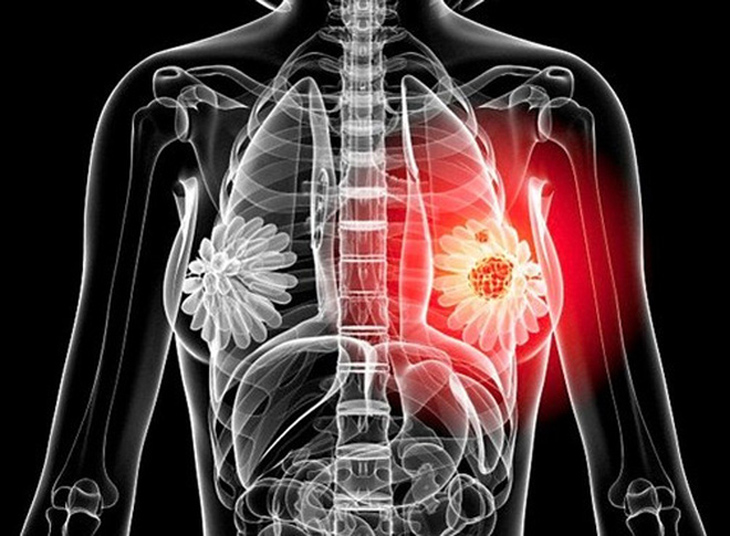
Fibrocystic breast disease is diagnosed through ultrasound imaging
Management of fibrocystic breast disease
To alleviate breast pain and hypersensitivity, patients are advised to maintain a stable psychological state, adopt a balanced lifestyle with appropriate work–rest patterns, and ensure adequate nutrition.
Dietary modifications may be beneficial, including replacing white rice with brown rice to increase B vitamin intake, supplementing calcium through dairy products, and increasing magnesium intake from fruits and vegetables to help reduce fluid retention and breast discomfort.
Patients should limit high salt intake and increase consumption of potassium-rich foods such as oranges, tangerines, and bananas. Stimulants including alcohol, caffeine, and tobacco should be avoided. Adequate hydration is recommended, along with supplementation of vitamin B6, magnesium, and potassium when appropriate.
Analgesics should only be used when symptoms are significant, such as paracetamol 500 mg, not exceeding three tablets per day. Additional supportive measures include warm compresses and wearing a properly fitted bra.
Current therapeutic strategies aimed at reducing breast glandular tissue are still under investigation. Surgical intervention is reserved for cases involving large, tense, and painful cysts, or when imaging findings from ultrasound, mammography, or fine needle aspiration raise suspicion of malignancy.
Note: The information provided is for reference purposes only and does not replace professional medical diagnosis or treatment. Follow the Hong Ngoc General Hospital fanpage for more useful health information: https://www.facebook.com/BenhvienHongNgoc/
Many women experience significant anxiety and psychological distress after being diagnosed with fibrocystic breast changes. This raises an important question: how serious is this condition, and what should be done after diagnosis?
What is fibrocystic breast disease?
Fibrocystic breast disease, also referred to as fibrocystic breast changes, is a common medical condition and represents a benign breast disorder frequently observed in women.
According to scientific evidence, this condition is considered a common physiological phenomenon, largely influenced by hormonal fluctuations, particularly involving female sex hormones.
Studies indicate that approximately 60% of breast lumps in women of reproductive age are non malignant, and over 90% of premenopausal women exhibit fibrocystic changes, which are often regarded as part of the natural aging process.
During the normal menstrual cycle, under the influence of estrogen and progesterone, breast tissue undergoes cyclical changes, including swelling, fluid retention, and increased firmness. These changes may create areas that feel like palpable masses. Following menstruation, these symptoms typically subside and the breast tissue returns to baseline.
Over multiple menstrual cycles, repeated hormonal stimulation can lead to increased breast tissue density and the formation of small fluid filled cysts within dilated or obstructed ducts. This process is more pronounced in cases of hormonal imbalance between estrogen and progesterone, particularly in premenopausal women or those experiencing chronic stress. Clinically, this may present as palpable nodules, localized thickening, or diffusely distributed small lumps within both breasts.
Fibrocystic breast disease is a relatively common condition in women
Clinical manifestations of fibrocystic breast disease
Breast pain
Breast pain is the most common symptom of fibrocystic breast disease, typically occurring during the menstrual cycle, particularly in the premenopausal period. In women with dense breast tissue, pain may be unilateral or bilateral, most commonly localized to the upper outer quadrant or the lower half of the breast, and may radiate to the ipsilateral arm.
The intensity and duration of pain vary among individuals. Some patients experience mild discomfort one week prior to menstruation, which tends to decrease during menses.
Breast fullness and nodularity
Some patients report persistent pain or a sensation of breast fullness. On palpation, areas of thickening or nodular masses may be detected, which is a common clinical finding.
These changes can be identified through physical examination, ultrasound, or mammography. Patients may experience tenderness upon compression. In certain cases, larger cysts may be present, typically round, firm, mobile, and fluid-filled, producing a tense sensation when palpated.
Additional symptoms
Other associated symptoms may include menstrual irregularities, as well as lower abdominal or back pain during menstruation.
Diagnosis of fibrocystic breast disease
Ultrasound is currently the most widely utilized diagnostic modality due to its safety, noninvasive nature, cost effectiveness, and rapid results. It allows for accurate differentiation between solid and cystic lesions, as well as assessment of the number and location of fibrocystic changes.
Mammography may be used in selected cases; however, its use is limited due to radiation exposure and its lower diagnostic value compared to ultrasound, particularly in patients with less dense breast tissue. Fine needle aspiration (FNA) may be indicated for solid lesions when further evaluation is required.
Fibrocystic breast disease is diagnosed through ultrasound imaging
Management of fibrocystic breast disease
To alleviate breast pain and hypersensitivity, patients are advised to maintain a stable psychological state, adopt a balanced lifestyle with appropriate work–rest patterns, and ensure adequate nutrition.
Dietary modifications may be beneficial, including replacing white rice with brown rice to increase B vitamin intake, supplementing calcium through dairy products, and increasing magnesium intake from fruits and vegetables to help reduce fluid retention and breast discomfort.
Patients should limit high salt intake and increase consumption of potassium-rich foods such as oranges, tangerines, and bananas. Stimulants including alcohol, caffeine, and tobacco should be avoided. Adequate hydration is recommended, along with supplementation of vitamin B6, magnesium, and potassium when appropriate.
Analgesics should only be used when symptoms are significant, such as paracetamol 500 mg, not exceeding three tablets per day. Additional supportive measures include warm compresses and wearing a properly fitted bra.
Current therapeutic strategies aimed at reducing breast glandular tissue are still under investigation. Surgical intervention is reserved for cases involving large, tense, and painful cysts, or when imaging findings from ultrasound, mammography, or fine needle aspiration raise suspicion of malignancy.
Note: The information provided is for reference purposes only and does not replace professional medical diagnosis or treatment. Follow the Hong Ngoc General Hospital fanpage for more useful health information: https://www.facebook.com/BenhvienHongNgoc/
Để lại câu hỏi của bạn để nhận được giải đáp từ các bác sĩ của Hồng Ngọc
Lorem ipsum dolor
Lorem ipsum dolor sit amet, consectetur adipiscing elit. Mauris odio lectus, pretium faucibus nisi eu, accumsan consectetur orci. In blandit vehicula nisl, vel lacinia ligula finibus a. Donec fermentum rhoncus