



Some symptoms in newborns, such as irregular breathing, mild nasal congestion, or swollen breast tissue, often make parents worried. In fact, these conditions are usually not as serious as they may seem.
Irregular breathing during sleep
A newborn’s chest is usually small, so gas exchange is relatively limited. The normal respiratory rate in newborns is about 40 to 50 breaths per minute.
In addition, because a newborn’s nervous system is not yet fully developed, their breathing rhythm may be irregular, especially during sleep.
Regurgitation
In newborns, regurgitation is a normal physiological phenomenon. At birth, a baby’s stomach is often positioned horizontally and located close to the esophagus. Therefore, after breastfeeding or formula feeding, even a few strong movements may cause the baby to regurgitate.
To help reduce this condition, parents should hold the baby upright for 5 to 10 minutes after feeding and gently pat the baby’s back to help them burp.

Sneezing and mild nasal congestion
These are not necessarily signs of influenza. In newborns, the nasal mucosa is not yet fully developed, so outside air or small amounts of residual milk may trigger sneezing or mild nasal congestion. This is a normal protective physiological response in newborns, rather than a sign of catching a cold or having the flu.
Sweating of the hands and feet
The temperature inside the mother’s womb is ideal and stable for fetal development. Immediately after birth, changes in the external environment can significantly affect a newborn’s respiratory and excretory functions.
When the ambient temperature is high, newborns regulate their body temperature by sweating. Therefore, mothers should dry the baby’s body regularly and maintain a stable room temperature.
Having a lot of hair or very little hair
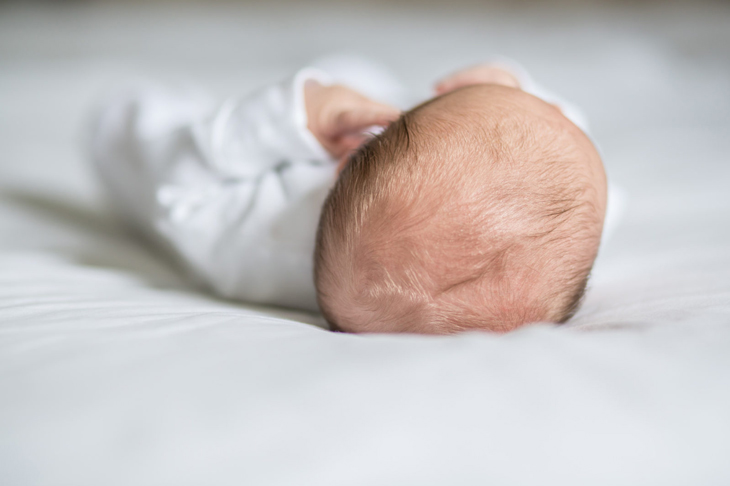
The amount and color of a newborn’s hair are closely related to the mother’s nutrition during pregnancy as well as family genetic factors. Therefore, if a baby is born with little hair or hair that is not black, parents should not be overly concerned.
However, if the baby has very little hair along with symptoms such as excessive sweating, frequent startling during sleep, poor sleep, or poor feeding, parents should take the baby to a doctor for appropriate advice. In such cases, the baby may have calcium deficiency, iron deficiency, or anemia.
Swollen breast tissue
Regardless of sex, newborns may develop small pea sized lumps in the breast area within 3 to 5 days after birth. These lumps are usually soft to the touch, and a small amount of milk-like discharge may appear if gently pressed. This occurs due to the influence of maternal estrogen. The condition usually resolves on its own after 2 to 3 weeks.
Parents should not be overly worried or try to clean the area by squeezing the baby’s breast tissue forcefully. Doing so may cause swelling or infection and may affect the development of the baby’s breast tissue in the future.
Vaginal bleeding in newborn girls
Some newborn girls may have a small amount of vaginal bleeding or white mucus about one week after birth. This occurs because the baby is still affected by maternal hormones, and the uterine lining has begun to develop.
During this period, parents should keep the baby’s genital area clean to help prevent infection.
The information provided in this article by Hong Ngoc General Hospital is for reference purposes only and is not intended to replace professional medical diagnosis or treatment.
Follow the Facebook fanpage of Hong Ngoc General Hospital for more useful information: https://www.facebook.com/BenhvienHongNgoc/