



Pain during bowel movements or the presence of bright red blood on toilet paper may be a sign of an anal fissure. These symptoms can be concerning and may leave many people unsure about the underlying cause. The following information provides an overview of the symptoms, causes, prevention strategies, and treatment options for this condition.
Because an anal fissure affects a sensitive area of the body, many individuals feel embarrassed and delay seeking medical attention. However, prompt evaluation is important to distinguish anal fissures from other anorectal conditions, such as hemorrhoids, and to ensure an accurate diagnosis and appropriate treatment.
What is an Anal Fissure?
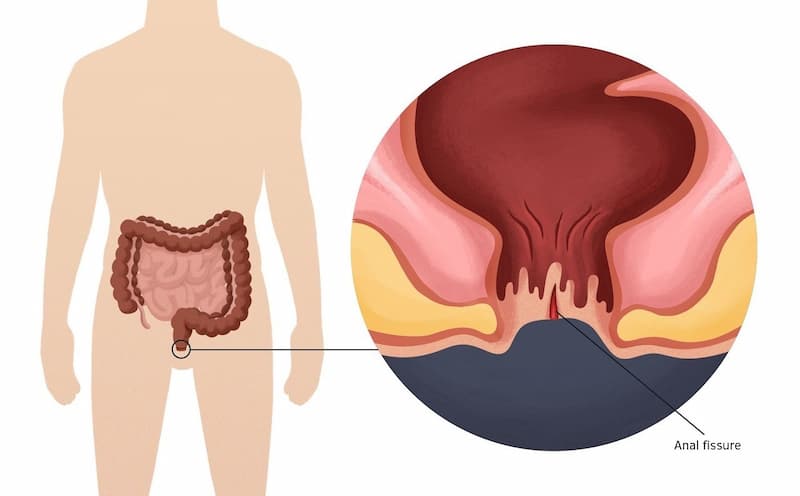
An anal fissure is a tear in the lining of the anal canal that causes pain and discomfort, most commonly occurring after the passage of hard stools or excessive straining during bowel movements. It is a common anorectal condition that can affect individuals of all ages. Most acute anal fissures heal within a few weeks with appropriate conservative measures, particularly the treatment of underlying constipation. However, a small proportion of cases may progress to chronic anal fissures, which often require more advanced medical or surgical intervention.
Who is at risk of developing an Anal Fissure?
Certain lifestyle habits and medical conditions can increase the risk of developing an anal fissure:
- Individuals with chronic constipation: Diets high in processed foods and saturated fats but low in dietary fiber can contribute to constipation, increasing the likelihood of anal fissures.
- People with a sedentary lifestyle: Lack of physical activity may slow bowel motility and promote constipation. Regular exercise, walking, and other physical activities can help maintain healthy bowel function.
- Individuals who frequently strain during bowel movements: Excessive straining due to hard stools can cause trauma to the anal canal and increase the risk of fissure formation.
- Children: Anal fissures are relatively common during infancy and early childhood and may occur without an identifiable underlying cause.
- Older adults: Reduced blood flow to the anorectal region associated with aging may impair tissue healing and increase susceptibility to anal fissures.
To reduce the risk of anal fissures, individuals should maintain regular bowel habits, consume an adequate amount of dietary fiber and fluids, and avoid excessive straining during defecation. When constipation occurs, appropriate medical treatment may be required to soften stools and facilitate bowel movements.
Good perianal hygiene is also important. After bowel movements, the area should be cleaned gently and kept dry. The use of scented wipes or products that may irritate the skin should be avoided, as persistent moisture and irritation can contribute to local inflammation and discomfort.
Patients with anal fissures are encouraged to adopt healthier dietary habits, including increasing their intake of vegetables and other fiber rich foods.

Postpartum women: Anal fissures are relatively common during the postpartum period, often associated with constipation. Maintaining a balanced diet rich in vegetables, fruits, and dietary fiber, together with adequate daily fluid intake, can help promote regular bowel movements and reduce the risk of developing anal fissures.
Causes of Anal Fissures
The exact cause of anal fissures is not always clear. However, the condition most commonly occurs when the anal canal is injured by the passage of large, hard stools, particularly in individuals with chronic constipation.
Other factors that may contribute to the development of anal fissures include:
- Anorectal inflammation and infection: Inflammatory processes can weaken tissue integrity, making the anal mucosa more susceptible to tearing during bowel movements.
- Internal anal sphincter hypertonia: Increased resting pressure and spasm of the internal anal sphincter can impair healing and contribute to the persistence of the fissure.
- Reduced local blood supply: Decreased blood flow to the affected area may delay wound healing and lead to the development of a chronic ischemic ulcer.
- Anatomical predisposition: Some individuals may have a naturally narrow anal canal, increasing their susceptibility to fissure formation.
- Infectious diseases: Conditions such as HIV infection, anorectal tuberculosis, and syphilis may be associated with anal fissures.
- Inflammatory bowel disease and malignancy: Crohn’s disease, other forms of colitis, and anorectal malignancies can increase the risk of fissure development.
- Trauma to the anal canal: This may result from the passage of hard or bulky stools, previous anorectal surgery, anal stenosis, or vaginal childbirth.
- Other contributing factors: Chronic constipation with excessive straining, persistent diarrhea, frequent bowel movements causing repeated irritation of the anal canal, and receptive anal intercourse.
Although anal fissures can occur in a wide range of clinical settings, constipation and the passage of hard stools remain the most common underlying causes.
Symptoms of Anal Fissures
Although anal fissures and hemorrhoids are distinct anorectal conditions, they are often confused because both can cause rectal bleeding.
Common signs and symptoms of an anal fissure include:
- Severe pain during bowel movements, which may improve shortly afterward.
- Persistent pain or discomfort for several hours after defecation.
- Bright red blood on the stool or toilet paper.
- Itching, burning, or irritation around the anus.
- A visible tear or crack near the anal opening.
- A small skin tag (sentinel pile) adjacent to the fissure, particularly in chronic cases.
Complications of Anal Fissures
Anal fissures can significantly affect a patient's comfort and quality of life. Pain during bowel movements often leads to fear of defecation, causing patients to delay or avoid bowel movements. This may worsen constipation, creating a cycle that further aggravates the fissure.
Persistent symptoms may also contribute to sleep disturbances, fatigue, emotional distress, and reduced overall well being.

Acute anal fissures often heal spontaneously within 4 to 6 weeks with appropriate conservative treatment. However, fissures that persist for more than 8 weeks are generally classified as chronic anal fissures. Chronic fissures are less likely to heal on their own, are prone to recurrent tearing, and may require more advanced medical or surgical treatment.
Diagnosis of Anal Fissures
Clinical Evaluation
The diagnosis of an anal fissure is often based on a detailed medical history and physical examination. During the initial assessment, the physician will review the patient's symptoms, medical history, and perform an examination of the anorectal region.
In acute anal fissures, the tear typically appears fresh and superficial. In contrast, chronic anal fissures are usually deeper and may be associated with characteristic findings such as a sentinel skin tag externally or a hypertrophied anal papilla internally.
The location of the fissure may also provide clues to the underlying cause. Fissures occurring in atypical locations, such as the lateral aspect of the anal canal, may suggest an underlying disorder, including Crohn’s disease, infection, or other systemic conditions.
Diagnostic Tests
To confirm the diagnosis and evaluate for underlying anorectal or colorectal disease, additional investigations may be recommended:
- Anoscopy: A short tubular instrument is inserted into the anal canal, allowing direct visualization of the anal canal and distal rectum.
- Flexible sigmoidoscopy: A flexible endoscope is used to examine the rectum and lower portion of the colon. This procedure may be considered in younger patients without significant risk factors for colorectal cancer or other intestinal diseases.
- Colonoscopy: A flexible endoscope is advanced through the rectum to examine the entire colon. Colonoscopy may be recommended for patients aged 50 years or older, those with risk factors for colorectal cancer, or individuals presenting with additional symptoms such as abdominal pain, diarrhea, unexplained rectal bleeding, or changes in bowel habits.
Treatment options for Anal Fissures
Anal fissures often heal within a few weeks if constipation or diarrhea is effectively managed and stools are kept soft. However, if the fissure fails to heal within 6 to 8 weeks, medical treatment or surgical intervention may be required.
Non surgical treatment
Medications
Medical therapy is typically recommended for patients with acute anal fissures or superficial lesions. Treatment may include stool softeners, fiber supplements, and topical medications to relieve pain, reduce sphincter spasm, and promote healing. Patients should consult a physician before starting any medication and avoid self treatment based on unverified sources, as inappropriate therapy may delay recovery and increase the risk of complications.
Lifestyle modifications
Conservative management includes:
- Increasing dietary fiber intake.
- Drinking adequate amounts of water.
- Engaging in regular physical activity.
- Maintaining healthy bowel habits and avoiding excessive straining during defecation.
Warm sitz baths
Soaking the anal area in warm water for 10 to 20 minutes several times daily, particularly after bowel movements, can help relax the anal sphincter, reduce discomfort, and promote healing. Irritating soaps and cleansing products should be avoided.
Surgical treatment
Surgery may be considered when symptoms persist despite appropriate medical treatment, or in cases of chronic anal fissures, recurrent disease, deep fissures, or complications such as secondary infection.
Common surgical procedures include:
Lateral Internal Sphincterotomy (LIS)
This is considered the gold standard surgical treatment for chronic anal fissures. The procedure involves dividing a small portion of the internal anal sphincter to reduce resting sphincter pressure, improve blood flow to the fissure, and facilitate healing.
Fissurectomy
This procedure involves excision of fibrotic or non healing tissue surrounding the fissure to promote wound healing. Fissurectomy may be performed alone or in combination with medical therapy or sphincterotomy, depending on the clinical situation.
Anal Dilatation
Anal dilatation aims to reduce sphincter hypertonia and improve anal canal patency. Although it may be considered in selected recurrent or chronic cases, it is less commonly performed today because of concerns regarding long term continence outcomes.
Appropriate treatment should be individualized based on the severity of symptoms, the duration of the disease, and the patient's overall clinical condition.
Where can Anal Fissures be treated safely and effectively?
Today, patients have access to a wide range of healthcare facilities offering diagnosis and treatment for anal fissures. However, choosing a reputable medical center with experienced specialists is essential to ensure accurate diagnosis, appropriate treatment, and optimal clinical outcomes.
At Hong Ngoc General Hospital, patients with anorectal disorders are evaluated and treated by a team of experienced specialists, including People’s Physician, Associate Professor Nguyen Xuan Hung, MD, PhD, a leading expert in gastrointestinal surgery and anorectal diseases.
Professor Hung has held numerous prestigious positions throughout his career, including:
- Former Director of the Colorectal and Perineal Surgery Center, Viet Duc University Hospital.
- Former Head of the Department of Gastrointestinal Surgery and Head of the Outpatient Department, Viet Duc University Hospital.
- Vice President of the Vietnam Society of Colorectal and Anal Diseases.
- Member of the Vietnam Surgical Society and the Vietnam Society of Endoscopic Surgery.
- Member of the French Society for the Treatment of Colorectal and Anal Diseases.
- Adjunct Lecturer at Hanoi Medical University and Vietnam National University, Hanoi.
With more than 40 years of clinical experience and advanced professional training in France, Singapore, and Taiwan, Professor Hung has extensive expertise in:
- Gastrointestinal surgery, including gastric, colorectal, and other digestive surgical disorders.
- Research and clinical applications in the management of peptic ulcer disease.
- Diagnosis and treatment of gastrointestinal malignancies, particularly colorectal cancer.
- Epidemiological research and treatment of anorectal and perineal disorders.
- Emergency abdominal surgery and the management of complex duodenal and pancreatic injuries.
Drawing on decades of clinical expertise and academic experience, Professor Hung provides comprehensive evaluation, accurate diagnosis, and individualized treatment strategies tailored to each patient's condition.
For consultation or to schedule an appointment with Associate Professor Nguyen Xuan Hung, please contact:
Appointment Hotline: 0911 908 856
Note: The information provided in this article by Hong Ngoc General Hospital is intended for informational purposes only and should not be considered a substitute for professional medical diagnosis, advice, or treatment. Patients should not self medicate or initiate treatment without consulting a qualified healthcare professional. To obtain an accurate diagnosis and an appropriate treatment plan, individuals should seek direct medical evaluation from a physician.
Follow the Hong Ngoc General Hospital Fanpage for additional health information and updates on healthcare services and programs.