
Sciatica is characterized by pain that originates in the lumbar spine and radiates down through the buttock, thigh, calf, and into the toes, significantly affecting daily activities. Understanding the underlying causes of sciatica can help prevent the condition effectively. So, what causes sciatica? Let’s explore in the article below.
Causes of sciatica
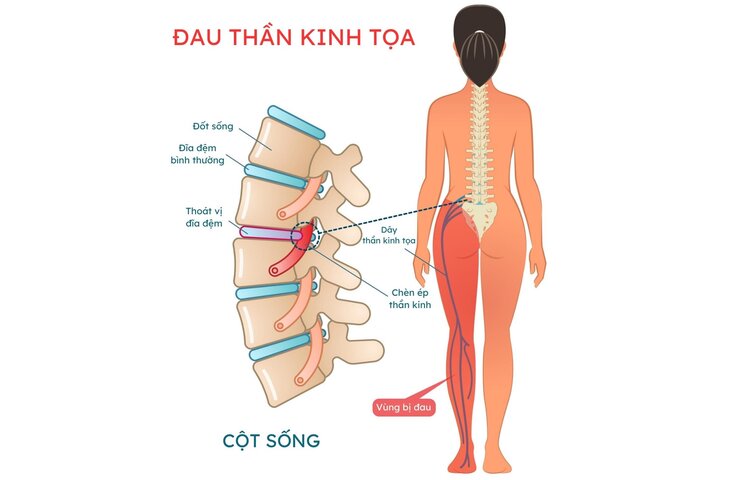
The most common cause of sciatica is lumbar disc herniation.
The most common cause of sciatica is lumbar disc herniation. Sciatica occurs when the sciatic nerve is compressed. In addition, spinal degeneration, spinal trauma, and spondylolisthesis can also lead to this condition.
Lumbar disc herniation: This accounts for up to 90% of sciatica cases. When a disc herniates, the nucleus pulposus protrudes through the annulus fibrosus and compresses the nerve roots, resulting in persistent pain that radiates down the lower extremities. Individuals who perform heavy lifting or engage in activities that place excessive strain on the spine are at higher risk.
Spinal degeneration: Degenerative changes in the intervertebral discs can lead to nerve compression and pain. This condition is more common in older adults as part of the natural aging process. However, younger individuals are also at risk, particularly those with poor posture or prolonged sitting habits.
Spondylolisthesis: This occurs when a vertebra slips forward or backward relative to the adjacent vertebra, compressing the sciatic nerve roots and causing radiating pain from the lower back to one or both legs.
Spinal trauma: Injuries to the spine can cause varying degrees of structural damage, including nerve root compression, which may result in sciatica.
Other less common causes: Conditions such as tumors, spinal tuberculosis, infections, and diabetes related spinal damage may also affect the sciatic nerve and lead to sciatica.
Signs and symptoms of sciatica
Recognizing the symptoms of sciatica is not difficult. However, it can sometimes be mistaken for common low back pain.
Pain along the sciatic nerve: Patients typically experience pain originating from the lumbar spine that radiates to the buttock, thigh, calf, foot, and toes. This may be accompanied by numbness, tingling, or a pins and needles sensation.
A characteristic feature of sciatica is pain that may be continuous or intermittent. The pain often worsens with movement and improves with rest, and may be aggravated by activities such as traveling on bumpy roads, coughing, straining, or sneezing.
In advanced stages, patients may develop quadriceps muscle atrophy, paraspinal muscle stiffness, postural abnormalities, and reduced mobility. In severe cases, lower limb paralysis can occur. Treatment at this stage becomes more challenging, and patients may require assistance in daily activities.

Sciatica causes pain that radiates from the lower back down to the buttock, thigh, calf, and toes.
Prevention of sciatica
The causes of sciatica are largely related to spinal disorders and degenerative changes. Therefore, preventive measures are closely associated with lifestyle, work habits, and physical activity, particularly in individuals with underlying spinal conditions.
Maintain a healthy body weight: Overweight and obesity increase pressure on the spine and joints. A balanced diet should be maintained to keep body weight within a healthy range.
Adopt a healthy diet: To prevent sciatica, it is important to limit foods high in protein, salt, and fat, while increasing the intake of vegetables to provide fiber and antioxidants.
Maintain proper posture: Poor posture significantly increases the risk of musculoskeletal disorders. The spine should be kept in a neutral, upright position, especially during prolonged sitting or driving. The use of lumbar support belts may be considered.
Adjust work activities appropriately: Avoid heavy lifting and physically demanding tasks whenever possible. If unavoidable, proper lifting techniques should be practiced under medical guidance to reduce the risk of injury.
Stay physically active: Maintaining overall physical fitness is key to preventing disease. Gentle exercises such as stretching, yoga, or swimming can help improve flexibility and strengthen the back muscles.
Limit alcohol and avoid smoking and stimulants.
Seek timely medical care: If diagnosed with spinal conditions such as degenerative spine disease, spondylolisthesis, tumors, or inflammatory disorders, patients should seek early evaluation and appropriate treatment.

Practicing yoga helps improve flexibility and reduce the risk of musculoskeletal conditions that can lead to sciatica.
Where to seek safe and effective treatment for sciatica?
In Hanoi, the Department of Musculoskeletal Medicine at Hong Ngoc General Hospital is a trusted destination for the examination, diagnosis, and treatment of sciatica, highly rated by both local and international patients for its medical expertise and service quality.
Experienced medical team: Patients can feel confident with a team of highly qualified and experienced physicians specializing in spinal and musculoskeletal disorders, including: Dr Nguyen Thi Ngoc, PhD, MD, with over 30 years of experience in conservative treatment of musculoskeletal conditions. Dr Dinh Van Hao, Head of the Department of Traditional Medicine and Rehabilitation at Hong Ngoc General Hospital Phuc Truong Minh, who received advanced training in Austria and has more than 10 years of experience in treating musculoskeletal and neurological conditions.
Advanced medical equipment: The hospital is equipped with modern imaging systems, including the SIGNA Prime MRI scanner and 128 slice CT scanner (USA), enabling early detection of disc herniation, lesion location, and structural abnormalities for accurate diagnosis and effective treatment.
Integrated rehabilitation approach: Treatment combines physiotherapy and rehabilitation using German technology alongside advanced manual therapy techniques from Austria, helping to relieve sciatic pain, reduce muscle stiffness, and improve mobility.
Premium patient experience: Patients benefit from a five star hospital environment, personalized follow up schedules, proactive appointment management, fast insurance processing, and weekend services without additional fees.
Sciatica is primarily caused by underlying spinal disorders. Although not life threatening, it can significantly impact daily life if left untreated. Therefore, individuals experiencing typical symptoms should seek medical evaluation at reputable healthcare facilities for early diagnosis and treatment.
For further consultation on sciatica treatment at Hong Ngoc General Hospital, please contact the hotline: +84 889 621 046 for prompt assistance.
Note: The information in this article is for reference only and is not intended to replace professional medical advice, diagnosis, or treatment. Patients are encouraged to seek direct consultation with qualified healthcare providers for accurate diagnosis and appropriate care.
Sciatica is characterized by pain that originates in the lumbar spine and radiates down through the buttock, thigh, calf, and into the toes, significantly affecting daily activities. Understanding the underlying causes of sciatica can help prevent the condition effectively. So, what causes sciatica? Let’s explore in the article below.
Causes of sciatica
The most common cause of sciatica is lumbar disc herniation.
The most common cause of sciatica is lumbar disc herniation. Sciatica occurs when the sciatic nerve is compressed. In addition, spinal degeneration, spinal trauma, and spondylolisthesis can also lead to this condition.
Lumbar disc herniation: This accounts for up to 90% of sciatica cases. When a disc herniates, the nucleus pulposus protrudes through the annulus fibrosus and compresses the nerve roots, resulting in persistent pain that radiates down the lower extremities. Individuals who perform heavy lifting or engage in activities that place excessive strain on the spine are at higher risk.
Spinal degeneration: Degenerative changes in the intervertebral discs can lead to nerve compression and pain. This condition is more common in older adults as part of the natural aging process. However, younger individuals are also at risk, particularly those with poor posture or prolonged sitting habits.
Spondylolisthesis: This occurs when a vertebra slips forward or backward relative to the adjacent vertebra, compressing the sciatic nerve roots and causing radiating pain from the lower back to one or both legs.
Spinal trauma: Injuries to the spine can cause varying degrees of structural damage, including nerve root compression, which may result in sciatica.
Other less common causes: Conditions such as tumors, spinal tuberculosis, infections, and diabetes related spinal damage may also affect the sciatic nerve and lead to sciatica.
Signs and symptoms of sciatica
Recognizing the symptoms of sciatica is not difficult. However, it can sometimes be mistaken for common low back pain.
Pain along the sciatic nerve: Patients typically experience pain originating from the lumbar spine that radiates to the buttock, thigh, calf, foot, and toes. This may be accompanied by numbness, tingling, or a pins and needles sensation.
A characteristic feature of sciatica is pain that may be continuous or intermittent. The pain often worsens with movement and improves with rest, and may be aggravated by activities such as traveling on bumpy roads, coughing, straining, or sneezing.
In advanced stages, patients may develop quadriceps muscle atrophy, paraspinal muscle stiffness, postural abnormalities, and reduced mobility. In severe cases, lower limb paralysis can occur. Treatment at this stage becomes more challenging, and patients may require assistance in daily activities.
Sciatica causes pain that radiates from the lower back down to the buttock, thigh, calf, and toes.
Prevention of sciatica
The causes of sciatica are largely related to spinal disorders and degenerative changes. Therefore, preventive measures are closely associated with lifestyle, work habits, and physical activity, particularly in individuals with underlying spinal conditions.
Maintain a healthy body weight: Overweight and obesity increase pressure on the spine and joints. A balanced diet should be maintained to keep body weight within a healthy range.
Adopt a healthy diet: To prevent sciatica, it is important to limit foods high in protein, salt, and fat, while increasing the intake of vegetables to provide fiber and antioxidants.
Maintain proper posture: Poor posture significantly increases the risk of musculoskeletal disorders. The spine should be kept in a neutral, upright position, especially during prolonged sitting or driving. The use of lumbar support belts may be considered.
Adjust work activities appropriately: Avoid heavy lifting and physically demanding tasks whenever possible. If unavoidable, proper lifting techniques should be practiced under medical guidance to reduce the risk of injury.
Stay physically active: Maintaining overall physical fitness is key to preventing disease. Gentle exercises such as stretching, yoga, or swimming can help improve flexibility and strengthen the back muscles.
Limit alcohol and avoid smoking and stimulants.
Seek timely medical care: If diagnosed with spinal conditions such as degenerative spine disease, spondylolisthesis, tumors, or inflammatory disorders, patients should seek early evaluation and appropriate treatment.
Practicing yoga helps improve flexibility and reduce the risk of musculoskeletal conditions that can lead to sciatica.
Where to seek safe and effective treatment for sciatica?
In Hanoi, the Department of Musculoskeletal Medicine at Hong Ngoc General Hospital is a trusted destination for the examination, diagnosis, and treatment of sciatica, highly rated by both local and international patients for its medical expertise and service quality.
Experienced medical team: Patients can feel confident with a team of highly qualified and experienced physicians specializing in spinal and musculoskeletal disorders, including: Dr Nguyen Thi Ngoc, PhD, MD, with over 30 years of experience in conservative treatment of musculoskeletal conditions. Dr Dinh Van Hao, Head of the Department of Traditional Medicine and Rehabilitation at Hong Ngoc General Hospital Phuc Truong Minh, who received advanced training in Austria and has more than 10 years of experience in treating musculoskeletal and neurological conditions.
Advanced medical equipment: The hospital is equipped with modern imaging systems, including the SIGNA Prime MRI scanner and 128 slice CT scanner (USA), enabling early detection of disc herniation, lesion location, and structural abnormalities for accurate diagnosis and effective treatment.
Integrated rehabilitation approach: Treatment combines physiotherapy and rehabilitation using German technology alongside advanced manual therapy techniques from Austria, helping to relieve sciatic pain, reduce muscle stiffness, and improve mobility.
Premium patient experience: Patients benefit from a five star hospital environment, personalized follow up schedules, proactive appointment management, fast insurance processing, and weekend services without additional fees.
Sciatica is primarily caused by underlying spinal disorders. Although not life threatening, it can significantly impact daily life if left untreated. Therefore, individuals experiencing typical symptoms should seek medical evaluation at reputable healthcare facilities for early diagnosis and treatment.
For further consultation on sciatica treatment at Hong Ngoc General Hospital, please contact the hotline: +84 889 621 046 for prompt assistance.
Note: The information in this article is for reference only and is not intended to replace professional medical advice, diagnosis, or treatment. Patients are encouraged to seek direct consultation with qualified healthcare providers for accurate diagnosis and appropriate care.
Để lại câu hỏi của bạn để nhận được giải đáp từ các bác sĩ của Hồng Ngọc
Lorem ipsum dolor
Lorem ipsum dolor sit amet, consectetur adipiscing elit. Mauris odio lectus, pretium faucibus nisi eu, accumsan consectetur orci. In blandit vehicula nisl, vel lacinia ligula finibus a. Donec fermentum rhoncus