
Schmorl's nodes (intravertebral disc herniation) are a distinct subtype of disc herniation that commonly affects older adults. Although often considered less symptomatic than conventional disc herniation, the condition may progressively worsen if not diagnosed and managed appropriately. This article provides essential information on the causes, symptoms, diagnosis, and treatment of Schmorl's nodes.
What are Schmorl's nodes (intravertebral disc herniation)?
Schmorl's nodes, also known as intravertebral disc herniation, occur when the nucleus pulposus protrudes through defects in the vertebral endplate and extends into the cancellous (spongy) bone of the adjacent vertebral body. Unlike conventional disc herniation, the displaced disc material does not primarily compress the spinal nerves but instead penetrates the vertebral body, creating pressure within the vertebral cancellous bone and potentially causing pain.
Schmorl's nodes can be classified into four stages:
Stage 1: A newly formed annular tear develops within the inner one-third of the intervertebral disc. At this stage, patients are typically asymptomatic and do not experience pain.
Stage 2: The tear enlarges and extends into the middle one-third of the disc. Symptoms remain mild, and patients may experience only slight discomfort or localized aching at the affected site.
Stage 3: The tear progresses to involve the outer one-third of the disc. Pain becomes more noticeable as the lesion advances and nerve root irritation may occur.
Stage 4: Similar to Stage 3, but with more extensive tissue involvement. Pain becomes more severe and may radiate beyond the affected disc level, significantly impacting daily activities and quality of life.
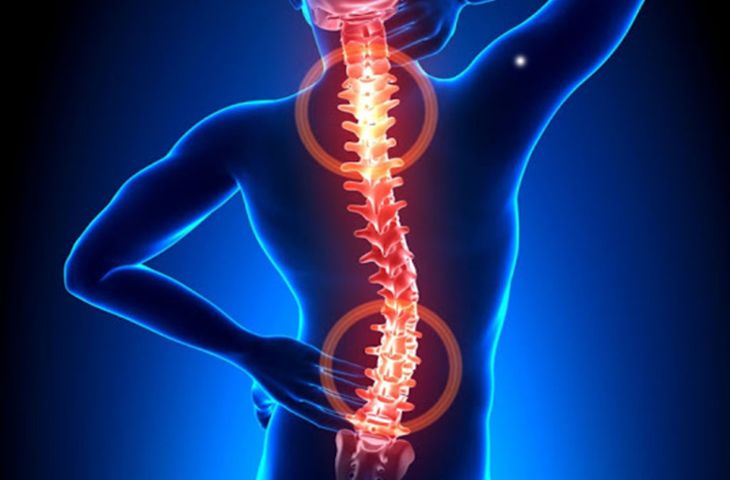
Schmorl's nodes should be diagnosed early and managed appropriately to prevent disease progression.
Causes of Schmorl's nodes (intravertebral disc herniation)
As a subtype of disc herniation, Schmorl's nodes share many of the same underlying causes and risk factors. In general, the condition is most commonly associated with age-related degeneration. As people age, intervertebral discs gradually lose their strength, elasticity, and ability to withstand mechanical stress, making them more susceptible to tears and structural damage when subjected to spinal loading.
Experts have also noted that Schmorl's nodes are more likely to develop in individuals with degenerative spinal conditions. A Schmorl's node occurs when soft disc material protrudes through the vertebral endplate into the adjacent vertebral body. These lesions are most commonly found in the thoracic and lumbar spine, where mechanical stress on the spine is greatest.
Additional causes of Schmorl's nodes (intravertebral disc herniation)
In addition to age-related degeneration, several other factors may contribute to the development of Schmorl's nodes, including:
Overweight and obesity: Excess body weight increases mechanical stress on the spine, placing continuous pressure on the intervertebral discs and making them more vulnerable to damage.
Excessive physical exertion: Individuals who regularly perform physically demanding work are at a higher risk of developing spinal and musculoskeletal disorders. This includes construction workers, manual laborers, athletes, and office workers who spend prolonged periods sitting.
Trauma: Sudden injuries can damage the spine and impair the function of the intervertebral discs. Common causes include traffic accidents, falls, and improper lifting or exercise techniques.
Smoking: Studies have shown that smokers often have reduced oxygen levels in the blood compared with non-smokers. As a result, the discs may receive inadequate nutrition, accelerating disc degeneration, tearing, and wear.
Other contributing factors: Poor nutrition, prolonged poor posture while sitting or lying down, genetic predisposition, pregnancy, and other conditions that place additional stress on the spine may also increase the risk of developing Schmorl's nodes.
Symptoms of Schmorl's nodes (intravertebral disc herniation)
Patients with Schmorl's nodes may experience the following signs and symptoms:
Persistent dull aching pain or sharp pain in the back, with symptoms gradually increasing in frequency over time.
Localized tenderness and pain when pressure is applied to the affected area.
In some cases, pain may be accompanied by a burning sensation.
Pain often improves when lying flat or extending the back.
Symptoms may worsen with prolonged sitting, bending forward, arching the back, twisting movements, coughing, or sneezing.
When the lumbar spine is involved, pain may radiate into the thighs and lower legs.
Difficulty performing daily activities due to back weakness, stiffness, and reduced mobility.
Schmorl's nodes can be identified on MRI or X-ray imaging, which are important tools for confirming the diagnosis and assessing the extent of the condition.
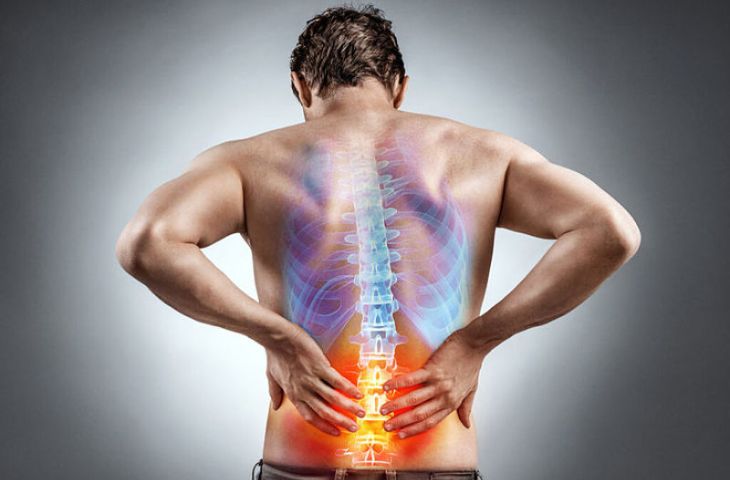
Sharp pain in the lower back may be a sign of Schmorl's nodes.
Treatment of Schmorl's nodes (intravertebral disc herniation)
Advances in modern medicine have made the treatment of Schmorl's nodes more effective and accessible. When symptoms occur, patients should seek medical evaluation for an accurate diagnosis and appropriate treatment plan. The most commonly used treatment options include:
Medication therapy
Medications are primarily used as a conservative treatment to relieve pain and improve symptoms. Commonly prescribed medications include:
Nonsteroidal anti-inflammatory drugs (NSAIDs)
Acetaminophen (paracetamol)
Muscle relaxants
Opioid analgesics in selected cases
All medications should be used under the supervision of a physician.
Physical therapy and rehabilitation
Physical therapy is one of the preferred treatment approaches for patients with musculoskeletal disorders. It can significantly improve symptoms, restore function in affected spinal structures, and enhance overall mobility. In addition, therapeutic exercises help provide long-term pain relief, improve musculoskeletal function, increase flexibility, and reduce the risk of injury and disability-related complications.
At Hong Ngoc General Hospital, physical therapy is prioritized for the treatment of Schmorl's nodes because it helps address the underlying condition while reducing reliance on medication. Each patient receives an individualized rehabilitation program tailored to their specific clinical condition.
Patients are treated using advanced rehabilitation technologies imported from Germany, including electrical stimulation therapy, shockwave therapy, and microwave therapy systems. These modalities are combined with specialized Austrian manual therapy techniques to provide effective pain relief, restore mobility, and accelerate functional recovery.
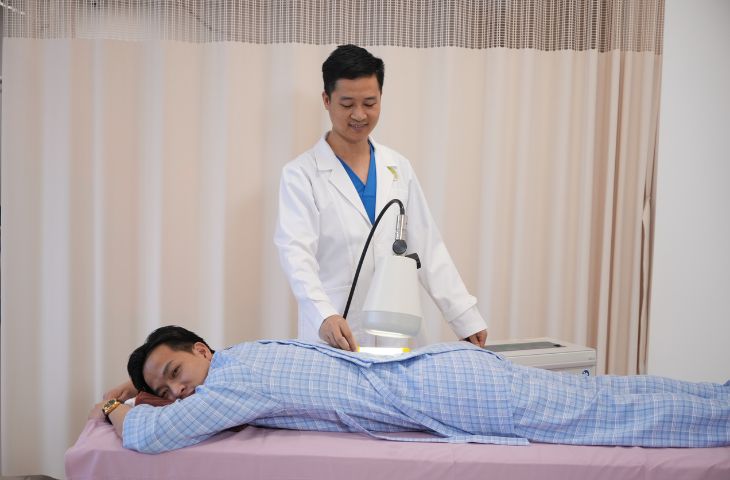
Physical therapy helps relieve pain and slow disease progression.
Minimally invasive interventional procedures
Physicians may recommend steroid injections, intradiscal electrothermal therapy (IDET), or radiofrequency procedures as minimally invasive treatment options to help relieve symptoms while minimizing tissue trauma.
Surgical treatment
The goal of surgery is to fuse the vertebrae at the level of the damaged disc. However, this approach should be carefully considered because it has several potential drawbacks, including:
Reduced motion at the fused spinal segments, which may lead to narrowing of the neural foramina and increased stress on adjacent intervertebral discs.
The normal height of the intervertebral disc may not be maintained.
If Schmorl's nodes are not diagnosed and treated promptly, patients may develop cauda equina syndrome, a serious neurological complication. This condition can cause inflammation and compression of the nerve roots within the spinal canal, significantly increasing the risk of severe neurological impairment and even paralysis.
Care and prevention of Schmorl's nodes (intravertebral disc herniation)
To help manage symptoms and reduce the risk of disease progression, patients should pay attention to the following recommendations:
Use supportive devices when appropriate: Supportive equipment such as massage chairs, lumbar support braces, and spinal support devices may help relieve pain and improve mobility.
Allow adequate rest: Taking sufficient time to rest helps reduce stress on the spine and intervertebral discs while promoting overall recovery and relaxation.
Avoid prolonged sitting and poor posture: Standing up, walking, and performing gentle stretching exercises after approximately one hour of sitting can help maintain flexibility and reduce spinal strain. When sitting, it is important to keep the back straight and avoid poor posture that may adversely affect the spine.
Maintain a balanced and nutritious diet: For older adults in particular, proper nutrition plays an important role in reducing pain and slowing disease progression. Nutrition experts recommend consuming foods rich in calcium and antioxidants, such as seafood, green vegetables, and dairy products.
Engage in regular, moderate exercise: Appropriate physical activity can help reduce joint stiffness and lower the risk of other health conditions. Suitable exercises may include yoga, walking, cycling, and swimming, depending on the individual's physical condition.
Undergo regular health check-ups: Routine medical examinations every six months, or follow-up visits as recommended by a physician, can help monitor the condition and prevent potential complications.
Choose a reputable healthcare provider: Seeking care at a qualified medical facility with expertise in spinal disorders is essential for early diagnosis, appropriate treatment, and optimal long-term outcomes.
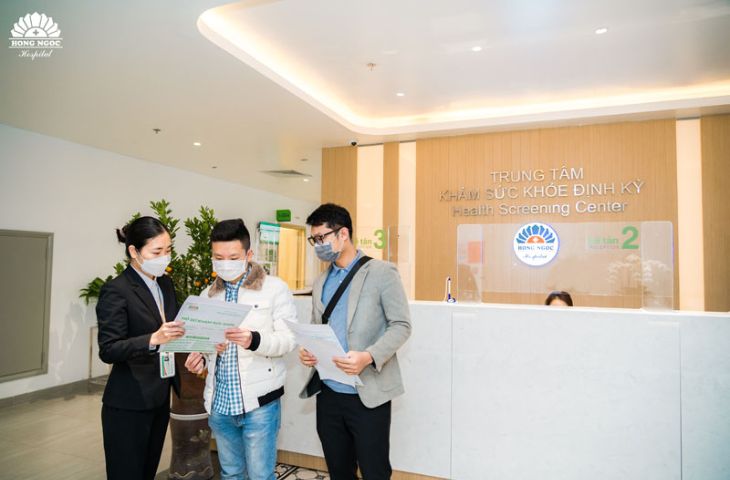
Regular health screenings at Hong Ngoc General Hospital
The information above provides a comprehensive overview of Schmorl's nodes (intravertebral disc herniation). We hope you find it helpful.
For more information or personalized consultation regarding this condition, please contact our hotline at 0243 927 5568 (extensions 2225 or 2265).
Disclaimer: The information provided in articles published by Hong Ngoc General Hospital is intended for informational and educational purposes only and should not be considered a substitute for professional medical advice, diagnosis, or treatment. Patients should not self-medicate or initiate treatment without consulting a qualified healthcare professional. To obtain an accurate diagnosis and appropriate treatment recommendations, individuals are advised to seek direct medical evaluation from a licensed physician.
Schmorl's nodes (intravertebral disc herniation) are a distinct subtype of disc herniation that commonly affects older adults. Although often considered less symptomatic than conventional disc herniation, the condition may progressively worsen if not diagnosed and managed appropriately. This article provides essential information on the causes, symptoms, diagnosis, and treatment of Schmorl's nodes.
What are Schmorl's nodes (intravertebral disc herniation)?
Schmorl's nodes, also known as intravertebral disc herniation, occur when the nucleus pulposus protrudes through defects in the vertebral endplate and extends into the cancellous (spongy) bone of the adjacent vertebral body. Unlike conventional disc herniation, the displaced disc material does not primarily compress the spinal nerves but instead penetrates the vertebral body, creating pressure within the vertebral cancellous bone and potentially causing pain.
Schmorl's nodes can be classified into four stages:
Stage 1: A newly formed annular tear develops within the inner one-third of the intervertebral disc. At this stage, patients are typically asymptomatic and do not experience pain.
Stage 2: The tear enlarges and extends into the middle one-third of the disc. Symptoms remain mild, and patients may experience only slight discomfort or localized aching at the affected site.
Stage 3: The tear progresses to involve the outer one-third of the disc. Pain becomes more noticeable as the lesion advances and nerve root irritation may occur.
Stage 4: Similar to Stage 3, but with more extensive tissue involvement. Pain becomes more severe and may radiate beyond the affected disc level, significantly impacting daily activities and quality of life.
Schmorl's nodes should be diagnosed early and managed appropriately to prevent disease progression.
Causes of Schmorl's nodes (intravertebral disc herniation)
As a subtype of disc herniation, Schmorl's nodes share many of the same underlying causes and risk factors. In general, the condition is most commonly associated with age-related degeneration. As people age, intervertebral discs gradually lose their strength, elasticity, and ability to withstand mechanical stress, making them more susceptible to tears and structural damage when subjected to spinal loading.
Experts have also noted that Schmorl's nodes are more likely to develop in individuals with degenerative spinal conditions. A Schmorl's node occurs when soft disc material protrudes through the vertebral endplate into the adjacent vertebral body. These lesions are most commonly found in the thoracic and lumbar spine, where mechanical stress on the spine is greatest.
Additional causes of Schmorl's nodes (intravertebral disc herniation)
In addition to age-related degeneration, several other factors may contribute to the development of Schmorl's nodes, including:
Overweight and obesity: Excess body weight increases mechanical stress on the spine, placing continuous pressure on the intervertebral discs and making them more vulnerable to damage.
Excessive physical exertion: Individuals who regularly perform physically demanding work are at a higher risk of developing spinal and musculoskeletal disorders. This includes construction workers, manual laborers, athletes, and office workers who spend prolonged periods sitting.
Trauma: Sudden injuries can damage the spine and impair the function of the intervertebral discs. Common causes include traffic accidents, falls, and improper lifting or exercise techniques.
Smoking: Studies have shown that smokers often have reduced oxygen levels in the blood compared with non-smokers. As a result, the discs may receive inadequate nutrition, accelerating disc degeneration, tearing, and wear.
Other contributing factors: Poor nutrition, prolonged poor posture while sitting or lying down, genetic predisposition, pregnancy, and other conditions that place additional stress on the spine may also increase the risk of developing Schmorl's nodes.
Symptoms of Schmorl's nodes (intravertebral disc herniation)
Patients with Schmorl's nodes may experience the following signs and symptoms:
Persistent dull aching pain or sharp pain in the back, with symptoms gradually increasing in frequency over time.
Localized tenderness and pain when pressure is applied to the affected area.
In some cases, pain may be accompanied by a burning sensation.
Pain often improves when lying flat or extending the back.
Symptoms may worsen with prolonged sitting, bending forward, arching the back, twisting movements, coughing, or sneezing.
When the lumbar spine is involved, pain may radiate into the thighs and lower legs.
Difficulty performing daily activities due to back weakness, stiffness, and reduced mobility.
Schmorl's nodes can be identified on MRI or X-ray imaging, which are important tools for confirming the diagnosis and assessing the extent of the condition.
Sharp pain in the lower back may be a sign of Schmorl's nodes.
Treatment of Schmorl's nodes (intravertebral disc herniation)
Advances in modern medicine have made the treatment of Schmorl's nodes more effective and accessible. When symptoms occur, patients should seek medical evaluation for an accurate diagnosis and appropriate treatment plan. The most commonly used treatment options include:
Medication therapy
Medications are primarily used as a conservative treatment to relieve pain and improve symptoms. Commonly prescribed medications include:
Nonsteroidal anti-inflammatory drugs (NSAIDs)
Acetaminophen (paracetamol)
Muscle relaxants
Opioid analgesics in selected cases
All medications should be used under the supervision of a physician.
Physical therapy and rehabilitation
Physical therapy is one of the preferred treatment approaches for patients with musculoskeletal disorders. It can significantly improve symptoms, restore function in affected spinal structures, and enhance overall mobility. In addition, therapeutic exercises help provide long-term pain relief, improve musculoskeletal function, increase flexibility, and reduce the risk of injury and disability-related complications.
At Hong Ngoc General Hospital, physical therapy is prioritized for the treatment of Schmorl's nodes because it helps address the underlying condition while reducing reliance on medication. Each patient receives an individualized rehabilitation program tailored to their specific clinical condition.
Patients are treated using advanced rehabilitation technologies imported from Germany, including electrical stimulation therapy, shockwave therapy, and microwave therapy systems. These modalities are combined with specialized Austrian manual therapy techniques to provide effective pain relief, restore mobility, and accelerate functional recovery.
Physical therapy helps relieve pain and slow disease progression.
Minimally invasive interventional procedures
Physicians may recommend steroid injections, intradiscal electrothermal therapy (IDET), or radiofrequency procedures as minimally invasive treatment options to help relieve symptoms while minimizing tissue trauma.
Surgical treatment
The goal of surgery is to fuse the vertebrae at the level of the damaged disc. However, this approach should be carefully considered because it has several potential drawbacks, including:
Reduced motion at the fused spinal segments, which may lead to narrowing of the neural foramina and increased stress on adjacent intervertebral discs.
The normal height of the intervertebral disc may not be maintained.
If Schmorl's nodes are not diagnosed and treated promptly, patients may develop cauda equina syndrome, a serious neurological complication. This condition can cause inflammation and compression of the nerve roots within the spinal canal, significantly increasing the risk of severe neurological impairment and even paralysis.
Care and prevention of Schmorl's nodes (intravertebral disc herniation)
To help manage symptoms and reduce the risk of disease progression, patients should pay attention to the following recommendations:
Use supportive devices when appropriate: Supportive equipment such as massage chairs, lumbar support braces, and spinal support devices may help relieve pain and improve mobility.
Allow adequate rest: Taking sufficient time to rest helps reduce stress on the spine and intervertebral discs while promoting overall recovery and relaxation.
Avoid prolonged sitting and poor posture: Standing up, walking, and performing gentle stretching exercises after approximately one hour of sitting can help maintain flexibility and reduce spinal strain. When sitting, it is important to keep the back straight and avoid poor posture that may adversely affect the spine.
Maintain a balanced and nutritious diet: For older adults in particular, proper nutrition plays an important role in reducing pain and slowing disease progression. Nutrition experts recommend consuming foods rich in calcium and antioxidants, such as seafood, green vegetables, and dairy products.
Engage in regular, moderate exercise: Appropriate physical activity can help reduce joint stiffness and lower the risk of other health conditions. Suitable exercises may include yoga, walking, cycling, and swimming, depending on the individual's physical condition.
Undergo regular health check-ups: Routine medical examinations every six months, or follow-up visits as recommended by a physician, can help monitor the condition and prevent potential complications.
Choose a reputable healthcare provider: Seeking care at a qualified medical facility with expertise in spinal disorders is essential for early diagnosis, appropriate treatment, and optimal long-term outcomes.
Regular health screenings at Hong Ngoc General Hospital
The information above provides a comprehensive overview of Schmorl's nodes (intravertebral disc herniation). We hope you find it helpful.
For more information or personalized consultation regarding this condition, please contact our hotline at 0243 927 5568 (extensions 2225 or 2265).
Disclaimer: The information provided in articles published by Hong Ngoc General Hospital is intended for informational and educational purposes only and should not be considered a substitute for professional medical advice, diagnosis, or treatment. Patients should not self-medicate or initiate treatment without consulting a qualified healthcare professional. To obtain an accurate diagnosis and appropriate treatment recommendations, individuals are advised to seek direct medical evaluation from a licensed physician.
Để lại câu hỏi của bạn để nhận được giải đáp từ các bác sĩ của Hồng Ngọc
Lorem ipsum dolor
Lorem ipsum dolor sit amet, consectetur adipiscing elit. Mauris odio lectus, pretium faucibus nisi eu, accumsan consectetur orci. In blandit vehicula nisl, vel lacinia ligula finibus a. Donec fermentum rhoncus