




Summer is the time when children are more likely to engage in outdoor activities, including playing, traveling, sports, and extracurricular programs. However, prolonged hot weather also increases the risk of dehydration, heat exhaustion, sunstroke, and heatstroke in children. Below, a pediatric specialist at Hong Ngoc General Hospital outlines the warning signs, timely first-aid measures for children with sunstroke, and symptoms that require hospital admission.
Quick answer: When a child develops sunstroke, parents should promptly move the child to a cool place, remove excess clothing, and cool the body with wet towels, cool water, or a fan. If the child is conscious, parents may offer small sips of cool water or oral rehydration solution prepared according to the instructions. If the child becomes drowsy, has seizures, loses consciousness, has difficulty breathing, develops a high fever of approximately 40°C or above, or is unable to drink fluids, emergency medical services should be called immediately, while cooling measures should be continued until medical assistance arrives.

Medical review: Dr. Nguyen Van Ngoc, Specialist Level I - Deputy Head of the Department of Pediatrics and Tropical Diseases, Hong Ngoc Phuc Truong Minh General Hospital
Quick summary of the article
- Children are more vulnerable to sunstroke than adults because their thermoregulatory mechanisms are not yet fully developed, they are more prone to dehydration, and they may have difficulty recognizing warning signs on their own.
- Signs suggestive of sunstroke in children include hot, flushed skin, thirst, dry lips, headache, dizziness, extreme fatigue, irritability or persistent crying, nausea, or vomiting.
- Signs suggestive of heatstroke include a very high body temperature, drowsiness, difficulty being awakened, seizures, shortness of breath, rapid breathing, a fast heartbeat, or loss of consciousness.
- Appropriate first aid includes moving the child to a cool place, loosening clothing, cooling the body, offering small sips of fluid if the child is alert, and closely monitoring the child’s condition.
- Do not give water or oral rehydration solution to a child who is drowsy, having seizures, unconscious, or vomiting repeatedly, as this may increase the risk of aspiration.
- If heatstroke is suspected, call emergency medical services immediately and continue cooling the child while waiting for help. Do not wait for the child to recover on their own.
- Never leave a child alone in a parked car, even for a short period. The CDC warns that children left unattended in parked vehicles are at the highest risk of heatstroke and death.
Why are children more susceptible to sunstroke than adults?
Children are not simply “small adults.” Their bodies have several physiological characteristics that make them more vulnerable to hot weather than adults, particularly young children, children with fever or diarrhea, those playing outdoor sports, or those wearing overly thick or restrictive clothing.
Immature thermoregulation
The body needs to maintain a stable core temperature for organs to function properly. In hot weather, the body dissipates heat by increasing sweating and redirecting blood flow to the skin. In children, these mechanisms are not as efficient as they are in adults.
- Sweat glands are not yet fully optimized: Sweating helps the body release heat through evaporation. In young children, sweat production and temperature regulation are still developing, making them more likely to experience a rise in body temperature after prolonged exposure to hot outdoor conditions.
- A larger body surface area relative to body weight: Children may absorb environmental heat more rapidly, especially when playing under direct sunlight, wearing thick clothing, or sitting in poorly ventilated spaces such as cars, strollers, or child safety seats.
- Difficulty recognizing warning signs: Young children often cannot clearly express symptoms such as “I feel dizzy,” “I am thirsty,” “I am tired,” or “I feel nauseous.” Parents should observe behavioral changes, including irritability or persistent crying, lethargy, loss of interest in play, poor feeding, or unusually prolonged sleep.
- Dependence on adults: The American Academy of Pediatrics notes that children rely on adults to protect them from extreme temperatures, whereas adults are generally able to seek shade or cooler environments and replenish fluids on their own.

Children become dehydrated more quickly
In hot weather, children lose fluids through sweating and breathing. If they spend prolonged periods outdoors, engage in vigorous physical activity, have a fever, diarrhea, or vomiting, the risk of dehydration can increase rapidly.
- Sweating causes fluid and electrolyte loss: When children sweat heavily, the body loses not only water but also sodium, potassium, and other electrolytes that are essential for normal nerve, muscle, and cardiac function.
- Dehydration impairs the body’s cooling capacity: When the body is dehydrated, it becomes more difficult to produce sweat effectively. This can cause body temperature to rise more quickly and increase the risk of heat exhaustion or heatstroke.
- Signs of dehydration in children may be subtle: Children may have dry lips, cry with few or no tears, urinate less frequently, have a diaper that stays dry for longer than usual, sunken eyes, fatigue, or poor feeding.
- Vomiting can worsen dehydration: If a child is exposed to heat and also vomits, fluid depletion may progress quickly. This is why children who vomit repeatedly after sun exposure should be closely monitored
Children are often absorbed in play and may not stop on their own
Children may continue running and playing even when they are tired, thirsty, or dizzy. Some children may not want to stop playing, may not drink fluids on their own, or may fail to recognize that their body is overheating.
Parents should be particularly vigilant when children:
- play outdoors at midday or in the early afternoon;
- play sports in hot and humid weather;
- wear thick sports clothing, protective gear, or tight-fitting headwear;
- have recently recovered from illness, are currently feverish, have diarrhea, or are eating and drinking poorly;
- have underlying cardiovascular, respiratory, or neurological conditions, or obesity.

How is sunstroke different from heatstroke?
Many parents often confuse sunstroke, heat exhaustion, and heatstroke. Distinguishing among these conditions can help parents understand when first aid and close monitoring may be sufficient, and when emergency medical care is required immediately.
Key point to remember: If a child is no longer as alert as usual, has seizures, loses consciousness, has difficulty breathing, or has a very high body temperature, the condition should be treated as potentially life-threatening and the child should be taken to emergency care immediately.
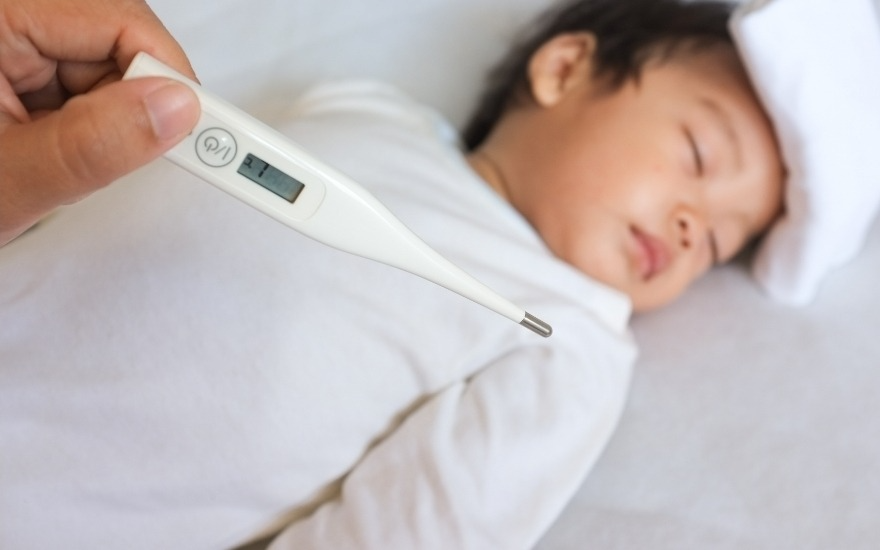
Table: Severity levels of sunstroke in children and appropriate management
Warning signs of sunstroke in children
Unusually hot, flushed skin
Hot, flushed skin may indicate that the body is attempting to dissipate heat by dilating blood vessels beneath the skin. This is a common response when a child spends a prolonged period under direct sunlight or in a hot environment.
Parents may observe the following signs:
- The face, neck, arms, and legs appear redder than usual: The child may look flushed, and the skin may feel warm or hot to the touch.
- The child sweats heavily: This may be a sign that the body is trying to cool itself down.
- Heavy sweating does not always occur: In severe stages, the body’s thermoregulatory mechanism may become impaired; the child may feel extremely hot, but sweating may decrease.
- Hot skin accompanied by drowsiness is a danger sign: If the child’s skin is very hot and the child responds slowly, is difficult to wake, or has seizures, heatstroke should be suspected.
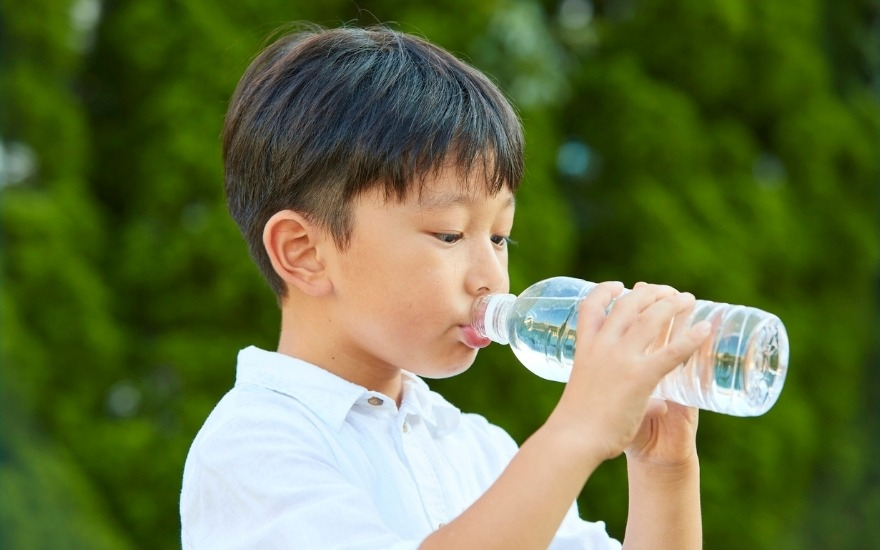
Excessive thirst, dry lips, or reduced urination
Thirst is an early sign of dehydration, but not all children are able to express that they are thirsty. In young children, parents need to watch for indirect signs.
Signs suggestive of dehydration include:
- The child repeatedly asks for water: This is a signal that the body is fluid-depleted after sweating.
- Dry lips and a dry tongue: Dry oral mucosa indicates that the body is dehydrated.
- Crying with few or no tears: In young children, crying without tears or with very few tears is a sign that requires attention.
- Reduced urination or a diaper that stays dry longer than usual: If the child does not urinate for several hours, has dark-colored urine, or has an unusually dry diaper, close monitoring is needed.
When is it dangerous? If the child is very thirsty but vomits, cannot drink fluids, urinates very little, becomes lethargic, or appears extremely weak, the child should be taken for medical evaluation.
Extreme fatigue, irritability, or loss of interest in play
Children affected by hot weather may be unable to describe feelings of dizziness, headache, or exhaustion. Instead, they may show behavioral changes.
Parents may notice the following signs:
- The child suddenly sits down while playing and does not want to move: This may indicate that the body has become overwhelmed by heat.
- The child becomes unusually irritable or cries persistently: Young children often express discomfort by crying rather than clearly describing their symptoms.
- The child sleeps more than usual or becomes lethargic: If the child is only mildly tired but remains alert and is able to drink fluids, parents may provide first aid and monitor the child closely. If the child becomes drowsy, is difficult to wake, or responds slowly, emergency care is required.
- The child refuses to breastfeed or eat: In young children, poor feeding accompanied by dry lips, fever, or reduced urination may suggest dehydration.
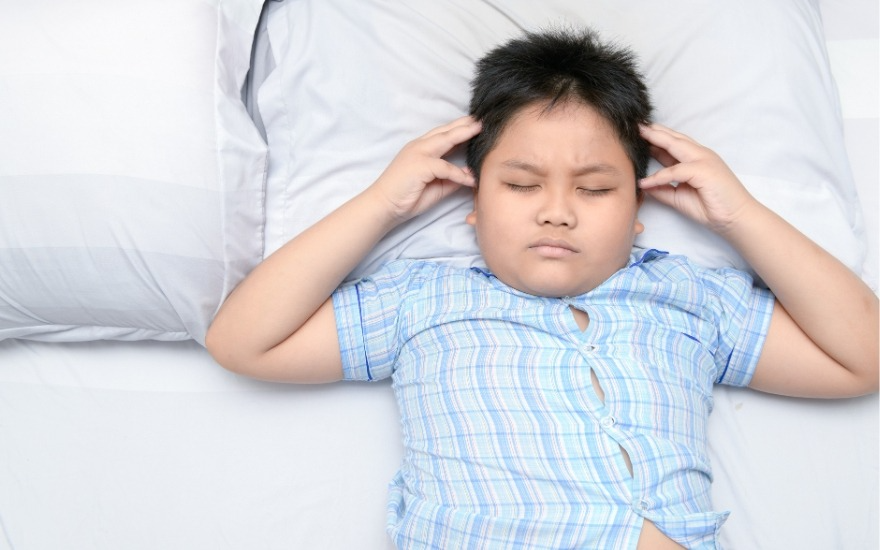
Headache, dizziness, or unsteady gait
Older children may report headache, dizziness, or feeling lightheaded after sun exposure. These are signs that the body may be under heat stress or dehydrated.
Parents should pay close attention if the child:
- complains of a severe headache;
- feels dizzy when standing up;
- walks unsteadily;
- has blurred vision;
- is unable to sit steadily;
- becomes increasingly tired despite resting.
If dizziness is accompanied by drowsiness, repeated vomiting, difficulty breathing, or very hot skin, the child should be taken to hospital promptly.
Nausea or vomiting
Nausea and vomiting may occur when a child’s body becomes overheated, dehydrated, or affected by electrolyte imbalance.
Parents should understand this correctly because:
- High temperatures can affect the nervous and digestive systems: Children may experience nausea, abdominal pain, or vomiting after playing under direct sunlight.
- Vomiting accelerates fluid loss: When a child vomits, oral rehydration becomes more difficult, increasing the risk of dehydration and electrolyte disturbances.
- Vomiting may be mistaken for a gastrointestinal disorder: If vomiting occurs after sun exposure and is accompanied by hot skin, extreme fatigue, headache, or fever, a heat-related illness should be considered.
- Persistent vomiting is a sign that requires medical attention: This is especially important if the child is unable to drink fluids, urinates very little, or becomes drowsy.
High fever or a rapid rise in body temperature
Children with sunstroke may develop an elevated body temperature. However, it is important to distinguish fever caused by infection from hyperthermia due to exposure to a hot environment.
Key points to watch for include:
- Body temperature rises after exposure to hot outdoor conditions: The child may have a fever or feel very hot to the touch.
- Fever-reducing medication is not the primary solution: Heatstroke is not the same as fever caused by infection. The priority is to move the child to a cool place and begin cooling the body.
- A body temperature of approximately 40°C or higher is a danger sign: This is particularly concerning if it is accompanied by drowsiness, seizures, rapid breathing, or a fast heartbeat.
- Do not wait for fever-reducing medication to take effect before going to the hospital: If heatstroke is suspected, emergency medical care is required.
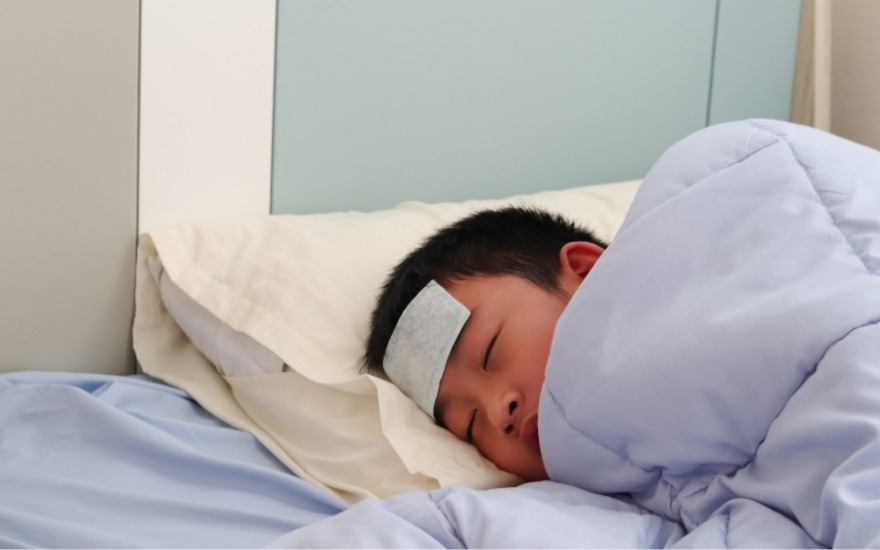
Drowsiness, somnolence, or delayed responses
These are warning signs. Altered consciousness in the setting of heat exposure should be considered suspected heatstroke until the child has been evaluated by a physician.
Parents should seek emergency care if the child:
- is somnolent or difficult to wake;
- does not respond normally when called;
- speaks incoherently or responds slowly;
- does not recognize family members;
- has seizures;
- loses consciousness.
High body temperature can directly affect the brain. Therefore, drowsiness should not be regarded as ordinary fatigue, and parents should not wait for the child to “sleep it off.”
How to provide proper first aid for a child with sunstroke
Step 1: Remove the child from the hot environment
The first priority is to eliminate the source of heat as quickly as possible. If the child remains under direct sunlight, body temperature may continue to rise.
Parents should:
- move the child to a shaded area;
- bring the child into a room with a fan or air conditioning, if available;
- prevent the child from continuing to stand, play, or engage in physical activity;
- let the child lie down or sit and rest in a well-ventilated place;
- avoid allowing crowds to gather around the child, as this can make the air feel more stifling.
Why is this important? Once the child is removed from the hot environment, the body has a chance to reduce heat absorption and begin dissipating heat more effectively.

Step 2: Loosen or remove excess clothing
Thick, tight-fitting, or layered clothing can interfere with heat dissipation. Children wearing sportswear, jackets, thick sun-protective clothing, or clothes soaked with sweat should have their clothing loosened.
Parents should:
- remove jackets, hats, and scarves;
- loosen the collar and waistband;
- change sweat-soaked clothing if possible;
- dress the child in light, breathable clothing.
Do not wrap the child tightly or cover the child with a blanket, as this may cause body temperature to rise further.
Step 3: Cool the body with cool water and a fan
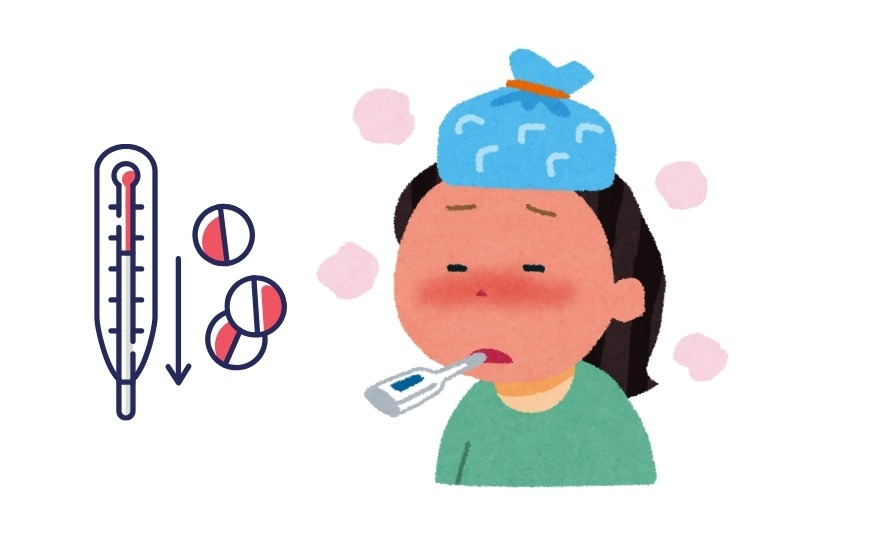
Cooling is the most important step when a child is affected by heat exposure. When a child shows signs of heat-related illness, the child should be moved to a cool place, excess clothing should be removed, and the body should be cooled with lukewarm or cool water or cool towels. If the child is alert, parents may offer small sips of cool water to help lower body temperature.
Parents may apply the following measures:
- wipe the body with a cool towel;
- spray or pour cool water onto the skin;
- use a fan to support evaporative cooling;
- place damp towels on the neck, armpits, and groin;
- replace cool towels regularly as they warm up.
- The neck, armpits, and groin contain large blood vessels close to the skin surface, which can help facilitate faster cooling.
Note: Parents should not apply ice directly to the skin or immerse the child in ice water at home, as this may cause shivering, discomfort, cold injury, or make it more difficult to monitor the child’s condition. Cool water, wet towels, a fan, and cool compresses applied to the neck, armpits, and groin are recommended. In a medical setting, physicians may use more advanced cooling measures depending on the child’s condition.
Step 4: Offer fluids if the child is alert
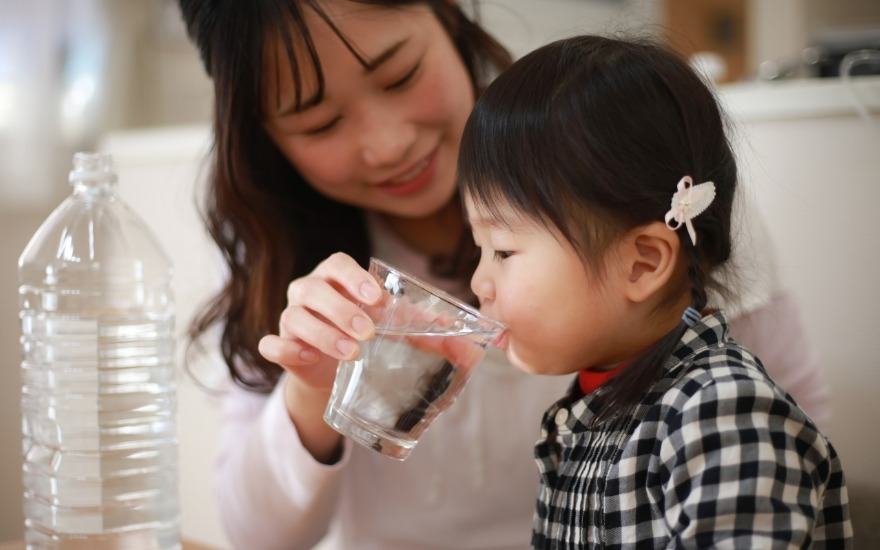
If the child is alert, able to speak, able to swallow safely, and not vomiting repeatedly, parents may offer small sips of fluid.
Suitable options include:
- cool water;
- oral rehydration solution prepared according to the instructions;
- an appropriate electrolyte drink, if recommended;
- breast milk or formula for infants who are still being fed, depending on the situation.
Important points to note:
- offer small sips and do not force the child to drink large amounts at once;
- if the child vomits, stop giving fluids temporarily and continue monitoring;
- oral rehydration solution must be mixed in the correct ratio and should not be made too concentrated or too diluted;
- do not give children carbonated soft drinks, energy drinks, or caffeinated beverages.
Step 5: Monitor the child closely and call emergency medical services if warning signs appear
After moving the child to a cool place and beginning cooling measures, parents should monitor whether:
- the child becomes more alert;
- the skin feels less hot;
- the child is able to drink fluids;
- vomiting continues;
- the child develops seizures, difficulty breathing, or bluish discoloration of the lips;
- the child urinates again;
- symptoms improve after cooling measures.
If the child becomes drowsy, has seizures, loses consciousness, has difficulty breathing, develops bluish discoloration, has a very high body temperature, or does not improve, emergency medical services should be called immediately. Do not wait for the fever to subside completely before taking the child to hospital.
Common mistakes parents often make
Forcing the child to drink too much water at once
When a child is fatigued from heat exposure, many parents try to make the child drink a large amount of water immediately. This may cause nausea, worsen vomiting, and make rehydration less effective.
Children should be offered small sips of fluid repeatedly, and only when they are alert and able to swallow safely.
Giving fluids when the child is drowsy or having seizures
This is a dangerous mistake. When a child is not fully conscious, swallowing and airway-protective reflexes are reduced. Giving water, milk, or oral rehydration solution may lead to aspiration.
If the child is drowsy, having seizures, unconscious, or vomiting repeatedly, emergency medical services should be called and no fluids should be given by mouth.
Applying ice directly or immersing the child in ice water at home
Many parents believe that the colder the intervention, the faster the child’s temperature will fall. However, at home, applying ice directly to the skin or immersing the child in ice water may cause shivering, discomfort, cold injury, or make it more difficult to monitor the child’s overall condition.
Parents should prioritize cool water, wet towels, a fan, continuous tepid sponging, and cool compresses applied to the neck, armpits, and groin.

Using only fever-reducing medication and waiting
Sunstroke and heatstroke are not the same as fever caused by infection. Fever-reducing medication cannot replace moving the child to a cool place, cooling the body, and seeking emergency care when needed.
If a child has a high fever accompanied by drowsiness, seizures, difficulty breathing, or very hot skin after sun exposure, parents should not simply give fever-reducing medication and monitor the child at home.
Keeping the child wrapped up for fear of cold
Some parents may see that the child is tired or shivering and cover the child with a blanket or add more layers of clothing. This can cause the body temperature to rise further.
When a child is overheated, clothing should be loosened to help the body dissipate heat, while the child’s condition should be closely monitored.
Waiting for the child to recover on their own
Some cases of heatstroke can progress rapidly. If a child becomes drowsy, has seizures, has difficulty breathing, or is unable to drink fluids, waiting may increase the risk of complications.
When heatstroke is suspected, emergency medical services should be called immediately, and cooling measures should be continued while waiting for assistance.
How to prevent sunstroke in children during the summer
Limit outdoor activities during peak heat hours
Children should avoid prolonged outdoor play during periods of intense sunlight, especially between approximately 10 a.m. and 4 p.m. when the weather is hot and humid, the UV index is high, or heat advisories are in effect.
If going outdoors is unavoidable, parents should:
- allow the child to take regular breaks in a cool place;
- avoid excessive physical exertion;
- have the child wear a wide-brimmed hat;
- dress the child in light-colored, breathable clothing;
- use age-appropriate sunscreen when necessary.
Encourage children to drink water regularly
Parents should not wait until a child says they are thirsty before offering fluids. Young children may not recognize thirst or may be unable to express it clearly.
Parents should:
- remind children to drink water regularly;
- increase fluid intake when the child sweats heavily;
- schedule water breaks during sports or physical activity;
- monitor the child’s lips, tongue, urine, or diaper changes;
- consult a physician if the child has a medical condition that requires fluid restriction.
Never leave a child alone in a car
This is a mandatory safety rule. Children should never be left in a parked car, even for a few minutes and even if the windows are slightly open. The temperature inside a vehicle can rise very quickly and lead to heatstroke.
The Centers for Disease Control and Prevention (CDC) advises never leaving infants or young children in a parked car, even with the windows cracked open.
Parents can:
- check the back seat before locking the car;
- place a handbag or phone in the back seat to build the habit of looking back;
- ask the school or daycare to call if the child does not arrive on time;
- never allow children to play inside a parked vehicle.

Monitor children at higher risk
Some children are more vulnerable to the effects of hot weather, including:
- young children;
- children with obesity;
- children who currently have fever, diarrhea, or vomiting;
- children with cardiovascular, respiratory, or neurological conditions;
- children taking certain medications as prescribed by a physician;
- children who play outdoor sports;
- children wearing thick protective clothing.
For these groups, parents should limit time spent outdoors, allow frequent breaks in a cool place, and closely monitor for signs of dehydration.
When should a child be taken to hospital?
Seek emergency care immediately if warning signs appear
Parents should take the child to the emergency department or call emergency medical services immediately if any of the following signs occur:
- A body temperature of approximately 40°C or higher: This is especially concerning if accompanied by drowsiness, seizures, or rapid breathing.
- Drowsiness, difficulty waking, or loss of consciousness: These are signs that the nervous system may be affected and heatstroke should be suspected.
- Seizures: Do not put any object into the child’s mouth and do not restrain the child’s arms or legs. Place the child in a safe side-lying position and call emergency medical services.
- Difficulty breathing, bluish lips, or abnormally rapid breathing: These may be associated with respiratory or circulatory disturbances.
- Persistent vomiting or inability to drink fluids: The child is at increased risk of dehydration and electrolyte imbalance.
- No urination, very little urination, or an unusually dry diaper: These signs may suggest significant dehydration.
- No improvement after the child has been moved to a cool place and cooled down: Parents should not continue monitoring the child at home.
Seek medical evaluation early if the child remains tired after first aid
Even if there are no emergency warning signs, parents should take the child for medical evaluation if:
- fatigue persists after sun exposure;
- fever continues;
- headache or dizziness recurs;
- the child eats or drinks poorly;
- vomiting occurs but is not yet persistent;
- urination is reduced;
- the child has an underlying medical condition;
- the child has a history of febrile seizures;
- parents are unsure whether the child has fully recovered.
At Hong Ngoc General Hospital, children can be examined by pediatric specialists to assess dehydration, hyperthermia, electrolyte disturbances, or signs suggestive of heatstroke after exposure to hot weather. Customers may contact the hotline at 024 3927 5568 or leave their information below to be contacted and advised by a physician.
Frequently asked questions
Does a child with sunstroke need an oral rehydration solution?
Oral rehydration solution may be used if the child remains alert, is able to drink, and shows signs of dehydration. It must be prepared according to the instructions and given in small sips. Do not give oral fluids if the child is drowsy, having seizures, vomiting repeatedly, or unconscious, as this may increase the risk of aspiration.
Should ice be applied directly to a child’s body?
Ice should not be applied directly to the skin, and parents should not immerse the child in ice water at home. Instead, they should use cool wet towels, a fan, cool-water sponging, and cool compresses applied to the neck, armpits, and groin. If heatstroke is suspected, emergency medical services should be called.
Should a child with sunstroke take fever-reducing medication?
Children with sunstroke should not be given fever-reducing medication such as paracetamol, aspirin, or nonsteroidal anti-inflammatory drugs (NSAIDs) without medical guidance, as these medications have little effect in lowering body temperature caused by sunstroke. This is because the body’s thermoregulatory mechanism has become overwhelmed, unlike a typical fever caused by infection. The priority is to move the child to a cool place and begin cooling the body. If the child has a high fever, becomes drowsy, has seizures, or develops difficulty breathing, emergency care is required.
How soon should a child be taken to the hospital after sunstroke?
If the child does not improve after being moved to a cool place, having clothing loosened, receiving cooling measures, and being rehydrated appropriately, or if warning signs such as drowsiness, seizures, difficulty breathing, or repeated vomiting appear, the child should be taken for medical evaluation or emergency care immediately.
How long does it take for a child to recover from sunstroke?
Mild cases may improve after the child rests in a cool place, receives cooling measures, and is rehydrated appropriately. However, if the child does not improve after about 30 minutes or symptoms worsen, medical evaluation is needed. The NHS advises that if heat exhaustion does not improve after 30 minutes of cooling, it should be treated as a more serious condition.
Should a child be allowed to sleep after sunstroke?
If the child is only mildly tired but remains alert, can drink fluids, and responds normally, parents may allow the child to rest in a cool place while closely monitoring their condition. If the child becomes somnolent, difficult to wake, drowsy, or slow to respond, emergency care is required immediately.
Can sunstroke cause seizures?
Yes. Seizures are a severe warning sign and may be associated with heatstroke or serious thermoregulatory disturbance. If a child has a seizure after sun exposure, emergency medical services should be called, the child should be placed in a safe side-lying position, no object should be put into the child’s mouth, and cooling measures should be continued.
Which children are more susceptible to sunstroke?
Young children, children who play outdoor sports, children with obesity, children with fever or diarrhea, children who are overdressed, children with underlying medical conditions, and children left in a parked car during hot weather are at higher risk.
Should a child continue playing after feeling better?
No. After signs of sunstroke or heat exhaustion appear, the child should rest in a cool place, drink appropriate fluids, and be closely monitored. Returning to activity too soon may cause symptoms to recur or worsen.
Conclusion
Sunstroke in children may begin with seemingly mild symptoms such as thirst, hot skin, extreme fatigue, irritability or persistent crying, headache, or nausea. However, the condition can progress to heatstroke if the child remains in a hot environment or is not cooled promptly.
When sunstroke is suspected, parents should move the child to a cool place, loosen clothing, cool the body with cool water, wet towels, or a fan, and offer small sips of fluid if the child remains alert. If the child becomes drowsy, has seizures, loses consciousness, has difficulty breathing, develops a high fever of approximately 40°C or above, vomits repeatedly, or is unable to drink fluids, emergency medical services should be called immediately, and cooling measures should be continued while waiting for assistance.
Early recognition of warning signs, proper first aid, and prevention of heat exposure are key factors in protecting children during the summer.
Medical note
This article is for informational purposes only and is not a substitute for medical diagnosis or treatment. Young children, children with underlying medical conditions, children with fever or diarrhea, children showing signs of dehydration, or any child who develops drowsiness, seizures, or difficulty breathing after heat exposure should receive early medical evaluation.