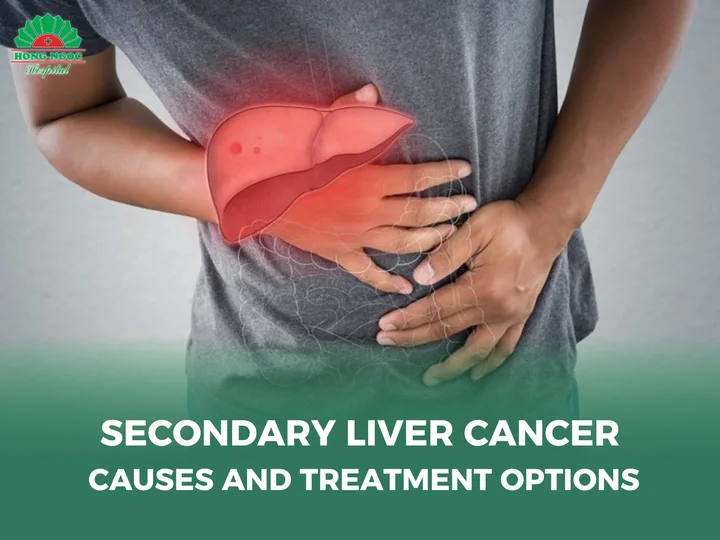




Primary liver cancer is the third leading cause of cancer-related mortality worldwide. What are the underlying causes of this disease? Which symptoms may aid in early detection? The following article provides essential insights into primary liver cancer.
What is primary liver cancer?
Disease classification and staging
Primary liver cancer is a malignant hepatic disease that occurs when liver cells undergo abnormal morphological and functional changes. It is defined as primary when malignant cells originate within the liver and form tumors locally. In contrast, if cancer cells spread to the liver from other organs, the condition is classified as secondary (metastatic) liver cancer.
In the most advanced stage of primary liver cancer, malignant cells invade surrounding tissues and metastasize from the liver to other parts of the body.
Primary liver cancer is classified based on the type of malignant cells and their site of origin:
- Hepatocellular carcinoma (HCC): Arises from hepatocytes, commonly associated with cirrhosis or chronic hepatitis.
- Fibrolamellar hepatocellular carcinoma (FHCC): Develops in otherwise normal liver tissue.
- Cholangiocarcinoma (CC): Originates from the epithelial cells of the bile ducts.
- Hepatoblastoma: A rare malignancy, predominantly occurring in children, accounting for approximately 0.5%–1% of cases.
- Angiosarcoma: A rare cancer arising from the vascular endothelial cells of the liver.

Primary hepatocellular carcinoma is staged based on tumor size and extent of spread, including:
- Very early stage: Initial malignant cells form a small tumor measuring less than 2 cm.
- Early stage: Tumor size is less than 5 cm, or up to three nodules may be present within the liver, with each lesion measuring ≤3 cm.
- Intermediate stage: Tumors increase in size, with at least one lesion potentially involving major vascular structures.
- Advanced stage: Tumors continue to enlarge, with vascular invasion or extrahepatic spread.
- End-stage: Widespread metastasis to distant organs, representing the most severe stage with limited therapeutic options and poor prognosis.

Causes of primary liver cancer
Primary liver cancer develops as a result of genetic mutations affecting the DNA structure of hepatocyte nuclei. In addition, several risk factors contribute to tumor formation and progression, including:
- Chronic hepatitis B or C infection: Long-standing, untreated viral hepatitis can lead to liver damage, cirrhosis, and eventual malignant transformation.
- Cirrhosis: Fibrotic changes in liver tissue due to alcohol abuse or chronic hepatitis significantly increase the risk of hepatocellular carcinoma.
- Aflatoxin exposure: Consumption of foods contaminated with aflatoxins may cause toxic effects and increase the risk of liver cancer over time.
- Inflammatory bowel disease: Conditions such as ulcerative colitis may elevate the risk of cholangiocarcinoma.
- Tobacco use: Long-term smoking is associated with an increased risk of liver malignancy.
- Parasitic infections (liver flukes): Chronic infestation may increase the risk of bile duct cancer.
- Immunosuppression: Individuals with weakened immune systems have a significantly higher risk of developing primary liver cancer.
- Genetic predisposition: A family history of liver cancer is associated with increased susceptibility.

Clinical manifestations of primary liver cancer
In the early stages, primary liver cancer is often asymptomatic. As the disease progresses, patients may present with nonspecific symptoms such as malaise, nausea, anorexia, unintentional weight loss, and fatigue.
In cases arising on a background of cirrhosis, symptoms related to the underlying liver disease may predominate, with a rapid deterioration in overall health status, increasing the risk of malignancy.
Additional clinical signs in more advanced stages may include:
- Right upper quadrant abdominal pain
- Jaundice of the skin and mucous membranes due to biliary obstruction and impaired bilirubin excretion
- Generalized pruritus
- Abdominal distension, which may result from tumor enlargement or ascites accumulation

Is primary liver cancer curable?
Patients with primary liver cancer have a significantly better prognosis if the disease is detected and treated at an early stage. The longer the disease remains undiagnosed and untreated, the lower the survival rate.
- Tumor size <3 cm: 5-year survival rate approximately 80%–90%
- Tumor size 3–6 cm: 5-year survival rate approximately 60%
- Tumor size >6 cm: 5-year survival rate approximately 10%–15%
- Tumor size >10 cm: Very low likelihood of curative treatment

Treatment options for primary liver cancer
Treatment strategies for primary liver cancer depend on disease stage and the patient’s overall clinical condition. Commonly applied modalities include surgery, chemotherapy, and transarterial therapies.
Surgical management
For patients diagnosed at an early stage, surgical resection offers a high chance of long-term survival. This approach is indicated when the tumor is localized, has not metastasized, and the remaining liver parenchyma can maintain adequate function. The liver has regenerative capacity, allowing recovery of functional tissue after partial resection.
In cases of extensive hepatic damage, liver transplantation may be considered, provided a suitable donor is available. In addition, biliary drainage procedures may be performed to relieve obstruction caused by tumor invasion, thereby reducing jaundice and ascites-related symptoms.
Chemotherapy
Chemotherapy may be utilized as an adjunct or alternative treatment, particularly in advanced stages. Antineoplastic agents are administered to destroy cancer cells or inhibit tumor growth, helping to reduce tumor size, slow disease progression, and prolong patient survival.

Radiotherapy
Radiotherapy uses high-energy X-rays to destroy cancer cells, particularly in cases where tumors are large or unresectable. In metastatic disease, this modality helps limit tumor spread, control symptoms, and improve overall survival outcomes.
Immunotherapy
Immunotherapy enhances the body’s immune response, enabling it to better recognize and eliminate cancer cells. This approach involves modulating immune pathways, often through targeted proteins, and is primarily used in advanced-stage liver cancer.
Pharmacological treatment
Various anticancer agents, such as cisplatin, doxorubicin, and mitomycin, may be used to support treatment and inhibit tumor growth. These therapies are typically indicated in selected cases, particularly when specific genetic mutations are identified.

Where to receive treatment for primary liver cancer?
Primary liver cancer can be effectively treated and survival outcomes significantly improved if detected at an early stage. Therefore, routine health check-ups are strongly recommended for early identification of liver diseases, enabling timely intervention and preventing progression to malignancy.
The Gastroenterology and Hepatology Center at Hong Ngoc General Hospital is a trusted medical facility for liver disease screening and treatment, offering:
- Highly experienced hepatology specialists, including Dr. Dang Thi Kim Oanh, MD, PhD, Specialist Level II – a leading hepatobiliary expert with over 40 years of experience at Bach Mai Hospital; MSc. Le Thi Van Anh, MD – with more than 30 years of experience at the Gastroenterology and Hepatology Center, Bach Mai Hospital; along with physicians extensively trained in Japan and South Korea. Individualized treatment plans are developed based on each patient’s condition.
- Advanced medical technology supporting accurate diagnosis and effective treatment: LOGIQ Fortis high-end ultrasound system with elastography (GE Healthcare, USA), Revolution EVO CT scanner, Signa Prime MRI system with AI integration (first in Vietnam), and Abbott laboratory system (USA).
- Comprehensive treatment approaches, including medical therapy, transarterial chemoembolization (TACE), and surgical intervention, tailored to each patient’s clinical status.
- Diverse screening packages for hepatobiliary diseases and liver cancer, enabling early detection even before symptom onset.
- Streamlined insurance procedures, reducing waiting time and optimizing treatment costs.
- Dedicated and professional medical staff, providing continuous patient support.
- Modern, clean, and comfortable hospital environment, helping reduce stress during the treatment process.
To schedule a consultation and treatment with leading hepatobiliary specialists, please contact the hotline 0911 908 856 or register here.
Note: The information provided in this article by Hong Ngoc General Hospital is for reference purposes only and does not replace professional medical diagnosis or treatment. Patients should not self-medicate. For an accurate diagnosis and appropriate treatment plan, individuals are advised to visit a medical facility for direct consultation, clinical evaluation, and prescription by a qualified physician.