



Dizziness in older adults may manifest in various positions and at different times, but it most commonly occurs while lying down, particularly during positional changes, such as turning from a supine position to the left or right lateral decubitus position.
What causes dizziness in older adults?
Dizziness in older adults is a potentially serious condition that warrants early evaluation and treatment. It is often accompanied by symptoms such as vertigo, lightheadedness, and tinnitus, causing significant discomfort and a high risk of recurrence.
The most common cause of dizziness in the elderly is vestibular dysfunction. The vestibular apparatus, located posterior to the cochlea within the inner ear, plays a crucial role in maintaining posture, gait stability, balance, coordination of head and eye movements, muscular reflexes, and overall body motion control.
Therefore, impairment of the vestibular system from any cause may lead to balance disturbances, nystagmus, dizziness, nausea, or vomiting.
Conditions such as head trauma, labyrinthitis involving the inner ear, posterior cerebral or vertebrobasilar vascular insufficiency due to stenosis or occlusion, as well as Ménière’s disease, may all present with dizziness. Ménière’s disease is classically characterized by vertigo, tinnitus, and hearing loss.
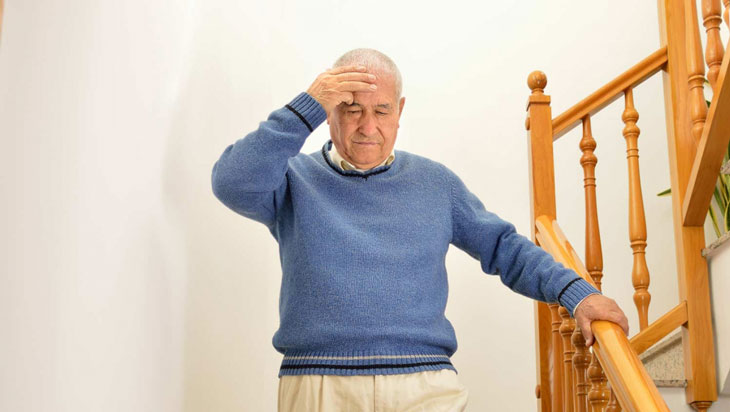
Another common cause of dizziness in older adults is vasomotor dysfunction associated with cerebrovascular insufficiency, particularly involving arteries supplying the cerebellum, such as the vertebrobasilar arterial system. Reduced cerebral perfusion may result from diminished blood flow or vascular obstruction secondary to atherosclerotic disease.
In addition, hypercholesterolemia, especially elevated low density lipoprotein (LDL) cholesterol, increases the risk of atherosclerosis. Progressive arterial narrowing caused by atherosclerotic plaque impairs cerebral blood circulation, thereby contributing to dizziness.
Certain intracranial tumors may also cause dizziness and nausea in older adults, including brain tumors, cerebellar tumors, and vestibulocochlear nerve (cranial nerve VIII) tumors.
Vascular and neoplastic causes of dizziness in the elderly are generally classified as central vestibular disorders.
Furthermore, dizziness in older adults may also occur secondary to foodborne intoxication caused by chemicals or bacterial pathogens. Neurotoxigenic bacteria such as Clostridium botulinum and Staphylococcus aureus, which predominantly affect the central nervous system, may induce dizziness and other neurological manifestations. In some cases, dizziness may also be associated with seasonal weather changes or chronic psychological stress.
Clinical manifestations of dizziness in older adults
Dizziness in older adults commonly occurs during the middle of the night or in the early morning hours. Upon awakening, patients may be unable to sit upright because of lightheadedness, vertigo, nausea, and sometimes vomiting.
Patients often experience unsteadiness, disequilibrium, and a sensation of faintness. Attempting to stand may result in falls or forward collapse, and in some cases, traumatic injuries such as fractures of the ribs, pelvis, upper limbs, or lower limbs may occur.
These symptoms can cause significant discomfort, particularly during positional changes, such as turning from one side to the other, which may precipitate dizziness and nausea.
Mild episodes may be transient, whereas severe cases can prevent any positional movement and may be accompanied by persistent vomiting.
When dizziness in older adults is related to vascular pathology, particularly cerebral circulatory insufficiency or cerebral hypoperfusion, patients may also experience headache, which can occasionally be severe and persistent. Headache is reported in up to 90% of such cases.
Dizziness originating from central nervous system disorders in older adults warrants particular caution. In addition to intracranial tumors, cerebrovascular insufficiency may lead to serious complications, including stroke.
What should older adults do when experiencing dizziness?
When dizziness occurs in older adults, patients should immediately adopt a safe and comfortable resting position, whether lying supine, on the left side, or on the right side, depending on which position provides greater symptom relief. They should avoid attempting to continue walking or working despite the symptoms.

Older adults should avoid sudden positional changes. Transitions from a supine to a lateral position, or from lying down to sitting upright, should be performed slowly and gently. In addition, elderly individuals should avoid exposure to bright light, including direct sunlight or intense artificial lighting, as well as excessive noise and loud environments.
Even when dizziness in older adults is only transient, patients should still seek medical evaluation to determine the underlying cause. Dizziness should never be underestimated, as it may be an early manifestation of serious medical conditions. Depending on the clinical presentation, physicians may recommend appropriate laboratory investigations and imaging studies to establish an accurate diagnosis.
Identifying the underlying etiology is essential for selecting the most appropriate treatment regimen. In addition to pharmacologic therapy, patients are encouraged to engage in regular, gentle exercise performed with correct technique. For example, cervical spine exercises may include slow head rotation to the left and right, backward head extension, and forward flexion. All movements should be performed gradually and carefully, with each exercise session lasting approximately 5 to 10 minutes. Excessively prolonged or high intensity exercise should be avoided.
When dizziness is associated with cerebrovascular insufficiency secondary to hyperlipidemia or hypertension, dietary modification is particularly important. Older adults should increase their intake of green vegetables and fruits, prioritize white meat over red meat, limit consumption of organ meats, and use vegetable oils instead of animal fats. Repeatedly reused cooking oil should also be avoided.
Patients with hypertension should adhere strictly to long term antihypertensive therapy. Medication selection and dosage must be prescribed by a physician, and blood pressure should be monitored regularly, ideally on a daily basis using a validated blood pressure monitor operated by someone trained in proper measurement technique.
Importantly, older adults should undergo routine health examinations on a regular basis and seek cardiovascular assessment whenever symptoms such as chest discomfort or dizziness occur.
Noter: The information provided in this article by Hong Ngoc General Hospital is intended for reference purposes only and does not replace professional medical diagnosis or treatment. Patients should not self medicate under any circumstances. To accurately determine their medical condition, patients are advised to visit a healthcare facility for direct clinical evaluation, diagnosis, and appropriate treatment consultation by a qualified physician.
Follow the official fanpage of Hong Ngoc General Hospital for more useful health related information.