


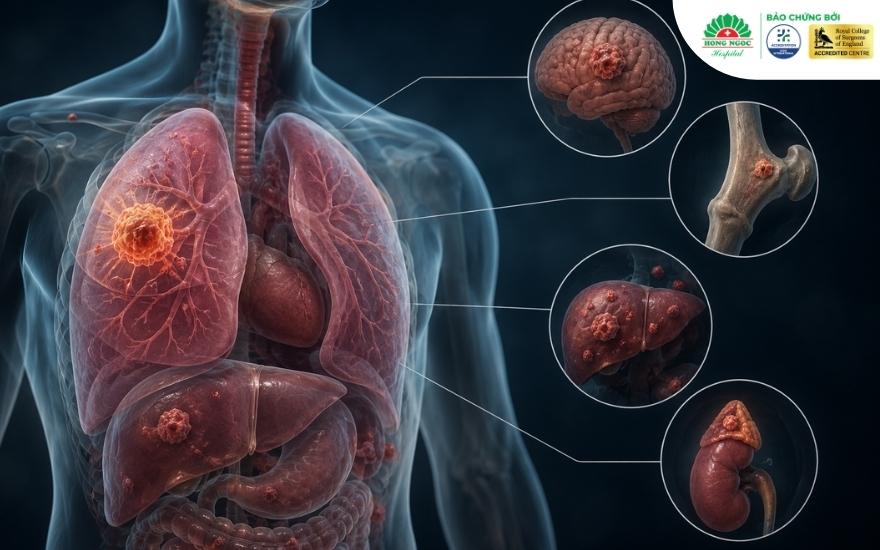
Metastatic lung cancer occurs when cancer cells spread beyond the lungs to other parts of the body and is generally classified as stage IV disease. Common sites of metastasis include the bones, which account for approximately 30% to 40% of cases, as well as the brain, liver and adrenal glands. Recognising abnormal symptoms, accurately assessing the extent of metastasis and selecting an appropriate treatment regimen are essential for controlling the disease, relieving symptoms and improving quality of life.
What is metastatic lung cancer?
Metastatic lung cancer, which is usually classified as stage IV lung cancer, occurs when malignant cells break away from the primary tumour in the lung, travel through the bloodstream or lymphatic system and grow in other parts of the body.
Cancer cells, particularly those originating in the lungs, spread beyond the primary tumour site mainly through two routes:
- Lymphatic spread: Cancer cells invade the mediastinal and supraclavicular lymph nodes before spreading to other parts of the body.
- Haematogenous spread: Cancer cells enter the bloodstream and travel to distant organs.
Signs and symptoms of metastatic lung cancer
At this stage, patients may experience both local symptoms caused by the lung tumour and symptoms related to the organs affected by metastasis.
Lung related symptoms
- A persistent dry or productive cough, coughing up fresh blood or blood stained sputum.
- Increasing shortness of breath, wheezing or severe chest pain when taking a deep breath or coughing.
- Hoarseness caused by tumour compression of the recurrent laryngeal nerve.
General symptoms
Unexplained weight loss of more than 10% of body weight within six months, persistent low grade fever, fatigue and physical deterioration.
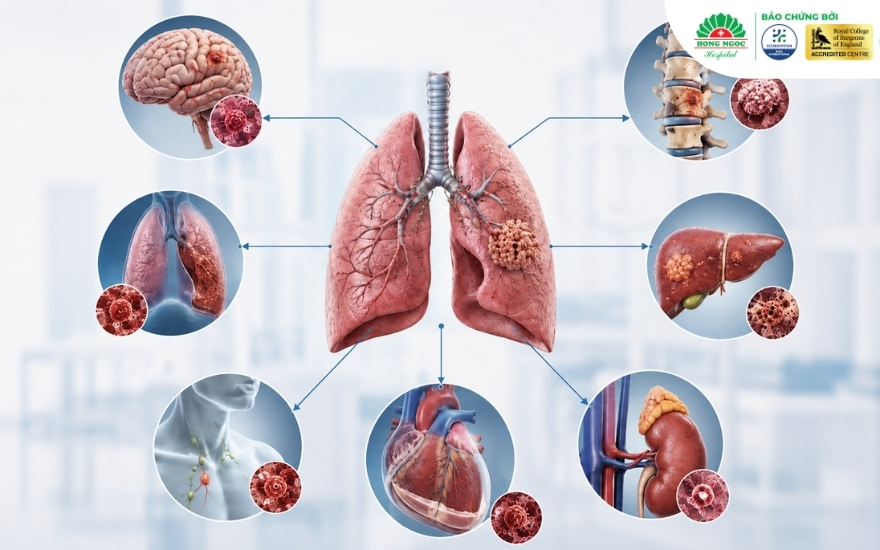
Where can lung cancer spread?
Symptoms vary depending on the organ affected by metastasis:
- Brain metastases: Persistent headaches that may be worse in the morning, nausea, weakness or numbness on one side of the body, seizures, visual disturbances, difficulty speaking or personality changes.
- Bone metastases: Persistent bone pain, particularly in the spine, pelvis or ribs, which may worsen at night or during movement. Patients may also be at risk of pathological fractures following minor trauma or spinal cord compression causing limb weakness or paralysis.
- Liver metastases: Pain or discomfort in the upper right abdomen, loss of appetite, rapid weight loss, fatigue, jaundice and abdominal swelling caused by ascites.
- Adrenal metastases: These often cause no noticeable symptoms in the early stages and are mainly detected through imaging tests such as CT or PET CT scans. Larger tumours may cause pain in the back or flank.
- Pleural or pericardial metastases: Pleural effusion or pericardial effusion may cause severe shortness of breath, chest pain and a persistent cough.
- Supraclavicular or cervical lymph node metastases: Firm, painless lymph nodes may appear in the neck or above the collarbone.
Stages of metastatic lung cancer
The eighth edition of the TNM classification developed by the International Association for the Study of Lung Cancer divides stage IV metastatic lung cancer into the following categories:
STAGE | DISEASE CHARACTERISTICS (TNM, 8th edition) |
| Stage IVA | - M1a: A tumour is present in the opposite lung, or there are pleural or pericardial nodules, or malignant pleural or pericardial effusion is present. |
- M1b: A single metastatic lesion is present in one organ outside the chest, such as a solitary brain metastasis. | |
| Stage IVB | - M1c: Multiple metastatic lesions are present in one or more organs outside the chest. |
Current treatment options for metastatic lung cancer
Treatment for metastatic lung cancer focuses on controlling tumour growth, relieving symptoms and optimising the patient’s quality of life. The choice of treatment and regimen depends on the characteristics of the cancer, the sites of metastasis and the patient’s overall health.
Targeted therapy
Targeted therapy may be indicated for patients with non small cell lung cancer whose tumours carry actionable molecular alterations such as EGFR mutations or ALK and ROS1 rearrangements. Doctors may recommend appropriate molecular biomarker testing to determine whether a patient is eligible for targeted treatment.
These medicines act on specific molecular targets in cancer cells and may provide significant clinical benefits for patients with the corresponding molecular alterations.
Immunotherapy
Lung cancer cells may express proteins such as PD L1, which suppress immune cell activity and help the tumour evade the body’s immune response. Medicines targeting the PD 1 or PD L1 pathways can restore the immune system’s ability to recognise and attack cancer cells.
Immunotherapy may be used alone or in combination with chemotherapy, depending on the type of lung cancer, biomarker results and the patient’s overall condition.
Chemotherapy and palliative radiotherapy
- Chemotherapy: Uses systemic anticancer medicines to destroy cancer cells or slow their growth.
- Radiotherapy: May include radiotherapy to relieve bone pain, whole brain radiotherapy or stereotactic body radiotherapy, also known as SBRT, for suitable lesions.
Surgical interventions
Surgery is not the primary treatment for most cases of metastatic lung cancer. However, in carefully selected situations, surgical intervention may be considered to manage complications or treat localised lesions.
- Pleural drainage or pleurodesis: Used to manage recurrent pleural effusion that causes breathing difficulties.
- Decompression surgery: May be considered when bone metastases cause spinal cord compression or a fracture that threatens neurological function.
- Surgical removal of a solitary metastatic lesion: In selected patients with a single metastasis in the brain or adrenal gland, surgery may be considered alongside definitive treatment of the primary lung tumour.
Note: The treatment plan will be tailored to the stage and characteristics of the cancer, molecular biomarker results such as EGFR, ALK and PD L1 status, the patient’s overall health and individual treatment preferences.
Multidisciplinary diagnosis and treatment of lung cancer at Hong Ngoc General Hospital
Hong Ngoc General Hospital is a trusted provider of care for patients with metastatic lung cancer. Its multidisciplinary team brings together experienced specialists in Oncology, Respiratory Medicine, Thoracic Surgery and Diagnostic Imaging to develop modern treatment strategies aimed at optimising disease control.
The hospital is also equipped with advanced diagnostic technology and internationally compliant operating theatres designed to support accurate and safe surgical interventions. Patients with metastatic lung cancer receive comprehensive care based on personalised treatment plans, with the aim of controlling the disease, relieving symptoms and improving quality of life.

Frequently asked questions about metastatic lung cancer
Below are answers from medical specialists to some common questions raised by patients and their families about metastatic lung cancer.
Can metastatic lung cancer be cured?
Metastatic lung cancer is an advanced stage of the disease. Treatment generally focuses on controlling the cancer, prolonging survival and maintaining quality of life. Each patient responds differently, so the prognosis can vary considerably depending on the type of cancer, its molecular characteristics, the sites of metastasis and the response to treatment.
Advances such as targeted therapy and immunotherapy have made it possible to control advanced lung cancer for extended periods in some patients, helping them maintain a stable quality of life for several years. However, treatment outcomes vary between individuals.
How long can someone live with metastatic lung cancer?
Survival depends on several factors, including the histological type of cancer, the number and location of metastatic sites, the patient’s general health and the response to treatment. There is therefore no single estimate that applies to every patient. An individual prognosis requires a comprehensive assessment by a specialist.
What should patients with metastatic lung cancer eat?
Patients should follow a diet that provides sufficient energy and protein while remaining easy to digest, particularly when cancer or treatment has caused weight loss or muscle wasting.
- High quality protein sources: Poultry, fish such as salmon and mackerel, eggs, tofu, milk and dairy products.
- Fruit and vegetables rich in nutrients and antioxidants: Broccoli, carrots, tomatoes, berries such as strawberries and blueberries, oranges and papaya.
- Complex carbohydrates and healthy fats: Oats, brown rice, sweet potatoes, olive oil, avocados and walnuts.
- Soft or liquid foods: Porridge, soups and oral nutritional supplements may be easier to consume. Dividing food into six to eight small meals a day may also help patients who experience fatigue, shortness of breath or difficulty eating.
Dietary requirements should be adjusted to the patient’s symptoms, nutritional status, treatment plan and any underlying medical conditions.
Are bone metastases from lung cancer dangerous?
The bones are among the most common sites of lung cancer metastasis, accounting for approximately 30% to 40% of cases. Bone metastases can cause serious complications, including severe pain, pathological fractures, high blood calcium levels and spinal cord compression. Without prompt treatment, spinal cord compression may lead to limb weakness or paralysis.
How much does treatment for metastatic lung cancer cost?
The cost of treatment varies according to the prescribed regimen, such as chemotherapy, radiotherapy, targeted therapy or immunotherapy, as well as the number of treatment cycles, required tests, the patient’s condition, treatment duration and the level of coverage provided by public or private health insurance.
Patients should discuss the expected costs directly with their treatment facility once a specific treatment plan has been established.
Conclusion
Although metastatic lung cancer is an advanced disease, developments in modern medicine have expanded treatment options and may help patients control the disease, relieve symptoms and maintain their quality of life. Following the prescribed treatment plan, attending regular follow up appointments and receiving appropriate nutritional support are important throughout the treatment journey.
—--------------------------------------------------------------------------
CTHORACIC SURGERY DEPARTMENT, HONG NGOC GENERAL HOSPITAL
🏆 Accredited by ACHS International for healthcare quality and patient safety
🏆 Recognised by the Royal College of Surgeons of England as an international surgical training centre
Addresses:
- Hong Ngoc Phuc Truong Minh General Hospital: 8 Chau Van Liem Street, Tu Liem Ward, Hanoi
- Hong Ngoc General Hospital: 55 Yen Ninh Street, Ba Dinh Ward, Hanoi
Hotlines: 0912 002 131 and 0949 646 556
Medical disclaimer: The information in this article is provided for general reference only and does not replace medical diagnosis or treatment. Patients and their families should consult a specialist directly for an assessment and an appropriate treatment plan.