

Bronchitis in children can occur year-round but tends to increase significantly during seasonal transitions. The disease may progress to a severe condition if not detected and treated promptly. Parents are therefore advised to equip themselves with adequate knowledge about bronchitis in order to take preventive measures and ensure proper management, thereby safeguarding their child’s health.
What is bronchitis in children?
Bronchitis in children is an acute infection of the lower airways, including the trachea and major bronchi. The inflammation occurs in the bronchial mucosa, leading to swelling and excessive mucus production, which obstruct airflow.
Bronchitis is most common in children between 6 months and 3 years of age. During this stage, the respiratory system is still immature and highly susceptible to infectious agents.
Causes of bronchitis in children
Bronchitis occurs when bacteria or viruses invade the respiratory tract, initially affecting the nose, sinuses, and throat before spreading to the bronchial mucosa, causing inflammation and infection. Common viral and bacterial pathogens include:
Bacteria: Streptococcus pneumoniae, Haemophilus influenzae, Chlamydia pneumoniae, Mycoplasma species, etc.
The most common cause of bronchitis in children is viral infection, with respiratory syncytial virus (RSV) being the leading pathogen. RSV infections often occur in outbreaks during the winter season, particularly among children under 5 years of age.
In addition, bronchitis in children may also result from other pathogenic factors such as fungi, parasites, exposure to tobacco smoke, and polluted environments. Children are also more susceptible to the condition following a common cold or after other respiratory illnesses.
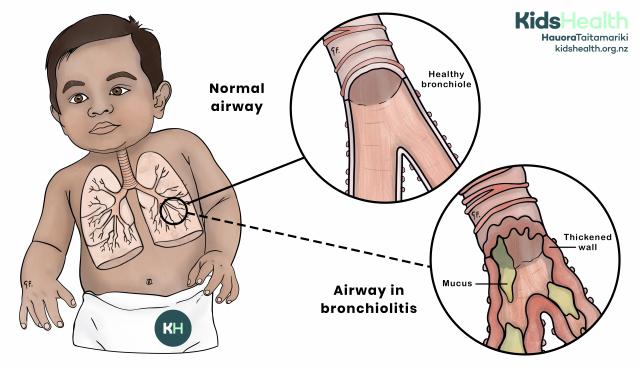
Image of a child’s bronchial tube containing excessive mucus
Symptoms of bronchitis in children
The symptoms of bronchitis may vary depending on the child’s age and the severity of the disease. The following are some typical manifestations:
Dry cough or productive cough, with sputum typically white or yellow in color. During the acute phase, the child’s coughing becomes progressively worse, characterized by persistent and severe episodes, particularly at night.
Breathing difficulties: The child may breathe rapidly or with effort, accompanied by chest retractions and wheezing.
Fever: Initially mild, later progressing to high fever (>39°C).
Nasal congestion and runny nose: Clear discharge or thick yellow/green mucus.
Fatigue and poor feeding: The child may appear drowsy, lethargic, with loss of appetite or refusal to breastfeed.
Other symptoms: Chest tightness, muscle aches, vomiting, and general fatigue

The symptoms of bronchitis may progress from mild to severe, leaving the child fatigued and with a poor appetite.
How is bronchitis different from the common cold?
Both bronchitis and the common cold are respiratory conditions that share several similar symptoms, which often leads to confusion.
The common cold primarily affects the upper respiratory tract (nose and throat) and typically lasts 7–10 days. Symptoms include runny nose, sneezing, sore throat, mild fever, headache, and little to no sputum, often clear in nature.
Bronchitis, on the other hand, is an infection of the bronchial tubes - the airways within the lungs and generally lasts longer than a cold. It is characterized by more severe symptoms such as persistent cough, breathing difficulties, wheezing, high fever, and fatigue.
Diagnostic methods for bronchitis in children
To accurately determine the condition and establish an appropriate treatment plan, physicians will combine clinical examination with paraclinical investigations.
Clinical examination: Physicians will review the child’s medical history, overall health status, presenting symptoms, and the duration of symptom onset. A physical examination is then performed, focusing mainly on the chest to assess for signs of bronchitis. Lung auscultation with a stethoscope is conducted to evaluate breath sounds.
Paraclinical investigations:
Chest X-ray: Helps rule out other conditions such as pneumonia or pleural effusion and assesses the extent of lung damage.
Blood oxygen measurement: Evaluates blood oxygenation levels, particularly in children experiencing breathing difficulties.
Blood tests: Assist in assessing inflammation, infection, and the function of vital organs.
Sputum test: Analyzes sputum samples to identify the causative bacteria or viruses.
Pulmonary function test: Evaluates lung capacity and respiratory function, commonly performed in cases suspected of asthma.
Early diagnosis of bronchitis helps children recover faster
Early consultation at Hong Ngoc, seizing the ‘golden window’ for bronchitis treatment in children
When a child shows early signs of bronchitis, it is important to seek pediatric consultation promptly for accurate diagnosis and timely intervention, helping to shorten the course of treatment and recovery.
With a team of pediatric specialists possessing more than 20 years of experience and guided by the principles of safety, modernity, and convenience, the Pediatrics Department of Hong Ngoc General Hospital is a trusted address for the diagnosis and treatment of bronchitis in children.
1:1 consultation with specialists of over 20 years’ experience: a single visit ensures accurate identification of the underlying cause and close monitoring throughout each child’s treatment process.
Advanced diagnostic systems such as X-ray and CT scanners provide high-resolution, detailed imaging that enables the detection of deep-seated lesions, supporting the examination and diagnostic process.
Treatment protocols follow WHO standards, with antibiotics limited to cases of secondary infection or acute respiratory failure. This approach helps prevent antibiotic resistance and recurrence. Priority is given to combining respiratory physiotherapy, which shortens treatment duration and enhances recovery.
A strict sterilization protocol is applied from the outside in, with patient flow separated in both outpatient clinics and inpatient wards, ensuring safety for children while preventing secondary infections and cross-contamination.
Streamlined examination procedures with minimal waiting time
Five-star amenities: high-quality inpatient rooms, spacious play areas, complimentary buffet vouchers, and more.
Note: The information provided in this article by Hong Ngoc General Hospital is for reference only and should not replace medical diagnosis or treatment. For an accurate assessment of your condition, please visit a hospital for direct examination and consultation with a physician to receive the most appropriate treatment plan.
PEDIATRICS DEPARTMENT - HONG NGOC GENERAL HOSPITAL
- 55 Yen Ninh, Ba Dinh, Hanoi- No. 8 Chau Van Liem, Nam Tu Liem, Hanoi- 3rd Floor, Block B, Tasco Mall, 07–09 Nguyen Van Linh, Long Bien, Hanoi- 10th Floor, Keangnam Landmark 72, Pham Hung, Hanoi- 1st Floor, TNL Plaza Goldseason, 47 Nguyen Tuan, Thanh Xuan, Hanoi- 1st Floor, HPC Landmark 105, To Huu, Ha Dong, Hanoi- 1st–3rd Floors, Kosmo Tay Ho, 161 Xuan La, Bac Tu Liem, HanoiFree consultation and quick appointment booking hotline: 0947.616.006
Bronchitis in children can occur year-round but tends to increase significantly during seasonal transitions. The disease may progress to a severe condition if not detected and treated promptly. Parents are therefore advised to equip themselves with adequate knowledge about bronchitis in order to take preventive measures and ensure proper management, thereby safeguarding their child’s health.
What is bronchitis in children?
Bronchitis in children is an acute infection of the lower airways, including the trachea and major bronchi. The inflammation occurs in the bronchial mucosa, leading to swelling and excessive mucus production, which obstruct airflow.
Bronchitis is most common in children between 6 months and 3 years of age. During this stage, the respiratory system is still immature and highly susceptible to infectious agents.
Causes of bronchitis in children
Bronchitis occurs when bacteria or viruses invade the respiratory tract, initially affecting the nose, sinuses, and throat before spreading to the bronchial mucosa, causing inflammation and infection. Common viral and bacterial pathogens include:
Bacteria: Streptococcus pneumoniae, Haemophilus influenzae, Chlamydia pneumoniae, Mycoplasma species, etc.
The most common cause of bronchitis in children is viral infection, with respiratory syncytial virus (RSV) being the leading pathogen. RSV infections often occur in outbreaks during the winter season, particularly among children under 5 years of age.
In addition, bronchitis in children may also result from other pathogenic factors such as fungi, parasites, exposure to tobacco smoke, and polluted environments. Children are also more susceptible to the condition following a common cold or after other respiratory illnesses.
Image of a child’s bronchial tube containing excessive mucus
Symptoms of bronchitis in children
The symptoms of bronchitis may vary depending on the child’s age and the severity of the disease. The following are some typical manifestations:
Dry cough or productive cough, with sputum typically white or yellow in color. During the acute phase, the child’s coughing becomes progressively worse, characterized by persistent and severe episodes, particularly at night.
Breathing difficulties: The child may breathe rapidly or with effort, accompanied by chest retractions and wheezing.
Fever: Initially mild, later progressing to high fever (>39°C).
Nasal congestion and runny nose: Clear discharge or thick yellow/green mucus.
Fatigue and poor feeding: The child may appear drowsy, lethargic, with loss of appetite or refusal to breastfeed.
Other symptoms: Chest tightness, muscle aches, vomiting, and general fatigue
The symptoms of bronchitis may progress from mild to severe, leaving the child fatigued and with a poor appetite.
How is bronchitis different from the common cold?
Both bronchitis and the common cold are respiratory conditions that share several similar symptoms, which often leads to confusion.
The common cold primarily affects the upper respiratory tract (nose and throat) and typically lasts 7–10 days. Symptoms include runny nose, sneezing, sore throat, mild fever, headache, and little to no sputum, often clear in nature.
Bronchitis, on the other hand, is an infection of the bronchial tubes - the airways within the lungs and generally lasts longer than a cold. It is characterized by more severe symptoms such as persistent cough, breathing difficulties, wheezing, high fever, and fatigue.
Diagnostic methods for bronchitis in children
To accurately determine the condition and establish an appropriate treatment plan, physicians will combine clinical examination with paraclinical investigations.
Clinical examination: Physicians will review the child’s medical history, overall health status, presenting symptoms, and the duration of symptom onset. A physical examination is then performed, focusing mainly on the chest to assess for signs of bronchitis. Lung auscultation with a stethoscope is conducted to evaluate breath sounds.
Paraclinical investigations:
Chest X-ray: Helps rule out other conditions such as pneumonia or pleural effusion and assesses the extent of lung damage.
Blood oxygen measurement: Evaluates blood oxygenation levels, particularly in children experiencing breathing difficulties.
Blood tests: Assist in assessing inflammation, infection, and the function of vital organs.
Sputum test: Analyzes sputum samples to identify the causative bacteria or viruses.
Pulmonary function test: Evaluates lung capacity and respiratory function, commonly performed in cases suspected of asthma.
Early diagnosis of bronchitis helps children recover faster
Early consultation at Hong Ngoc, seizing the ‘golden window’ for bronchitis treatment in children
When a child shows early signs of bronchitis, it is important to seek pediatric consultation promptly for accurate diagnosis and timely intervention, helping to shorten the course of treatment and recovery.
With a team of pediatric specialists possessing more than 20 years of experience and guided by the principles of safety, modernity, and convenience, the Pediatrics Department of Hong Ngoc General Hospital is a trusted address for the diagnosis and treatment of bronchitis in children.
1:1 consultation with specialists of over 20 years’ experience: a single visit ensures accurate identification of the underlying cause and close monitoring throughout each child’s treatment process.
Advanced diagnostic systems such as X-ray and CT scanners provide high-resolution, detailed imaging that enables the detection of deep-seated lesions, supporting the examination and diagnostic process.
Treatment protocols follow WHO standards, with antibiotics limited to cases of secondary infection or acute respiratory failure. This approach helps prevent antibiotic resistance and recurrence. Priority is given to combining respiratory physiotherapy, which shortens treatment duration and enhances recovery.
A strict sterilization protocol is applied from the outside in, with patient flow separated in both outpatient clinics and inpatient wards, ensuring safety for children while preventing secondary infections and cross-contamination.
Streamlined examination procedures with minimal waiting time
Five-star amenities: high-quality inpatient rooms, spacious play areas, complimentary buffet vouchers, and more.
Note: The information provided in this article by Hong Ngoc General Hospital is for reference only and should not replace medical diagnosis or treatment. For an accurate assessment of your condition, please visit a hospital for direct examination and consultation with a physician to receive the most appropriate treatment plan.
PEDIATRICS DEPARTMENT - HONG NGOC GENERAL HOSPITAL
- 55 Yen Ninh, Ba Dinh, Hanoi- No. 8 Chau Van Liem, Nam Tu Liem, Hanoi- 3rd Floor, Block B, Tasco Mall, 07–09 Nguyen Van Linh, Long Bien, Hanoi- 10th Floor, Keangnam Landmark 72, Pham Hung, Hanoi- 1st Floor, TNL Plaza Goldseason, 47 Nguyen Tuan, Thanh Xuan, Hanoi- 1st Floor, HPC Landmark 105, To Huu, Ha Dong, Hanoi- 1st–3rd Floors, Kosmo Tay Ho, 161 Xuan La, Bac Tu Liem, HanoiFree consultation and quick appointment booking hotline: 0947.616.006
Để lại câu hỏi của bạn để nhận được giải đáp từ các bác sĩ của Hồng Ngọc
Lorem ipsum dolor
Lorem ipsum dolor sit amet, consectetur adipiscing elit. Mauris odio lectus, pretium faucibus nisi eu, accumsan consectetur orci. In blandit vehicula nisl, vel lacinia ligula finibus a. Donec fermentum rhoncus