



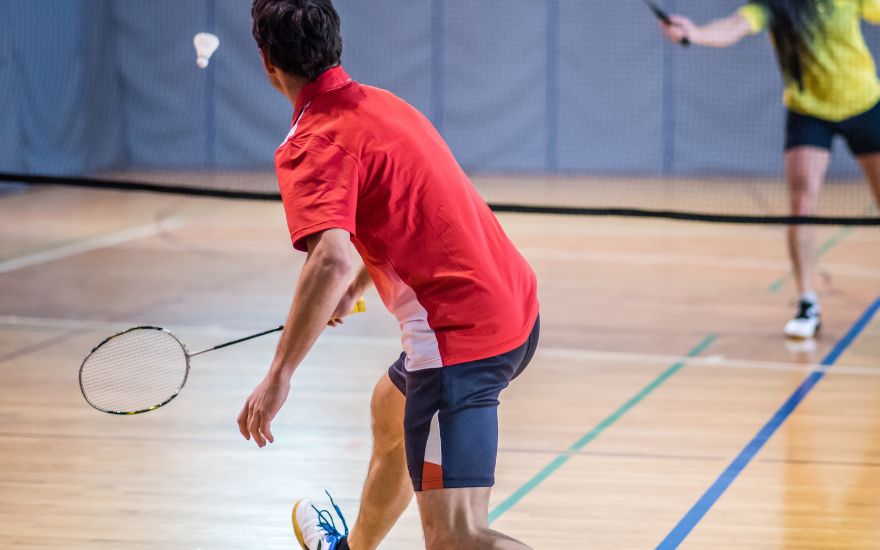
Shoulder pain in badminton players often develops after repetitive shoulder movements, such as racket swings, overhead smashes and raising the arm above the head. Mild pain may occur when the muscles and tendons around the shoulder are subjected to greater stress than they are accustomed to.
However, if the pain persists, the shoulder feels weak or arm elevation becomes difficult, players should seek medical evaluation to identify the underlying cause and receive appropriate rehabilitation.

Medical consultation: Hoang Van Ban, MSc, MD, Department of Orthopaedics, Trauma Surgery and Neurosurgery, Hong Ngoc Phuc Truong Minh General Hospital.
Medical disclaimer: Shoulder pain after playing badminton is not always caused by a rotator cuff injury. Players should not self-diagnose the cause or continue training if shoulder pain, swelling or limited movement occurs after a stroke, impact or fall.
Why does shoulder pain occur after playing badminton?
During a badminton session, the shoulder joint repeatedly performs movements such as arm elevation, shoulder rotation and rapid arm acceleration to raise the racket and hit the shuttlecock. When these movements are repeated excessively or exceed the shoulder’s load capacity, the muscles and tendons around the joint may become overloaded, leading to pain.
Factors that may contribute to shoulder pain after playing badminton include:
- Playing for too long or increasing intensity too quickly: Beginners or players returning after a break may develop shoulder pain if they rapidly increase the number of sessions, playing duration or frequency of smashes.
- Repeated overhead shots: These movements require continuous arm elevation and rotation. Excessive repetition can place stress on the muscles and tendons around the shoulder.
- Incorrect playing technique: Excessive arm swing or relying too much on shoulder force can increase stress on the shoulder joint.
- Weak shoulder muscles: When the rotator cuff muscles and scapular stabilizing muscles are not strong enough, the shoulder may have reduced stability during racket swings and shuttlecock hits.
- Falls or impacts: Falling onto the arm, landing on the shoulder or colliding with another player can injure the muscles, tendons, ligaments or shoulder joint.
A proper warm-up helps the muscles and shoulder joint gradually adapt before playing, but it cannot completely eliminate the risk of injury. If pain consistently occurs after a specific movement or after a certain duration of play, players should review their technique, shoulder muscle strength and training progression rather than simply extending warm-up time.

Common injuries that can cause shoulder pain in badminton players
Pain after playing badminton alone is not enough to determine which shoulder structures are affected. Physicians assess the location of pain, movements that worsen symptoms, arm strength and the timing of symptom onset to identify the underlying cause.
Rotator cuff injuries
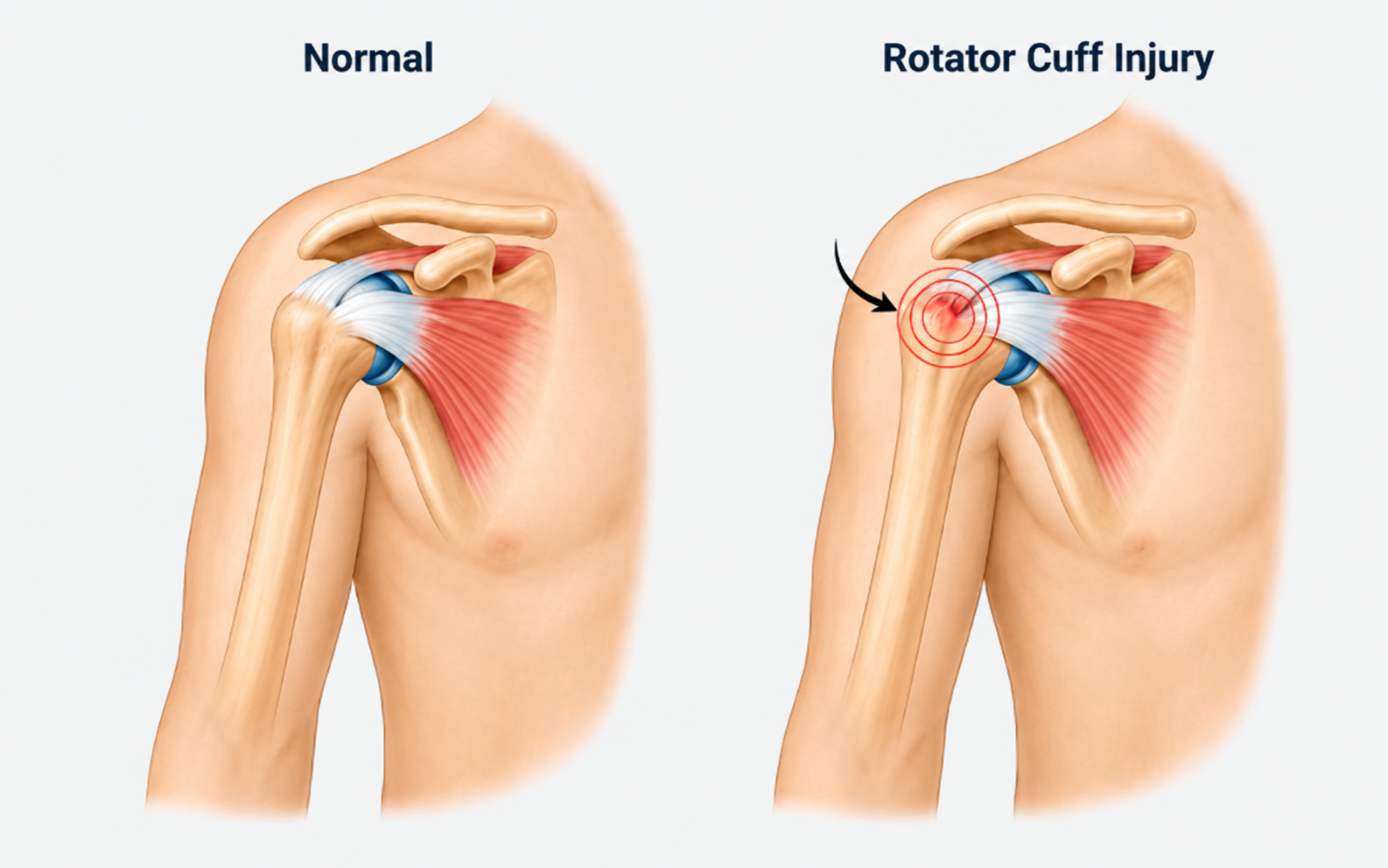
The rotator cuff consists of muscles and tendons that help stabilize the shoulder joint and support arm elevation and rotation. Repeated overhead movements can irritate the rotator cuff tendons, causing pain around the shoulder or the outer side of the upper arm, especially when raising the arm, performing smashes or lying on the affected side.
Players may experience faster shoulder fatigue, difficulty performing powerful smashes as before or pain when lowering the arm. If the shoulder becomes noticeably weak or arm elevation is difficult after an injury, players should seek medical evaluation to assess possible rotator cuff damage.
Pain below the acromion
The rotator cuff tendons and the bursa are located beneath the acromion. When these structures become irritated, players may experience pain when raising the arm overhead, performing smashes or making overhead shots. Pain is often more noticeable when the arm reaches a certain position.
Rotator cuff tendinitis, bursitis and shoulder impingement can present with similar symptoms, making them difficult to distinguish based on pain alone. If pain persists or limits shoulder movement, players should seek medical evaluation to identify the cause and receive appropriate treatment.
Muscle strains, ligament injuries or trauma after falls
Powerful racket swings can strain the muscles around the shoulder. Meanwhile, falls or collisions may injure the ligaments, affect the acromioclavicular (AC) joint or compromise shoulder stability. Pain usually appears immediately after the injury and may be accompanied by swelling, bruising or difficulty moving the shoulder.
If the shoulder appears deformed, becomes significantly swollen or the player cannot raise the arm after a fall, they should not attempt to pull, manipulate or forcefully rotate the shoulder. These may be signs of dislocation, fracture or injury to the tendons and ligaments, requiring prompt medical evaluation.

How should shoulder pain after playing badminton be managed?
When shoulder pain develops, players should reduce or temporarily stop movements that worsen the pain, particularly powerful smashes and overhead shots. If the shoulder remains mobile and there are no signs of a serious injury, they may continue daily activities at a comfortable level.
During the first few days, the following measures may be helpful:
- Reduce playing intensity: Limit strokes that aggravate shoulder pain and shorten playing sessions.
- Apply a cold pack: Wrap the cold pack in a towel and apply it to the painful area for 15–20 minutes at a time. Do not place ice directly on the skin.
- Maintain gentle shoulder movement: Perform simple movements as long as they do not significantly worsen the pain.
- Avoid strenuous exercise: Temporarily avoid weights, resistance bands and exercises involving repeated arm elevation while the shoulder remains painful.
- Do not self-medicate with prescription drugs: Medications and interventional treatments should only be used as directed by a physician.
Signs that indicate the need for early medical evaluation
Players should seek medical evaluation if pain becomes progressively worse, does not improve after approximately 2 weeks, or begins to interfere with arm elevation and daily activities. Continuing to play while the shoulder remains weak or painful during overhead movements may prolong the recovery process.
Early assessment is recommended if the following signs appear:
- Severe pain immediately after a stroke, impact or fall.
- Inability to raise or move the arm.
- Significant shoulder swelling, bruising or changes in shape.
- Noticeable weakness in one arm compared with the other.
- Numbness, loss of sensation or persistent abnormal sensations extending down the arm.
- Shoulder pain accompanied by fever, fatigue or feeling unwell.
These symptoms alone are not enough to determine whether there is a tendon tear, dislocation or fracture at home. Patients should undergo direct medical evaluation and diagnostic imaging when clinically indicated.

Evaluation and treatment of shoulder pain at Hong Ngoc Phuc Truong Minh General Hospital
Badminton players experiencing persistent shoulder pain, difficulty raising the arm, pain during overhead shots or reduced arm strength should seek medical evaluation to determine the extent of injury.
At the Department of Orthopaedics, Trauma Surgery and Neurosurgery, Hong Ngoc Phuc Truong Minh General Hospital, physicians assess pain location, arm elevation and rotation, shoulder muscle strength and joint stability to develop an appropriate treatment plan.
For patients requiring improvement in mobility and strength, rehabilitation after sports injuries is provided in coordination with the Department of Physiotherapy and Rehabilitation. Exercise programs are tailored to each recovery stage, focusing on restoring range of motion, strength and shoulder control.
For badminton players, rehabilitation also focuses on gradually returning to overhead movements, racket swings and smashes before returning to the court.

Frequently asked questions about shoulder pain when playing badminton
How long does shoulder pain after playing badminton usually last?
If the pain is mild and caused by the shoulder being used more than usual, symptoms may improve with rest and reduced playing intensity. However, if pain persists for several days, recurs after each badminton session or becomes progressively worse, players should seek medical evaluation to identify the underlying cause.
Should I continue playing badminton if my shoulder hurts?
When shoulder pain is present, players should temporarily stop or reduce playing time and avoid powerful smashes or overhead shots. They can gradually return to training once the pain has improved, shoulder movement has recovered and activities no longer cause discomfort.
When should shoulder pain be evaluated by a doctor?
Medical evaluation is recommended if pain persists, arm elevation becomes difficult, arm strength decreases or symptoms affect daily activities. Severe pain after a fall or impact, accompanied by swelling, bruising or inability to raise the arm, should be assessed promptly.
Conclusion
Shoulder pain in badminton players is often related to repetitive overhead movements, powerful strokes or activity levels that exceed the shoulder’s accustomed capacity. Players should reduce painful movements and gradually restore shoulder strength. If pain persists, significant weakness develops, arm elevation becomes difficult or severe pain occurs after a fall or impact, medical evaluation is recommended to identify the injury before returning to the court.
References
- Desmeules F, et al. Rotator Cuff Tendinopathy Diagnosis, Nonsurgical Medical Care, and Rehabilitation: A Clinical Practice Guideline. Journal of Orthopaedic & Sports Physical Therapy. 2025.
- American Academy of Orthopaedic Surgeons. Shoulder Impingement/Rotator Cuff Tendinitis.
- American Academy of Orthopaedic Surgeons. Rotator Cuff Tears.
- NHS. Shoulder pain.
- Schwank A, et al. 2022 Bern Consensus Statement on Shoulder Injury Prevention, Rehabilitation, and Return to Sport for Athletes at All Participation Levels. Journal of Orthopaedic & Sports Physical Therapy.