
Avascular necrosis of the femoral head is a serious condition that may lead to disability. However, its symptoms are often vague, making early detection difficult and easily mistaken for other conditions such as hip osteoarthritis. The following article will provide a clearer understanding of avascular necrosis of the femoral head.
What is avascular necrosis of the femoral head?
The femoral head is part of the hip joint, shaped like two-thirds of a sphere, oriented upward and inward.
Avascular necrosis of the femoral head occurs when blood supply to this area is reduced or cut off, leading to bone tissue death and resorption. In the early stages, the bone becomes increasingly porous with small cavities forming. As the disease progresses, subchondral bone damage develops, and in the final stage, collapse of the femoral head occurs, resulting in hip joint dysfunction and potentially permanent disability.
Because the condition is not caused by bacterial infection, it is also referred to as aseptic necrosis of the femoral head.
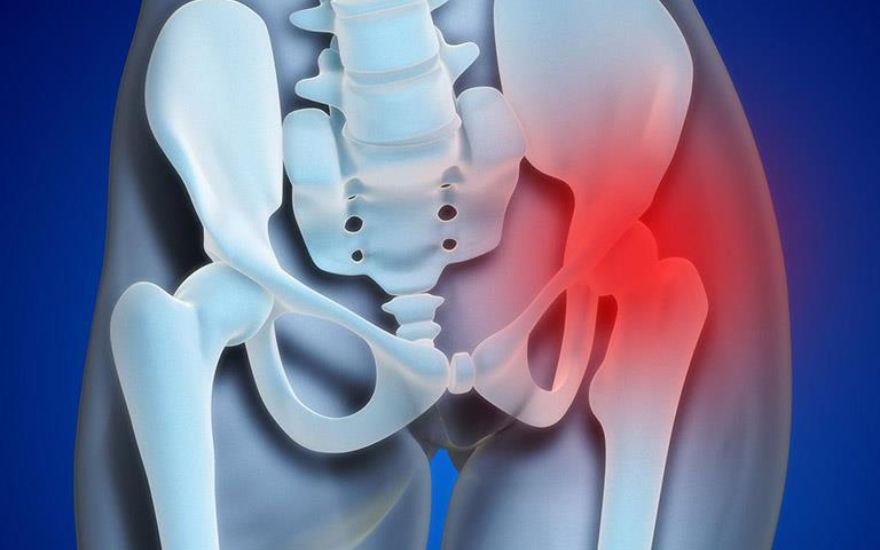
Avascular necrosis of the femoral head is a condition in which the blood supply to the femoral head is reduced or interrupted.
Symptoms of avascular necrosis of the femoral head
In the early stages, symptoms are often subtle and difficult to detect, making early diagnosis challenging. Common signs include:
Hip pain: Pain arises on the affected side, radiating from the inner groin to the inner thigh. Some patients may also experience pain in the buttocks or knee. Pain can occur in one or both hips, worsening with physical activity (walking, standing for long periods) and subsiding with rest.
Restricted mobility: Hip pain limits movement, especially internal and external rotation, abduction, and adduction. Patients often find it difficult or impossible to squat.
Advanced stages: Pain intensifies, and patients may lose nearly all hip joint function, including flexion, extension, rotation, and sitting.
Avascular necrosis of the femoral head is a dangerous complication; therefore, early detection and timely intervention are essential to prevent disability.
Several factors contribute to the development of avascular necrosis of the femoral head, including:
Trauma: Injuries such as hip dislocation or femoral neck fracture can disrupt blood supply to the hip joint, leading to necrosis. This condition is not dependent on age or gender and often develops gradually, sometimes appearing around two years after the initial injury.
Substance use (alcohol, tobacco): One of the leading causes. Alcohol and tobacco cause chronic vascular damage, promote fat accumulation, block small blood vessels, and reduce blood flow to the femoral head, resulting in necrosis.
Long-term corticosteroid use: Prolonged use of corticosteroids increases the risk of bone necrosis.
Underlying medical conditions: Disorders such as hypercoagulability and spontaneous thrombosis, autoimmune diseases (e.g., rheumatoid arthritis, systemic lupus erythematosus), chronic conditions (e.g., hypertension, diabetes), and occupational factors (e.g., miners, divers) may all contribute.
Related risk factors: Age and gender also influence the risk. The likelihood of avascular necrosis increases with age, and men are generally more susceptible than women.

Age is also a contributing factor to avascular necrosis of the femoral head.
Treatment methods for avascular necrosis of the femoral head
Depending on the stage of the disease and the patient’s overall health, physicians will recommend appropriate treatment options tailored to specific goals:
Early stage: The main objective is conservative treatment, which may include medications to relieve pain, improve symptoms, and slow disease progression. If these measures are ineffective and pain significantly impacts quality of life, interventional procedures such as core decompression or drilling to reduce pressure in the femoral head may be considered.
Stage with subchondral fracture: The focus is on symptom relief, functional recovery, and adapting activity levels. Surgical methods may be considered, such as removal of necrotic bone with bone grafting, femoral head rotation, or corrective osteotomy.
Advanced stage (collapse of the femoral head, secondary osteoarthritis): Partial or total hip replacement may be indicated to address symptoms and restore mobility.
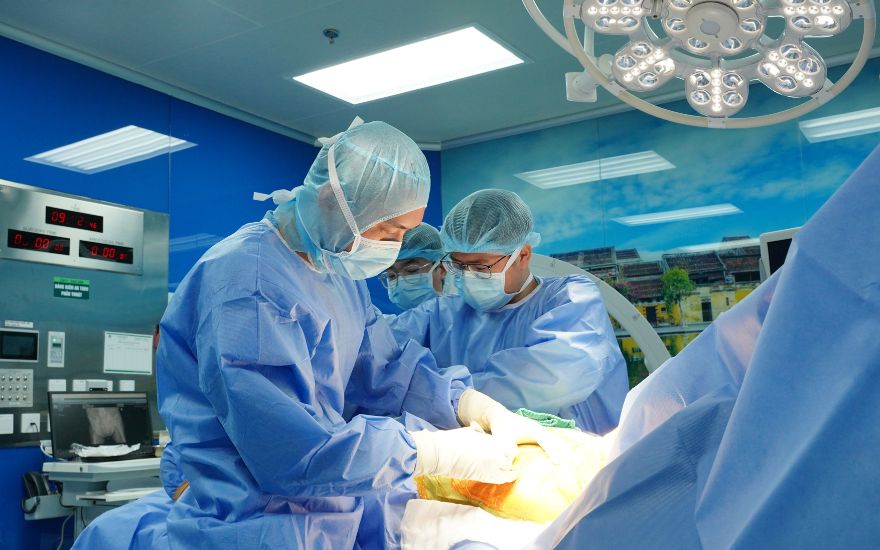
Partial hip replacement surgery at Hong Ngoc General Hospital
Hong Ngoc General Hospital is a trusted destination for the diagnosis and treatment of avascular necrosis of the femoral head, highly regarded by patients for both medical expertise and service quality.
A team of highly experienced physicians, many of whom have studied and trained at leading hospitals and medical universities in Vietnam and abroad, such as Viet Duc Hospital and Hanoi Medical University.
Application of multimodal pain management techniques, helping patients experience less pain and enabling early mobilization as soon as one day after surgery.
Advanced surgical techniques widely adopted worldwide, offering numerous advantages: preservation of muscles and tendons, ability to walk the day after surgery, and restoration of a natural gait.
Personalized postoperative rehabilitation programs designed to prevent muscle atrophy and joint stiffness.
Access to top-tier facilities in Northern Vietnam, including FDA-standard sterile operating rooms that minimize infection risk, comfortable inpatient rooms, and 24/7 nursing support.
If you experience persistent hip pain or difficulty moving your hip joint, it is important to seek evaluation at specialized medical centers in musculoskeletal and orthopedic trauma to prevent the risk of femoral head necrosis.
For specialized consultation on the treatment of avascular necrosis of the femoral head or hip replacement surgery at Hong Ngoc General Hospital, please contact our hotline at 0912002131 for timely support.
Note: The information provided in this article by Hong Ngoc General Hospital is for reference only and is not a substitute for professional medical diagnosis or treatment. Patients should not self-medicate. For an accurate assessment of your condition, please visit the hospital for direct examination, diagnosis, and a personalized treatment plan by a physician.
Follow the official fanpage of Hong Ngoc General Hospital for more useful health information and updates on special promotions: https://www.facebook.com/BenhvienHongNgoc
Avascular necrosis of the femoral head is a serious condition that may lead to disability. However, its symptoms are often vague, making early detection difficult and easily mistaken for other conditions such as hip osteoarthritis. The following article will provide a clearer understanding of avascular necrosis of the femoral head.
What is avascular necrosis of the femoral head?
The femoral head is part of the hip joint, shaped like two-thirds of a sphere, oriented upward and inward.
Avascular necrosis of the femoral head occurs when blood supply to this area is reduced or cut off, leading to bone tissue death and resorption. In the early stages, the bone becomes increasingly porous with small cavities forming. As the disease progresses, subchondral bone damage develops, and in the final stage, collapse of the femoral head occurs, resulting in hip joint dysfunction and potentially permanent disability.
Because the condition is not caused by bacterial infection, it is also referred to as aseptic necrosis of the femoral head.
Avascular necrosis of the femoral head is a condition in which the blood supply to the femoral head is reduced or interrupted.
Symptoms of avascular necrosis of the femoral head
In the early stages, symptoms are often subtle and difficult to detect, making early diagnosis challenging. Common signs include:
Hip pain: Pain arises on the affected side, radiating from the inner groin to the inner thigh. Some patients may also experience pain in the buttocks or knee. Pain can occur in one or both hips, worsening with physical activity (walking, standing for long periods) and subsiding with rest.
Restricted mobility: Hip pain limits movement, especially internal and external rotation, abduction, and adduction. Patients often find it difficult or impossible to squat.
Advanced stages: Pain intensifies, and patients may lose nearly all hip joint function, including flexion, extension, rotation, and sitting.
Avascular necrosis of the femoral head is a dangerous complication; therefore, early detection and timely intervention are essential to prevent disability.
Several factors contribute to the development of avascular necrosis of the femoral head, including:
Trauma: Injuries such as hip dislocation or femoral neck fracture can disrupt blood supply to the hip joint, leading to necrosis. This condition is not dependent on age or gender and often develops gradually, sometimes appearing around two years after the initial injury.
Substance use (alcohol, tobacco): One of the leading causes. Alcohol and tobacco cause chronic vascular damage, promote fat accumulation, block small blood vessels, and reduce blood flow to the femoral head, resulting in necrosis.
Long-term corticosteroid use: Prolonged use of corticosteroids increases the risk of bone necrosis.
Underlying medical conditions: Disorders such as hypercoagulability and spontaneous thrombosis, autoimmune diseases (e.g., rheumatoid arthritis, systemic lupus erythematosus), chronic conditions (e.g., hypertension, diabetes), and occupational factors (e.g., miners, divers) may all contribute.
Related risk factors: Age and gender also influence the risk. The likelihood of avascular necrosis increases with age, and men are generally more susceptible than women.
Age is also a contributing factor to avascular necrosis of the femoral head.
Treatment methods for avascular necrosis of the femoral head
Depending on the stage of the disease and the patient’s overall health, physicians will recommend appropriate treatment options tailored to specific goals:
Early stage: The main objective is conservative treatment, which may include medications to relieve pain, improve symptoms, and slow disease progression. If these measures are ineffective and pain significantly impacts quality of life, interventional procedures such as core decompression or drilling to reduce pressure in the femoral head may be considered.
Stage with subchondral fracture: The focus is on symptom relief, functional recovery, and adapting activity levels. Surgical methods may be considered, such as removal of necrotic bone with bone grafting, femoral head rotation, or corrective osteotomy.
Advanced stage (collapse of the femoral head, secondary osteoarthritis): Partial or total hip replacement may be indicated to address symptoms and restore mobility.
Partial hip replacement surgery at Hong Ngoc General Hospital
Hong Ngoc General Hospital is a trusted destination for the diagnosis and treatment of avascular necrosis of the femoral head, highly regarded by patients for both medical expertise and service quality.
A team of highly experienced physicians, many of whom have studied and trained at leading hospitals and medical universities in Vietnam and abroad, such as Viet Duc Hospital and Hanoi Medical University.
Application of multimodal pain management techniques, helping patients experience less pain and enabling early mobilization as soon as one day after surgery.
Advanced surgical techniques widely adopted worldwide, offering numerous advantages: preservation of muscles and tendons, ability to walk the day after surgery, and restoration of a natural gait.
Personalized postoperative rehabilitation programs designed to prevent muscle atrophy and joint stiffness.
Access to top-tier facilities in Northern Vietnam, including FDA-standard sterile operating rooms that minimize infection risk, comfortable inpatient rooms, and 24/7 nursing support.
If you experience persistent hip pain or difficulty moving your hip joint, it is important to seek evaluation at specialized medical centers in musculoskeletal and orthopedic trauma to prevent the risk of femoral head necrosis.
For specialized consultation on the treatment of avascular necrosis of the femoral head or hip replacement surgery at Hong Ngoc General Hospital, please contact our hotline at 0912002131 for timely support.
Note: The information provided in this article by Hong Ngoc General Hospital is for reference only and is not a substitute for professional medical diagnosis or treatment. Patients should not self-medicate. For an accurate assessment of your condition, please visit the hospital for direct examination, diagnosis, and a personalized treatment plan by a physician.
Follow the official fanpage of Hong Ngoc General Hospital for more useful health information and updates on special promotions: https://www.facebook.com/BenhvienHongNgoc
Để lại câu hỏi của bạn để nhận được giải đáp từ các bác sĩ của Hồng Ngọc
Lorem ipsum dolor
Lorem ipsum dolor sit amet, consectetur adipiscing elit. Mauris odio lectus, pretium faucibus nisi eu, accumsan consectetur orci. In blandit vehicula nisl, vel lacinia ligula finibus a. Donec fermentum rhoncus