
Achilles tendonitis is a common injury that occurs at the heel, causing pain, restricted movement, and difficulty in daily activities. Patients with Achilles tendon inflammation should receive proper and timely treatment to prevent serious complications.
What is Achilles tendonitis?
The Achilles tendon is formed by the merging of the gastrocnemius and soleus muscles, playing an essential role in nearly all lower limb movements such as running, jumping, and walking. Due to its constant exposure to high levels of tension and repetitive stress, the tendon is highly susceptible to injury.
Achilles tendonitis (also known as heel tendon inflammation) occurs when the tendon is overloaded by excessive force or pressure, leading to inflammation and damage in the heel area. The Achilles tendon has limited blood supply, and its insertion — located about 3–6 cm above the heel bone — is composed of numerous small tendon fibers, making it vulnerable even to sudden or minor impacts.
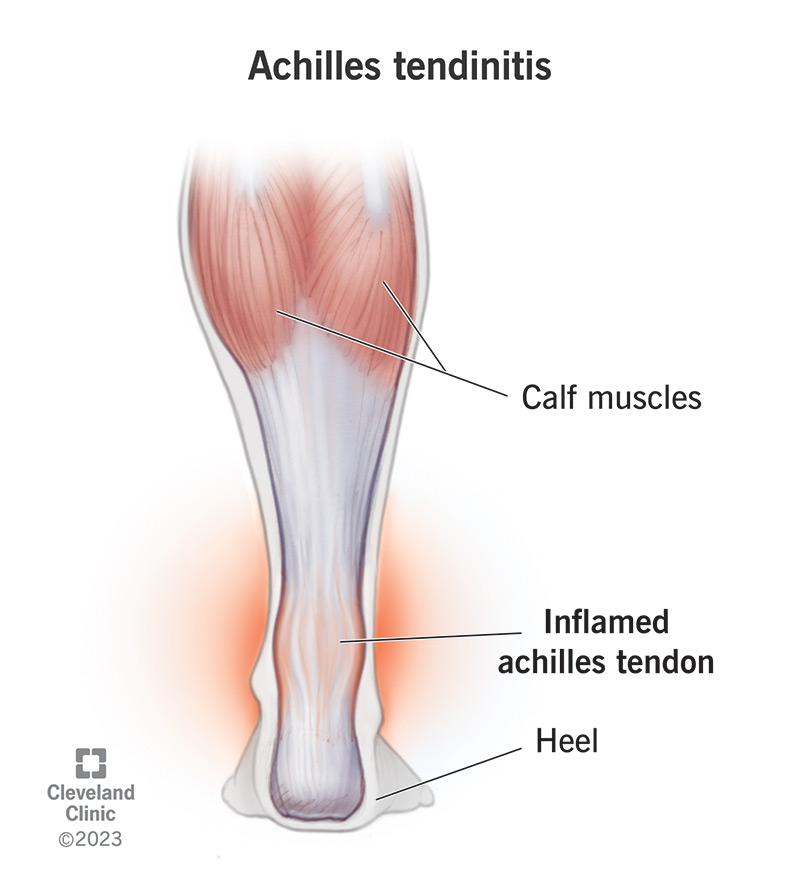
Achilles tendon fiber inflammation is a common type of injury.
According to researchers, Achilles tendonitis is divided into two types:
Insertional Achilles tendonitis: occurs when inflammation affects the lower end of the tendon — the area where the tendon attaches to the heel bone.
Non-insertional (mid-portion) Achilles tendonitis: can occur at any point along the tendon other than its insertion into the heel bone. This type is more common among younger, physically active individuals.
Causes of Achilles tendonitis
There are several causes of Achilles tendonitis, which can be categorized into subjective (internal) and objective (external) factors:
Subjective causes: Athletes or individuals who do not follow proper training routines, skip warm-up sessions, or perform incorrect stretching techniques may experience muscle strain leading to inflammation. Sudden movements or abrupt changes in posture that the body is not prepared for can also cause injury. Additionally, wearing footwear that is too tight or too loose, or not suitable for foot size and shape, increases the risk of Achilles tendon inflammation.
Objective causes: Older adults are more prone to Achilles tendonitis because the tendon is composed mainly of collagen, which decreases with age, reducing elasticity and making connective tissues more susceptible to injury. Other risk factors include flat feet, sports or occupational injuries, underlying musculoskeletal or dermatological conditions such as psoriasis, obesity, and ankle weakness — all of which can contribute to the development of Achilles tendonitis.

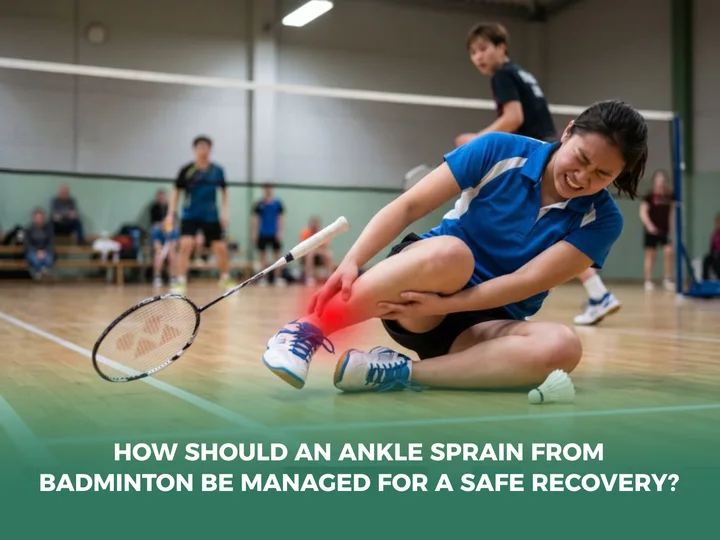
Athletes are among the most susceptible to injuries that can lead to Achilles tendonitis.
Symptoms of Achilles tendonitis
Patients with Achilles tendonitis may recognize the condition through the following symptoms:
Stiffness or burning pain in the lower calf area
Sharp or aching pain around the heel, especially when stretching the heel or bearing weight on the toes
Persistent pain, swelling, or tenderness around the heel accompanied by heel stiffness
A snapping or popping sound may be heard in the affected tendon area
Partial or complete tendon rupture, leading to significant difficulty in movement or walking
Pain tends to be more noticeable in the morning
When these symptoms occur, patients should promptly visit a medical facility for examination, diagnosis, and timely treatment by a qualified physician.
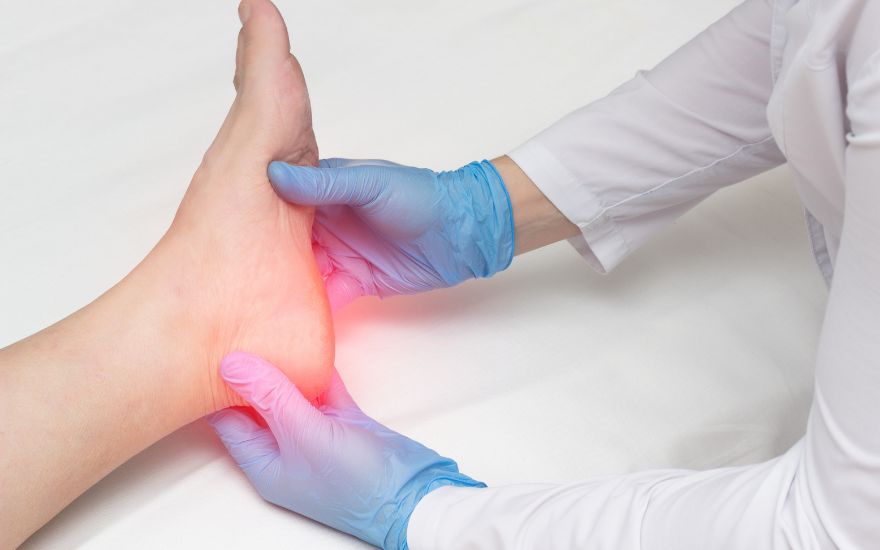
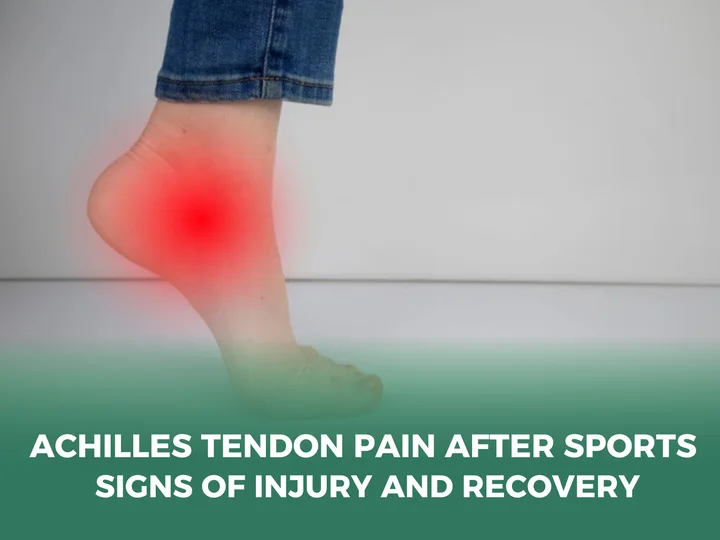
Achilles tendonitis causes pain and soreness in the heel area.
Treatment and prevention of Achilles tendonitis
Treatment of Achilles tendonitis
To treat Achilles tendonitis effectively, doctors will evaluate the symptoms, identify the injury site, and perform diagnostic tests such as X-rays to assess the foot and heel structure, detect complications, and rule out other causes of pain; and MRI scans to visualize the tendon and locate the exact area of damage. Based on the results, the doctor will make a diagnosis and prescribe an appropriate treatment plan.
In most mild cases, Achilles tendonitis can heal with proper rest and care. Allowing the body to rest helps reduce pressure on the heel bone, promote tendon recovery, and relieve pain. For mild pain, patients may apply ice, use compression bandages or knee braces to stabilize the injured area, and elevate the affected leg to improve circulation and reduce swelling. In addition, physical therapy under professional supervision may be recommended to restore movement, strengthen the muscles around the tendon, and accelerate healing.
When conservative treatment is ineffective, or in cases of complete tendon rupture or risk of rupture, surgery may be required. Surgical repair aims to reconnect the torn tendon fibers, restore tendon continuity, and help patients regain normal mobility and function.
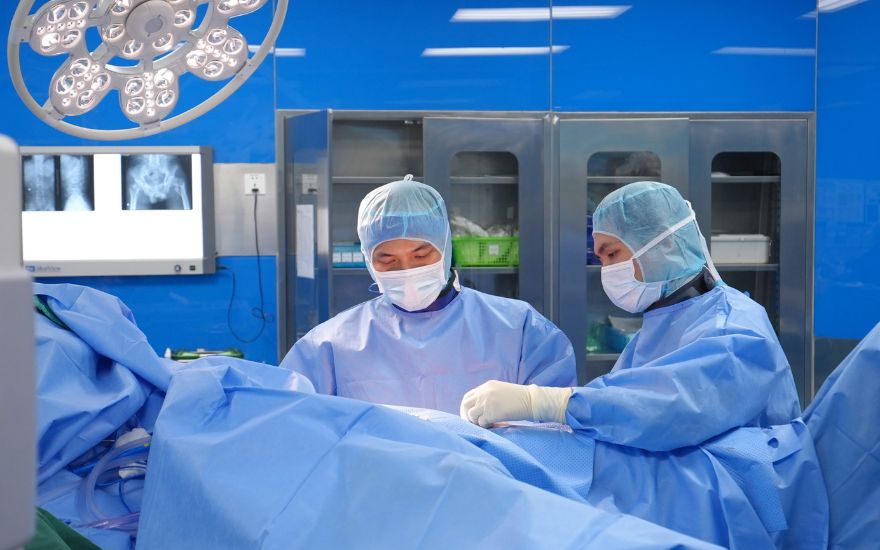
Surgical treatment for Achilles tendonitis at Hong Ngoc General Hospital
In Hanoi, Hong Ngoc General Hospital is a trusted medical facility chosen by many patients for the examination and treatment of Achilles tendonitis due to the following strengths:
A team of highly qualified doctors trained in France, Japan, Australia, and other countries, with extensive expertise and experience in the treatment and surgical management of tendon disorders.
Application of advanced and safe treatment methods, including platelet-rich plasma (PRP) injections and physical therapy, which help relieve pain and accelerate functional recovery.
Minimally invasive surgical techniques with small incisions, minimal bleeding and swelling, faster wound healing, and quick rehabilitation.
Implementation of a comprehensive anesthesia and pain management protocol before, during, and after surgery to ensure patient safety, combined with an intensive rehabilitation program that enhances circulation and speeds up recovery.
State-of-the-art medical equipment imported from the UK, the US, and Germany, ensuring precision and safety in every procedure.
Accreditation by the Royal College of Surgeons of England (RCS), confirming the hospital’s compliance with global surgical standards.
A comprehensive postoperative care and rehabilitation system that supports rapid recovery of mobility and overall health.
Insurance coverage and direct billing support, along with 5-star hospital-hotel services, providing comfort and convenience throughout the treatment and recovery process.
Prevention of Achilles tendonitis
To reduce the risk of Achilles tendon injuries, patients should pay attention to the following lifestyle and exercise recommendations:
Warm up thoroughly before engaging in exercise or sports activities.
Allow adequate rest and relaxation after training sessions.
Choose appropriate sportswear and footwear suitable for the specific activity.
Avoid sudden increases in exercise intensity that may overload the heel and tendon.
Avoid running or jumping on uneven, slippery, or unstable surfaces.
Use protective gear when participating in sports or working in high-risk environments.
Maintain a healthy lifestyle with a balanced diet, regular exercise, and sufficient rest.
When experiencing any symptoms of Achilles tendonitis, patients should visit a reputable medical facility for timely examination, diagnosis, and treatment. For consultation and treatment of Achilles tendonitis, please contact the Department of Musculoskeletal Medicine – Hong Ngoc General Hospital at Hotline: 0889 621 046 to receive care from our experienced specialists.
Note: The information provided in this article by Hong Ngoc General Hospital is for reference only and should not replace professional medical diagnosis or treatment. Patients are advised not to self-medicate. To accurately determine your condition, please visit the hospital for direct examination, diagnosis, and appropriate treatment planning by a qualified physician.
Achilles tendonitis is a common injury that occurs at the heel, causing pain, restricted movement, and difficulty in daily activities. Patients with Achilles tendon inflammation should receive proper and timely treatment to prevent serious complications.
What is Achilles tendonitis?
The Achilles tendon is formed by the merging of the gastrocnemius and soleus muscles, playing an essential role in nearly all lower limb movements such as running, jumping, and walking. Due to its constant exposure to high levels of tension and repetitive stress, the tendon is highly susceptible to injury.
Achilles tendonitis (also known as heel tendon inflammation) occurs when the tendon is overloaded by excessive force or pressure, leading to inflammation and damage in the heel area. The Achilles tendon has limited blood supply, and its insertion — located about 3–6 cm above the heel bone — is composed of numerous small tendon fibers, making it vulnerable even to sudden or minor impacts.
Achilles tendon fiber inflammation is a common type of injury.
According to researchers, Achilles tendonitis is divided into two types:
Insertional Achilles tendonitis: occurs when inflammation affects the lower end of the tendon — the area where the tendon attaches to the heel bone.
Non-insertional (mid-portion) Achilles tendonitis: can occur at any point along the tendon other than its insertion into the heel bone. This type is more common among younger, physically active individuals.
Causes of Achilles tendonitis
There are several causes of Achilles tendonitis, which can be categorized into subjective (internal) and objective (external) factors:
Subjective causes: Athletes or individuals who do not follow proper training routines, skip warm-up sessions, or perform incorrect stretching techniques may experience muscle strain leading to inflammation. Sudden movements or abrupt changes in posture that the body is not prepared for can also cause injury. Additionally, wearing footwear that is too tight or too loose, or not suitable for foot size and shape, increases the risk of Achilles tendon inflammation.
Objective causes: Older adults are more prone to Achilles tendonitis because the tendon is composed mainly of collagen, which decreases with age, reducing elasticity and making connective tissues more susceptible to injury. Other risk factors include flat feet, sports or occupational injuries, underlying musculoskeletal or dermatological conditions such as psoriasis, obesity, and ankle weakness — all of which can contribute to the development of Achilles tendonitis.
Athletes are among the most susceptible to injuries that can lead to Achilles tendonitis.
Symptoms of Achilles tendonitis
Patients with Achilles tendonitis may recognize the condition through the following symptoms:
Stiffness or burning pain in the lower calf area
Sharp or aching pain around the heel, especially when stretching the heel or bearing weight on the toes
Persistent pain, swelling, or tenderness around the heel accompanied by heel stiffness
A snapping or popping sound may be heard in the affected tendon area
Partial or complete tendon rupture, leading to significant difficulty in movement or walking
Pain tends to be more noticeable in the morning
When these symptoms occur, patients should promptly visit a medical facility for examination, diagnosis, and timely treatment by a qualified physician.
Achilles tendonitis causes pain and soreness in the heel area.
Treatment and prevention of Achilles tendonitis
Treatment of Achilles tendonitis
To treat Achilles tendonitis effectively, doctors will evaluate the symptoms, identify the injury site, and perform diagnostic tests such as X-rays to assess the foot and heel structure, detect complications, and rule out other causes of pain; and MRI scans to visualize the tendon and locate the exact area of damage. Based on the results, the doctor will make a diagnosis and prescribe an appropriate treatment plan.
In most mild cases, Achilles tendonitis can heal with proper rest and care. Allowing the body to rest helps reduce pressure on the heel bone, promote tendon recovery, and relieve pain. For mild pain, patients may apply ice, use compression bandages or knee braces to stabilize the injured area, and elevate the affected leg to improve circulation and reduce swelling. In addition, physical therapy under professional supervision may be recommended to restore movement, strengthen the muscles around the tendon, and accelerate healing.
When conservative treatment is ineffective, or in cases of complete tendon rupture or risk of rupture, surgery may be required. Surgical repair aims to reconnect the torn tendon fibers, restore tendon continuity, and help patients regain normal mobility and function.
Surgical treatment for Achilles tendonitis at Hong Ngoc General Hospital
In Hanoi, Hong Ngoc General Hospital is a trusted medical facility chosen by many patients for the examination and treatment of Achilles tendonitis due to the following strengths:
A team of highly qualified doctors trained in France, Japan, Australia, and other countries, with extensive expertise and experience in the treatment and surgical management of tendon disorders.
Application of advanced and safe treatment methods, including platelet-rich plasma (PRP) injections and physical therapy, which help relieve pain and accelerate functional recovery.
Minimally invasive surgical techniques with small incisions, minimal bleeding and swelling, faster wound healing, and quick rehabilitation.
Implementation of a comprehensive anesthesia and pain management protocol before, during, and after surgery to ensure patient safety, combined with an intensive rehabilitation program that enhances circulation and speeds up recovery.
State-of-the-art medical equipment imported from the UK, the US, and Germany, ensuring precision and safety in every procedure.
Accreditation by the Royal College of Surgeons of England (RCS), confirming the hospital’s compliance with global surgical standards.
A comprehensive postoperative care and rehabilitation system that supports rapid recovery of mobility and overall health.
Insurance coverage and direct billing support, along with 5-star hospital-hotel services, providing comfort and convenience throughout the treatment and recovery process.
Prevention of Achilles tendonitis
To reduce the risk of Achilles tendon injuries, patients should pay attention to the following lifestyle and exercise recommendations:
Warm up thoroughly before engaging in exercise or sports activities.
Allow adequate rest and relaxation after training sessions.
Choose appropriate sportswear and footwear suitable for the specific activity.
Avoid sudden increases in exercise intensity that may overload the heel and tendon.
Avoid running or jumping on uneven, slippery, or unstable surfaces.
Use protective gear when participating in sports or working in high-risk environments.
Maintain a healthy lifestyle with a balanced diet, regular exercise, and sufficient rest.
When experiencing any symptoms of Achilles tendonitis, patients should visit a reputable medical facility for timely examination, diagnosis, and treatment. For consultation and treatment of Achilles tendonitis, please contact the Department of Musculoskeletal Medicine – Hong Ngoc General Hospital at Hotline: 0889 621 046 to receive care from our experienced specialists.
Note: The information provided in this article by Hong Ngoc General Hospital is for reference only and should not replace professional medical diagnosis or treatment. Patients are advised not to self-medicate. To accurately determine your condition, please visit the hospital for direct examination, diagnosis, and appropriate treatment planning by a qualified physician.
Để lại câu hỏi của bạn để nhận được giải đáp từ các bác sĩ của Hồng Ngọc
Lorem ipsum dolor
Lorem ipsum dolor sit amet, consectetur adipiscing elit. Mauris odio lectus, pretium faucibus nisi eu, accumsan consectetur orci. In blandit vehicula nisl, vel lacinia ligula finibus a. Donec fermentum rhoncus