



Varicose veins of the lower extremities directly affect a patient’s daily life. If detected and treated early, the condition can be completely cured. Patients are advised to consult a doctor promptly for timely and effective treatment.
What are varicose veins of the lower extremities?
Varicose veins of the lower extremities occur when the veins in the legs lose their ability to effectively return blood to the heart. As a result, blood pools in the legs, leading to hemodynamic changes and tissue deformation in the surrounding area.
This condition often progresses silently and gradually, causing little disruption to daily life in its early stages. It predominantly affects women, with the incidence being three times higher in females than in males.
Classification of varicose veins in the lower extremities
In humans, the venous system of the lower extremities consists of:
- Superficial veins: including the small saphenous vein and the great saphenous vein
- Deep veins: including the femoral vein, anterior tibial vein, popliteal vein, and posterior tibial vein
- Perforator veins: which connect the superficial veins with the deep veins
Varicose veins can develop in any venous location. They are classified into stages as follows:
- Stage 1: No visible or palpable signs; the patient is asymptomatic.
- Stage 2: Dilated varicose veins with a diameter greater than 3 mm.
- Stage 3: Presence of lower limb edema without skin changes.
- Stage 4: Skin changes appear, including lipodermatosclerosis, venous eczema, and dystrophy with pigmentation.
- Stage 5: Pigmentation changes accompanied by healed venous ulcers.
- Stage 6: Marked pigmentation changes with active, non-healing ulcers.

Causes of varicose veins of the lower extremities
There are many causes of varicose veins in the legs, most commonly due to inflammation of the venous wall or venous blood reflux. This reflux impedes the return of blood from the legs to the heart, leading to circulatory stasis, progressive vein dilation, and eventually venous insufficiency.
Specifically, the causes are divided into two groups:
- Primary causes
Idiopathic varicose veins are often associated with genetic abnormalities or hemodynamic dysfunction of the superficial venous system. Primary deep vein varicosities may result from anatomical abnormalities, such as excessively long valve leaflets, leading to valve prolapse and annular dilation.
- Secondary causes
Secondary varicose veins of the lower extremities may be caused by:
- Compression by tumors or Cockett’s syndrome
- Post-thrombotic syndrome
- Hemodynamic overload, such as frequent intense sports activities or pregnancy
- Venous dysplasia
Reader may also be interested in:
- Cardiology Department
- Hypertension – a common condition with potentially serious complications
- Tachycardia: Causes and management
Symptoms of chronic venous insufficiency (varicose veins) in the lower extremities
Depending on the stage and severity of the disease, clinical manifestations may vary. Each individual may experience symptoms of different intensity depending on their condition. However, most patients with chronic venous insufficiency in the lower extremities present with the following common symptoms:
Early stage
In the early stage, patients may experience the following symptoms:
- Frequent leg fatigue and mild swelling after prolonged standing or sitting
- Tingling, prickling, or crawling sensations in the lower legs, especially at night
- Nighttime leg cramps
- Appearance of small, visible spider veins on the legs, particularly around the ankles and feet
- Swelling of the legs, most noticeable in the ankles and feet
- Changes in skin color on the lower legs
Complicated stage
At this stage, symptoms become more severe and may include:
- Bleeding due to ruptured varicose veins
- Superficial thrombophlebitis
- Infected venous ulcers
- Severe leg pain
- Enlarged, bulging varicose veins that are visibly prominent
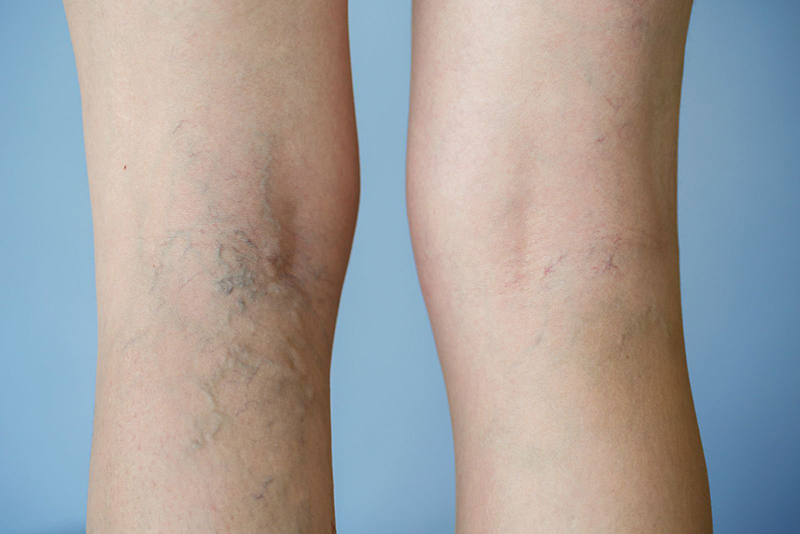
How is chronic venous insufficiency in the lower extremities diagnosed?
Chronic venous insufficiency in the lower extremities can be diagnosed based on clinical symptoms observed by the physician, combined with an assessment of the patient’s risk factors. These symptoms may be visible or palpable, as dilated veins become tense and engorged when the patient changes from a lying to a standing position.
In addition, physicians may recommend duplex Doppler ultrasound for the most accurate diagnosis. This imaging technique helps evaluate the function and integrity of the venous valves in the great and small saphenous veins, as well as the deep veins, thereby detecting venous valve insufficiency or obstruction. The results provide essential information for determining the most appropriate and effective treatment plan.
Treatment methods for chronic venous insufficiency in the lower extremities
Chronic venous insufficiency in the lower extremities can be managed through various treatment approaches, depending on the severity of the disease and the patient’s overall condition. Commonly used methods include:
Conservative (medical) therapy
- In mild cases, physicians may prescribe medications to improve venous circulation and prevent reflux.
- Certain drugs, such as venotonic agents that strengthen the vein walls, may be used. However, medications are generally effective only in the early stages of the disease.
Surgical intervention
- The surgeon removes the dilated superficial veins using specialized instruments.
- This method provides high effectiveness with a very low recurrence rate. However, it is now less commonly used because it requires anesthesia, longer hospitalization, slow postoperative recovery, and may be associated with complications such as thigh hematoma, venous thrombosis, or sensory disturbances in the lower extremities.
Cryotherapy with liquid nitrogen at –90°C
- This method involves occluding the lumen of the vein using a catheter placed inside the vessel.
- Its drawback is a high recurrence rate, up to 30%.
Sclerotherapy
- This technique involves injecting a sclerosing agent into the superficial venous system of the lower extremities.
- The agent damages the endothelium and adjacent medial components, leading to thrombosis and permanent occlusion of the diseased vein, thereby redirecting blood flow to healthier veins.
Venaseal™ medical adhesive (cyanoacrylate glue)
- A minimally invasive, non-thermal treatment.
- Under ultrasound guidance, an appropriate amount of medical adhesive is delivered along the diseased vein through a specialized catheter system.
- The adhesive closes the vein walls, allowing blood to reroute into healthy veins.
- This procedure is indicated for patients with superficial venous insufficiency from grade II onward but is not suitable for veins located just beneath the skin. It is typically used for truncal saphenous vein segments without the need for additional Muller phlebectomy.
Endovenous ablation
- This method uses either laser energy (endovenous laser ablation – EVLA) or radiofrequency ablation (RFA) to destroy diseased veins.
- EVLA applies laser fibers with commonly used wavelengths around 1470 nm, while RFA uses catheters that emit radiofrequency waves.
- Both techniques generate thermal energy, which damages venous collagen, induces inflammation, fibrosis, and eventually complete vein closure.
- These modern, minimally invasive procedures require advanced equipment and must be performed by highly skilled specialists.
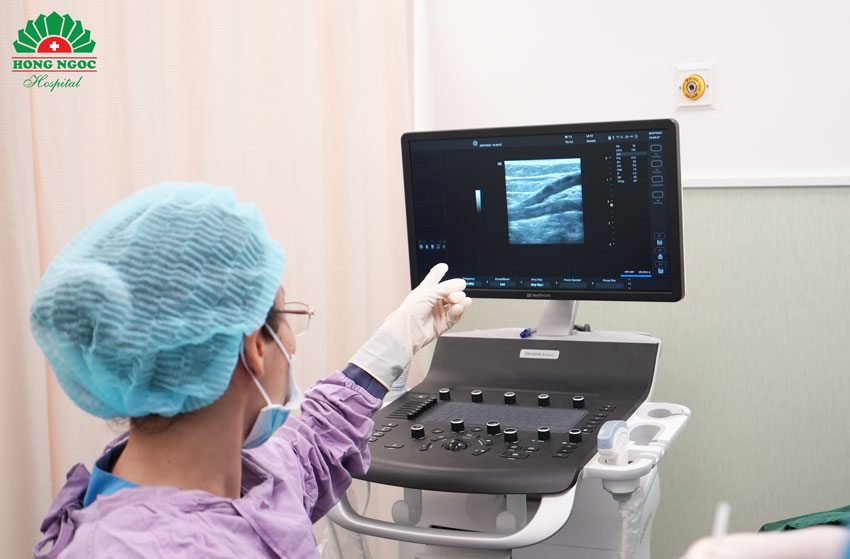
Currently, Hong Ngoc General Hospital has successfully implemented radiofrequency ablation (RFA) for the treatment of chronic venous insufficiency in the lower extremities.
Book an appointment and receive consultation from our specialists here:
Prevention of chronic venous insufficiency in the lower extremities
Chronic venous insufficiency can be prevented early with proper lifestyle adjustments and healthy habits. Recommended preventive measures include:
- Avoid wearing excessively tight clothing
- Limit frequent use of high-heeled shoes
- Maintain proper sitting and lying posture; avoid standing or sitting in one position for too long
- When lying down, elevate the legs to facilitate venous return to the heart
- Exercise regularly at a moderate intensity to promote circulation and improve overall health
- Ensure adequate hydration, with at least 2 liters of water per day for adults
- Follow a well-balanced diet rich in vitamins and fiber
- Maintain a healthy weight and prevent obesity
If suspicious symptoms occur, patients are advised to seek medical consultation early. Early detection and timely treatment significantly improve outcomes and reduce treatment costs.
Note: The information provided in this article by Hong Ngoc General Hospital is for reference only and should not replace medical diagnosis or treatment. Patients are advised not to self-medicate. For an accurate diagnosis and appropriate treatment plan, please visit a hospital for direct consultation with a physician.
Follow the official fanpage of Hong Ngoc General Hospital for more useful health information.