


Medical review: Hoang Van Ban, MSc, MD, Department of Orthopaedic Surgery and Neurosurgery, Hong Ngoc – Phuc Truong Minh General Hospital
Medical note: This article is for general information only and does not replace medical examination, diagnosis or treatment. Do not try to manipulate the ankle, take medication for prolonged periods without medical advice, or continue exercising if swelling or pain worsens. Seek medical assessment if the ankle is significantly swollen, persistently painful, difficult to bear weight on, deformed, warm or red, or if symptoms recur after exercise. A clinician can assess the cause and recommend appropriate treatment.
What causes ankle swelling after exercise?
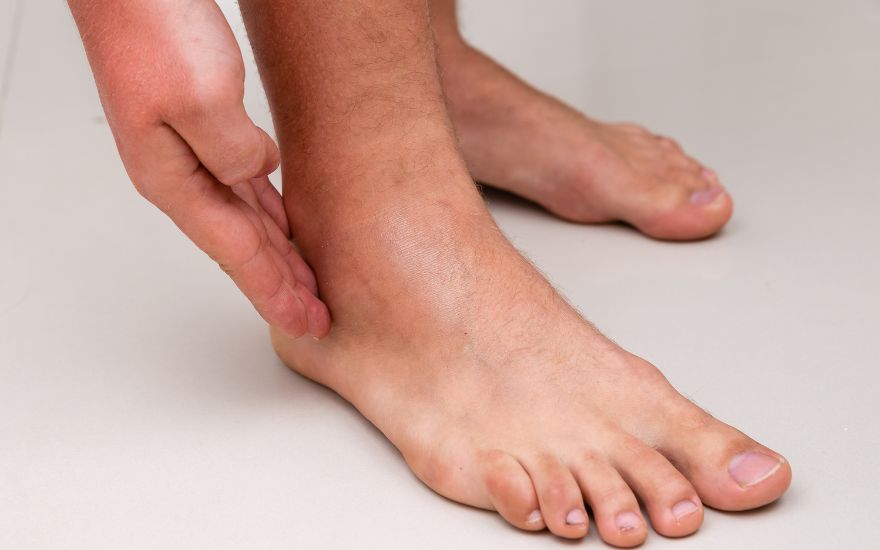
Ankle swelling after exercise may be associated with ligament injury, tendon problems, or joint or bone injury caused by repeated loading. The location of the swelling, when the pain began and the ability to bear weight can help guide the assessment. A clinical examination and imaging may also be needed.
An ankle sprain or twist
An ankle sprain occurs when the ligaments around the ankle joint are stretched or torn as the foot suddenly twists, lands unevenly or moves beyond its normal range. It can happen when someone steps awkwardly, changes direction quickly or loses their balance while playing sport.
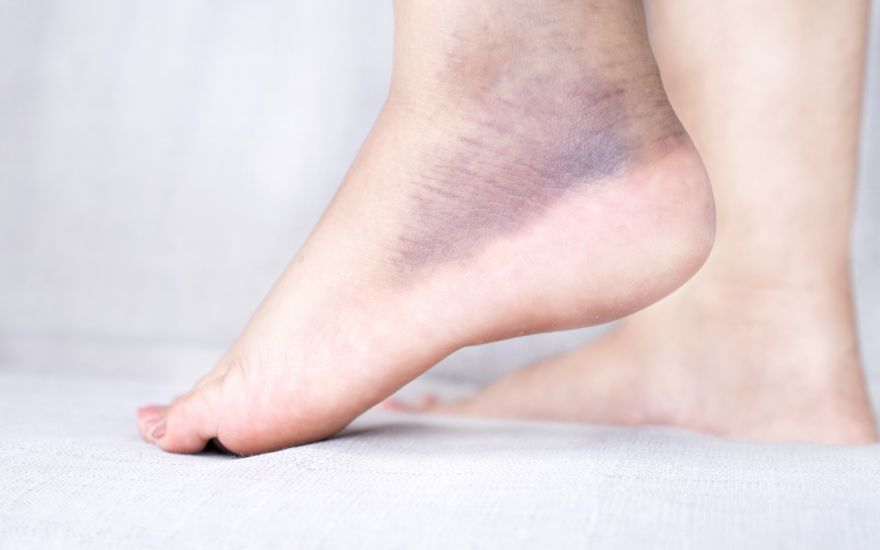
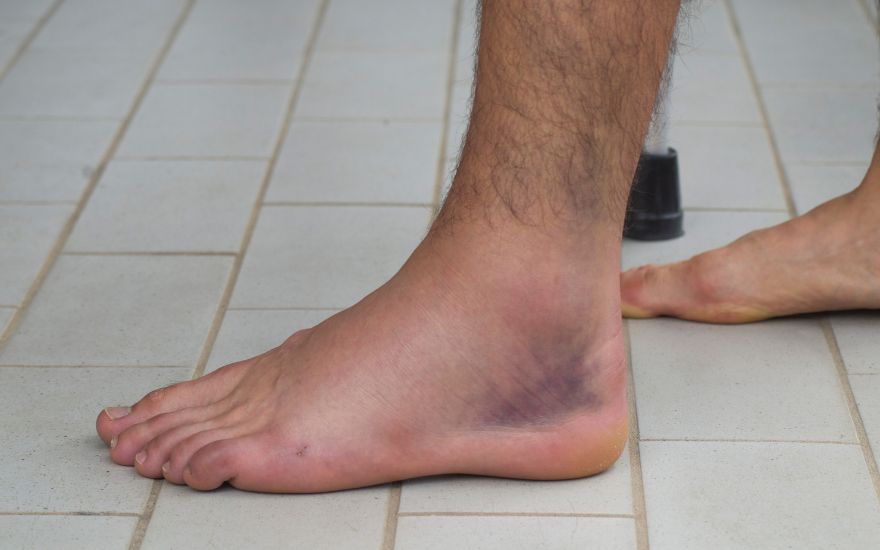
Symptoms include swelling around the ankle bones and pain when standing or walking, sometimes with bruising. A more severe ligament injury can make the joint unstable, causing the ankle to give way or making it difficult to bear weight.

Tendon injuries around the ankle from repetitive activity
The Achilles tendon and the tendons around the ankle are loaded during running, rising onto the toes, jumping and accelerating. If training intensity or volume increases too quickly, the load may exceed the tendons’ capacity to adapt and recover, causing pain, swelling and reduced function.
An Achilles tendon injury typically causes pain at the back of the ankle, near the heel, which may worsen when running or rising onto the toes. Pain and swelling along the inner or outer ankle may involve other tendons. A clinician will assess the location of the pain and which movements aggravate the symptoms to identify the affected tendon.
Soft tissue irritation around the joint after prolonged exercise
Long-distance running and repeated jumping increase the load on the ankle joint and surrounding soft tissues. A prolonged session or sudden increase in training volume may cause tightness, pain and swelling around the ankle afterwards.
However, ankle swelling should not automatically be assumed to be a normal response to exercise. Reduce activities that cause pain and monitor the symptoms. Seek medical assessment if the swelling recurs, persists or limits movement, as tendons, ligaments and structures within the joint may need to be examined.

Bone injury from repetitive loading
Repeated impact from running or jumping can cause small bone injuries to accumulate faster than the body can repair them. These are known as bone stress injuries. They can progress from an early bone stress reaction to a crack, called a stress fracture.
The pain is usually localised to the affected bone and worsens with weight-bearing. At first, it may occur during exercise and ease with rest. As the injury progresses, pain may also occur when walking or resting, with localised swelling. Stop running and seek medical assessment if these symptoms develop.
Assessing ankle swelling after exercise
The amount of swelling does not fully indicate the severity of an injury. Also note where the pain is, whether there is bruising, how well the ankle moves and how much weight the leg can bear.
- Mild swelling: Appears after exercise without a clear injury, causes little difficulty when walking and improves with rest. It may be associated with doing more activity than the ankle is used to.
- Swelling with pain or bruising: If it is concentrated around the ankle after the foot twists or rolls, a sprain should be considered.
- Swelling with deformity or inability to bear weight: A fracture or severe ligament injury needs to be ruled out, particularly if there is sharp pain over a bone.
- Swelling with worsening warmth and redness: If accompanied by fever, fatigue or redness that is spreading, seek medical assessment promptly to determine the cause.
What should you do if your ankle swells after exercise?
If swelling develops after the ankle twists or rolls, or following a strenuous training session, stop the activity that is causing pain. In the early stages, relative rest, ice, compression and elevation (RICE) can help relieve pain and control swelling.
- Rest: Pause running, jumping, changing direction and any movement that worsens the pain. Do not try to finish a session once the ankle has swollen.
- Ice: Wrap an ice pack in a thin towel and apply it to the swollen area for about 15–20 minutes at a time. Do not apply ice directly to the skin or leave it on continuously for too long.
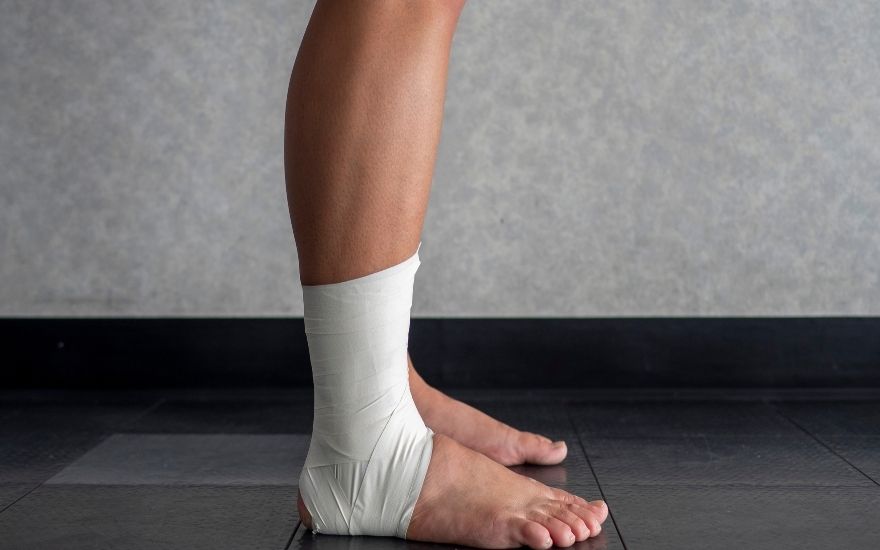
- Compression: Wrap the ankle with an elastic bandage, applying moderate pressure to help control swelling. Loosen it immediately if the foot becomes numb, cold, discoloured or more painful.
- Elevation: When sitting or lying down, rest the leg on pillows and, if comfortable, keep the ankle raised above heart level.
These measures mainly help relieve pain and control swelling in the early stages. Do not immobilise the ankle for a prolonged period unless a doctor advises it. Avoid vigorous massage, manipulating the ankle, applying heat, soaking it in hot water or using warming oils while it remains swollen and painful.
Do not take pain relief for prolonged periods just to continue exercising. If the pain is severe, the swelling does not improve or walking is affected, seek medical assessment to identify the cause and determine appropriate treatment.

When should you seek medical care for ankle swelling after exercise?
Seek medical care if ankle swelling significantly affects your ability to stand or walk, or if there are signs of possible injury to the bones or ligaments, or problems with circulation.
Watch for:
- Deformity of the ankle or foot after an injury.
- Severe pain or pain that is worsening quickly.
- Inability to bear weight or take about four steps.
- Sharp pain when pressing directly over a bone around the ankle.
- Swelling or bruising that spreads quickly.
- An ankle that feels unstable or gives way when you step.
- Numbness, coldness or a change in skin colour in the foot.
- Marked warmth and redness around the swelling, with fever or unusual fatigue.
- Swelling that does not improve after a few days of rest or keeps recurring after exercise.
How to prevent ankle swelling after exercise
To help prevent ankle swelling after exercise, warm up before running or playing sport, and increase distance, speed and training frequency gradually. After strenuous sessions, allow enough time for the tendons, muscles and ankle joint to recover.
Recommended measures include:
- Choose well-fitting shoes with good grip that are suitable for your sport.
- Practise heel raises, single-leg stands and exercises to strengthen the muscles around the ankle.
- Reduce the intensity if the ankle starts to hurt or swell after exercise.
- If you have had an ankle sprain before, focus on balance exercises to help prevent the ankle from rolling again.
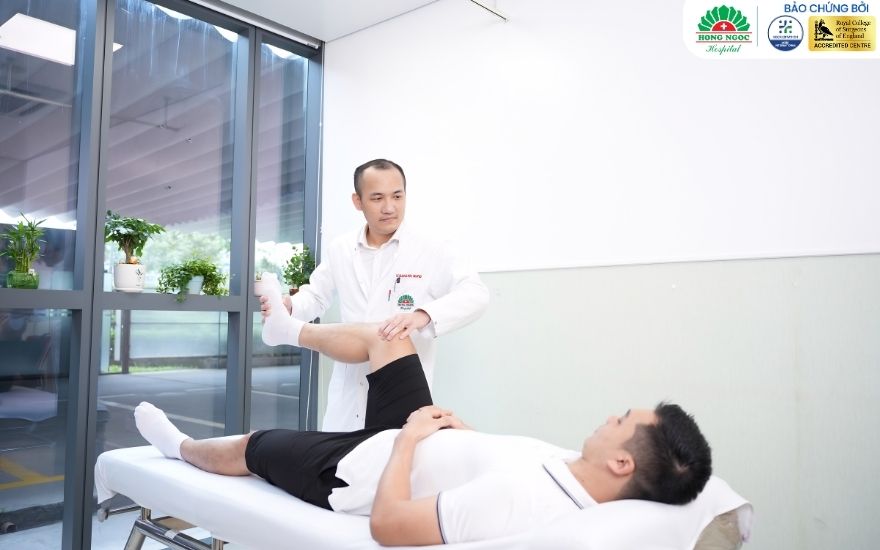
Assessment of ankle swelling after exercise at Hong Ngoc General Hospital
People with ankle swelling after exercise can seek assessment at the Department of Orthopaedic Surgery and Neurosurgery at Hong Ngoc–Phuc Truong Minh General Hospital, particularly if swelling is accompanied by persistent pain, difficulty bearing weight or repeated episodes. The doctor will assess how the pain began, the location of the swelling, ankle movement, muscle strength and joint stability. If further investigation is needed, imaging will be selected based on the suspected injury rather than applying the same tests to every patient.
For injuries requiring non-surgical treatment, rehabilitation is coordinated with the Department of Physical Therapy and Rehabilitation. The programme aims to improve ankle movement, muscle strength and balance, and help patients regain the ability to perform everyday or sports-related movements.
Frequently asked questions about ankle swelling after exercise
Does ankle swelling after running mean I have a sprain?
Not all swelling after running is caused by a sprain. A sprain usually follows a twist or roll of the ankle, with pain, swelling and bruising around the ankle and difficulty bearing weight. If there was no clear injury, swelling after running may also be related to tendon overuse, prolonged stress on the joint or a bone stress injury.
Should I be concerned if my ankle is swollen but does not hurt?
Mild swelling after prolonged standing, walking or exercise may sometimes be related to fluid building up in the leg. If it improves with rest and is not accompanied by pain, redness, warmth or restricted movement, monitor it. If the swelling recurs frequently, affects one leg for no clear reason or is accompanied by calf pain, see a doctor promptly for assessment and appropriate care.
Should I apply heat to a swollen ankle?
If the ankle has just been injured and is noticeably swollen, apply a cold pack for about 15–20 minutes at a time to relieve pain and help control the swelling. Avoid heat or soaking the ankle in hot water immediately after an injury. Once the acute phase has passed, whether to use heat will depend on the cause and recovery plan.
When can I return to exercise?
You can resume exercise when the ankle no longer becomes more swollen or painful during everyday activities and its range of movement is similar to that of the other ankle. Before returning to running or sport, you should be able to rise onto your toes, stand on one leg, jog, jump and change direction without pain or the ankle giving way.
The decision should not be based solely on the number of days you have rested or whether the swelling has gone down. If the ankle swells again whenever you increase the intensity, reduce your activity and reassess it before continuing training.
Is it normal for my ankle to swell after every training session?
Swelling that recurs after most training sessions should not be considered a normal response. It may indicate that the ankle is being subjected to more activity than it can currently tolerate, or that an injury has not healed. Reduce the intensity and seek medical advice if the swelling persists, the pain worsens or walking becomes difficult.
Conclusion
Do not ignore ankle swelling after exercise if it persists, recurs or affects your ability to walk. Reduce your activity, manage the symptoms appropriately in the early stages and avoid exercising through pain or swelling. Seek medical care if the ankle is deformed, there is pain over a bone, you have difficulty bearing weight, or swelling and bruising are worsening rapidly. An assessment can identify the cause and guide appropriate treatment.
References
- Martin RL, Davenport TE, Fraser JJ, et al. Ankle Stability and Movement Coordination Impairments: Lateral Ankle Ligament Sprains Revision 2021. Journal of Orthopaedic & Sports Physical Therapy. https://www.jospt.org/doi/10.2519/jospt.2021.0302
- American College of Radiology. Appropriateness Criteria – Acute Trauma to the Ankle. https://acsearch.acr.org/docs/69436/Narrative/
- Mayo Clinic. Sprained ankle – Symptoms and causes. https://www.mayoclinic.org/diseases-conditions/sprained-ankle/symptoms-causes/syc-20353225
- Mayo Clinic. Sprain: First aid. https://www.mayoclinic.org/first-aid/first-aid-sprain/basics/art-20056622
- American Academy of Orthopaedic Surgeons. Stress Fractures. https://orthoinfo.aaos.org/en/diseases--conditions/stress-fractures/