



Medical review: Hoang Van Ban, MSc, MD, Department of Orthopaedic Surgery and Neurosurgery, Hong Ngoc – Phuc Truong Minh General Hospital
Medical note: The following information is for general educational purposes only and does not replace a medical diagnosis or treatment prescribed by a doctor. Seek medical care promptly after rolling your ankle if you cannot stand or walk, have sharp pain over a bone, the joint is deformed, your foot is numb or cold, or symptoms continue to worsen after first aid.
What is an ankle sprain while running?
An ankle sprain occurs when the ligaments around the ankle joint are overstretched or torn as the foot twists suddenly while running. Ligaments connect bones and help stabilise the joint. When the force exceeds their capacity, they can be injured, causing pain, swelling and difficulty bearing weight.
Most ankle sprains occur when the sole of the foot turns inwards, placing considerable strain on the ligaments on the outside of the ankle. The injury can range from mild stretching to a partial or complete tear. A severe twist can also damage tendons or joint cartilage, or cause a fracture around the ankle. Runners should not assume that every injury after twisting an ankle is a mild sprain.

Causes of ankle sprains while running
With every stride, the ankle bears body weight and continually adjusts the foot’s position to maintain balance. An ankle sprain can occur when the foot lands awkwardly, encounters uneven ground or cannot adapt quickly to a change in terrain.
Factors that may increase the risk include:
- Uneven surfaces: Gravel, rocks, tree roots, potholes, kerbs and sloping roads can cause the foot to twist suddenly. The risk is higher when trail running, running downhill or running in poor light.
- Unstable foot placement: Overstriding, landing on the outer edge of the foot, changing direction suddenly or running too fast over difficult terrain can place uneven force on the ankle joint.
- Ankle weakness: Reduced muscle strength and balance can slow the ankle’s response when the foot lands awkwardly. This is more likely in people who have had a sprain but have not fully recovered.
- Increasing training intensity too quickly: Increasing distance, speed and gradient at the same time can quickly fatigue the leg muscles, reducing control of each stride and balance.
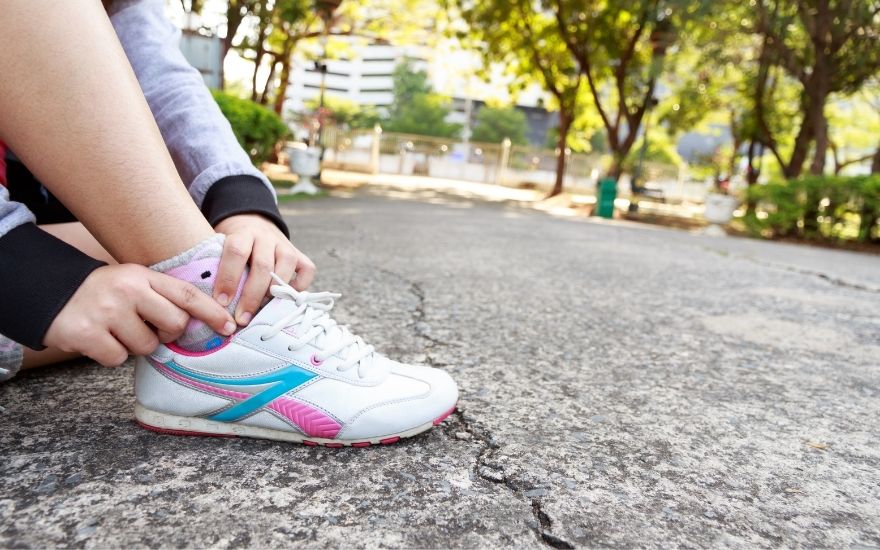
- Unsuitable running shoes: Shoes that are too loose, loosely laced, unevenly worn or lacking grip can make the foot more likely to slip or roll on landing.

Signs of an ankle sprain while running
Pain often begins immediately when the foot gives way or lands awkwardly. Swelling and bruising may become more noticeable over the following hours, so runners should monitor how symptoms develop rather than judging the injury straight away.
Common symptoms
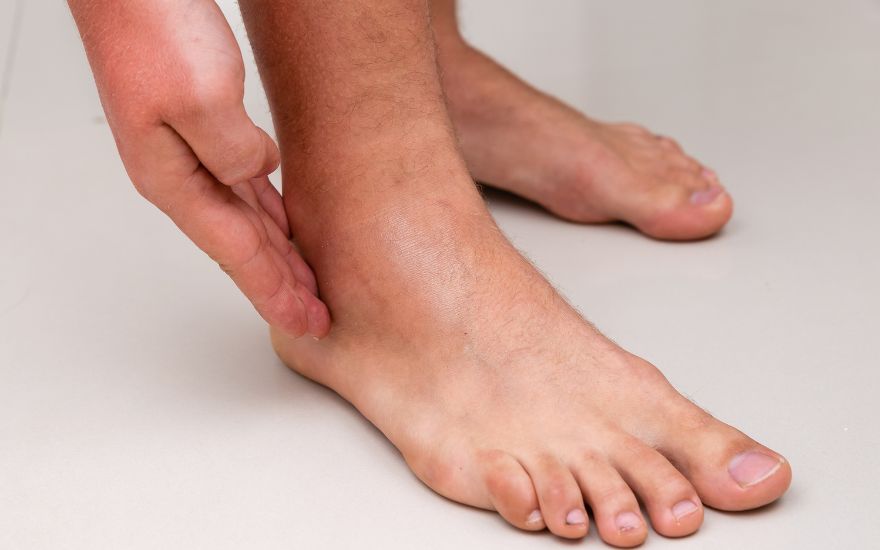
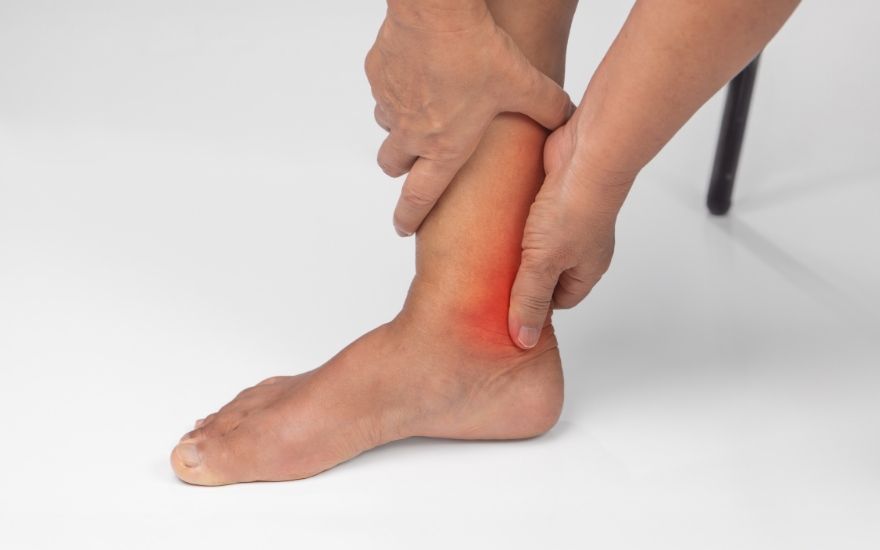
Pain is often felt around the outer ankle because the foot commonly rolls inwards. Pain on the inner side of the ankle or higher up the joint also needs attention, as it may indicate a different injury pattern.
Common symptoms include:
- Sharp pain immediately after the ankle twists.
- Swelling around the ankle, sometimes extending into the foot.
- Bruising that appears within hours or over the next few days.
- Pain that worsens when standing, walking or turning the foot.
- Reduced ability to bend, straighten or rotate the ankle.
- Limping or difficulty bearing weight.
- A weak, loose or unstable feeling in the ankle, or a tendency for it to give way.
The ability to walk does not fully indicate the severity of the injury. Someone who can still take steps may have a ligament tear or a small fracture. Conversely, severe pain and swelling in the first few hours do not, by themselves, confirm a complete ligament tear.
Grades of ankle sprain
Ankle sprains are generally classified into three grades according to the extent of ligament damage and joint stability. Accurate grading requires consideration of how the injury occurred, a clinical examination and imaging when indicated.
- Grade I: The ligament is stretched or has microscopic damage. The ankle is mildly painful and swollen but remains stable. The person can usually walk, although it may be uncomfortable.
- Grade II: The ligament is partially torn. Pain, swelling and bruising are more pronounced; bearing weight becomes difficult, movement is restricted and the joint is less stable.
- Grade III: The ligament is completely torn. The ankle is markedly unstable, with significant swelling and bruising, and the person may have difficulty standing or walking normally.

What to do immediately after rolling your ankle while running
After twisting an ankle, stop running and move away from the road or any other hazardous area. If standing makes the pain worse, sit down and ask someone for help. During a race, contact the medical team rather than trying to walk or run to the finish.
First aid using the RICE principle
During the first 48 hours, RICE can help protect the joint, relieve pain and limit swelling. It is an initial measure for soft-tissue injuries and does not replace medical assessment if there are signs of a fracture, dislocation or severe injury.
Follow these four steps:
- R – Rest: Stop running and avoid activities that cause pain. If bearing weight is difficult, limit walking and use crutches or ask for assistance. Once acute pain has eased, gradually increase weight-bearing according to your ability and professional advice.
- I – Ice: Wrap ice or a cold pack in a thin towel and apply it to the swollen, painful area for 15–20 minutes at a time, repeating every 2–3 hours. Do not apply ice directly to the skin or while asleep. Stop if the skin develops a burning sensation or unusual numbness.
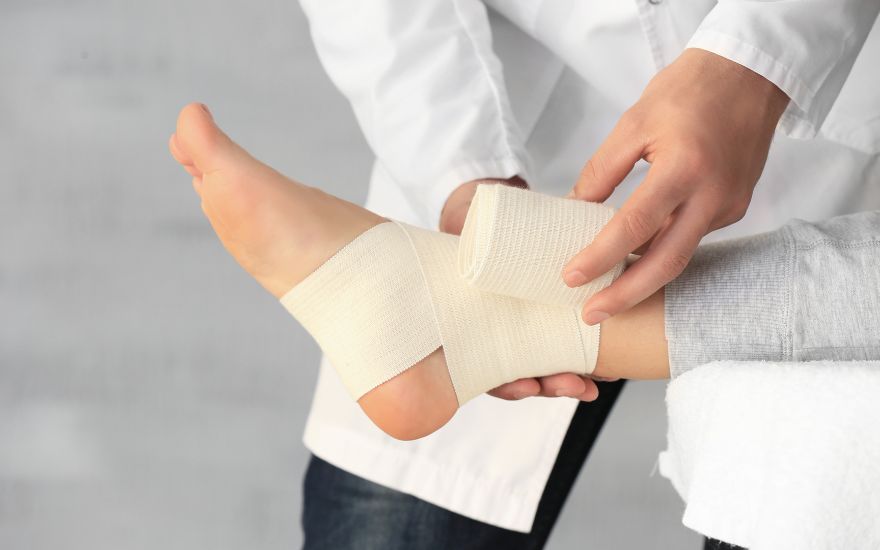
- C – Compression: Apply an elastic bandage with moderate pressure to support the ankle and help control swelling. Loosen it immediately if the toes become numb, cold, pale, blue or more painful. Do not immobilise the ankle with a tight bandage if it is deformed or a fracture is suspected.
- E – Elevation: When sitting or lying down, rest the lower leg on pillows so the ankle is raised above heart level. Do this several times a day, particularly during the first two days, to help limit fluid build-up around the injury.
Loosen your shoelaces before applying ice or a bandage, as the foot may swell further. If you are away from home, keep the leg steady and arrange transport. Do not try running again to test how much it hurts.
What to avoid during the first 48 hours
Some people apply medicated oil, use heat or ask someone to manipulate the ankle immediately after rolling it. These actions may further irritate the injured area, increasing pain and swelling, while masking signs of a fracture or dislocation.
After an injury, avoid:
- Applying heat, soaking the ankle in hot water, or using warming oils or medicated alcohol.
- Vigorous massage, pulling or twisting the foot, or trying to manipulate the ankle joint.
- Applying herbal poultices or remedies with unknown ingredients to the swollen, painful area.
- Drinking alcohol while the ankle is acutely swollen.
- Running, jumping or forcefully stretching the ankle to test it.
- Taking pain relief or anti-inflammatory medicines without checking whether they are appropriate for you, particularly in light of any underlying conditions or contraindications.
After the acute phase, do not keep the ankle completely immobilised for a prolonged period unless advised by a doctor. Once pain and swelling have eased, gentle movement within your tolerance can help prevent joint stiffness and support recovery.
When should you seek medical care after rolling your ankle?
A mild sprain should gradually improve with rest and appropriate care. However, severe pain, inability to bear weight or sharp pain over a bone should not be left to resolve on its own. Prompt assessment can help rule out a fracture, a severe ligament tear or an injury to the tendons around the joint.
Seek medical care if you experience any of the following:
- You cannot stand or walk about four steps.
- You have sharp pain when pressing on an ankle bone or a specific point on a foot bone.
- The ankle is misaligned or deformed, or there is an open wound.
- Swelling is severe, bruising is spreading or pain is worsening quickly.
- The foot is unusually numb, cold or blue.
- You have pain at the back of the heel and cannot stand on tiptoe.
- Symptoms do not improve after a few days of initial care.
- The ankle often feels unstable, gives way or rolls again during activity.
If the joint is deformed, the foot has lost sensation, is cold or blue, or there is an open wound, seek emergency medical care. Do not try to manipulate the ankle. Keep the leg in its current position, limit movement and wait for medical staff to assist.
How to prevent ankle sprains while running
A previous sprain increases the risk of another if strength and balance have not been fully restored. Prevention should therefore start with building a solid foundation for movement and choosing suitable running conditions.
Runners should:
- Warm up before running: Spend 5–10 minutes briskly walking or jogging, moving the ankles and doing dynamic warm-up exercises to prepare the body for activity.
- Increase training gradually: Adjust one factor at a time, such as distance, speed or gradient. Avoid increasing them all at once.
- Strengthen the ankles: Do heel raises, resistance-band exercises in different directions and calf-strengthening exercises at an appropriate level.
- Practise balance: Start by standing on one leg on a flat surface. Increase the duration or difficulty once you can maintain control.
- Check the route: Slow down and shorten your stride when running downhill, in low light, on wet surfaces or in areas with obstacles.
- Choose well-fitting shoes: Shoes should hold the heel securely, have good grip and suit the running surface. Replace them when the soles are unevenly worn, slippery or misshapen.
- Stop at the right time: Rest if your ankle hurts, your legs become very tired or your stride starts to lose control.
- Use a brace or tape as advised: Appropriate support may help some people with a history of ankle sprains, but it does not replace strength and balance exercises.
Assessment and treatment of running-related ankle sprains at Hong Ngoc General Hospital
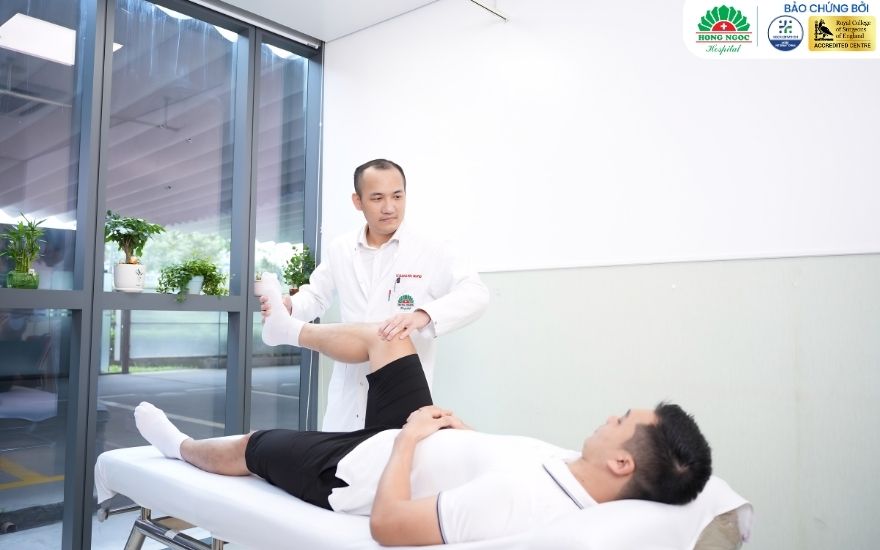
Runners with persistent pain, significant swelling or bruising, difficulty bearing weight, or an ankle that often feels unstable or gives way can seek assessment at the Department of Orthopaedic Surgery and Neurosurgery at Hong Ngoc–Phuc Truong Minh General Hospital. The doctor will assess how the injury occurred, the location of the pain, ankle movement and joint stability. Imaging may be recommended when needed to determine the extent of the injury and guide treatment.
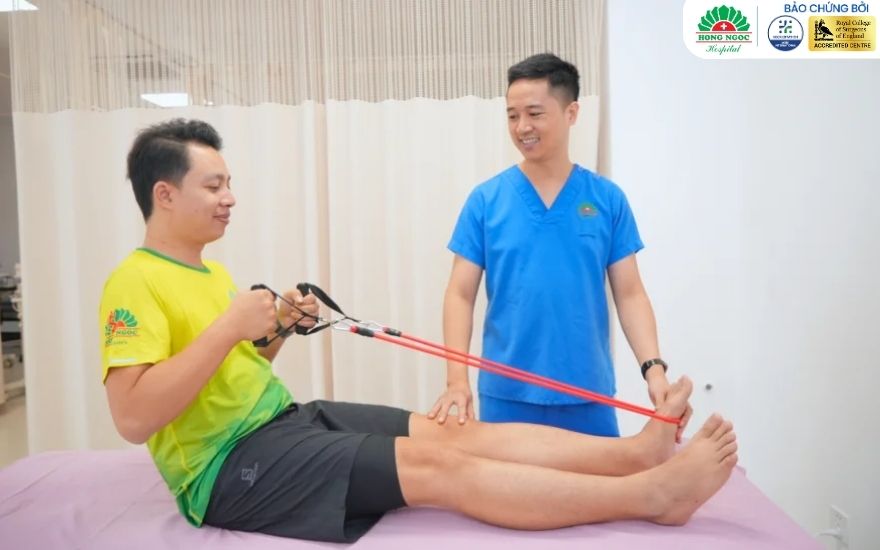
If non-surgical treatment is appropriate, rehabilitation is coordinated with the Department of Physical Therapy and Rehabilitation. The programme focuses on improving ankle range of motion, calf strength, single-leg balance, the ability to rise onto the toes and control of the foot on landing. As these functions improve, the runner can progress gradually from walking to slow running, then increase distance and speed to return to training safely.
Frequently asked questions about ankle sprains while running
If I can still walk after rolling my ankle, do I need to see a doctor?
Being able to walk after rolling your ankle while running does not completely rule out a ligament tear or a small fracture. Seek medical advice if you have sharp pain in one specific area of a bone, are limping, swelling or bruising is worsening, or you cannot take about four normal steps. Symptoms that do not improve after a few days of care should also be assessed.
How long does ankle swelling take to go down after a sprain?
Swelling is usually most noticeable in the first few days and then gradually subsides if the injury is mild and managed appropriately. With a moderate or severe sprain, swelling may last for several weeks, particularly after standing or walking. Seek medical care promptly if swelling increases rapidly or is accompanied by severe pain, numbness, coldness or a change in foot colour.
Should I use ice or heat after rolling my ankle?
During the first 48–72 hours, apply a cold pack for 15–20 minutes at a time, placing a thin towel between the pack and your skin. Avoid heat while the ankle is still swollen and bruised, as it may make the injured area more uncomfortable. After the acute phase, whether to use heat will depend on your symptoms and advice from a healthcare professional.
Should I wear an ankle brace when I start running again?
A brace or supportive tape may be suitable for some people with a history of ankle sprains or who are returning to activity. Ask a doctor or rehabilitation professional which type of support to use and for how long. Do not use a brace to push through a run while the ankle is still painful, swollen or unstable.
How long does it take to recover from an ankle sprain while running?
A mild sprain often improves within about one to two weeks, while moderate or severe injuries may take several weeks to 6–12 weeks or longer. Recovery time depends on the extent of ligament damage and the rehabilitation process. Resume training only when the ankle is pain-free, no longer swollen, and you can maintain your balance and walk briskly, rise onto your toes, and go up and down stairs steadily. Then increase your distance and speed gradually, reducing your training load if symptoms return.
Conclusion
An ankle sprain while running needs prompt care and appropriate rehabilitation to help prevent persistent pain, joint instability or reinjury. Stop running as soon as the injury occurs, follow the RICE first-aid principles, and do not massage or manipulate the injured area yourself. Return to running only when the ankle is no longer swollen, moves freely and can bear weight steadily. If the pain is severe, you cannot walk or symptoms persist, seek medical assessment and appropriate treatment.