



Medical review: Hoang Van Ban, MD, MSc, Department of Orthopaedic and Neurosurgery, Hong Ngoc - Phuc Truong Minh General Hospital.
Medical note: This article is for reference only and does not replace medical examination, diagnosis or treatment. Do not attempt to manipulate or realign the ankle yourself, take medication for an extended period without medical advice, or continue exercising if the pain worsens. If the pain affects your ability to walk, persists or recurs, or is accompanied by signs of a serious injury, seek medical assessment to determine the appropriate treatment.
What commonly causes ankle pain after exercise?
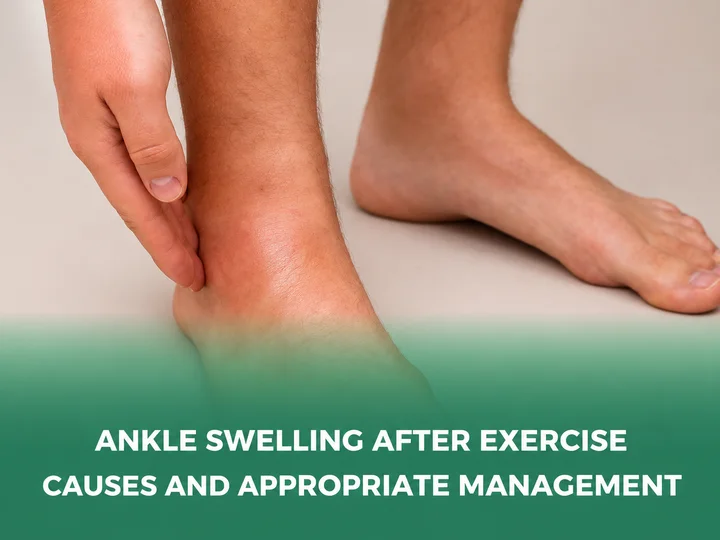
Ankle pain after exercise is often associated with a sprain, irritation of the tendons around the ankle, or repeated loading of the joint and bones. When the pain occurs and what triggers it can help point to the cause before an examination.
Ankle sprain or twist
An ankle sprain occurs when the ligaments supporting the ankle joint are stretched or torn after the ankle twists or turns, or lands awkwardly. This injury is common in football, basketball, badminton, tennis, pickleball and running on uneven ground.
After an injury, people often feel pain around the ankle bones, swelling and difficulty bearing weight. Bruising may appear later. If the ligaments are significantly damaged, the ankle may feel unstable or give way when stepping, making it difficult to walk.

Irritation of the tendons around the ankle
The Achilles tendon and the tendons that run around the ankle are continually involved in running, rising onto the toes, jumping and accelerating. If distance, duration or training intensity increases too quickly, these tendons can become irritated and cause pain after exercise.
Achilles tendon pain is usually felt at the back of the ankle, near the heel, and may become more noticeable when running or rising onto the toes. Pain along the inner or outer side of the ankle may involve other tendons, so the location of the pain is important information for the doctor’s assessment.

Repeated stress on the ankle joint
A longer-than-usual run, several matches in a row or repeated jumping can place prolonged, repetitive stress on the ankle joint. After exercise, you may feel a dull ache, tightness or heaviness around the ankle.
If symptoms ease with rest and do not affect your ability to walk, reduce the intensity of your next few sessions. If the pain keeps recurring despite reducing your training load, seek an assessment to identify the cause instead of continuing to increase the intensity.

Bone injury after high-intensity exercise
Repeated running and jumping place stress on the bones of the foot and ankle, particularly when training volume increases too quickly. If the bones do not have enough time to recover, small injuries can accumulate and lead to a stress fracture.
The pain is usually localised to one spot on the bone. Initially, it may occur near the end of a training session and ease with rest. As the injury progresses, however, the pain may start earlier, persist while walking or be accompanied by swelling around the affected area.

What should you do about ankle pain after exercise?
If the pain starts after a twist, awkward landing or strenuous workout, stop the activity that caused it. In the early stages, relative rest, ice, compression and elevation (R.I.C.E.) can help relieve pain and control swelling, particularly if the ankle may be sprained.
- Relative rest: Temporarily stop running, jumping, sprinting and changing direction if these movements worsen the pain. Do not try to finish a workout if your ankle is already painful or swollen.
- Ice: Wrap an ice pack in a thin towel and apply it to the painful area for about 15–20 minutes at a time. Do not place ice directly on the skin or apply it continuously for too long.
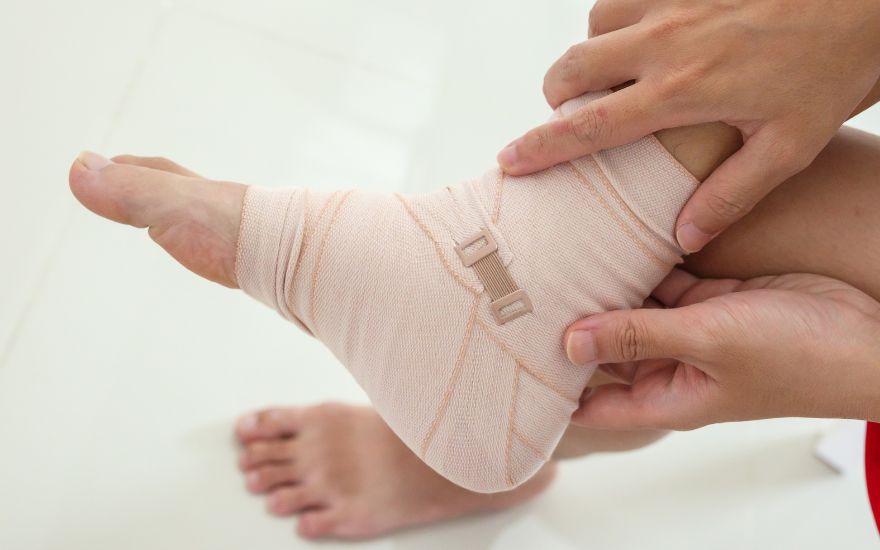
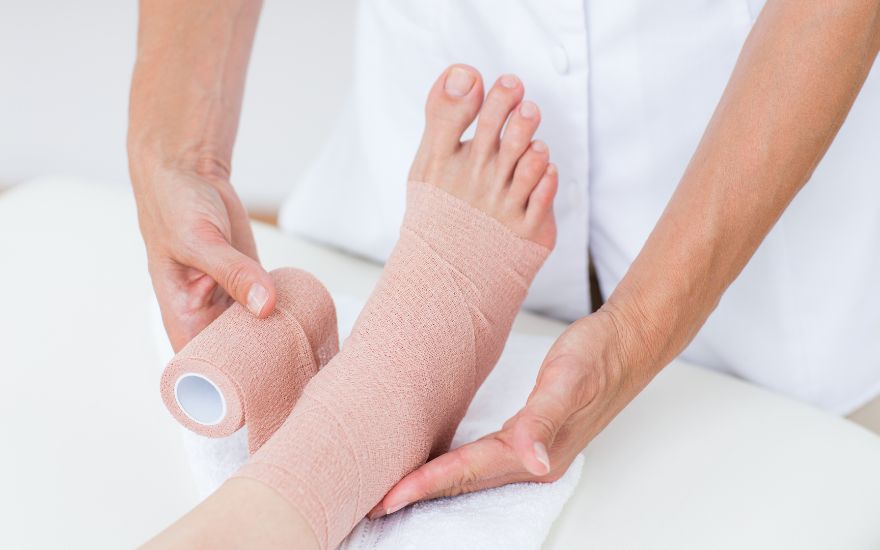
- Compression: Wrap the ankle with an elastic bandage, applying moderate pressure to help control swelling. Loosen the bandage immediately if your foot becomes numb, cold, bluish or more painful.
- Elevation: When sitting or lying down, rest your leg on pillows and, if comfortable, keep the ankle above heart level.
These measures mainly help manage symptoms in the early stages and do not replace an assessment of the injury. Do not keep the ankle immobilised for a prolonged period unless advised by a doctor.
While the ankle remains painful or swollen, avoid vigorous massage, pulling or manipulating the joint, soaking it in hot water, applying heat or rubbing warming oils onto the recently injured area. Do not take painkillers for an extended period simply to continue training.
When should you seek medical care for ankle pain after exercise?
Seek medical care if ankle pain significantly affects your ability to stand or walk, or if there are signs of possible bone or ligament injury. After an acute injury, certain findings can also help a doctor decide whether an X-ray is needed to rule out a fracture.
Watch for the following signs:
- The ankle or foot looks deformed after an injury.
- Severe pain or pain that is worsening rapidly.
- Inability to bear weight on the affected leg.
- Inability to walk about four steps after the injury.
- Sharp pain when pressing directly on the bone around the ankle.
- Rapidly increasing swelling or bruising.
- An unstable ankle that gives way when you step.
- Numbness, coldness or unusual colour changes in the foot.
- Pain that persists or recurs after several training sessions.
Being able to walk a few steps does not completely rule out a fracture. If the pain is clearly localised over a bone or the injury followed a forceful impact, seek medical assessment rather than monitoring it for an extended period.

Treatment for ankle pain after exercise depends on the cause
Treatment depends on the affected structure and the severity of the injury. For a mild sprain or soft tissue irritation, doctors generally recommend modifying activities, protecting the ankle and following appropriate movement guidance. More severe injuries may require a support device, immobilisation or specialised treatment.
Once pain and swelling have eased, the next goal is to restore ankle movement, muscle strength and balance. Rehabilitation usually progresses from simple exercises to heel raises, strengthening exercises and standing on one leg, before returning to running, jumping and changes of direction.
The level of activity should be increased according to how the ankle responds. If an exercise causes a noticeable increase in pain or swelling after a session, reduce the activity and reassess rather than pushing through.
Preventing ankle pain after exercise
To reduce the risk of recurring pain, pay attention to how you increase training intensity, warm up and choose your footwear. If you have had an ankle sprain before, focus on restoring ankle strength and balance before returning to sports that involve rapid changes of direction.
Useful measures include:
- Warm up before running or playing sports.
- Gradually increase distance, speed and training duration.
- Avoid changing several aspects of your training at the same time.
- Choose well-fitting shoes with good grip that are suitable for the playing surface.
- Do heel raises, single-leg balance exercises and other exercises to strengthen the muscles around the ankle.
- Allow time to rest after intense training sessions or competitions.
- Reduce your training load when pain begins instead of trying to complete the planned session.
For people with a previous ankle sprain, balance exercises and strengthening the muscles around the ankle are important parts of returning to activity. Waiting until the pain is gone and then immediately resuming your previous intensity may leave the ankle unprepared for sprinting, jumping or changing direction.

Assessment of ankle pain after exercise at Hong Ngoc General Hospital
Persistent ankle pain or swelling that returns with exercise can make it difficult to stay active. An assessment can identify the cause and help determine appropriate treatment before you resume training. Patients can visit the Department of Orthopaedic and Neurosurgery at Hong Ngoc–Phuc Truong Minh General Hospital for evaluation.
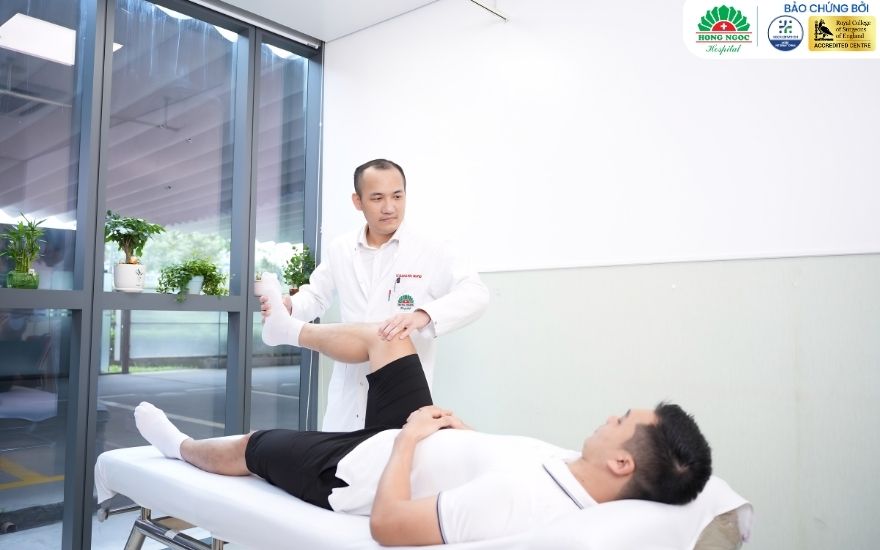
The doctor will ask what movement triggered the pain and assess its location, as well as the ankle’s range of motion, strength and stability. If further assessment is needed, diagnostic imaging may be recommended to help guide treatment. When conservative treatment is appropriate, rehabilitation is coordinated with the Department of Physical Therapy and Rehabilitation. Hong Ngoc General Hospital treats and rehabilitates a range of sports injuries, including ankle sprains and dislocations, Achilles tendinitis and other activity-related soft tissue injuries.
The exercise programme is tailored to the individual’s condition and aims to restore ankle movement, strength, balance and the ability to perform activities needed for daily life or their chosen sport.
Frequently asked questions about ankle pain after exercise
Does ankle pain after exercise mean I have a sprain?
Not all ankle pain after exercise is caused by a sprain. A sprain can occur when the foot twists or turns, often causing pain around the ankle bones, swelling and bruising. Pain that gradually worsens over several training sessions may instead be related to an injury to a tendon, joint or bone.
Should I apply heat or ice to ankle pain after exercise?
If the pain starts immediately after an injury and the ankle is swollen, apply ice during the early stages. Wrap the ice pack in a towel and apply it for no longer than 20 minutes at a time. Avoid applying heat to an area with acute swelling.
Is ankle pain without swelling a cause for concern?
The degree of swelling does not fully reflect the extent of an injury. Pain localised over a bone, pain that worsens when bearing weight, pain that persists over several training sessions or changes to your gait should be assessed, even if the ankle is not visibly swollen.
When can I return to sports?
You should return when walking does not worsen the pain, ankle strength and balance have recovered, and you can run, jump, accelerate and change direction without ankle pain during or after exercise. The decision to return to play should be based on your actual movement ability, confidence and ability to perform sport-specific movements—not only on how many days you have rested or whether the swelling has gone down.
Is it normal for ankle pain to recur after every workout?
Pain that recurs after several training sessions should not be considered a normal response. Reduce your activity level and check your footwear and training technique. If symptoms continue to recur or gradually worsen, seek medical assessment to identify the cause and determine appropriate management.
Conclusion
Ankle pain after exercise is often associated with a sprain, tendon irritation or repeated stress on a joint or bone. When pain develops, reduce your activity and manage it appropriately instead of pushing through the workout. If the pain is severe, makes it difficult to bear weight, is localised over a bone, is accompanied by rapidly increasing swelling or bruising, or persists or recurs, seek medical assessment to identify the cause before returning to your previous level of activity.
References
- Martin RL, Davenport TE, Fraser JJ, et al. Ankle Stability and Movement Coordination Impairments: Lateral Ankle Ligament Sprains Revision 2021. Journal of Orthopaedic & Sports Physical Therapy. 2021;51(4):CPG1-CPG80. https://doi.org/10.2519/jospt.2021.0302
- American College of Radiology. ACR Appropriateness Criteria® Acute Trauma to the Ankle. https://acsearch.acr.org/docs/69436/Narrative/
- Chimenti RL, Neville C, Houck J, et al. Achilles Pain, Stiffness, and Muscle Power Deficits: Midportion Achilles Tendinopathy Revision – 2024. Journal of Orthopaedic & Sports Physical Therapy. 2024;54(12):CPG1-CPG32. https://pubmed.ncbi.nlm.nih.gov/39611662/
- American Academy of Orthopaedic Surgeons. Stress Fractures. OrthoInfo. https://orthoinfo.aaos.org/en/diseases--conditions/stress-fractures
- Smith MD, Vicenzino B, Bahr R, et al. Return to sport decisions after an acute lateral ankle sprain injury: introducing the PAASS framework—an international multidisciplinary consensus. British Journal of Sports Medicine. 2021;55(22):1270–1276. https://bjsm.bmj.com/content/55/22/1270