


According to the World Health Organization (WHO), vaccination during pregnancy is essential to prevent serious infectious diseases for both mother and baby. So, which vaccines are necessary for pregnant women? What should be noted about managing possible side effects after vaccination during pregnancy? Let’s explore the answers in the article below!
Benefits of full vaccination during pregnancy
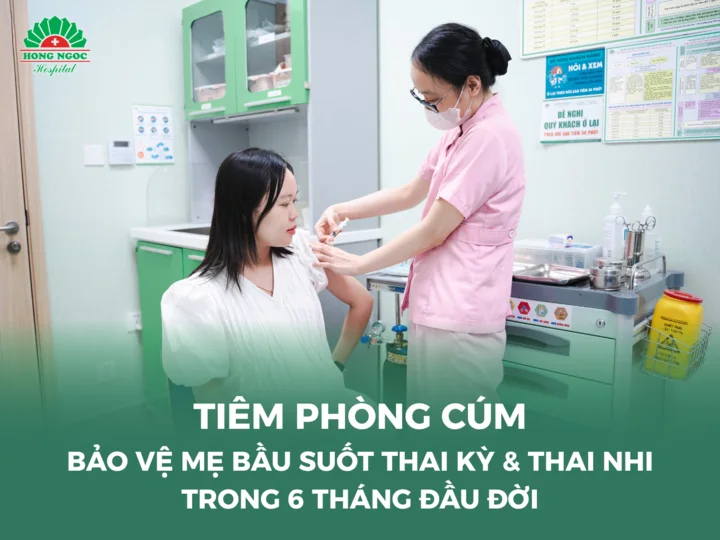
Receiving all recommended vaccines on schedule is a crucial measure to minimize risks for both mother and baby throughout the nine months of pregnancy. During this period, a woman’s immune system becomes more vulnerable, making her more susceptible to harmful bacteria and viruses. Vaccination helps mothers build protective antibodies against dangerous infectious diseases.
Adequate vaccination during pregnancy provides multiple important benefits for maternal and fetal health, including:
- Reduce the risk of miscarriage and preterm birth caused by infectious diseases.
- Minimize negative impacts on the comprehensive development of the fetus. If the mother contracts infectious diseases such as measles or rubella during pregnancy, it may affect the brain development of the fetus.
- Protect the baby after birth Maternal vaccination is the only measure to safeguard infants from certain dangerous diseases until they are old enough and healthy enough to receive their own vaccines. Some diseases, such as tuberculosis, pneumonia, and meningitis, can be transmitted from mother to child during delivery; therefore, being fully vaccinated beforehand can help protect the baby after birth.
Vaccines women should receive before pregnancy
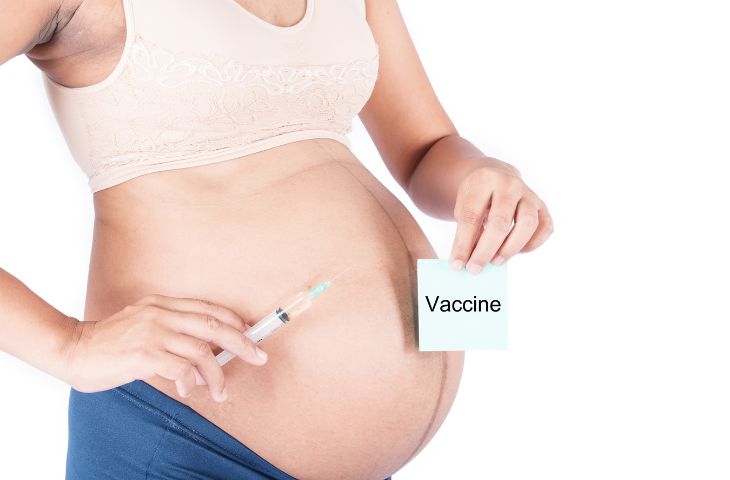
Pregnant women are a particularly sensitive group, as their health status makes them more vulnerable and they may react differently to certain vaccines. Moreover, while many vaccines are widely used, some are not recommended during pregnancy due to potential risks to the fetus. For this reason, several essential vaccines should ideally be administered before conception. Below are the five most important:
Influenza vaccine
Seasonal flu is a contagious infection, especially common in the winter–spring months. For the general population, influenza can often be managed with medications, but for pregnant women, the use of such drugs may pose risks to the fetus. Contracting influenza during pregnancy, particularly in the first trimester, can result in congenital malformations, stillbirth, or miscarriage. Receiving the flu vaccine before or during pregnancy helps reduce the risk of birth defects in newborns and lowers the rate of miscarriage during the first three months of gestation.
Pneumococcal vaccine
Pneumococcus is a bacterium responsible for severe infections, including arthritis, meningitis, pneumonia, and other dangerous complications. Vaccination before pregnancy helps mothers and babies develop immunity against these risks. If a woman contracts pneumococcal disease during pregnancy, both the mother and fetus are at increased risk of infection and serious complications that can endanger their health and lives.
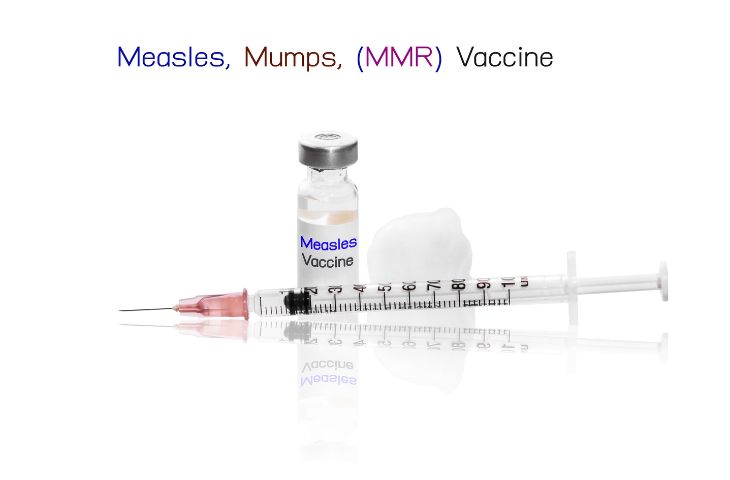
MMR (measles–mumps–rubella) combined vaccine
Like seasonal influenza, these three viral diseases are easily transmitted through the respiratory tract. Contracting measles, mumps, or rubella during pregnancy significantly increases the risk of miscarriage or stillbirth. According to WHO statistics, there are approximately 17 million measles cases globally each year, 90,000 mumps cases, and around 100,000 rubella cases among pregnant women. These diseases are major causes of congenital anomalies, particularly those affecting the brain, heart, hearing, and vision.
HPV vaccination before pregnancy helps the immune system produce protective antibodies, creating a “shield” for both mother and baby throughout the nine months of pregnancy.
Hepatitis B vaccine
Hepatitis B is a viral infection caused by the HBV virus. During pregnancy, a woman’s immune system is weakened, and if she contracts hepatitis B, the risks of developing chronic hepatitis, cirrhosis, liver cancer, and liver failure are very high. The virus can also be transmitted from mother to child, causing conditions such as neonatal jaundice. To prevent these risks, the WHO recommends that women complete all 3 doses of the hepatitis B vaccine before pregnancy. Although the vaccine does not harm the fetus, early vaccination is advised to ensure full protection throughout pregnancy.
Varicella (chickenpox) vaccine
If a woman contracts chickenpox during the first trimester, even with treatment, the complications can be severe. Maternal chickenpox infection can lead to serious fetal anomalies, including congenital heart defects, cataracts, brain damage, and congenital varicella syndrome. Statistics from the Ministry of Health show that about 30% of infants with congenital varicella die, while 15% are at risk of developing herpes zoster in the first four years of life. Vaccination before pregnancy is the only effective preventive measure. This vaccine is recommended for women who have never had chickenpox, and even those who were vaccinated in childhood should receive a booster dose at least 3 months before conception.
Diphtheria, pertussis, and tetanus vaccine (DPT)
Vaccination against diphtheria, pertussis, and tetanus is crucial for women planning pregnancy. These are dangerous bacterial infections that can cause miscarriage, preterm birth, fetal abnormalities, developmental delays, and even infertility. Since the DPT vaccine is only administered to infants from 2 months of age, newborns are particularly vulnerable to pertussis in the early weeks of life. Maternal immunization helps minimize the risks during pregnancy and provides passive immunity, giving the baby early protection against these infections.
In addition to these six essential vaccines, women preparing for pregnancy are also encouraged to receive the HPV vaccine and the Japanese encephalitis vaccine to achieve optimal reproductive health protection. Register for maternal vaccination HERE.
Is vaccination necessary during pregnancy?
If a woman has already completed all the recommended vaccines before conception, she can feel reassured about having a healthy pregnancy. However, the timing of vaccination is also important; it should not be too far in advance of pregnancy. For example, if the mother has not received a tetanus vaccine within the past 5 years, she should receive a booster shot during pregnancy, ideally before the 35th week of gestation.
In addition, pregnant women may receive booster doses of the influenza and hepatitis B vaccines. For other types of vaccines, it is advisable to consult a physician for specific recommendations. Importantly, the measles–mumps–rubella (MMR) vaccine must not be administered during pregnancy.
Reader may also be interested in:
- HPV vaccination for cervical cancer prevention: A vital shot for women
- Just one flu vaccine shot: Protects mothers throughout pregnancy and their babies during the first six months of life
Vaccination schedule for pregnant women
Most vaccines permitted during pregnancy are typically administered between the 4th and 6th months of gestation. However, the exact timing depends on each vaccine type, medical indications, and the mother’s health condition.
- MMR vaccine (measles–mumps–rubella): should be given at least 1 month before conception to ensure effective protection.
- Diphtheria–pertussis–tetanus (DPT): requires only one dose, which can be administered either before pregnancy or during the 6th month of pregnancy.
- Hepatitis B vaccine: ideally administered before conception to protect the mother from the earliest days of pregnancy. However, if the woman has not been vaccinated prior to pregnancy, physicians still recommend receiving the HBV vaccine at any stage of pregnancy.
- Influenza vaccine: can be administered at any time during pregnancy, but should be given as early as possible and repeated annually.
- Varicella (chickenpox) vaccine: must not be administered during pregnancy; it should be completed at least 3 months before conception.
Important notes for vaccination during pregnancy
Pregnancy is a sensitive period, and changes in the immune system can increase the likelihood of vaccine-related reactions. Therefore, vaccination for expectant mothers requires special attention to the following:
- Thorough pre-vaccination screening: physicians must carefully review the mother’s medical history and allergy history to determine whether vaccination is appropriate. If any risk, even minimal, is identified, vaccination may be postponed.
- Monitoring before and after vaccination: pregnant women should be closely observed during and after the injection. If the mother is experiencing fever, acute illness, or chronic disease exacerbation, vaccination should be deferred. It is advisable for the mother to remain at the clinic for 30–60 minutes after vaccination so that any adverse reactions can be managed promptly.
- Adherence to the vaccination schedule: vaccines must be administered at the correct intervals and dosages to provide the most effective protection for both mother and baby.
How to reduce side effects after vaccination during pregnancy
After vaccination, some pregnant women may experience mild side effects such as low-grade fever, muscle soreness, and fatigue. A few simple measures can help relieve these reactions:
- Drink plenty of water and eat fruits rich in vitamin C to stay hydrated and reduce prolonged fatigue.
- If fever develops, avoid taking medication on your own; instead, apply warm compresses, especially to the armpits, groin, neck, and arms.
- Maintain a nutritious diet. If appetite decreases, meals can be divided into smaller portions, with options such as soups or porridge instead of rice.
Things to avoid after vaccination:
- Do not bathe in cold water.
- Do not take antipyretic medication unless prescribed by a physician.
Warning signs: if severe reactions occur such as prolonged fever, vaginal bleeding, or sudden hypotension, contact your doctor immediately and go to the nearest healthcare facility for timely evaluation and treatment.
Where should pregnant women get vaccinated?
For many years, Hong Ngoc General Hospital has been a trusted choice for women seeking vaccination before and during pregnancy. By selecting vaccination packages at Hong Ngoc, clients receive a range of valuable benefits, including:
- Guaranteed vaccine reservation to ensure stable supply for clients
- Authentic vaccine sources, quality-assured and stored in compliance with GSP standards
- Vaccination packages with extended validity up to 6 months after purchase
- Complimentary consultation and pre-vaccination screening
- A network of 7 vaccination centers across 12 districts in Hanoi, offering maximum convenience for clients to choose the most suitable location
Contact information Hong Ngoc General Hospital
- Hotline: 0949 416 006 – 0947 616 006 – 0911 858 616
- Tel: (84-24) 3927 5568 ext *3036 – *3388 – *2244
- Follow us on fanpage: Hong Ngoc General Hospital