



Osteoarthritis often causes pain and discomfort, significantly affecting patients’ quality of life. Therefore, everyone should remain vigilant and recognize the early symptoms of osteoarthritis to ensure timely treatment and prevent serious health complications.
Symptoms of osteoarthritis
Symptoms of osteoarthritis may vary from person to person, depending on the severity of the condition and the affected joint. However, patients can still recognize the disease through several typical symptoms, including:
- Joint pain: This is the most typical symptom of osteoarthritis. Pain may be dull or acute at different times and can significantly affect mobility. In the early stages, pain usually occurs only when the affected joint is moved and then quickly subsides. However, if the condition persists over time, osteoarthritis may cause severe and prolonged pain. In particular, sudden changes in weather or colder temperatures may worsen the pain.
- Joint stiffness: This symptom often occurs together with pain, especially in the early morning after waking up. At this time, the affected joints may become stiff and difficult to move. The stiffness usually improves after about 10 to 30 minutes of rest. However, if the disease becomes persistent, this symptom may recur and significantly affect mobility and daily activities.

- Crepitus during movement: Osteoarthritis causes the cartilage and cushioning structures between the bone ends to wear down, while the amount of lubricating synovial fluid gradually decreases. As a result, when patients move, the bone ends may rub against each other, producing a crackling or grinding sound accompanied by severe pain. Patients may notice this symptom during vigorous movement.
- Difficulty with movement: Joint degeneration can impair mobility. At this stage, patients may find it difficult to perform certain movements, such as bending forward, flexing the body, turning the neck, or walking.
- Muscle atrophy, swelling, and deformity: If osteoarthritis persists for a long time without proper treatment, more serious symptoms may develop, such as swelling that leads to deformity of the affected joint, knee malalignment, and muscle atrophy around the degenerated joint due to prolonged lack of movement.
In addition to the symptoms mentioned above, osteoarthritis may present with different signs depending on the affected joint.
- Hip osteoarthritis: Patients often experience pain in the groin and the front inner thigh. Pain may also occur in the buttock and radiate down the back of the thigh. Patients may walk with a limp, have difficulty abducting the hip, and find it hard to flex the thigh toward the abdomen.
- Knee osteoarthritis: Patients may have difficulty standing up and sitting down, especially when going up or down stairs or rising from a squatting position. In some cases, they may suddenly buckle or fall due to pain. Walking ability and knee flexion and extension may also be limited, and patients may hear sounds when moving the joint.
- Lumbar spine osteoarthritis: Patients may experience dull pain in the lower back, which often worsens in the evening after a working day and improves with rest. During painful episodes, even simple movements and daily activities may become difficult.
- Shoulder osteoarthritis: Movements such as raising the arm forward, moving it backward, or rotating the arm may be limited. Patients may also have difficulty performing simple activities such as scratching their back or combing their hair.
Diagnosis of osteoarthritis
When symptoms of osteoarthritis occur, patients should visit a specialized medical facility as soon as possible for examination and an accurate diagnosis. Based on the diagnosis, doctors can recommend an appropriate treatment approach.
First, the doctor will assess clinical signs, including whether the joint is swollen, painful, red, warm, or difficult to move. The patient’s medical history will also be reviewed.
The doctor may then order necessary diagnostic tests to confirm the condition. Common methods used by specialists to accurately diagnose osteoarthritis include:
- X ray: This can detect bone spurs, cartilage loss, joint space narrowing, and other abnormalities.
- Magnetic resonance imaging (MRI): MRI allows doctors to obtain a comprehensive view of the joint and detect damage to the articular cartilage.
- Arthroscopy: This enables direct visualization of cartilage damage within the joint.
- Joint ultrasound: Ultrasound helps assess joint effusion and degenerative cartilage fragments.
After test results are available, doctors will make a diagnosis and recommend the most suitable treatment plan for each patient. Treatment aims to relieve symptoms of osteoarthritis, maintain and restore joint function, and prevent possible complications.
Treatment methods for osteoarthritis
There are currently many treatment methods for osteoarthritis. Depending on the severity and condition of the disease, doctors will develop different treatment regimens for each patient. Below are some common treatment methods recommended by specialists:
Increasing physical activity
This treatment approach is commonly recommended for people with osteoarthritis. Regular exercise at an appropriate intensity can help improve joint flexibility and reduce symptoms such as pain and stiffness. In addition, patients may apply heat or cold therapy to relieve pain, swelling, and inflammation.
Exercise should be performed according to a doctor’s advice and guidance to avoid incorrect movements that may negatively affect the joints.
Weight loss
Overweight or obesity places excessive pressure on the bones and joints as they support excess body weight, making osteoarthritis worse. For patients who are overweight or obese, scientifically guided weight loss through physical activity and a healthier diet is recommended.

Medication
Certain medications may be recommended by doctors to help improve the symptoms of osteoarthritis. Depending on the severity and condition of the disease, doctors will prescribe different medications for each individual case. Commonly recommended medications may include:
- Paracetamol: This medication helps provide rapid relief of localized pain.
- Nonsteroidal anti inflammatory drugs (NSAIDs): NSAIDs may be prescribed when paracetamol is not effective in relieving pain. In addition to pain relief, these medications can also help reduce inflammation and swelling quickly.
- Steroid injections: This method must be performed only as prescribed by a doctor to avoid serious side effects. After injection, the medication can provide local anesthesia and rapid pain relief.
Note: When using any medication, patients should strictly follow the dosage and instructions prescribed by their doctor. Medication should never be overused or taken without medical guidance, as this may cause harm to the liver, kidneys, and stomach and may seriously affect the patient’s health.
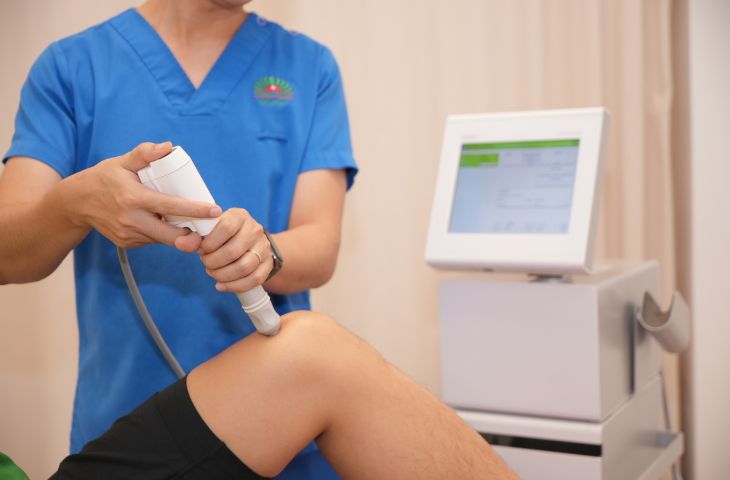
Physical therapy
Physical therapy is a modern treatment method recommended by specialists because it is noninvasive, safe, and suitable for a wide range of patients.
When performed properly, physical therapy not only helps relieve pain, swelling, and inflammation, but also improves joint mobility. However, patients should undergo physical therapy under the guidance of a therapist or physician. They should avoid performing exercises on their own at home without proper instruction, as incorrect movements may negatively affect and damage the musculoskeletal system.
Conservative treatment with biologic preparations
Intra articular injection of artificial synovial fluid with hyaluronic acid or platelet rich plasma, or PRP, injection are currently among the most commonly used conservative treatment methods for osteoarthritis.
Among these, PRP injection is considered a safe and preferred option because it uses the patient’s own blood, which is processed in a sterile, standardized environment. A course of PRP injections may help relieve pain caused by osteoarthritis, tendinitis, and sports injuries without the need for surgery or medication.
A typical treatment course includes three injections, with each injection given two weeks apart. However, the treatment schedule may be adjusted depending on the patient’s condition and recovery progress.
Surgery
There are currently three commonly used surgical methods for osteoarthritis: arthroscopy, joint replacement, and corrective osteotomy. However, joint surgery is considered the last option and is usually indicated only when conservative treatments are no longer effective.
Surgery can significantly improve symptoms and help restore more flexible joint movement. However, it also has certain limitations, such as high cost, a longer recovery and rest period, and the risk of postoperative infection if the surgical wound is not properly cared for.
When undergoing examination and treatment at the Musculoskeletal Department of Hong Ngoc General Hospital, patients can access high quality medical care in Hanoi, including:
- A team of experienced and highly qualified doctors who have worked at leading hospitals in Vietnam and abroad, including Bach Mai Hospital, Viet Duc University Hospital, and Royal North Shore Hospital in Australia.
- A modern medical equipment system imported from the United States, including the SIGNA Prime MRI system, a 128 slice CT scanner, the Hologic bone densitometry system, and the Logiq P7 musculoskeletal ultrasound system. These technologies provide high resolution images and help accurately detect tumors, bone and joint injuries, and other abnormalities at an early stage.
- A coordinated treatment approach with the Physical Therapy and Rehabilitation Department, using German therapy equipment and advanced Austrian manual therapy techniques to help patients restore mobility more quickly and reduce pain caused by osteoarthritis.
- A specific follow up schedule, with proactive appointment reminders for each patient.
- A clean hospital environment with modern amenities, including free Wi Fi, a coffee shop, and a restaurant.
- Services available on Saturdays and Sundays with no additional charges.
- Fast and convenient direct billing procedures, helping ensure maximum insurance benefits for patients.
Note: The information provided in this article by Hong Ngoc General Hospital is for reference purposes only and is not intended to replace professional medical diagnosis or treatment. Patients should not purchase or use medications on their own for treatment. To accurately determine their medical condition, patients should visit a hospital or reputable healthcare facility for direct examination, diagnosis, and consultation with a physician on an appropriate treatment plan.
Follow the official fanpage of Hong Ngoc General Hospital for more useful health information:https://www.facebook.com/BenhvienHongNgoc