




Finding a lump under the skin can be worrying, and many people wonder whether it is a benign lipoma or a sign of a more serious condition. Benign lipomas typically feel soft, move easily under the skin, grow slowly and cause little or no pain. However, a lump’s nature cannot be confirmed by looking at or feeling it alone. This article explains common features, signs to watch for and when to seek medical care for an appropriate diagnosis.
Key points:
- Signs of a benign lipoma: The lump is usually soft, moves easily under the skin, is round or oval, grows slowly and causes little or no pain. A medical assessment is needed to confirm what it is.
- Causes and risk factors: Lipomas form when mature fat cells multiply. Family history, age and some rare syndromes may increase the likelihood of developing them.
- Diagnosis: A doctor may combine a physical examination with soft-tissue ultrasound, MRI or CT scans, and a biopsy if needed to assess the lump.
- Benign versus malignant lumps: Benign lipomas are usually soft, movable and slow-growing. A lump that grows quickly, lies deep beneath the skin or is large should be assessed carefully to rule out malignancy.
- Treatment: Small lipomas that cause no symptoms can often be monitored. Surgery may be considered if a lump grows large, causes pain or pressure, affects movement, or has suspicious features.
| Lipomas are common benign soft-tissue tumours made up of fat cells. They usually grow slowly, feel soft, move easily when touched and cause little or no pain. Lipomas can develop in many parts of the body, including the neck, shoulders, back, arms and thighs. Most are harmless and only need monitoring. However, watching for changes such as rapid growth or pain can help identify when medical assessment is needed. |
1. 10 common features of a benign lipoma
Benign lipomas usually grow slowly and cause no typical symptoms. Many people discover one by chance when they feel a lump under the skin. The following features may help identify a lipoma and distinguish it from other unusual lumps.
1.1. The lump feels soft
This is a characteristic feature of a benign lipoma. It usually feels soft and slightly elastic because it is made up mainly of mature fat cells. However, this feature alone cannot reliably distinguish a lipoma from other soft-tissue lumps. A doctor should assess any lump that shows unusual changes.
1.2. The lump moves easily under the skin
A benign lipoma is usually located just beneath the skin and is not firmly attached to the surrounding tissues. When pressed gently with a finger, it may move in different directions. This can help doctors distinguish it from some malignant lumps, which may be fixed to nearby tissues.
1.3. It grows slowly over time
Most benign lipomas grow very slowly and may remain for months or years with little change. If a lump grows quickly over a short period, seek medical advice to rule out other conditions, including liposarcoma, a malignant soft-tissue tumour.
1.4. It is usually painless
Most benign lipomas do not cause pain or affect a person’s health. However, a lump may cause pain or discomfort if it presses on a nerve or blood vessel, or if it is in an area that is frequently rubbed or pressed during everyday activities.
1.5. The skin over the lump does not change colour
The skin over a lipoma usually remains its normal colour, without redness, warmth or signs of inflammation. If the area becomes red or swollen, develops an ulcer or starts to discharge fluid, a doctor should assess it to determine the cause.
1.6. The lump is round or oval with clear borders
Lipomas are often round or oval, with borders that are distinct from the surrounding tissue. This can make them easier to identify during a physical examination. However, this is only one feature that may suggest a benign lipoma and should be considered alongside clinical findings and any tests needed.
1.7. It is usually small
Most lipomas are about 1–5 cm in diameter, although some may grow larger over time. Lumps larger than 5 cm or those that are growing quickly should be assessed more closely.
1.8. It commonly appears on the shoulders, neck, back, arms or thighs
Lipomas can develop anywhere there is fatty tissue, but they are commonly found on the neck, shoulders, back, chest, arms and thighs. A person may also develop several lipomas in different parts of the body.
1.9. One or several lumps may develop
Some people have only one lipoma, while others develop several. Multiple lipomas may be associated with family history or certain rare syndromes and should be assessed by a doctor.
1.10. The lump has clear borders and a smooth surface
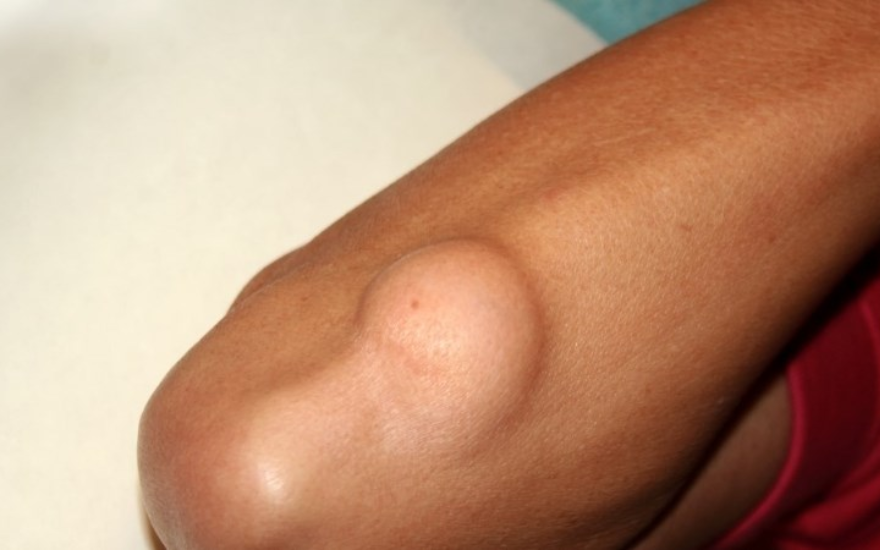
A lipoma usually lies in the layer of fat just beneath the skin, so it may be easy to feel or see if it grows large. It often forms a slight bulge beneath the skin, while the overlying skin generally remains unchanged in colour and appearance.
2. Risk factors for benign lipomas
The following factors are commonly associated with the development of lipomas:
- Family history: People with a family history of lipomas or familial multiple lipomatosis may be more likely to develop them.
- Age: Benign lipomas are most common in people aged 40–60. The likelihood may increase with age as fatty tissue changes and the body undergoes natural ageing.
- Soft-tissue injury: Some lipomas appear after an impact or injury, although further research is needed to confirm this association.
- Certain rare genetic syndromes: Conditions such as familial multiple lipomatosis, Dercum disease, Gardner syndrome or Madelung disease may increase the likelihood of developing multiple lipomas.
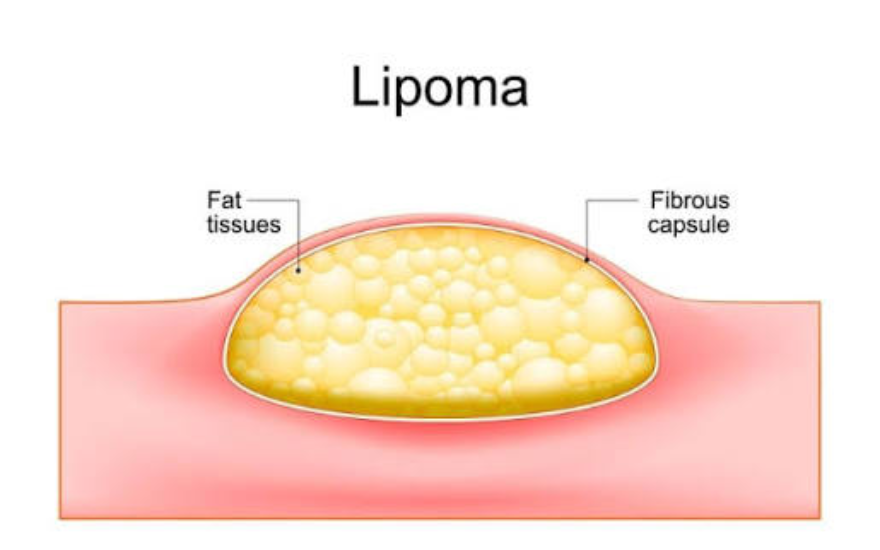
- Abnormal growth of fat cells: A lipoma forms when mature fat cells grow and cluster in one area beneath the skin, creating a benign lump. This is considered the main process involved, although what triggers it is not yet fully understood.
3. Diagnostic methods for benign lipomas
Diagnosing a benign lipoma involves more than assessing clinical symptoms. Imaging tests or a biopsy may also be needed when a lump is suspicious. These assessments help determine what the lump is and rule out malignancy.
- Physical examination: This is the first step. The doctor assesses the lump’s location, size, shape, softness, mobility and tenderness. Further tests may be requested if indicated.
- Soft-tissue ultrasound: This commonly used imaging test helps determine the lump’s location, size, structure and borders. It can also help distinguish a lipoma from a cyst, lymph node or other soft-tissue lesion.
- Magnetic resonance imaging (MRI) or computed tomography (CT): These tests may be recommended if a lump is large, lies deep beneath the muscle, grows quickly or has unusual features. MRI is particularly useful for assessing how the lump relates to nearby tissues and helping distinguish a benign lipoma from a malignant soft-tissue tumour such as liposarcoma.
- Biopsy or histopathological examination: If the lump is suspected to be malignant, or the examination and imaging results are inconclusive, the doctor may recommend taking a tissue sample for analysis. The results help determine the nature of the lump and guide treatment.

4. How to distinguish a benign lipoma from a malignant tumour
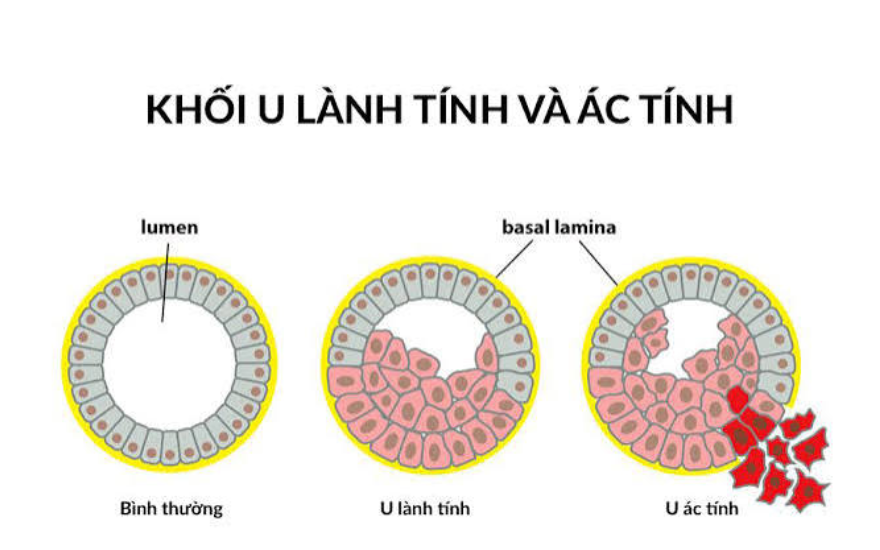
Both benign lipomas and liposarcomas may appear as lumps beneath the skin. However, they differ in their nature, potential seriousness and treatment. Do not try to diagnose a lump yourself. See a doctor for an examination and any necessary tests.
Benign lipoma
A benign lipoma is a lump made up of mature fat cells. Most grow slowly, have relatively well-defined borders, feel soft, move easily under the skin and are painless. They usually lie just beneath the skin and commonly occur on the neck, shoulders, back, arms or thighs. Small lipomas that cause no symptoms may only need periodic monitoring, as advised by a doctor.
Liposarcoma
Liposarcoma is a rare cancer of the soft tissues. It often develops deep within soft tissue, tends to grow quickly and increase in size, and may cause pain, numbness or restricted movement if it presses on nearby structures. Unlike a benign lipoma, liposarcoma requires specialist care, which may include surgery, radiotherapy or chemotherapy depending on the case.
5. Accurate assessment and diagnosis of benign lipomas at Hong Ngoc General Hospital
Diagnosis is an important step in distinguishing a benign lipoma from malignant soft-tissue tumours such as liposarcoma. The findings help doctors develop an appropriate monitoring or treatment plan. At Hong Ngoc General Hospital, patients receive coordinated care from the Department of Oncology, supported by modern diagnostic equipment and personalised treatment plans.
The Department of Oncology specialises in assessing and treating soft-tissue tumours:
- Assessment, diagnosis and treatment of soft-tissue tumours: The Department of Oncology assesses and treats a range of soft-tissue conditions, including lipomas, fibromas, cysts and tumours suspected of being malignant. Each patient receives a comprehensive assessment to determine the nature of the lump and the appropriate course of action.
- Coordinated care from diagnosis to follow-up: The process—from specialist consultation and imaging to biopsy when needed, surgery and post-treatment follow-up—is provided at the hospital. This helps reduce waiting times and support continuity of care.
Doctors assess the features of the lump:
- Examination by a doctor: Experienced doctors from the Department of Oncology assess the lump through a physical examination and a review of the patient’s medical history and risk factors.
- Distinguishing lipomas from other lumps: Doctors consider the examination findings together with test results to distinguish a benign lipoma from an epidermoid cyst, lymph node, fibroma or malignant soft-tissue tumour such as liposarcoma, and make an appropriate diagnosis.
- Advice on monitoring or treatment: After the assessment, the doctor will recommend regular monitoring or treatment if the lump grows large, causes pain or pressure, or affects function or appearance.
Imaging and tests when needed
- Soft-tissue ultrasound: High-resolution ultrasound helps identify the lump’s location, size, structure and borders, and can help distinguish a lipoma from other soft-tissue lesions.
- MRI or CT when indicated: For large or deep lumps, or those with suspicious features, the doctor may recommend an MRI or CT scan to assess whether the lump is affecting nearby structures.
- Biopsy and histopathology when needed: If a physical examination and imaging cannot determine the nature of the lump, the doctor may recommend a biopsy or histopathological examination. These tests help assess the tissue, confirm the diagnosis and guide treatment.
Choosing an appropriate course of action
- Monitoring when treatment is not indicated: For lipomas that grow slowly and cause no pain or disruption to daily activities, the doctor will advise monitoring and regular follow-up.
- Surgery when indicated: The doctor may recommend surgical removal to relieve symptoms, improve quality of life or reduce the risk of complications.
- Avoiding unnecessary procedures: Each patient receives an individual treatment plan based on the lump’s features and their overall health. Surgery is avoided when there is no clear indication.
Benefits of assessment and treatment at Hong Ngoc General Hospital
- Experienced specialists provide direct assessment and care: Experienced specialists from the Department of Oncology assess the lump, review diagnostic results and advise on an appropriate course of action. If surgery is indicated, a specialist performs the procedure. The treatment plan takes into account the lump’s size, location and features, as well as the patient’s health.
- Carefully controlled surgical procedures: All surgeries follow established safety procedures and strict infection-prevention and postoperative-care standards.
- Support for early recovery after surgery: The enhanced recovery after surgery (ERAS) approach helps reduce pain and complications, shorten hospital stays and support faster recovery.
- Multidisciplinary collaboration: For complex cases or when malignancy is suspected, doctors from the Department of Oncology work with other relevant specialists to determine the most appropriate treatment plan.
- Modern facilities and comfortable inpatient rooms: Coordinated medical equipment and well-appointed treatment spaces support a safe and comfortable care experience.
- Support with health insurance and direct billing: The hospital supports health insurance and direct billing insurance claims in accordance with applicable policies, helping patients manage the payment process during treatment.

6. Frequently asked questions about the signs of a benign lipoma
6.1. Are benign lipomas painful?
Most benign lipomas do not cause pain. However, a lump may cause pain or discomfort if it grows large, presses on a nerve or blood vessel, or lies in an area that is frequently rubbed during everyday activities. If it suddenly becomes very painful or develops other unusual features, seek medical advice.
6.2. Does a benign lipoma need surgery?
Not every benign lipoma needs surgery. If a lump is small, grows slowly, causes no pain and does not interfere with daily activities, the doctor will usually recommend regular monitoring. Surgery may be considered if it grows large, causes pain or pressure, limits movement, affects appearance, or has suspicious features that need to be assessed through histopathology.
6.3. Do benign lipomas go away on their own?
Benign lipomas usually do not disappear on their own. Most remain stable or grow very slowly over time. If a lump causes no symptoms, regular monitoring may be all that is needed. If it grows quickly or causes discomfort, the doctor will consider an appropriate treatment.
6.4. Where do benign lipomas usually appear?
Benign lipomas can develop wherever there is fatty tissue, but they are most commonly found on the neck, shoulders, back, chest, arms and thighs. They usually lie just beneath the skin, feel soft and move easily. A person may have one lipoma or several.
6.5. Can a benign lipoma return after surgery?
The risk of recurrence after a lipoma is completely removed is low. However, some people may develop new lipomas, particularly those with familial multiple lipomatosis or related genetic syndromes. Follow the doctor’s advice about follow-up if you notice another lump.
6.6. How can I tell a benign lipoma from a malignant tumour?
A lump cannot be reliably classified by sight or touch alone. Benign lipomas are usually soft, slow-growing, easy to move and painless. Some malignant tumours may grow quickly, lie deep beneath the skin, become large or cause pain, although they do not always have typical features. To determine what a lump is, a doctor may recommend an examination and, if needed, ultrasound, MRI, CT or a biopsy.
Recognising the signs of a benign lipoma can help you monitor changes and decide when to seek medical advice. However, a lump’s nature cannot be confirmed by looking at or feeling it alone. If it grows quickly, becomes painful, lies deep beneath the skin or continues to increase in size, see a medical facility for a specialist assessment and any necessary tests. At the Hong Ngoc Department of Oncology, experienced specialists assess patients directly and use appropriate diagnostic methods to evaluate the lump and develop a treatment plan for each individual case.
Department of Oncology, Hong Ngoc General Hospital – a trusted provider of comprehensive care for benign lipomas Hotline: 0911 858 626 Addresses:
Website: https://hongngochospital.vn/vi/chuyen-khoa/khoa-ung-buou Facebook: https://www.facebook.com/BenhvienHongNgoc Email: info@hongngochospital.vn |
References:
- Mayo Clinic. Lipoma – Diagnosis & Treatment: Lipoma - Diagnosis & treatment - Mayo Clinic
- Mayo Clinic. Lipoma: https://www.mayoclinic.org/diseases-conditions/lipoma/symptoms-causes/syc-20374470
- Cleveland Clinic. Lipoma: https://my.clevelandclinic.org/health/diseases/15008-lipomas
- American Academy of Orthopaedic Surgeons (AAOS). Lipoma and Atypical Lipomatous Tumors: https://orthoinfo.aaos.org/en/diseases--conditions/lipoma