

Medical review: Hoang Van Ban, MSc, MD, Department of Orthopaedic Surgery and Neurosurgery, Hong Ngoc – Phuc Truong Minh General Hospital
Medical note: This article is for general information only and does not replace an examination, diagnosis or treatment by a doctor. Do not try to manipulate the joint, massage it forcefully, apply heat while it is acutely swollen and painful, or continue playing sport before the ankle has recovered. Seek prompt medical care if the ankle is deformed, very painful, unable to bear weight, rapidly becoming more swollen or bruised, or if the foot is numb, cold or blue.
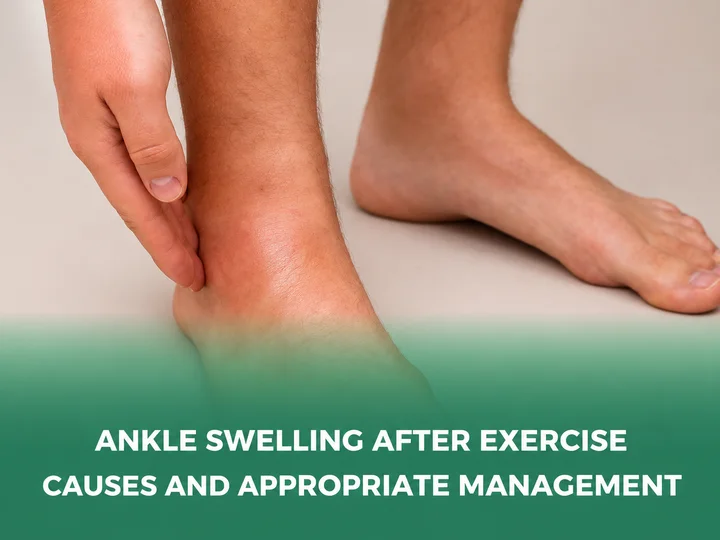
What is an ankle sprain sustained during sport?
An ankle sprain occurs when the foot twists beyond its normal range, stretching or tearing the ligaments around the ankle. In most cases, the foot rolls inwards, injuring the ligaments on the outer side of the ankle. Outward rolling is less common but may affect the ligaments on the inner side or the tissues connecting the two lower-leg bones.
Depending on the severity of the injury, the ligaments may be mildly stretched, partially torn or completely torn. More severe injuries generally cause greater pain, swelling and ankle instability, and take longer to recover.

Causes and signs of an ankle sprain
Ankle sprains are common in sports involving running, jumping, changing direction or landing, such as football, basketball, badminton, tennis, pickleball and running. Recognising how the injury occurred and its early signs can help players respond appropriately.
Situations that can cause an ankle sprain
The ankle may twist when the foot is placed awkwardly while the body continues moving. Common situations include:
- Landing awkwardly: The foot lands on its outer edge or on another player’s foot after a jump.
- Changing direction suddenly: The foot stays planted on the ground while the body turns in another direction.
- Uneven playing surfaces: A slippery or uneven surface, or an obstacle, causes the player to misstep.
- Unsuitable footwear: Loose shoes, worn soles or poor grip can make the foot less stable.
- Incomplete ankle recovery: People who have had a sprain but have not fully regained strength, balance or movement control are at greater risk of reinjury.

Signs of an ankle sprain
Pain often begins immediately after a misstep, an awkward landing or a collision. Depending on the severity of the injury, symptoms may include:
- Pain around the ankle that worsens when standing, walking or turning the foot.
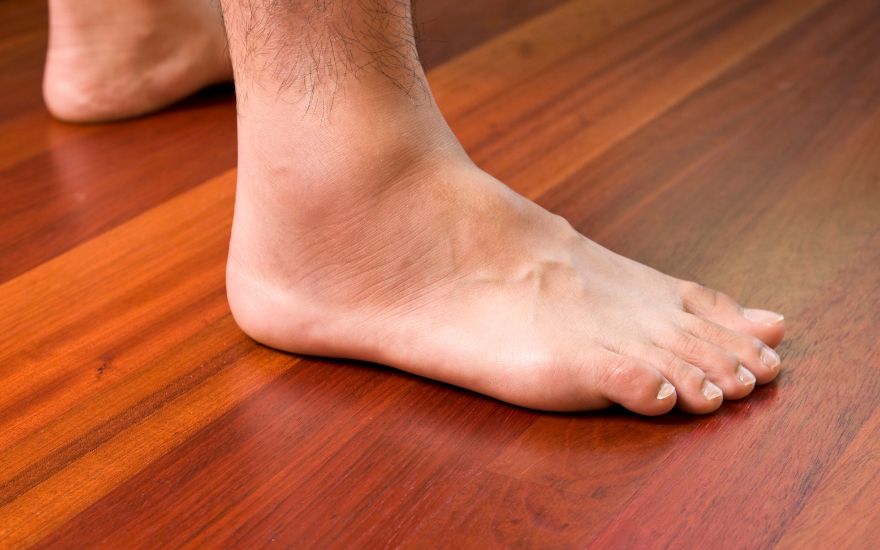
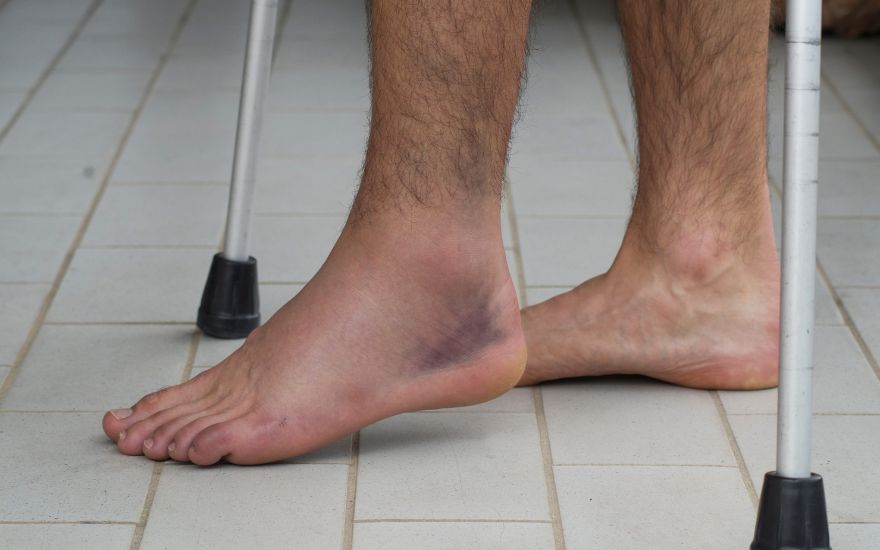
- Swelling and bruising that become more noticeable after the injury.
- Difficulty bending, straightening or rotating the ankle.
- Limping or difficulty bearing weight on the injured leg.
- A weak or unstable feeling in the ankle, or a tendency for it to give way.
A mild sprain stretches the ligament or causes microscopic damage. A moderate sprain may involve a partial tear, while a severe sprain can cause a complete tear and significant joint instability.
Visible symptoms are not always enough to distinguish a sprain from a fracture or dislocation. Anyone with severe pain or rapidly increasing swelling should seek medical assessment to determine the extent of the injury.
First aid for an ankle sprain on the field
After rolling an ankle, stop playing and do not try running or twisting the ankle to test it. Appropriate first aid in the early stages can help protect the joint, relieve pain and limit swelling.
Follow the RICE principle
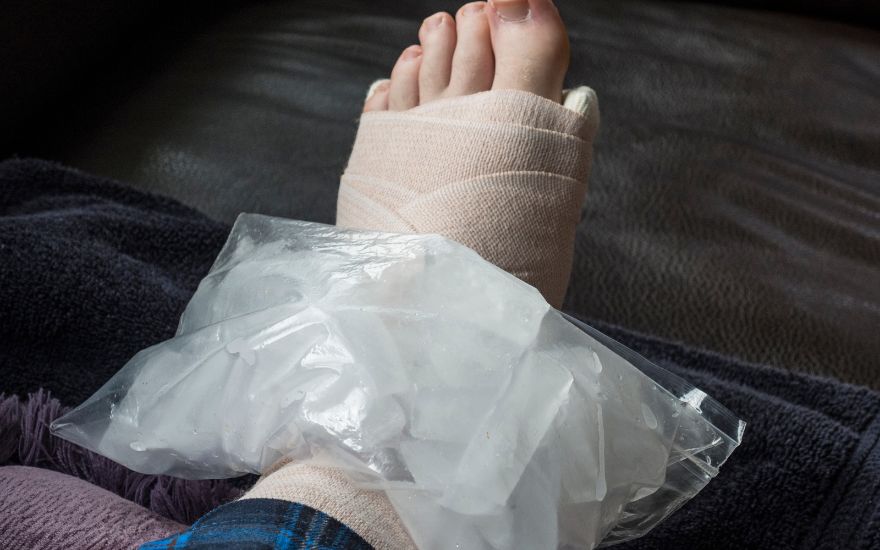
RICE stands for rest, ice, compression and elevation. These steps can be taken immediately after an injury:
- Rest: Stop playing straight away. If walking causes significant pain, ask someone to help you leave the field rather than putting weight on the injured leg.
- Ice: Wrap an ice pack or cold pack in a thin towel and apply it to the painful area for about 15–20 minutes at a time. Do not apply ice directly to the skin.
- Compression: Wrap the ankle with an elastic bandage, applying moderate pressure to help control swelling. Loosen it if the toes become numb, cold, blue or more painful.
- Elevation: Rest the lower leg on pillows so the ankle is raised, keeping the position comfortable and avoiding numbness.
These measures mainly help control symptoms in the early stages. If there are signs of a serious injury, seek medical assessment rather than relying on home care alone.
What to avoid
Inappropriate treatment immediately after an injury can worsen pain and swelling or aggravate the damage. If you have rolled your ankle, avoid:
- Applying warming oil or heat too soon: Heat in the early stages may increase swelling and bruising.
- Vigorous massage: Forceful pressure on the injured area may worsen the pain.
- Pulling or manipulating the ankle yourself: Trying to put the joint back in place before ruling out a fracture or dislocation could make the injury worse.
- Applying herbal poultices or remedies with unknown ingredients: These may cause skin irritation, burns or infection.
- Continuing to play: Running, jumping or changing direction while the ankle is painful and unstable increases the risk of further injury or another sprain.

When should you seek medical care after an ankle sprain?
Not every ankle sprain requires an immediate hospital visit. A mild sprain may gradually improve with reduced activity and appropriate care. Seek medical assessment promptly if you have any of the following:
- The ankle or foot is deformed after the injury.
- You cannot stand or walk a few steps.
- There is sharp pain over a specific point on a bone.
- Swelling or bruising is increasing rapidly.
- The ankle feels very unstable or frequently gives way.
- The foot is numb, cold, pale or blue.
- Ankle movement is markedly restricted.
- Pain and swelling do not improve after a few days of care.
- Sprains recur frequently or the ankle often feels unstable.
During the assessment, the doctor will distinguish a sprain from a fracture, dislocation or other injury around the ankle. Imaging may also be recommended to assess the severity of the injury.

Ankle sprain assessment at Hong Ngoc General Hospital
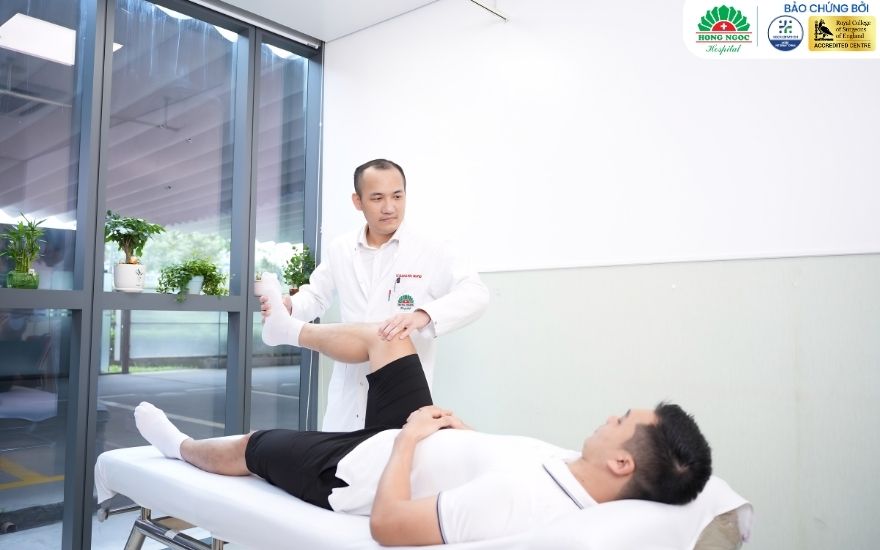
At the Department of Orthopaedic Surgery and Neurosurgery at Hong Ngoc – Phuc Truong Minh General Hospital, the doctor will assess the location of the pain, the degree of swelling, ankle movement, ability to bear weight and joint stability.
Imaging may also be recommended to check for a fracture or associated injury. Based on the findings, the doctor will select treatment suited to the severity of the injury and each person’s activity needs.
During recovery, physiotherapy can help restore range of motion, muscle strength, balance and ankle control. Exercises are progressed according to the patient’s response. The aim is not only to relieve pain, but also to improve joint stability and support a safe return to daily activities, training or sport.
How to prevent recurrent ankle sprains
People who have had an ankle sprain are at greater risk of reinjury if they return to activity before their strength, balance and joint control have fully recovered. Prevention after an injury is therefore just as important as pain relief.
Players should:
- Warm up the ankles, lower legs and whole body before training.
- Do heel raises to strengthen the muscles around the ankle.
- Practise single-leg standing and balance exercises to improve joint control.
- Use resistance bands to exercise the ankle through bending, straightening and rotational movements.
- Gradually increase training duration, speed and difficulty after a period of rest.
- Practise proper landing, pivoting and change-of-direction technique.
- Choose shoes that fit properly and are suitable for the sport and playing surface.
- Use ankle tape or a brace when advised, particularly if sprains have occurred repeatedly.

Frequently asked questions about ankle sprains during sport
If I can still walk after spraining my ankle, do I need to see a doctor?
Being able to walk does not necessarily mean the injury is mild. Some ligament tears and small fractures may still allow weight-bearing at first. Seek medical advice if the pain worsens, swelling or bruising is significant, you are limping, you have sharp pain over a specific bone, or the ankle feels unstable.
Should I apply heat or ice after spraining my ankle during sport?
While the ankle is acutely swollen and painful, apply a cold pack for about 15–20 minutes at a time, wrapped in a towel to protect the skin. Heat should only be considered once the acute swelling has subsided and if it is appropriate for your recovery. Do not apply heat immediately after the injury.
Does an ankle sprain during sport require a cast?
Not every sports-related ankle sprain requires a cast. Mild sprains are usually managed by protecting the joint, controlling pain and swelling, and gradually restoring movement. More severe injuries may require a brace or temporary immobilisation, depending on the extent of the ligament tear, joint stability and any associated injuries.
How long does an ankle sprain take to heal?
A mild sprain often improves within one to three weeks. A partial ligament tear may take three to eight weeks, while a severe injury can take several weeks to a few months. Recovery time depends on the extent of the injury and the rehabilitation process. Return to sport only when the ankle is pain-free, moves well, has regained sufficient strength and no longer feels unstable.
Conclusion
An ankle sprain during sport needs appropriate early care to limit pain and swelling, protect=- the ligaments and reduce the risk of reinjury. Stop playing, apply ice, use moderate compression, elevate the leg, and avoid massage, heat or trying to manipulate the joint yourself. Seek medical care promptly if the ankle is deformed, swelling or bruising is increasing rapidly, the pain is severe, the foot is numb or cold, or you cannot bear weight.
References
- American Academy of Orthopaedic Surgeons – Sprained Ankle
- National Health Service – Sprains and strains
- Journal of Orthopaedic & Sports Physical Therapy – Clinical Practice Guidelines for Lateral Ankle Sprains
- British Journal of Sports Medicine – Return to sport after an acute lateral ankle sprain
- Chelsea and Westminster Hospital – Care of your ankle injury