



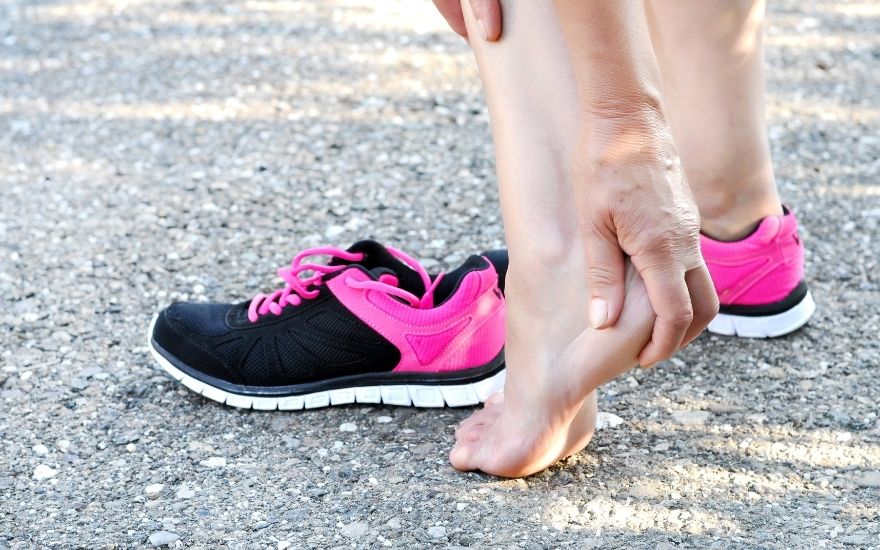
Heel pain when running can develop when the foot is subjected to excessive stress or has not had sufficient time to adapt to the intensity of training. It may be associated with injury to the plantar fascia, Achilles tendon, heel bone or surrounding tissues. Runners should therefore pay attention to the location and onset of pain, as well as its severity when standing or walking, to help identify the possible cause. If the pain worsens, persists or affects mobility, they should reduce their training intensity and seek medical attention promptly.
Medical consultation: Hoang Van Ban, MD, MSc, Department of Orthopedic Trauma and Neurosurgery, Hong Ngoc Phuc Truong Minh General Hospital.
Medical disclaimer: The following information is for reference only and is not a substitute for an in-person medical examination and diagnosis. Heel pain can have various causes that require different approaches to management. Runners should therefore not attempt to diagnose their condition based solely on the location of the pain. If the pain persists, worsens or affects walking, medical evaluation is recommended to determine the cause and receive appropriate management.
What commonly causes heel pain when running?
Running subjects the feet to repetitive impact with every step. When running distance, speed or training frequency increases faster than the muscles, tendons and bones can adapt, structures around the heel may become overloaded or injured, resulting in pain.
Plantar fasciitis causes pain under the heel
The plantar fascia is a strong band of connective tissue extending from the heel bone to the toes. It supports the arch of the foot and helps absorb stress during movement. Excessive running, sudden increases in distance or prolonged repetitive activity can overload and irritate the plantar fascia near its attachment to the heel bone, causing pain.
Pain typically occurs under the heel and is most pronounced during the first few steps after waking or after sitting for an extended period. It may ease after walking for a while but often returns after running, prolonged standing or increased activity during the day.

Achilles tendon injury causes pain at the back of the heel
The Achilles tendon connects the calf muscles to the heel bone and helps propel the foot off the ground when running. When runners increase their speed, distance or training frequency too quickly, the tendon is subjected to greater stress and may become painful, stiff or thickened.
Pain is typically felt at the back of the heel or slightly above where the tendon attaches to the heel bone. It may become more pronounced when running, climbing stairs or standing on tiptoe. Some people experience tendon stiffness in the morning or when they begin moving. Sudden pain accompanied by marked leg weakness and difficulty standing on tiptoe requires prompt medical evaluation to rule out a more serious injury.

Calcaneal stress fractures caused by repetitive high-intensity running
When the heel bone is repeatedly subjected to the impact of running without sufficient recovery time, small cracks may develop. The risk increases when runners suddenly extend their running distance or increase training intensity, even without a noticeable fall or direct impact.
Pain is typically felt at the back of the heel, particularly when running, climbing stairs or standing on tiptoe. The area may also feel stiff in the morning or when movement begins. If the pain develops suddenly or is accompanied by leg weakness or an inability to stand on tiptoe, prompt medical evaluation is required to assess for a possible Achilles tendon tear or rupture.

How should heel pain when running be managed?
When heel pain begins during a run, the runner should slow down or stop if the pain continues to worsen, alters their running gait or prevents the foot from bearing weight normally. Continuing to run simply to complete the planned distance may place further stress on irritated or injured tissues.
Over the following days, management should depend on the severity of the pain and the suspected cause. Runners may:
- Temporarily reduce or stop running activities that aggravate the pain.
- Switch to lower-impact exercise if it does not cause pain and the suspected injury does not require immobilization.
- Apply a cold pack wrapped in a towel for 15–20 minutes when needed to relieve discomfort. Do not apply ice directly to the skin.
- Wear properly fitting shoes and avoid footwear that rubs excessively against the painful area of the heel.
- Monitor walking ability, pain after activity, and heel pain or stiffness the following morning.
Avoid forceful massage or stretching during the acute stage, as this may worsen the injury. Runners should not take pain medication without consulting a doctor. If the pain is localized to the bone or a stress fracture is suspected, they should stop training and avoid repeatedly testing the heel by attempting to run.

When should heel pain after running be medically evaluated?
Runners should seek medical attention if heel pain progressively worsens, repeatedly recurs, interferes with daily activities or does not improve after approximately two weeks despite limiting activities that aggravate it. People with underlying conditions such as diabetes or reduced sensation in the feet should exercise greater caution when heel symptoms develop.
Earlier medical evaluation is required if any of the following signs occur:
- Severe pain immediately after an injury.
- Inability to stand or walk normally.
- Inability to stand on tiptoe using the affected foot.
- A popping sound or snapping sensation at the back of the heel at the time of injury.
- Visible deformity of the heel or ankle.
- Significant swelling or bruising around the heel and ankle.
- Pain localized to the bone that worsens with weight-bearing.
- Numbness, reduced sensation or signs of impaired circulation in the foot.
Sudden pain at the back of the heel accompanied by an inability to push off the foot or stand on tiptoe may indicate an Achilles tendon rupture. If bone pain progressively worsens over several running sessions, the runner should stop training and seek medical evaluation to determine the cause and receive appropriate treatment rather than continuing to exercise.

Assessment and treatment of running-related heel pain at Hong Ngoc General Hospital
Runners with persistent or recurrent heel pain, or pain that affects their ability to train, can seek medical evaluation at the Department of Orthopedic Trauma and Neurosurgery, Hong Ngoc Phuc Truong Minh General Hospital. The doctor will assess the location of the pain, running history, and mobility of the foot and ankle, and may recommend appropriate diagnostic imaging when necessary to determine the cause.
If conservative treatment and functional rehabilitation are required, patients may receive coordinated care from the Department of Physical Therapy and Rehabilitation. Sports injury rehabilitation at Hong Ngoc includes individualized therapeutic exercises and physical therapy techniques for conditions such as plantar fasciitis and Achilles tendinopathy.
For runners, rehabilitation should extend beyond relieving pain during daily activities. Before gradually increasing running duration, distance and speed, patients need to progressively restore ankle dorsiflexion and plantar flexion, calf strength, single-leg balance, heel-raise capacity and the ability to perform running-specific movements.
Frequently asked questions about heel pain when running
Should I continue running with heel pain?
You should not continue running at the same intensity if each step makes the heel pain worse or alters your running gait. Reduce activities that aggravate the pain, maintain appropriate light activity and only begin increasing your running again when normal daily walking no longer worsens the symptoms.
Does heel pain in the morning mean plantar fasciitis?
Pain under the heel during the first few steps after waking is a common symptom of plantar fasciitis, but this symptom alone is not sufficient for a diagnosis. A doctor will need to assess the location of the pain and ankle mobility while ruling out other causes, such as heel bone injury or nerve entrapment.
Is pain at the back of the heel after running caused by the Achilles tendon?
Pain at the back of the heel or in the lower leg, particularly when running, climbing stairs or standing on tiptoe, is commonly associated with the Achilles tendon. However, pain in this area may also be caused by bursitis or problems where the tendon attaches to the heel bone. Persistent pain should therefore be medically evaluated to determine the exact cause.
How soon can I return to running after developing heel pain?
There is no single recovery timeline for every case because the time required to return to running depends on the cause and severity of the injury. Runners should be able to walk without pain, move the ankle comfortably, regain sufficient leg strength and complete the necessary rehabilitation exercises before gradually progressing from walking to short runs and then increasing distance and speed.
Conclusion
Heel pain when running may arise from the plantar fascia, Achilles tendon, heel bone or a sudden increase in training load. Runners should reduce activities that aggravate the pain, monitor its location and progression, and seek medical attention if it persists, worsens or affects walking. Identifying the underlying cause and completing an appropriate rehabilitation program can help runners return to running more safely.
References
- Koc TA Jr, Bise CG, Neville C, Carreira D, Martin RL. Heel Pain – Plantar Fasciitis: Revision 2023. Journal of Orthopaedic & Sports Physical Therapy, 2023.https://pubmed.ncbi.nlm.nih.gov/38037331/
- Chimenti RL, et al. Achilles Pain, Stiffness, and Muscle Power Deficits: Midportion Achilles Tendinopathy Revision – 2024. Journal of Orthopaedic & Sports Physical Therapy.https://www.jospt.org/doi/10.2519/jospt.2024.0302
- American Academy of Orthopaedic Surgeons. Plantar Fasciitis and Bone Spurs.https://orthoinfo.aaos.org/en/diseases--conditions/plantar-fasciitis-and-bone-spurs
- American Academy of Orthopaedic Surgeons. Stress Fractures of the Foot and Ankle.https://orthoinfo.aaos.org/en/diseases--conditions/stress-fractures-of-the-foot-and-ankle/
- George ERM, Sheerin KR, Reid D. Criteria and Guidelines for Returning to Running Following a Tibial Bone Stress Injury: A Scoping Review. Sports Medicine, 2024.https://pubmed.ncbi.nlm.nih.gov/39141251/