



Rheumatoid arthritis is a chronic disease with no possibility of complete cure. The condition may occur in various joints of the body, including the hand joints, knee joints, and foot joints, causing significant limitations in daily activities for affected individuals. Patients need to clearly understand the causes of rheumatoid arthritis in order to establish appropriate treatment orientation and prevent disease progression.
Causes of rheumatoid arthritis
Risk factors for rheumatoid arthritis
Individuals exposed to the following risk factors are at increased risk of developing rheumatoid arthritis:
- Sex: Women have a significantly higher risk of developing rheumatoid arthritis compared with men, with a female-to-male ratio of approximately 10:1. This disparity is attributed to fluctuations in female sex hormones associated with menstruation, pregnancy, lactation, and menopause, which may trigger inflammatory responses and contribute to the onset of rheumatoid arthritis.
- Age: The peak incidence of rheumatoid arthritis occurs around the age of 60 years. However, in women, disease onset commonly occurs between 30 and 60 years of age. Cases in men younger than 45 years are relatively uncommon.
- Genetic Factors: Individuals with a family history of rheumatoid arthritis have a higher risk of developing the disease compared with the general population.
- Cigarette Smoking: Evidence indicates that cigarette smoking not only increases the risk of developing rheumatoid arthritis but also exacerbates disease severity and accelerates progression. Individuals carrying genetic susceptibility who smoke may develop the disease approximately 10 years earlier than non-smoking carriers of risk alleles. Nicotine and other tobacco-related compounds may stimulate aberrant immune activation, contributing to autoimmune pathogenesis.
- Exposure to Toxic Substances: Occupational exposure to hazardous agents such as asbestos or silica has been shown to increase the risk of rheumatoid arthritis. Individuals working in high-risk environments, including industrial zones, mining sites, and steel manufacturing plants are particularly susceptible.
- Infections: Infection with certain pathogens, including Epstein–Barr virus, parvovirus, Mycoplasma species, and enteric bacteria, has been associated with an increased risk of rheumatoid arthritis.
- Living Environment: Prolonged exposure to cold and humid climates may contribute to disease susceptibility.
- Overweight and Obesity: Excess adipose tissue can enhance the production of pro-inflammatory cytokines, thereby promoting the initiation and progression of rheumatoid arthritis. Consequently, overweight or obese individuals with rheumatoid arthritis often experience more rapid functional decline and reduced range of motion, particularly obese women under the age of 55 years.

Pathophysiology of rheumatoid arthritis
To date, the exact etiology of rheumatoid arthritis has not been definitively established. However, the disease is believed to arise from immune system dysregulation triggered by the aforementioned risk factors.
Under normal conditions, the immune system produces antibodies to eliminate harmful pathogens such as bacteria, viruses, and fungi, thereby protecting the body, including the joints. In rheumatoid arthritis, immune dysregulation leads to an aberrant autoimmune response in which the immune system mistakenly targets the synovial membrane, initiating inflammatory cascades.
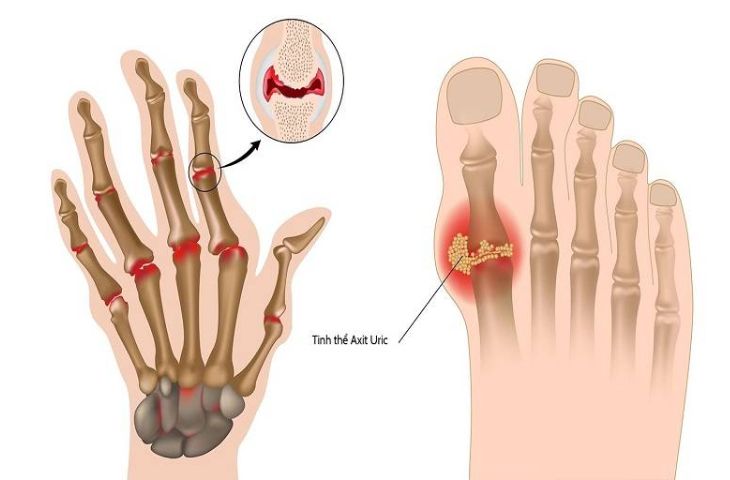
As a result of persistent inflammation, the synovium becomes hypertrophic and inflamed, manifesting clinically as joint swelling, warmth, erythema, and pain. Progressive synovial proliferation and pannus formation may compress and eventually erode the articular cartilage. In addition, chronic synovitis affects surrounding ligaments and periarticular soft tissues, leading over time to structural instability and joint deformity.
Reader may also be interested in:
- What is rheumatoid arthritis? Causes, symptoms, and treatment options
- 9+ Common signs of rheumatoid arthritis and potential complications. Individuals at increased risk of rheumatoid arthritis
If rheumatoid arthritis is not appropriately treated and controlled in a timely manner, it can result in irreversible joint deformities, loss of joint function, and severe impairment in mobility. The disease may significantly compromise quality of life, increase the risk of long-term disability, and ultimately lead to loss of functional independence.
Important considerations for patients with rheumatoid arthritis
To prevent the progression of rheumatoid polyarthritis, the following recommendations should be taken into consideration:
- Maintain optimal body weight and avoid overweight or obesity.
- Engage in regular, appropriately guided physical exercise, and avoid excessive training that may exert detrimental mechanical stress on the joints.
- Maintain proper posture while sitting or standing, and avoid prolonged static positions.
- Refrain from behaviors that may adversely affect the joints, such as cracking the fingers or sitting cross-legged for extended periods.
- Avoid wrist movements that cause lateral deviation of the hand.
- Perform regular joint massage to support circulation and joint flexibility.
- Adopt a balanced and nutrient-adequate diet, ensuring sufficient intake of calcium and vitamin D, while limiting alcohol consumption and avoiding tobacco use.
- Minimize exposure to toxic substances and environmental pollutants.
- Undergo routine health examinations every six months to maintain overall health and facilitate early detection of risk factors associated with rheumatoid arthritis.
Adopt a scientifically structured and nutritionally balanced diet to help mitigate the progression of rheumatoid arthritis.
Rheumatoid arthritis is a chronic condition that cannot be completely cured and requires early intervention to minimize joint damage and prevent serious complications. If any abnormal joint symptoms are observed, patients should promptly seek medical evaluation to accurately assess their musculoskeletal status and receive appropriate, individualized treatment.
At Hong Ngoc General Hospital, patients with rheumatoid arthritis are evaluated and managed by a highly experienced team of Musculoskeletal and Rheumatology specialists who have previously practiced at leading national and international institutions, including Bach Mai Hospital, Viet Duc University Hospital, and Royal North Shore Hospital (Australia).
Patients are treated using comprehensive, evidence-based modalities tailored to disease severity, including pharmacologic therapy, surgical intervention when indicated, and structured physical rehabilitation programs.
In addition, the hospital’s clean, modern, and well-ventilated environment is designed to enhance patient comfort and provide a reassuring clinical experience throughout the course of consultation and treatment.
For more comprehensive consultation regarding the management of rheumatoid arthritis at Hong Ngoc General Hospital, please contact our Hotline at 0889 621 046 for timely assistance and professional support.
Note: The information provided in this article by Hong Ngoc General Hospital is for reference purposes only and does not replace professional medical diagnosis or treatment. Patients should not self-medicate or independently purchase medications for treatment. To obtain an accurate assessment of their medical condition, individuals are advised to visit a qualified healthcare facility for direct clinical evaluation, diagnosis, and appropriate therapeutic consultation by a licensed physician.
Follow the official Fanpage of Hong Ngoc General Hospital for additional health information and updates:https://www.facebook.com/BenhvienHongNgoc