




A bulging disc can directly affect a patient’s daily activities and quality of life. Understanding the causes, symptoms, and treatment options for this condition is essential to help patients manage symptoms effectively and prevent it from becoming a long-term health concern.
What is a bulging disc?
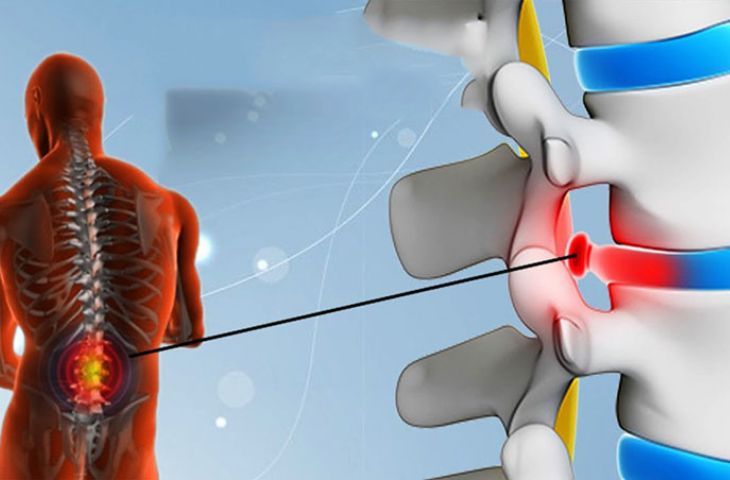
A bulging disc is a condition in which an intervertebral disc protrudes outward and becomes deformed. Intervertebral discs are located between two vertebrae and have a round, flattened shape. Each disc consists of a tough outer fibrous layer called the annulus fibrosus and a gel-like inner core known as the nucleus pulposus. These discs function as cushions that absorb shock, protect the spine, and prevent friction between vertebrae during movement.
A bulging disc occurs when the disc protrudes beyond its normal boundary while the nucleus pulposus remains contained within the outer fibrous layer. The protruding disc may place pressure on nearby nerve roots, leading to persistent pain and discomfort for the patient.
Stages of a bulging disc
Bulging disc disease typically progresses through four main stages:
Stage 1
This is the earliest stage of the condition. At this point, the intervertebral disc begins to shift slightly from its normal position. Most patients do not experience noticeable symptoms during this stage.
Stage 2
At this stage, the disc starts to bulge and may come into contact with nearby nerve structures. As a result, patients may experience sudden episodes of pain. The pain is usually intermittent and commonly occurs during vigorous movement or changes in posture.
Stage 3
At this stage, the bulging disc compresses the nerve roots more significantly. As a result, patients often experience persistent, dull, and prolonged pain. The pain gradually worsens over time and may radiate down both legs.
Stage 4
This is the most severe stage of the condition. Prolonged nerve compression may lead to nerve damage or necrosis. In addition, muscles in the arms or legs may gradually weaken and atrophy due to impaired nerve conduction.
In most cases, symptoms begin to appear during stage 2. However, these symptoms are often mild and easily mistaken for other musculoskeletal problems, causing many patients to underestimate the condition. As a result, many individuals only seek medical attention and treatment when the disease has progressed to stages 3 or 4.
Difference between a bulging disc and a herniated disc
Many people mistakenly believe that a bulging disc and a herniated disc refer to the same condition. However, these are two distinct spinal disorders.
A bulging disc occurs when the disc protrudes outward, but the nucleus pulposus remains contained within the outer fibrous layer (annulus fibrosus). Therefore, a bulging disc is often considered a milder form or an early stage of a herniated disc. If not treated properly, a bulging disc may progress into a herniated disc.
A herniated disc occurs when the outer fibrous layer tears, allowing the nucleus pulposus to protrude outward and compress nearby nerves or the spinal cord, leading to pain and neurological symptoms.
Causes of a bulging disc
Bulging discs are primarily caused by external factors that place excessive stress on the spine and intervertebral discs. Common causes include:
- Trauma or injury: The spine is highly vulnerable to injury during physical activity, especially when subjected to sudden or excessive force. These injuries may damage the intervertebral discs, increasing the risk of disc bulging or collapse. In many cases, both the discs and spinal structures are affected.
- Overweight and obesity: A high proportion of lumbar bulging disc cases are associated with excess body weight. Continuous pressure on the spine and discs over a prolonged period can impair their normal function and accelerate degeneration.
- Poor daily habits: Incorrect lifting techniques, poor sleeping posture, and improper working posture are common contributors to bulging disc disease. In addition, smoking and excessive alcohol consumption may accelerate disc degeneration and worsen spinal health.
- Aging: After the age of 40, the cervical and lumbar discs gradually degenerate as part of the natural aging process. The discs lose water content and elasticity, making them more susceptible to bulging even with minor mechanical stress.
- Genetic factors: Genetics may also play a role in the development of bulging disc disease. Individuals with a family history of disc-related disorders may have a higher risk of developing the condition.

Is a bulging disc dangerous?
Based on the progression stages of a bulging disc, the condition is generally not considered dangerous if detected and treated early, particularly during stages 1 and 2. However, if left untreated, complications may extend beyond persistent spinal pain and can lead to more serious health problems, including:
- Muscle weakness: A bulging disc may compress the nerves responsible for supplying the muscles, preventing adequate nerve signaling and nutrition to the muscle tissues. Over time, the affected muscles gradually weaken and may undergo atrophy, particularly in the arms and legs.
- Sensory disturbances: Areas surrounding the compressed disc may frequently experience numbness or tingling sensations. Patients may gradually lose the ability to clearly perceive pain, heat, or cold sensations. This complication can be potentially dangerous and should be evaluated promptly by a physician.
- Bladder and bowel dysfunction: This is one of the most serious complications of a bulging disc, especially when the lumbar spine is involved. Patients may develop impaired bladder or bowel control, leading to urinary or fecal incontinence. These symptoms often indicate advanced disease progression and require immediate medical attention.
Typical symptoms of a bulging disc
A bulging disc can be difficult to identify through visual observation alone. Therefore, patients should pay close attention to the following warning signs and symptoms:
Symptoms associated with the lumbar spine
- Muscle weakness, numbness, or tingling in one or both legs.
- Difficulty walking or impaired mobility.
- Increased reflexes in one or both legs, which may sometimes lead to muscle spasticity.
- Loss of bladder or bowel control.
- In severe cases, paralysis below the waist may occur.
Symptoms associated with the cervical spine
- Numbness, pain, or tingling sensations around the neck or shoulder blade region.
- Pain often begins at one specific point before radiating to the upper arm, forearm, or fingers.
- Pain in the affected disc region may improve with rest.
- In severe cases, patients may experience dizziness, headaches, or blurred vision.
However, the presence of these symptoms alone is not sufficient to confirm a diagnosis of a bulging disc. Accurate diagnosis typically requires imaging studies such as CT scans or MRI examinations.

Proper exercise and physical activity for patients with a bulging disc
To maximize the benefits of exercise for this condition, patients can practice appropriate exercises at home using the following methods:
Using supportive devices
A variety of home spine support products are currently available on the market, including spinal traction belts, massage chairs, and foam rollers. When used regularly, these devices may help relax and massage the back muscles, thereby reducing pain and muscle fatigue.
Choosing suitable sports and exercises
Healthcare professionals commonly recommend low impact exercises for patients with a bulging disc, including swimming, pull up bar exercises, and back strengthening workouts.
Can patients with a bulging disc go running?
To determine whether running is appropriate for patients with a bulging disc, it is important to understand the underlying mechanism of the condition. When a disc becomes damaged and bulges outward, the inner soft nucleus remains contained within the fibrous outer layer. However, this abnormal protrusion may place pressure on the spinal structures, nerve roots, and surrounding ligaments.
Physical activity offers many benefits for patients with a bulging disc, including improved mobility, muscle strength, and pain reduction. However, regarding running specifically, healthcare experts advise that patients may still participate in this activity, but it should not be performed too frequently. Running places significant body weight and repetitive impact forces on the legs and lumbar spine, which may increase stress on the intervertebral discs and potentially worsen the condition.
Treatment options for a bulging disc
There are various treatment options available for bulging disc disease. Based on the results of clinical examination and diagnostic imaging, doctors will develop an individualized treatment plan to achieve the best possible outcomes.
Some of the most commonly recommended treatment methods for bulging discs include:
Exercises for treating a bulging disc at home
Regular exercise is one of the most effective ways to improve joint flexibility and support functional recovery. For successful management of a bulging disc, patients should not overlook the following exercises:
Lower back exercise: Perform 5–10 repetitions daily to improve flexibility and mobility of the lower lumbar spine. Instructions are as follows:
- Lie flat on your back on the floor with both arms relaxed at your sides
- Bend both knees with feet flat on the floor, pressing the lower back and buttocks firmly against the ground
- Tighten the hip muscles and lift the lower body off the floor, holding the position for approximately 10 seconds
- Continue arching the back while lowering the hips downward, maintaining the position for another 10 seconds
- Return to a relaxed lying position and release all muscle tension
Bridge pose exercise: Perform 10–20 repetitions daily to help relieve neck and lower back pain.
- Lie flat on your back on the floor with both arms placed alongside the body
- Press both feet firmly against the floor while bending the knees
- Tighten the abdominal and thigh muscles, then slowly lift the lower body until the knees form a 90-degree angle
- Reach both hands toward the heels, hold the position for 10 seconds, then slowly lower the body back to the starting position

Cobra stretch exercise: Perform 10 repetitions daily to help relieve pressure on the cervical and lumbar spine muscles and intervertebral discs.
- Lie face down with the body straight, placing both hands on the floor beside the shoulders
- Slowly push against the floor with both hands to lift the upper body upward
- Arch the back and gently extend the neck backward as far as comfortable, hold for approximately 10 seconds, then slowly lower the body back to the starting position
Gentle abdominal curl exercise: Practice for 15–20 minutes daily to help stretch the spine and reduce abdominal fat.
- Lie on your back with both arms relaxed, knees bent, and feet flat on the floor
- Raise both hands toward the knees with fingertips pointing forward
- Slowly curl the upper body, bringing the chest toward the knees in a controlled movement
- Hold the position for about 5 seconds, then slowly lower the body back down
Medication-based treatment
Medications used in the treatment of bulging discs primarily aim to provide rapid pain relief caused by compression of spinal nerves by the protruding disc material. Depending on the patient’s symptoms and degree of inflammation, physicians may prescribe several classes of medications, including:
- Over-the-counter pain relievers and anti-inflammatory medications: These medications may be administered orally or applied topically to provide rapid pain relief while helping reduce inflammatory reactions around the affected joints and spinal structures.
- Prescription pain medications: These stronger analgesics are typically indicated for acute or severe symptoms. High-dose pain medications may cause significant side effects; therefore, patients should use them strictly as prescribed and carefully follow the recommended dosage.
- Muscle relaxants: Muscle relaxants are commonly prescribed for patients with bulging discs accompanied by muscle tightness or spasms in surrounding muscle groups.
Although these medications may help alleviate pain symptoms, they do not address the underlying cause of the condition, meaning symptoms may recur at any time.
In addition, prolonged or inappropriate use of conventional medications may lead to adverse effects and reduced drug responsiveness. Therefore, patients should only use medications under the guidance and prescription of a qualified specialist to ensure both safety and optimal treatment outcomes.
Surgical treatment for bulging discs
Surgical intervention may be considered in severe cases where the condition progresses significantly and conservative treatments, including medications and physical therapy, fail to provide satisfactory outcomes. Surgery is also indicated when the disease severely affects the patient’s health or poses a risk of serious complications.
In principle, surgery helps remove the protruding disc material compressing the spinal nerves. However, it cannot completely guarantee that the condition will not recur. In addition, surgical procedures may still carry certain risks and potential complications. Therefore, patients should carefully discuss the benefits, risks, and treatment expectations with their specialist before undergoing surgery.
Physical therapy and chiropractic care
This is a non-pharmacological, non-invasive treatment approach that is considered safe for a wide range of patients. With this method, specialists use manual techniques to adjust and manipulate the spine in order to reduce nerve compression and restore the natural alignment of the spine and intervertebral discs.
In addition, physicians may combine treatment with modern physical therapy modalities such as spinal traction tables, therapeutic ultrasound devices, microwave therapy systems, and interferential therapy machines. These techniques help relieve pressure on compressed nerve roots, reposition the protruding disc material, and improve mobility and functional recovery.
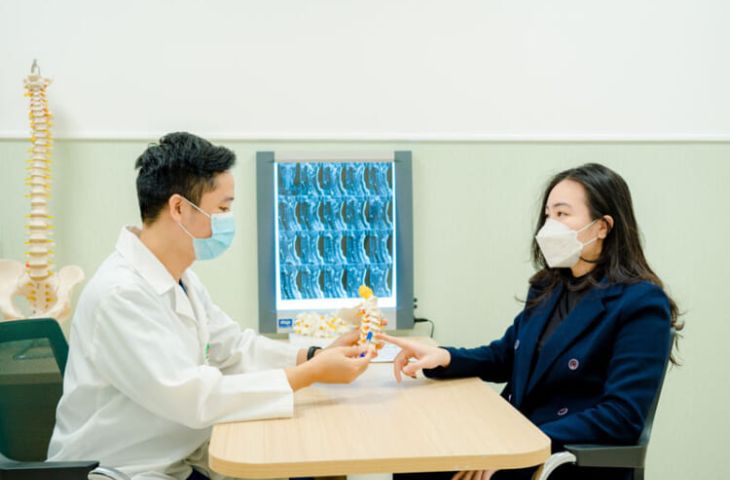
Depending on each individual case, physicians will conduct a thorough assessment and establish a personalized treatment plan before initiating chiropractic or spinal therapy. However, this approach is generally suitable only for mild cases without signs of annulus fibrosus rupture.
Understanding the significant impact of musculoskeletal disorders on patients’ health and quality of life, the Department of Physical Therapy and Rehabilitation at Hong Ngoc General Hospital continuously strives to enhance service quality, delivering safe and effective therapeutic experiences to help improve symptoms and functional recovery.
With physical therapy services for neck and shoulder pain, bulging discs, herniated discs, and cervical or lumbar spondylosis at Hong Ngoc, patients receive comprehensive examination, treatment, and care supported by one of Northern Vietnam’s leading healthcare service systems, including highly qualified therapists, state-of-the-art rehabilitation equipment, and professional, patient-centered care services.
Note: The information provided in this article by Hong Ngoc General Hospital is for reference purposes only and does not replace medical diagnosis or treatment. Patients should not self-medicate without professional guidance. For an accurate evaluation of their condition, patients are advised to visit a medical facility for direct examination, diagnosis, and appropriate treatment consultation by qualified physicians.
Follow the official fanpage of Hong Ngoc General Hospital for more health-related information:https://www.facebook.com/BenhvienHongNgoc