

Medical review: Hoang Van Ban, MSc, MD, Department of Orthopaedic Surgery and Neurosurgery, Hong Ngoc – Phuc Truong Minh General Hospital
Medical note: This article is for general information only and does not replace an examination or treatment prescribed by a healthcare professional. Rest, ice, compression and elevation are first-aid measures only. Anyone with severe pain, rapidly increasing swelling, a deformed ankle, a numb or cold foot, or an inability to bear weight should seek medical care. Do not try to manipulate the ankle, apply medicinal poultices or return to the pitch before it has recovered.
Why are football players prone to ankle sprains?
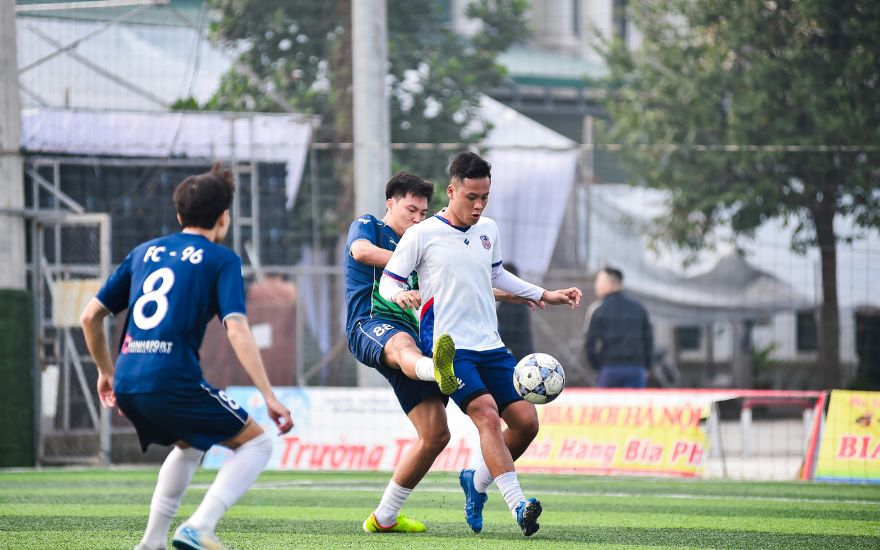
Football involves frequent acceleration, sudden stops, turns and challenges for the ball. The risk of an ankle sprain increases in the following situations:
- Changing direction while the foot is planted: The body turns before the foot can follow, placing a twisting force on the ankle.
- Landing awkwardly: A player lands on the outer edge of the foot or on an opponent’s foot after jumping.
- Being tackled or colliding with another player: The foot is held in place while the lower leg and body continue to move.
- Uneven playing surfaces: Small holes, slippery grass, hard ground or obstacles can cause the foot to lose support.
- Unsuitable football boots: Boots that are too loose or tight, or have studs unsuitable for the playing surface, can reduce control of the foot.
- Weak ankle muscles or poor balance: The joint may respond too slowly to sudden changes in position.
- A previous sprain: The ligaments and the joint’s ability to sense its position may not have fully recovered, making the ankle more prone to another sprain.
- Training while fatigued: Reflexes and movement control may decline towards the end of a session or when the intensity exceeds the player’s fitness level.
Signs of an ankle sprain while playing football
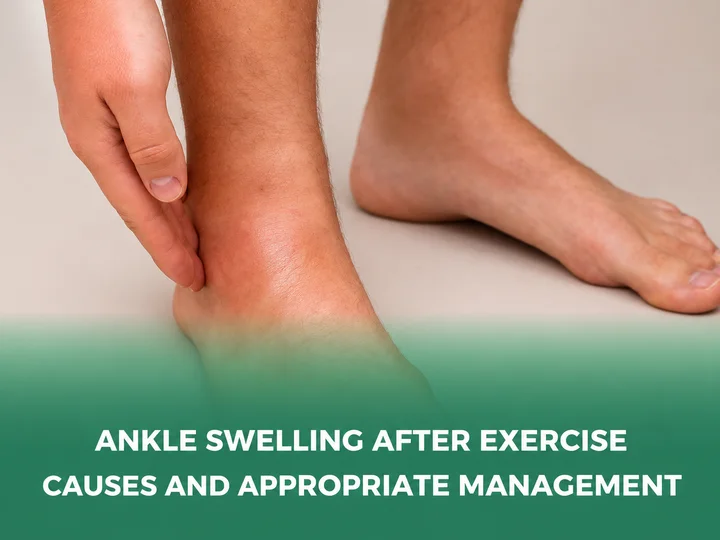
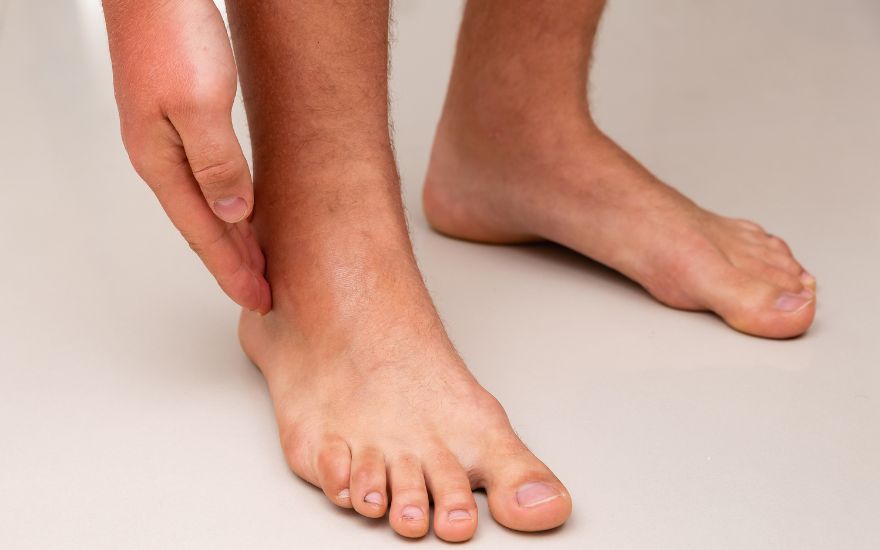
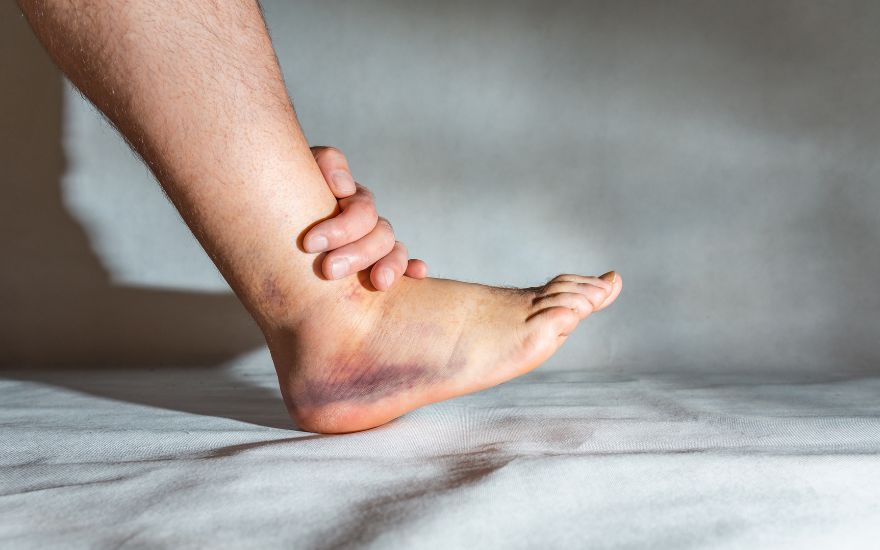
Pain usually starts immediately after the foot twists and is often concentrated on the outer side of the ankle. The injured area may swell within minutes or hours, while bruising can appear later. The person may also have difficulty standing, walking, turning the ankle or rising onto their toes.
Common symptoms include:
- Pain around the ankle that worsens when touched or when weight is placed on the leg.
- Swelling, warmth or bruising around the ankle and foot.
- Difficulty bending, straightening or rotating the ankle normally.
- Limping or being unable to stand on the injured leg.
- A loose or unstable feeling in the ankle, or a tendency for it to give way.
- Pain extending above the ankle or into the middle of the foot.
A severe sprain can cause symptoms similar to those of a fracture. Significant swelling does not necessarily mean that a ligament has torn completely, and being able to walk does not rule out a bone injury.
Grades of ankle sprain
The severity of an ankle sprain is assessed by the number of ligaments affected, the extent of the tear and the stability of the joint. Accurate grading requires a clinical examination.
Grade I sprain
The ligament is stretched, with minor damage to some of its fibres. The ankle is usually mildly painful and swollen, with little instability. The person can still walk, although it may be uncomfortable, and movement is only slightly restricted.
Grade II sprain
The ligament is partially torn, causing more noticeable swelling and bruising around the ankle. Weight-bearing is painful, walking is difficult and the joint may feel less stable. This injury often requires a brace or other support and an appropriate rehabilitation programme.
Grade III sprain
The ligament is completely torn, making the ankle significantly unstable. The person may have severe pain and extensive swelling and be almost unable to bear weight. In some cases, pain lessens after the initial phase even though the ankle remains unstable. Do not assume that the injury has become less severe just because the pain has eased.
First aid for a football-related ankle sprain using the RICE principle
If you roll your ankle, stop playing and leave the pitch with appropriate assistance. Do not try running further to test the ankle, as this could make the injury worse. The four RICE steps below can help protect the joint and manage the initial symptoms:
- Rest: Stop playing football, limit weight-bearing on the painful leg and avoid twisting the ankle. If you cannot walk normally, ask someone to help you rather than trying to move on your own.
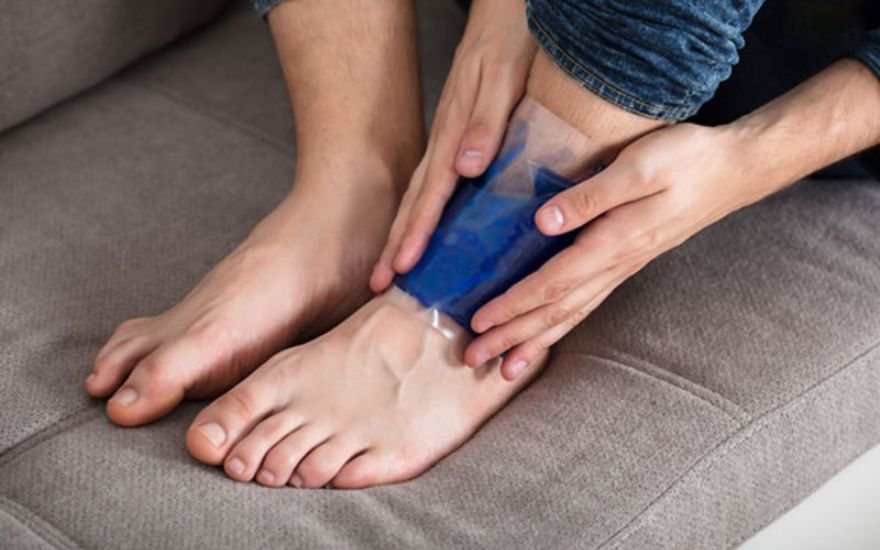
- Ice: Wrap a cold pack in a thin towel and apply it to the painful area for about 15–20 minutes at a time. You can repeat this every few hours during the first 24–\48 hours, checking the skin to avoid cold injury. Do not apply ice directly to the skin or leave the whole foot soaking in iced water for a prolonged period.
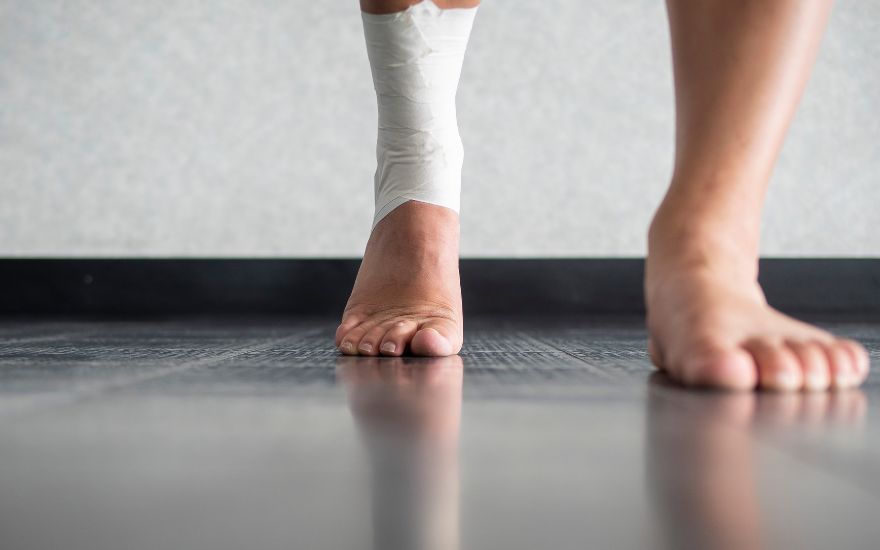
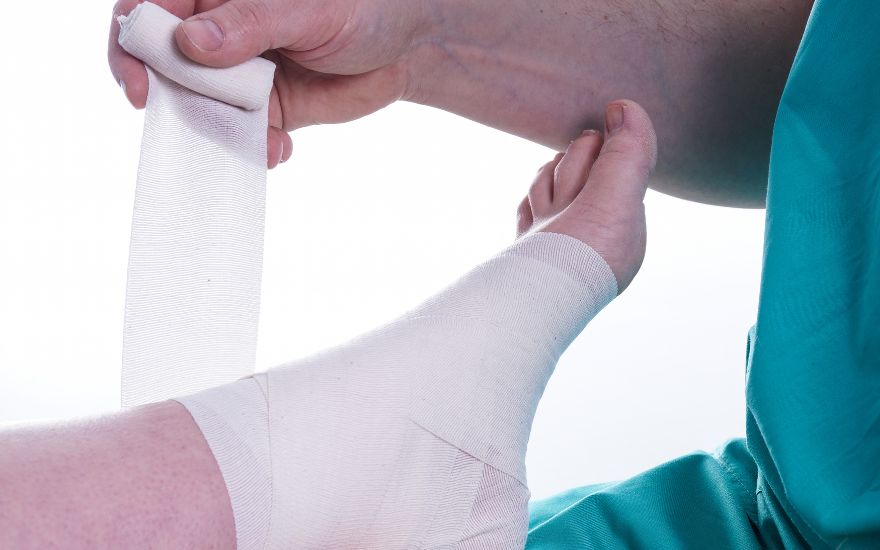
- Compression: Wrap the ankle with an elastic bandage, applying moderate pressure to support the joint and help limit swelling. Start at the foot and work upwards, leaving the toes uncovered so you can monitor circulation. Loosen the bandage immediately if the toes become numb, cold, blue or more painful.
- Elevation: When sitting or lying down, rest the leg on pillows so the ankle is above heart level, provided this does not increase the pain. Elevation can help limit fluid build-up around the injury and reduce swelling.
RICE is for initial care only. It does not replace medical assessment if the ankle is deformed, very painful or unable to bear weight. Once pain and swelling begin to ease, and if the joint has not been prescribed immobilisation, gently move the foot up and down, then slowly rotate the ankle through a small range of motion, gradually increasing it as tolerated. You can then practise standing and walking short distances as tolerated, reducing activity if pain or swelling worsens. Do not keep the ankle immobilised for several days without medical advice, as this can lead to joint stiffness and weaken the muscles around the ankle.
What to avoid after rolling your ankle
Incorrect care in the first few hours may worsen swelling or place further strain on the ligaments. If you have rolled your ankle, avoid:
- Continuing to play or walking excessively: If walking increases the pain, limit weight-bearing and ask someone for help.
- Applying warming oil, medicated alcohol or heat too soon: Heat widens blood vessels and may make swelling and bruising more pronounced during the acute phase.
- Vigorous massage: Direct pressure on an already painful, swollen area may further irritate the tissues.
- Pulling or manipulating the ankle yourself: A deformed joint may indicate a dislocation or fracture. Incorrect manipulation can increase the risk of injury to blood vessels, nerves and soft tissues.
- Applying herbal poultices or mixtures with unknown ingredients: These will not heal the ligament and may cause skin irritation, burns or infection.
- Wrapping the bandage too tightly: Excessive compression can restrict circulation to the foot.
- Taking medication for a prolonged period without medical advice: Pain relief and anti-inflammatory medicines have contraindications, interactions and possible side effects. If you have an underlying condition, take other medicines or have had an allergic reaction to medication, consult a healthcare professional before use.
When should you seek medical care after an ankle sprain?
Seek medical care promptly if you experience any of the following:
- Severe pain or pain that is worsening quickly.
- Inability to stand or take a few steps on the injured leg.
- Rapid swelling, spreading bruising or ankle deformity.
- Sharp pain over an ankle bone or a specific point on a foot bone.
- An open wound, bleeding or a suspected dislocation.
- A numb, cold, pale or blue foot.
- Pain extending above the ankle, marked joint instability or repeated episodes of the ankle giving way.
- Pain and swelling that have not clearly improved after 3–5 days, or continue to worsen.
- Recurrent ankle instability after repeated sprains.
If the ankle is deformed or the foot shows signs of reduced circulation, keep it in its current position, do not try to manipulate it and take the injured person to a medical facility immediately. Persistent pain should also be assessed even if the person can still walk, as some bone, tendon or cartilage injuries may not be obvious in the first few hours.

How to prevent ankle sprains while playing football
People who have had an ankle sprain are at greater risk of another if strength and balance have not fully recovered. The following measures can help keep the ankle stable during play:
- Warm up thoroughly: Spend about 10–15 minutes jogging lightly, rotating the joints in a controlled way, doing high knees and lateral steps, and practising ball skills at a low intensity.
- Strengthen the ankle: Do heel raises, resistance-band exercises in different directions and calf-strengthening exercises at a level that suits you.
- Practise balance: Single-leg standing, weight shifting and controlled landing exercises can help the body respond more effectively if the foot moves out of alignment.
- Learn how to change direction safely: Lower your centre of gravity and turn your body and foot in the same direction. Avoid keeping the planted foot fixed while forcefully rotating the knee and hip.
- Choose boots suited to the playing surface: Football boots should fit properly and have studs suitable for natural grass, artificial turf or indoor courts. Replace them when the soles are worn or the upper no longer holds the foot securely.
- Check the pitch: Avoid areas with holes or obstacles, slippery surfaces or poor drainage.
- Increase training gradually: After a period of rest, gradually increase the number and duration of sessions to allow the muscles, tendons and joints to adapt.
- Stop if you are in pain or excessively tired: Continuing to play when foot control has declined increases the risk of reinjury.

Assessment of football-related ankle sprains at Hong Ngoc General Hospital
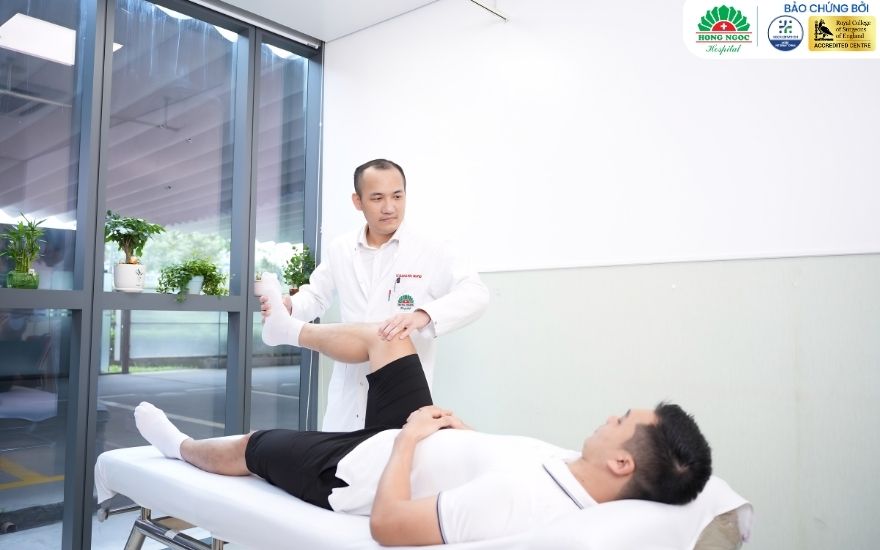
People with severe pain, rapidly increasing swelling, difficulty bearing weight or ankle instability after an injury can seek assessment at the Department of Orthopaedic Surgery and Neurosurgery at Hong Ngoc–Phuc Truong Minh General Hospital. The doctor will assess how the injury occurred, the location of the pain, ankle movement and joint stability to determine the appropriate management.
Depending on the severity of the injury, treatment may include non-surgical care, supportive devices and physiotherapy and rehabilitation. If the injury involves a fracture or other severe damage requiring intervention, the doctor will consider the appropriate surgical approach based on the individual case.
Rehabilitation aims to relieve pain and restore ankle range of motion, strength, balance and stability. Return to running, changing direction and playing football should wait until the player meets the criteria for safe movement.
Frequently asked questions about ankle sprains while playing football
Should I use ice or heat immediately after rolling my ankle?
Ice is more appropriate when the ankle has just become painful and swollen. Wrap a cold pack in a towel and apply it for about 15–20 minutes at a time. Avoid heat, hot-water soaks or warming oil while the injury is acutely swollen.
Should I bandage my ankle while sleeping?
Do not apply a tight compression bandage for a prolonged period without medical advice. If you have been advised to wear a bandage or brace overnight, follow the instructions and check the colour, temperature and sensation in your toes.
Will an ankle sprain heal on its own?
A mild sprain may improve with appropriate protection and care. However, incomplete ligament healing or skipping balance rehabilitation can leave the ankle unstable, cause persistent pain and increase the risk of reinjury. A severe injury needs appropriate assessment and treatment.
How long does an ankle sprain from football take to heal?
A mild sprain often improves within one to two weeks; a moderate sprain may take about three to six weeks, while a severe injury can take six to twelve weeks or longer. Recovery depends on the extent of ligament damage, associated injuries and rehabilitation. Do not decide when to return to the pitch based only on how many days you have rested.
When can I return to playing football after an ankle sprain?
Return to football only when the ankle is pain-free, does not become more swollen after activity, and has regained a range of motion and strength close to that of the uninjured ankle. You should also be able to stand on one leg, jump, accelerate and decelerate, and change direction without losing balance or feeling that the joint is unstable. Increase training intensity gradually rather than returning straight to competition.
Conclusion
An ankle sprain while playing football occurs when the ligaments around the joint are stretched or torn as the foot suddenly twists. Stop playing, apply ice, use moderate compression and elevate the leg soon after the injury. Do not try to manipulate the ankle, massage it forcefully or continue bearing weight while it is still painful. If you cannot walk, the joint is deformed, swelling is increasing rapidly, the foot is numb or cold, or symptoms do not improve, seek medical assessment.
References
- Martin RL, et al.Ankle Stability and Movement Coordination Impairments: Lateral Ankle Ligament Sprains Revision 2021. Journal of Orthopaedic & Sports Physical Therapy. 2021.
- Smith MD, et al.Return to Sport Decisions After an Acute Lateral Ankle Sprain Injury: Introducing the PAASS Framework. British Journal of Sports Medicine. 2021.
- American Academy of Orthopaedic Surgeons.Sprained Ankle.
- American College of Radiology.Appropriateness Criteria: Acute Trauma to the Ankle.