



An American traveler was rushed to hospital in critical condition after developing confusion and delayed responsiveness at an airport security checkpoint, just minutes before boarding his return flight.
Clinical evaluation revealed acute hepatic encephalopathy complicated by multiorgan failure and severe metabolic acidosis, requiring urgent life saving intervention.
American traveler develops hepatic encephalopathy, multiorgan failure, and near cardiac arrest prior to boarding
Shortly before boarding his flight back to the United States, Mr G.S.H, a 67 year old American national, suddenly became confused and slow to respond at the airport security area.
Without any accompanying relatives, he was unable to complete departure procedures and was promptly transferred to the Emergency Department at Hong Ngoc General Hospital.
At admission, the patient had a decreased level of consciousness, drowsiness, and delayed responses, with a Glasgow Coma Scale score of 13. Physical examination revealed marked jaundice and characteristic fetor hepaticus.
Arterial blood gas analysis showed severe metabolic acidosis, while laboratory tests indicated critically impaired liver and kidney function, requiring immediate emergency intervention.
.png)
Medical history revealed alcohol related cirrhosis, with liver transplantation performed three years earlier in the United States. The patient had been on regular immunosuppressive therapy.
In the weeks leading up to admission, he experienced progressive jaundice but did not seek medical care. On the day of departure, fatigue, drowsiness, and confusion worsened significantly, suggesting severe complications. Despite this, he still intended to return to the United States for treatment.
Based on clinical and laboratory findings, the patient was diagnosed with acute liver failure in a post transplant setting, complicated by hepatic encephalopathy, hepatorenal syndrome, and severe metabolic acidosis.
This represents multiorgan failure, with simultaneous involvement of the liver, kidneys, and central nervous system, placing the patient in a life threatening condition.
“Hepatic encephalopathy is a severe complication of liver failure, occurring when the liver loses its detoxification capacity, leading to accumulation of toxins such as ammonia that directly affect the brain,” said Dr. Nguyen Thi Thu, MD, MSc, from the Intensive Care Unit at Hong Ngoc General Hospital.
“In this case, the patient had progressed to multiorgan failure, a life threatening emergency. Without prompt reversal of metabolic acidosis, cardiac arrest could occur at any time.”
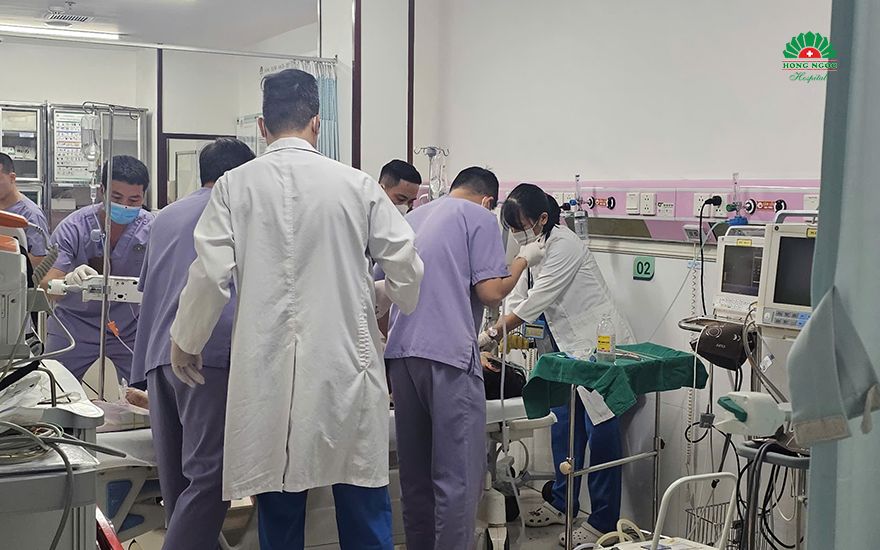
A race against time to secure rare blood while initiating lifesaving CRRT and plasma exchange
Given the critical condition, immediate treatment was initiated in the emergency department. The patient received bicarbonate therapy to correct metabolic acidosis and stabilize internal homeostasis, helping to prevent circulatory collapse.
“When blood pH drops critically low, the function of all organ systems is suppressed. Without immediate intervention, cardiac arrest may occur at any time. Therefore, the priority is to reverse metabolic acidosis and stabilize the internal environment,” Dr. Thu explained.
The patient received comprehensive, multidisciplinary management. In addition to plasma exchange and continuous renal replacement therapy, strict bed rest was maintained, along with liver support, blood glucose control, electrolyte correction, fluid balance monitoring, and investigation to identify factors contributing to disease progression.
“In patients with cirrhosis, particularly in the decompensated stage, hepatic glycogen reserves are severely impaired. Without proper management, hypoglycemia may occur and can be life threatening,” said Dr. Nguyen Thi Thu, MD, MSc.
The patient received targeted pharmacotherapy, including high dose L ornithine L aspartate at 20 g per day, combined with early plasma exchange during the initial phase of treatment.
However, treatment posed significant challenges as the patient had a rare blood type, O Rh negative. Each plasma exchange session required approximately 4 liters of compatible blood products, while the availability of this blood type was extremely limited.
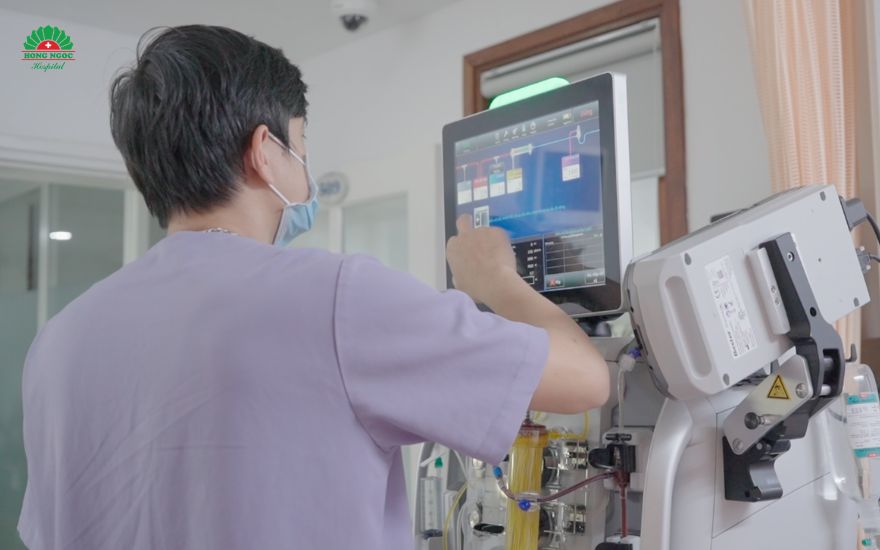
In addition to liver failure, the patient developed severe renal failure, with serum creatinine rising to approximately 800 µmol/L, far above normal levels.
In response, physicians initiated continuous renal replacement therapy (CRRT) to support kidney function, remove toxins, and stabilize internal homeostasis. CRRT was performed continuously over the first two days, in parallel with plasma exchange.
In total, the patient underwent four sessions of plasma exchange, combined with three courses of continuous renal replacement therapy during the initial phase.
Following these intensive interventions, the patient’s clinical condition and laboratory parameters improved markedly. Biochemical markers gradually returned to safer levels, with a significant reduction in serum bilirubin. Renal function recovered, and the patient was no longer dependent on renal replacement therapy.
“My dialysis session lasted almost the entire night, but I was very well supported. The doctors and nurses here were very professional and confident. That impressed me the most during my first time receiving treatment in Vietnam. I have almost fully recovered,” Mr G.S.H said.

According to Dr. Nguyen Thi Thu, MD, MSc in critical emergencies such as this case, the “golden hour” plays a decisive role. Early access to medical care, accurate diagnosis, and prompt initiation of treatment are key factors in preventing cardiac arrest and improving survival outcomes.
“Hong Ngoc General Hospital is equipped with a comprehensive intensive care system, including a highly skilled medical team and advanced technology, with extensive experience in managing critically ill patients. We are available 24/7 to receive and provide emergency care for similar cases,” she said.