



After nearly 20 minutes underwater, Tran Quang Minh, a three-year-old boy from Thai Nguyen, was rescued but faced the risk of spending the rest of his life in a vegetative state. However, after more than three months of intensive treatment at Hong Ngoc General Hospital, the child made a remarkable recovery.
A drowning accident leaves a child facing the risk of a lifelong vegetative state
In October 2025, a sudden drowning accident caused Minh to suffer cardiac arrest and prolonged cerebral hypoxia. Although doctors managed to resuscitate him and save his life, the consequences were severe. The child showed almost no response to his surroundings, developed incomplete paralysis of all four limbs, and lost the ability to communicate, move and interact with the environment.
At several central-level hospitals, Minh was diagnosed with severe hypoxic brain injury and given a poor prognosis with a high risk of death. The family was even counseled about the possibility of withdrawing life support.
“There were days when we only hoped he would keep breathing. Doctors told us to prepare for the worst. Seeing him lying there without reflexes, without movement, without any awareness… we were almost in despair” said Vu Thi Dinh, the child’s grandmother.

Just when hope seemed to fade, the family decided to seek further treatment at Hong Ngoc General Hospital, opening a new possibility for recovery.
Milestones in a remarkable medical recovery
Dr Dinh Van Hao, Specialist Level I and Head of the Physical Therapy and Rehabilitation Department, who directly managed Minh’s case, said the team believed recovery was still possible.
“Although the chances were very slim, hypoxic brain injury does not necessarily mean that all neurons have completely died. In many cases, there are still borderline areas where neurons are functionally suppressed but not irreversibly damaged. If sufficient oxygen is delivered and treatment is applied at the right time, these cells may still recover”.
Based on this understanding, the medical team developed a treatment protocol using hyperbaric oxygen therapy. The method allows the child to breathe 100 percent pure oxygen in a high-pressure chamber, compared with the 21 percent oxygen in normal air and 30 to 60 percent oxygen typically delivered through nasal cannulas or masks. Under increased pressure, oxygen can penetrate deeper into hypoxic brain tissue, helping stimulate neural repair and restore neurological function.
For Minh’s treatment, doctors used a new-generation single-patient hyperbaric oxygen chamber (3 ATA) manufactured by Sechrist Industries in the United States, delivering pure medical oxygen from a liquid oxygen system. The single-chamber environment allows strict control of oxygen concentration, pressure and exposure time, minimizing dilution with ambient air and ensuring stable therapeutic pressure. After extensive research, the team applied a treatment protocol of 3 ATA for 45 to 60 minutes per session, five sessions per week, continuously adjusting the regimen according to the child’s physical condition and treatment response.
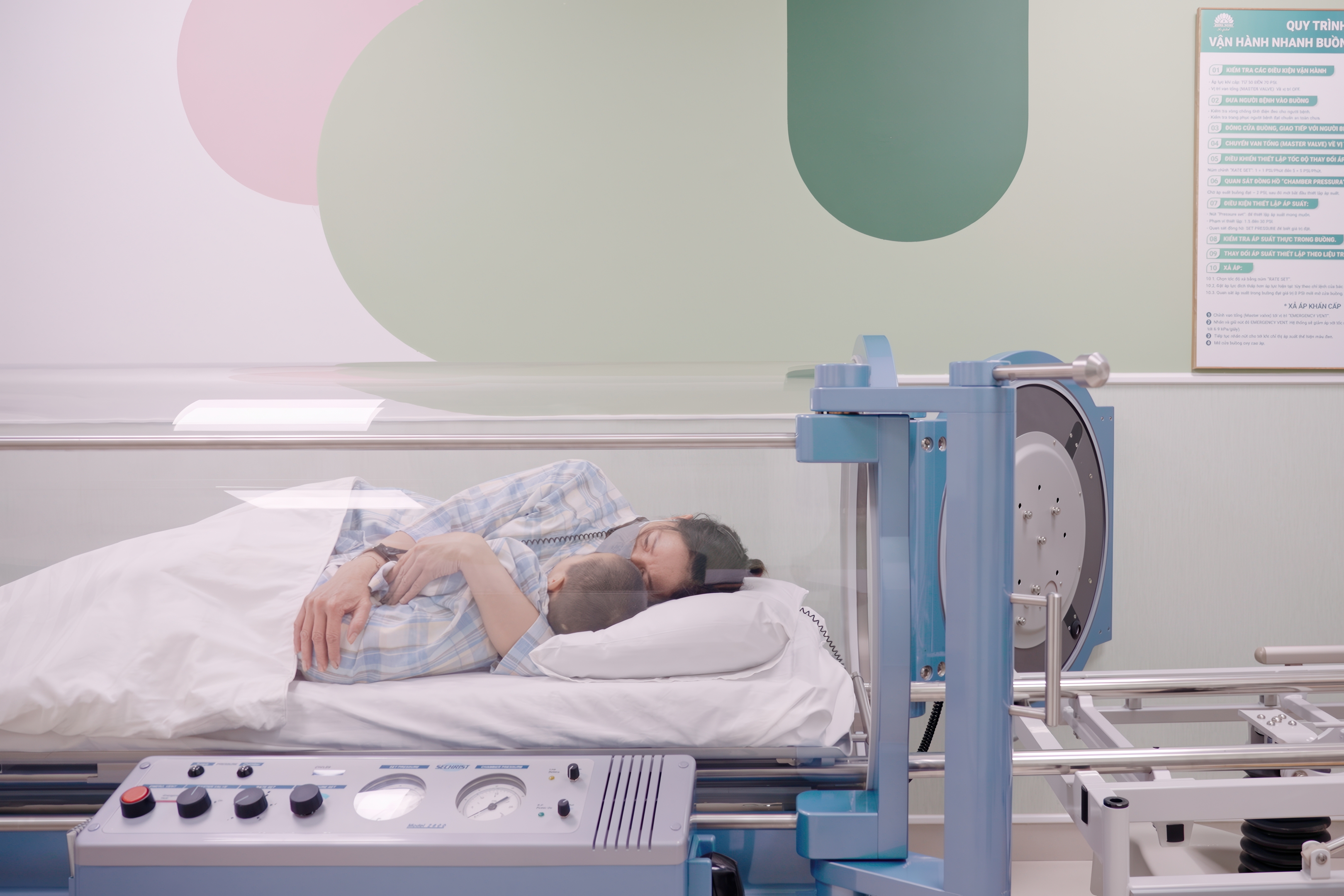
Alongside hyperbaric oxygen therapy, physical therapy and rehabilitation were initiated early and maintained continuously, taking advantage of the high neuroplasticity in young children. Rehabilitation included assisted standing and walking, trunk control and balance training, neuromuscular stimulation exercises, and speech therapy to improve responsiveness and interaction. Traditional medicine techniques such as acupressure, moxibustion and infrared therapy were also incorporated to relax muscles, improve circulation and support tissue metabolism.
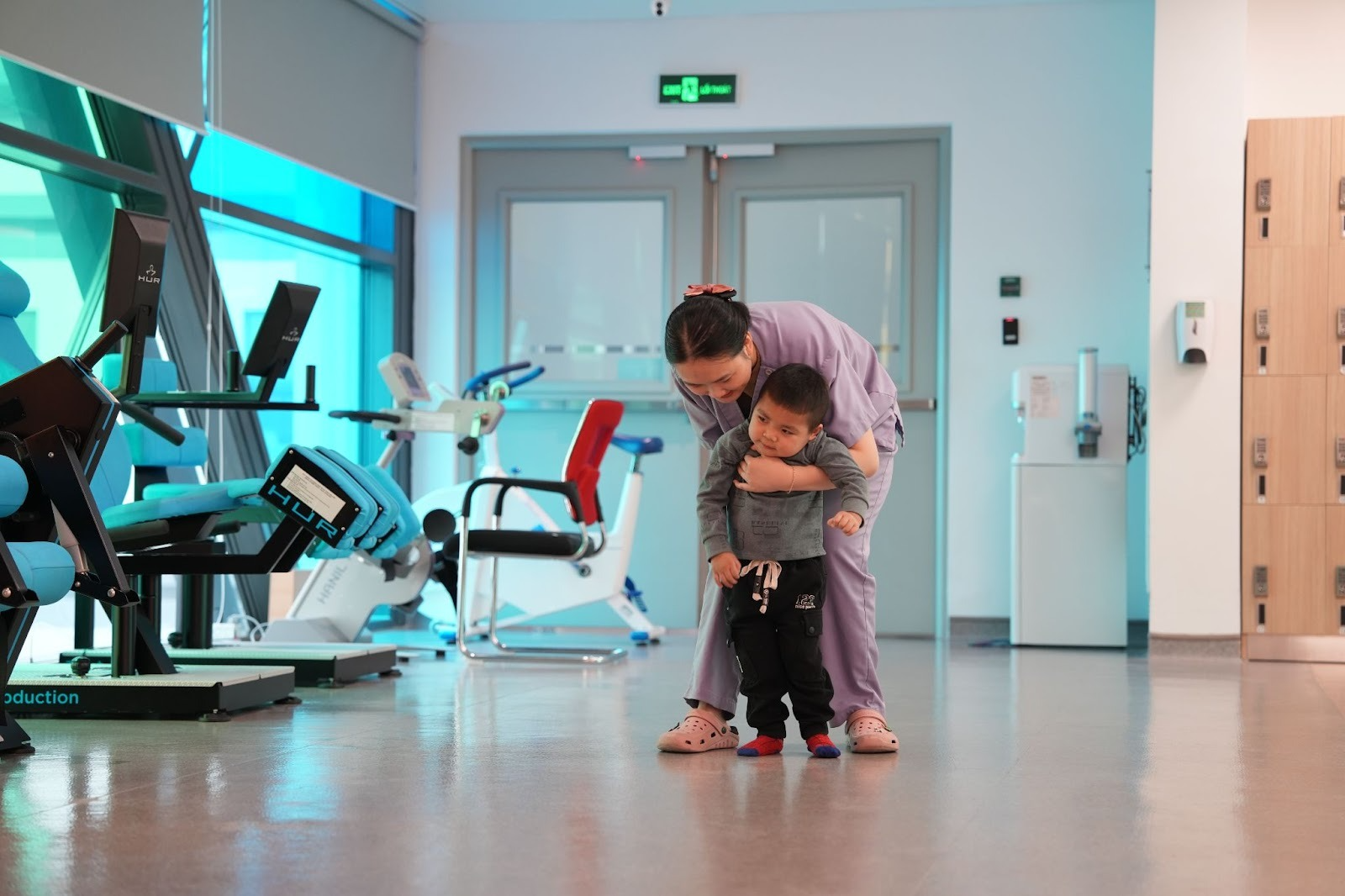
Fortunately, the child responded well to treatment with positive improvements. After 10 days, he began to show responses to sound. After four hyperbaric oxygen sessions, around two weeks into treatment, he was able to lift his head and upper body for about three minutes. By January 7, 2026, after roughly one and a half months of treatment, Minh could sit steadily, release his right hand while sitting, stand briefly with assistance, express personal needs such as hunger, thirst or the need to use the toilet, call family members and speak more words.
After two months of treatment (January 21), further improvements were observed. Minh was able to stand steadily while holding support without assistance, communicate more fluently with longer sentences close to his pre-accident level, sit independently, and showed improved vision and eye tracking. By February 27, 2026, after three months of treatment, the child was able to walk independently, communicate well and demonstrate significant recovery in both motor and cognitive functions.
Minh’s entire course of treatment was fully funded by Hong Ngoc General Hospital.
Dr Dinh Van Hao, Specialist Level I, added: “This is not a miracle, but the outcome of research-based medicine, a carefully designed treatment protocol and timely treatment. International medical literature has reported some successful cases using hyperbaric oxygen therapy for brain injury, but reports in pediatric patients remain limited. The selection of dosage, pressure and treatment duration must be carefully calculated. When combined with structured rehabilitation during the brain’s golden window, the chances of recovery can improve significantly”.

Opening new hope for patients in a vegetative state
Minh’s case highlights the importance of early and proactive rehabilitation for hypoxic brain injury. Instead of stopping at supportive care, doctors applied an individualized treatment protocol combining hyperbaric oxygen therapy and rehabilitation, creating a turning point in the child’s recovery.
From a patient once given a poor prognosis, Tran Quang Minh can now walk independently and call out to his loved ones.
For his family, the journey is nothing short of extraordinary. More broadly, it brings renewed hope to many patients with brain injuries in Vietnam that as long as there is still a chance, modern medicine will not give up.