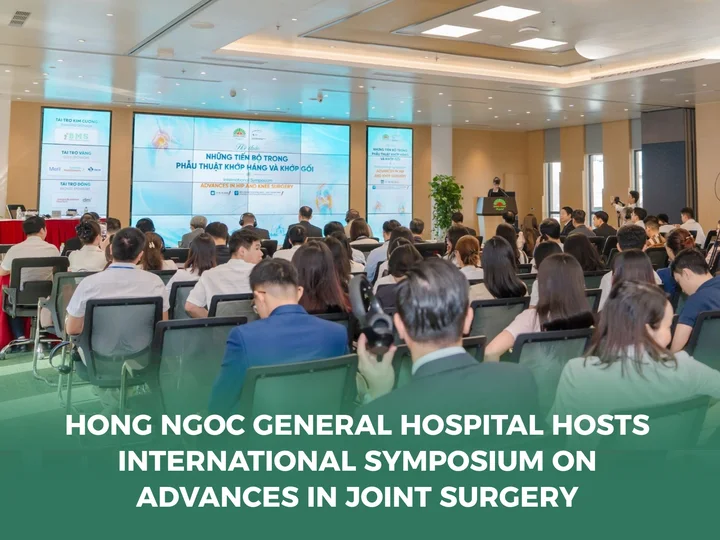



On 17 - 18 October 2026, the international symposium “Advances in Hip and Knee Surgery”, organised by Hong Ngoc General Hospital, brought together medical professionals from multiple countries to share expertise, review emerging techniques and exchange experience in joint surgery.
As minimally invasive techniques, navigation systems, robotics and artificial intelligence (AI) create new possibilities in orthopaedic and trauma surgery, keeping pace with technological advances and strengthening the ability to apply them in clinical practice have become increasingly important.
To promote professional collaboration and surgical education, Hong Ngoc General Hospital organised the international symposium “Advances in Hip and Knee Surgery”, bringing together 13 experts from Vietnam, Austria, Japan, Germany, India and Taiwan (China).

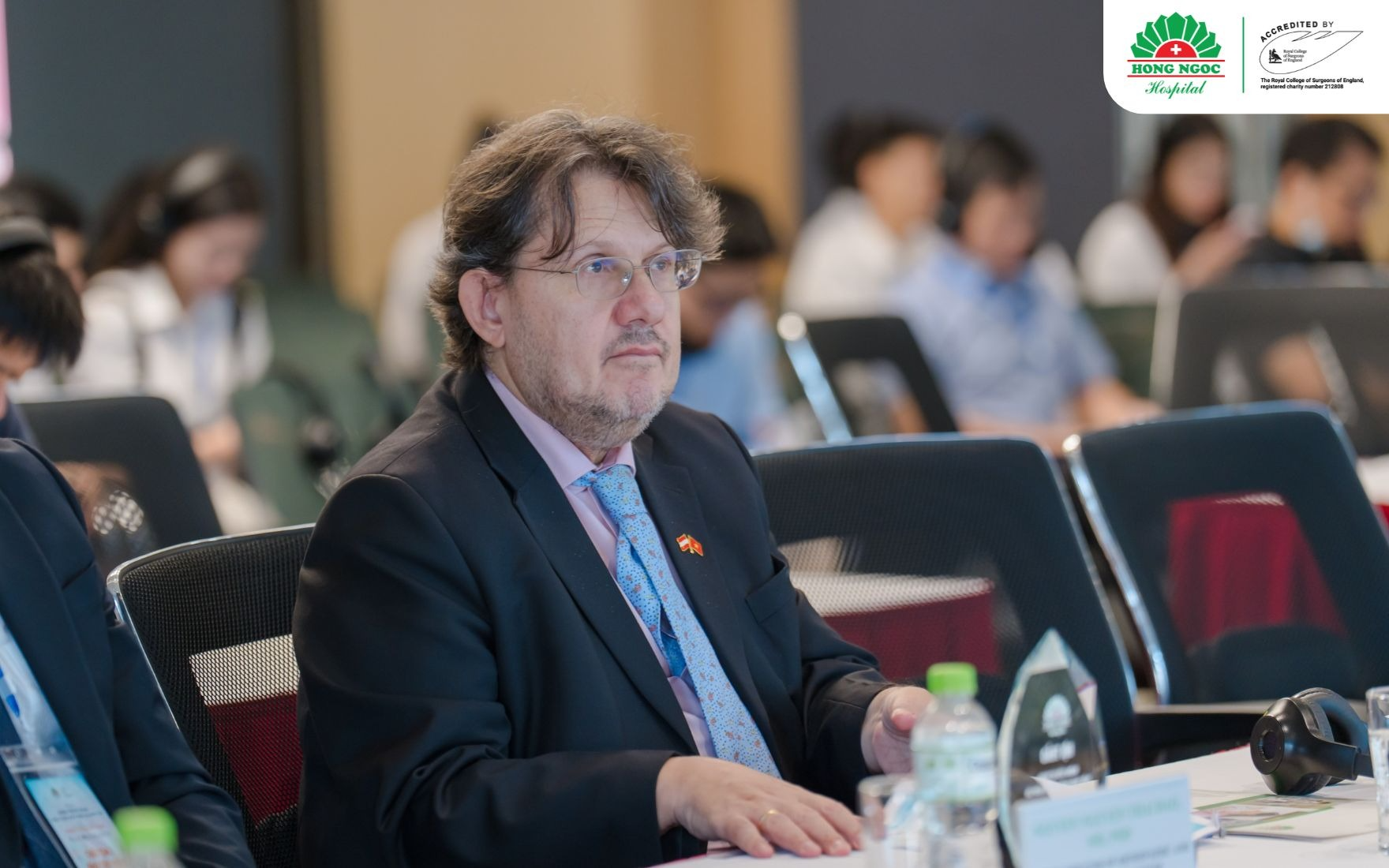
The symposium was attended by Mr. Philipp Agathonos, Ambassador Extraordinary and Plenipotentiary of the Republic of Austria to Vietnam. His presence added significance to the event and reflected Austria’s interest in promoting international medical exchange and cooperation with Vietnam.
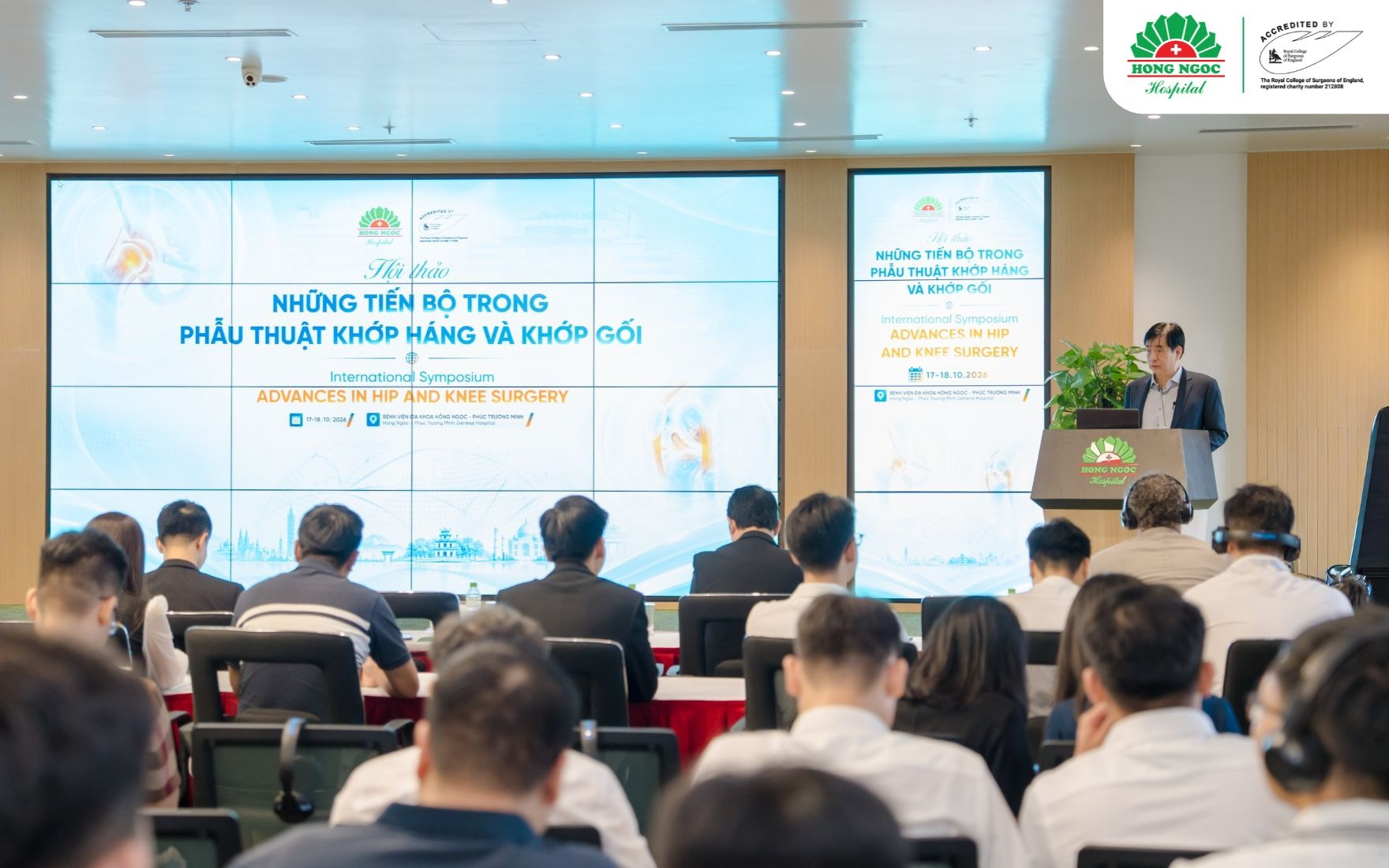
In his opening remarks, Assoc. Prof. Ha Kim Trung, MD, PhD, Deputy Medical Director of Hong Ngoc Phuc Truong Minh General Hospital, said: “As a hospital recognised by the Royal College of Surgeons of England (RCS) as an international surgical training centre, Hong Ngoc places strong emphasis on professional education and international clinical collaboration.
Through international scientific symposiums, we aim to build academic connections between Vietnamese and global experts, creating opportunities to exchange experience, review medical advances and strengthen the clinical capabilities of our doctors. This is also part of the hospital’s long-term development strategy, bringing advanced treatment techniques progressively closer to patients in Vietnam.”
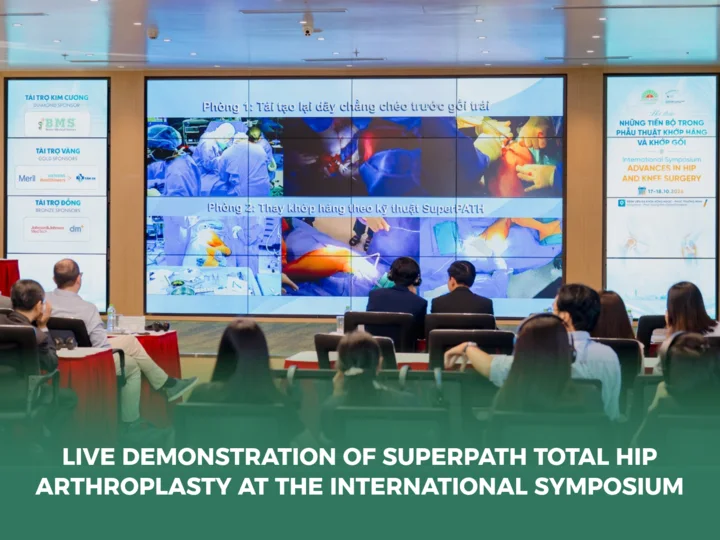
On the morning of October 18, two surgeries broadcast live from the operating room to the conference hall became a highlight of the programme. Rather than learning about surgical techniques solely through scientific presentations, participating physicians had the opportunity to observe the procedures firsthand, follow the surgeons’ clinical decision-making and discuss the cases with international experts.
The first procedure was a SuperPATH total hip replacement for Thuong, a 46-year-old patient diagnosed with stage IV osteonecrosis of the right femoral head. At this advanced stage, the disease had severely damaged the joint and impaired her mobility. The operation was performed by resident physician Pho Minh Duc, MD, MSc, and Pham Van Dao, MD, Specialist Level I, from the Department of Orthopaedic Trauma and Neurosurgery at Hong Ngoc General Hospital – Phuc Truong Minh, with expert guidance from Joerg Beardi, Head of Orthopaedics and Trauma Surgery at Klinikum Werra-Meissner, Eschwege, Germany.
Using the minimally invasive SuperPATH technique, the artificial hip joint was positioned in the correct anatomical alignment to provide stability and support joint function, while preserving the surrounding tendons, muscles and soft tissues. This approach can help reduce postoperative pain and allow patients to begin rehabilitation early, supporting a gradual return to mobility.
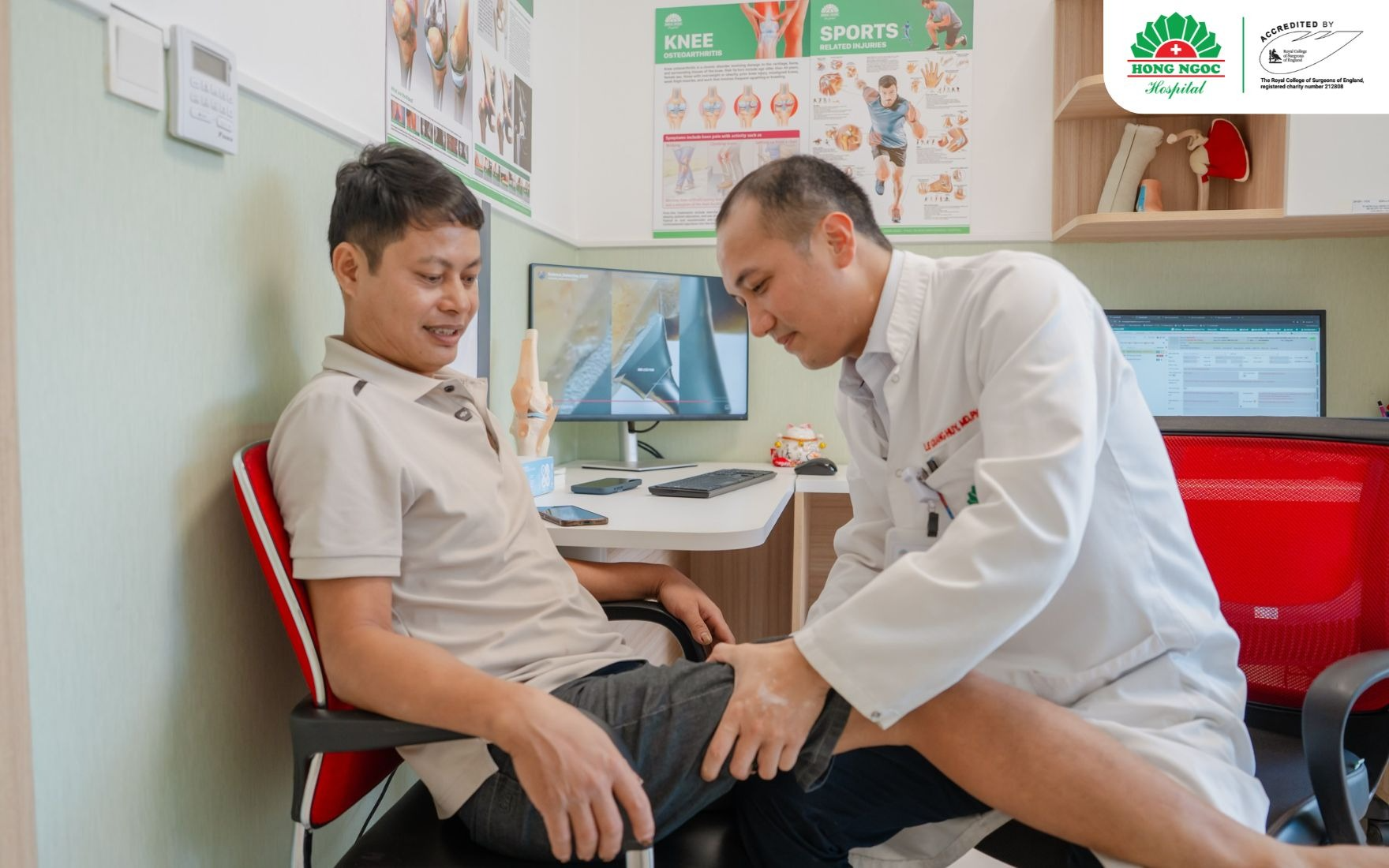
The second procedure was a revision anterior cruciate ligament (ACL) reconstruction combined with extra-articular lateral reinforcement using the iliotibial band. It was performed by Le Quang Huy, MD, PhD, and Nguyen Van Doanh, MD, Specialist Level I, from the Department of Orthopaedic Trauma and Neurosurgery at Hong Ngoc Phuc Truong Minh General Hospital, with expert guidance from Christian Koidl, MD, PhD, Head of the Knee Surgery Unit, Department of Orthopaedics and Trauma Surgery, Medical University of Innsbruck, Austria. The procedure also drew considerable interest from medical professionals.
Son, a 27-year-old patient, had undergone arthroscopic reconstruction of the left ACL in 2025. Recently, after falling and landing on his leg, he sustained an almost complete tear of the reconstructed ACL, along with grade III injuries to both the medial and lateral menisci. Given his condition, he was advised to undergo a second arthroscopic ACL reconstruction using a quadriceps tendon graft, combined with the Lemaire procedure. This technique uses a strip of the iliotibial band to reinforce the knee’s lateral stability outside the joint, while the meniscal injuries are also addressed.
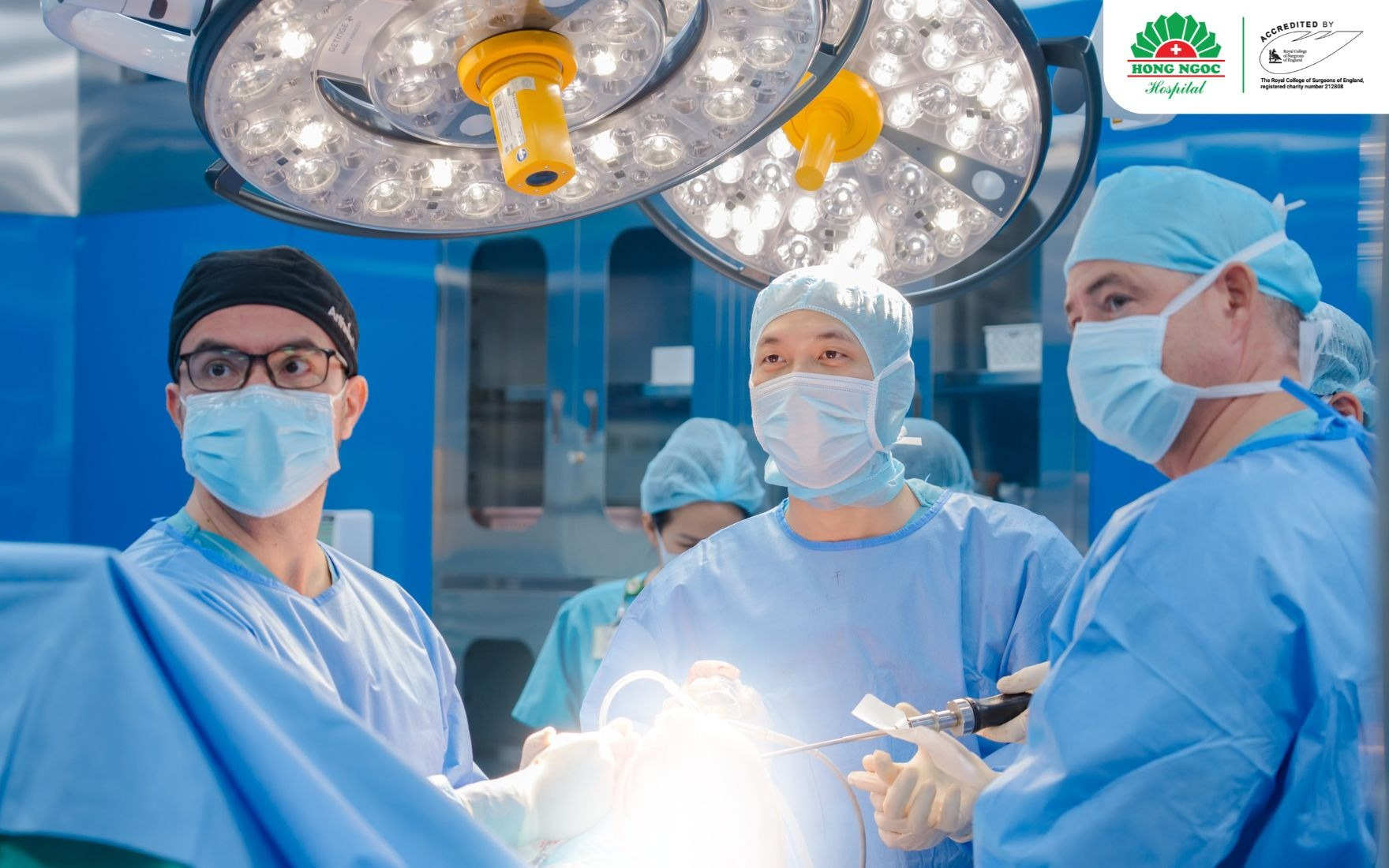
Commenting on the outcome, Le Quang Huy, MD, PhD, said: “After approximately one hour of surgery, we had reconstructed the ACL using a quadriceps tendon graft, positioned the new ligament anatomically and secured it firmly within the knee. Adding the Lemaire procedure helped enhance joint stability and support smooth flexion and extension, laying the groundwork for the patient to gradually regain mobility through exercise and rehabilitation.”
The previous day, October 17, the symposium featured two scientific sessions with 18 presentations, focusing on joint replacement, joint preservation and the management of revision cases.
In hip surgery, Prof. Dietmar Krappinger, MD, PhD, MBA, Deputy Head of the Department of Orthopaedics and Trauma Surgery and Head of the Pelvis and Hip Surgery Unit at the Medical University of Innsbruck, Austria, reviewed current approaches to “Total Hip Arthroplasty for Acetabular Fractures” and shared his “Experience with Revision Total Hip Arthroplasty in Austria.”

In knee surgery, Prof. Hiranaka Takafumi, MD, PhD, Director of the Joint Surgery Center and Head of Orthopaedic Surgery at Takatsuki General Hospital, Japan, shared his experience with “Kinematic Alignment Total Knee Arthroplasty (KA-TKA) Using Caliper Measurements and the ROSA Robotic System” and “Experience with Revision Total Knee Arthroplasty in Japan.” Other presentations on ligament reconstruction, the treatment of articular cartilage injuries and the management of periprosthetic fractures offered practical perspectives from different healthcare systems.
By combining scientific presentations with live surgery, the symposium gave the programme practical value: physicians could learn about advances in medicine and observe how surgical techniques are applied in specific clinical situations.
The two-day symposium concluded by reaffirming Hong Ngoc General Hospital’s commitment to developing surgical education, strengthening links with international orthopaedic centres and gradually bringing advances in modern surgery into clinical practice to improve patient care.